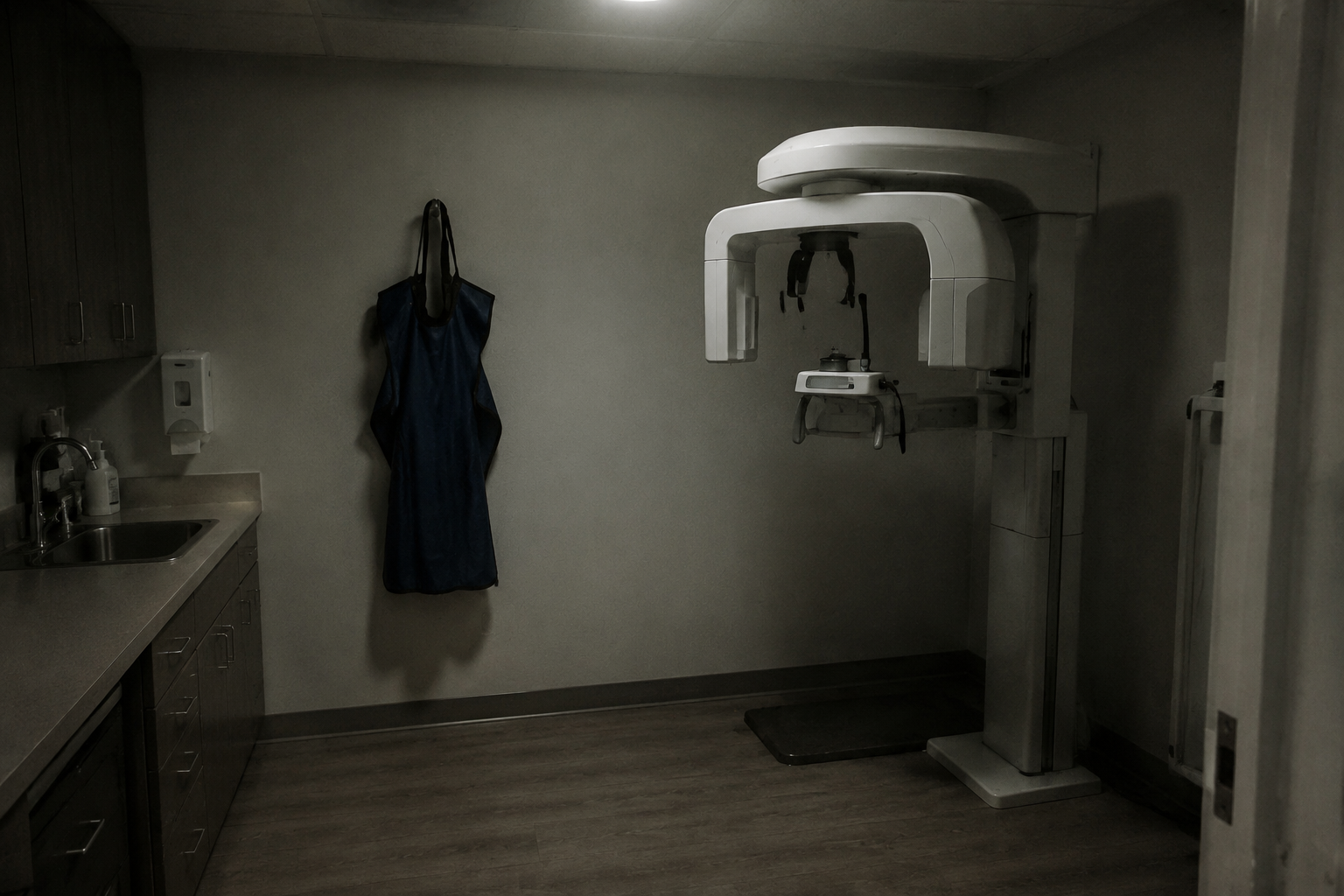
The lead apron was supposed to be hanging from a wall hook. Instead, the after-hours camera showed it upright beside the panoramic X-ray machine, shaped enough like a waiting patient that the first employee who reviewed the camera still stopped and replayed it.
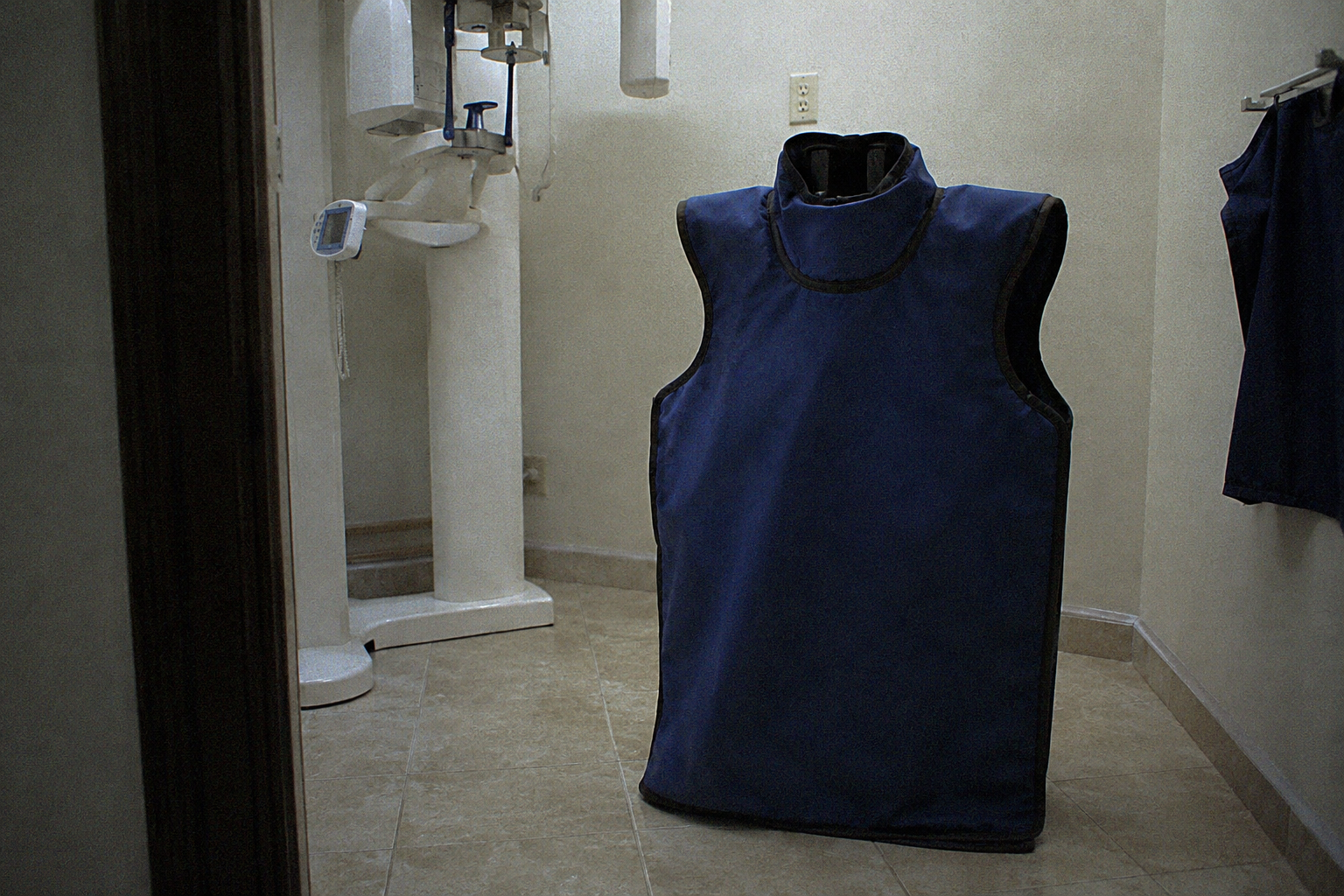
That alone would have been strange. The harder detail was the doorway reflection. In the glossy trim near the imaging room, a second human-shaped darkness appeared for a few seconds, separate from the apron, before the room returned to stillness.
WHAT THE CAMERA SHOWS:
- An empty dental clinic after the final staff exit.
- The panoramic X-ray room visible from a fixed hallway camera.
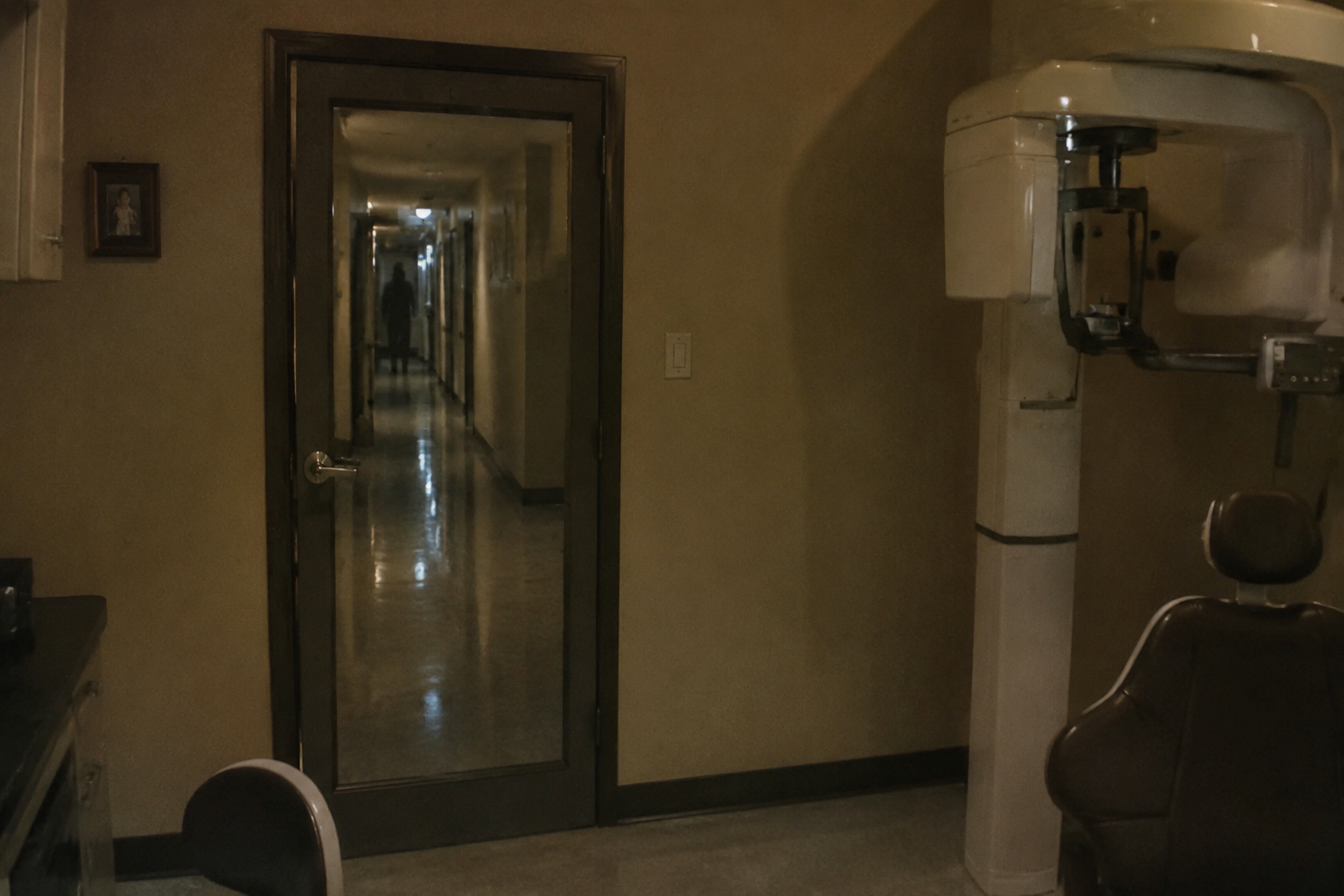
- A lead protective apron standing upright beside the machine.
- A doorway or glossy surface reflecting a human-shaped figure.
- No matching entry in the access log.
- No cleaning crew sign-in during the window.
- No alarm event explaining the movement.
This is why the camera still works better as evidence than as a ghost story. It is quiet, clinical, and almost explainable, which makes each mismatch feel worse.
1. The Apron Was Not Where Staff Said It Belonged
Lead aprons are heavy, stiff, and familiar to anyone who works around dental imaging equipment. They do not float, fold neatly by themselves, or usually remain upright without support.
According to the account attached to the camera images, the apron had been left on its regular hook after the last scan of the day. In the camera still, it appears near the panoramic machine instead, shoulder area raised and lower section dropping in a way that reads as a person-shaped outline.
That is the first detail the ordinary explanation has to handle. A fallen apron should look fallen. This one looked positioned, or at least caught in the one posture that made it seem occupied.
2. The Reflection Did Not Match the Apron Cleanly
If the apron were the only oddity, the case would be easier to file away as a storage mistake. The reflection is what people rewatch.
The camera angle catches a glossy doorway edge and darker hallway surfaces. In that reflection, a thin human-shaped form appears briefly. It does not seem to sit exactly where the apron is standing, and it does not look like a simple duplicate of the apron shape.
Reflections in medical offices can be deceptive. Glass, polished trim, dark monitors, and open doors can build figures out of ordinary pieces. But this reflection arrives at the same time as the displaced apron, which makes it harder to ignore.
3. The Access Log Did Not Supply a Person
Modern clinics leave records. Badge systems, alarm panels, cleaning invoices, and sign-in sheets usually turn strange camera images into a boring answer.
The claim in this case is that no matching access event appeared during the relevant window. No staff member was logged returning to the building. No cleaner was recorded entering the imaging area. No maintenance ticket explained why the room would be disturbed.
That does not prove the building was impossible to enter. Logs can miss things. Someone can use the wrong door, borrow a key, or forget to record a short visit. But documentation is normally what dissolves cases like this, and here it did not.
4. The Cleaning Window Made the Timeline Narrower
Cleaning crews are a reasonable explanation for after-hours movement. They bump chairs, shift supplies, and sometimes move objects without realizing a camera will turn the change into a mystery later.
That explanation only works if the crew was there. The clinic account says the cleaning window did not match the camera still, leaving the room apparently empty when the apron stood upright.
A cleaner could still have been present without a clean record. But then the case changes from a simple object problem to a paperwork problem. Someone or something had to be in the right place at the right time while the logs stayed silent.
5. The Panoramic Machine Made the Shape Feel Less Random
The panoramic machine gives the scene its mood. It is built to rotate around a person’s head and jaw. The patient stands still while the machine studies a face from angles most people never see.
Beside that machine, the upright apron does not look like a random garment. It looks like the suggestion of the patient who should be wearing it.
That is not a detail people read as anything paranormal. It is why the camera images lingers. The object is ordinary, but its location and posture borrow the outline of a missing body. In that room, even a small change reads like a presence.
The room also narrows the number of casual explanations. This was not a public lobby with coats, bags, and shifting foot traffic. It was a specialized imaging space where staff usually know what belongs where. When something inside that room changes after closing, the change feels less like clutter and more like a recorded event.
What a Skeptical Explanation Still Has to Explain
The strongest mundane theory is a combination theory. The apron slipped or was left badly. The reflection came from a doorway surface or monitor. The access record missed a harmless human visit.
That could be true. Most strange camera images becomes less strange when several small coincidences are allowed to stack.
But the camera still asks for three coincidences at once: an apron in a person-like posture, a separate figure-like reflection, and no paperwork identifying who caused either one. Any one of those details could be dismissed. Together, they make the scene feel crowded even though the building was supposed to be empty.
Why the camera images Feels More Like a Record Than a Story
The case is not loud. Nothing lunges at the lens. No face appears in a window. No door slams for the camera.
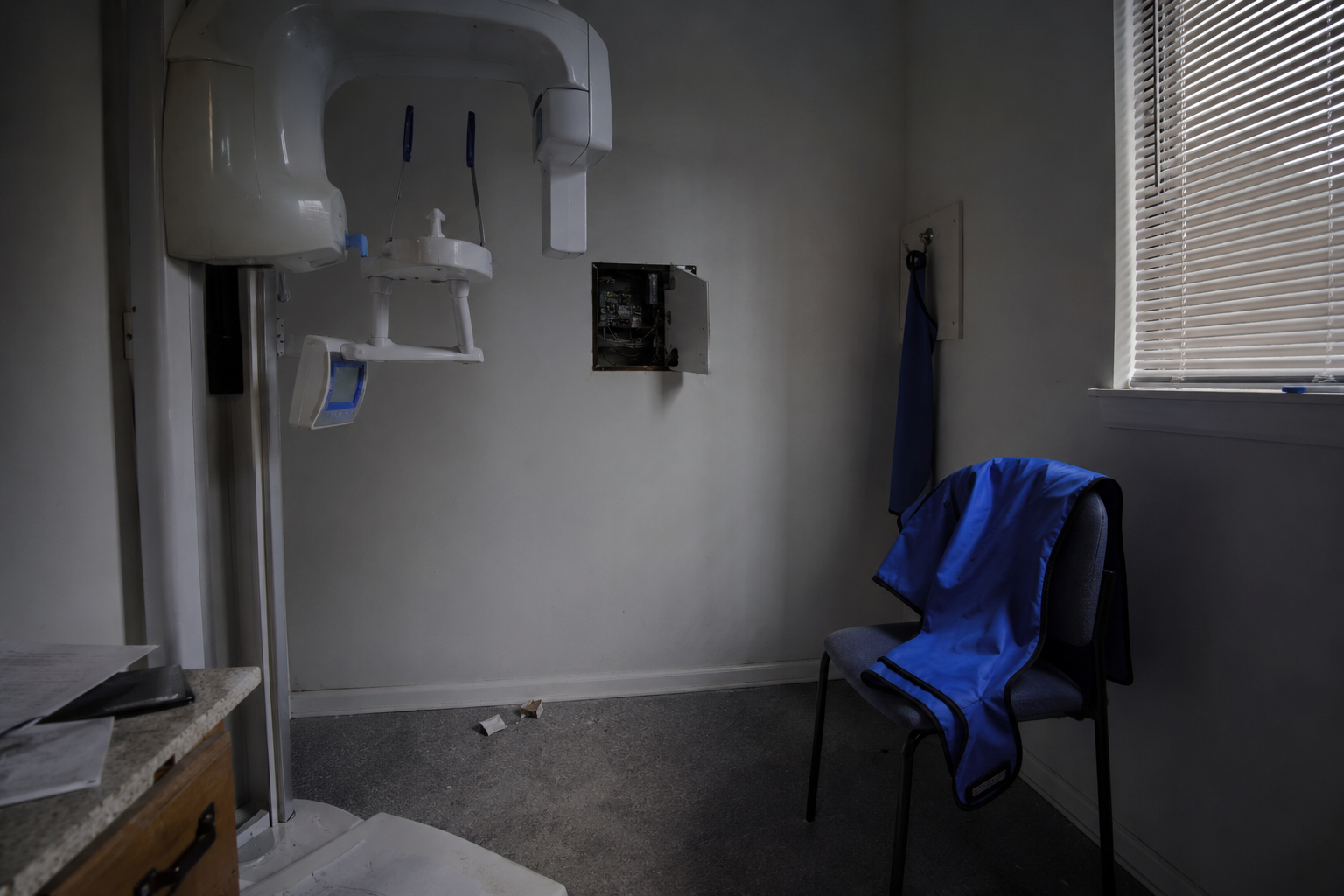
Instead, the evidence is made of placement. Where the apron was. Where the reflection appeared. Where the records say no person should have been.
That is why the dental clinic camera still fits the better side of caught-on-camera mysteries. It gives viewers enough fixed details to test, but not enough to close the case.
The camera still also has the kind of restraint that makes small evidence feel bigger. If the camera had shown a dramatic face, the debate would probably move straight to hoax or editing. Because it shows only posture, reflection, and silence, the viewer has to keep returning to the practical details.
It also keeps the fear grounded in routine. Anyone who has worked late in an office, clinic, school, or shop knows the feeling of a room looking slightly different than it did before. Most of the time, the answer is memory or habit. This camera images is unsettling because the camera seems to remember the room differently too.
The Detail That Still Makes the Room Feel Occupied
The lingering question is not whether a dental clinic can produce strange reflections. It can. The question is why the illusion formed around the one object in the room already shaped like a missing person.
If someone entered, why did the logs not show it? If no one entered, how did the apron move and the reflection appear in the same short window? If it was all camera confusion, why did it imitate a person so cleanly?
The camera still does not prove a haunting, an intruder, or a hoax. It leaves the access record, the doorway reflection, and the upright lead apron staring back at each other with no final explanation. What do you think the camera actually caught?
Reader Context
This Weird Witnessed story is an editorial reconstruction, written as eerie visual storytelling rather than a verified report. For more context, see Camera Anomalies and Strange Images Guide and How WeirdWitnessed Creates Reconstructed Horror Stories.