A locker room mirror usually makes a workplace feel ordinary. It shows coats on hooks, scuffed tiles, dented metal doors, and whoever happens to be standing in front of it.
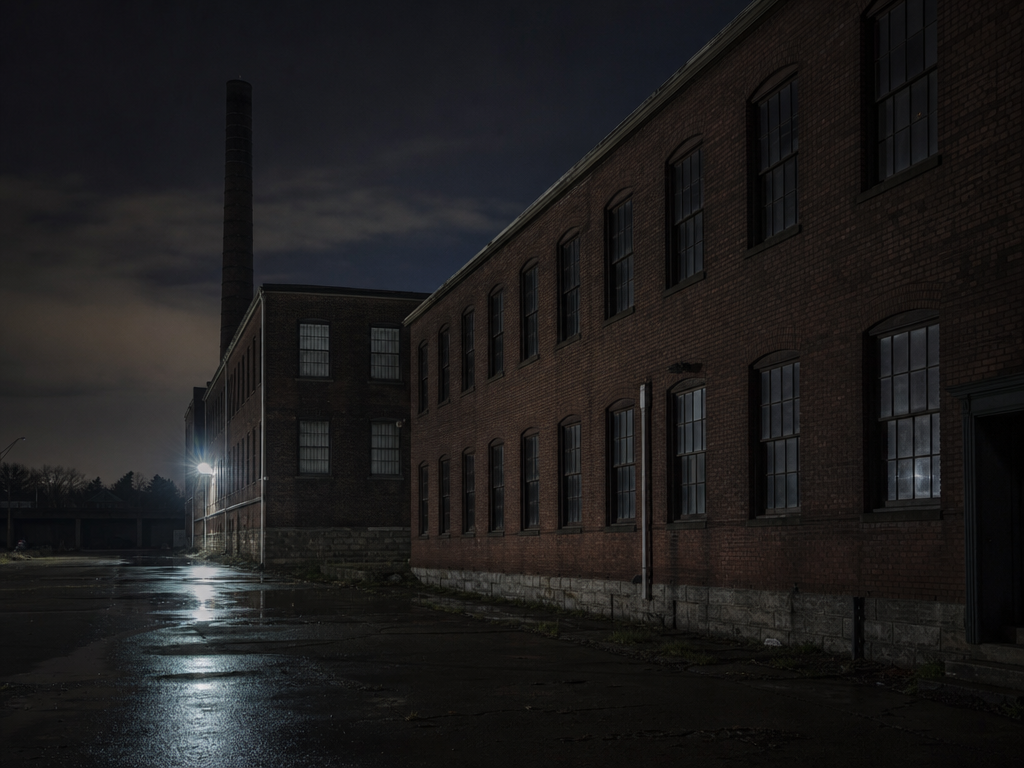
That is why the Harrow Mill photo unsettled the small group who first reviewed it. At first, it looked like routine documentation from a closed textile mill: one dim changing room, one maintenance inspection, one mirror catching more of the room than the camera directly faced.
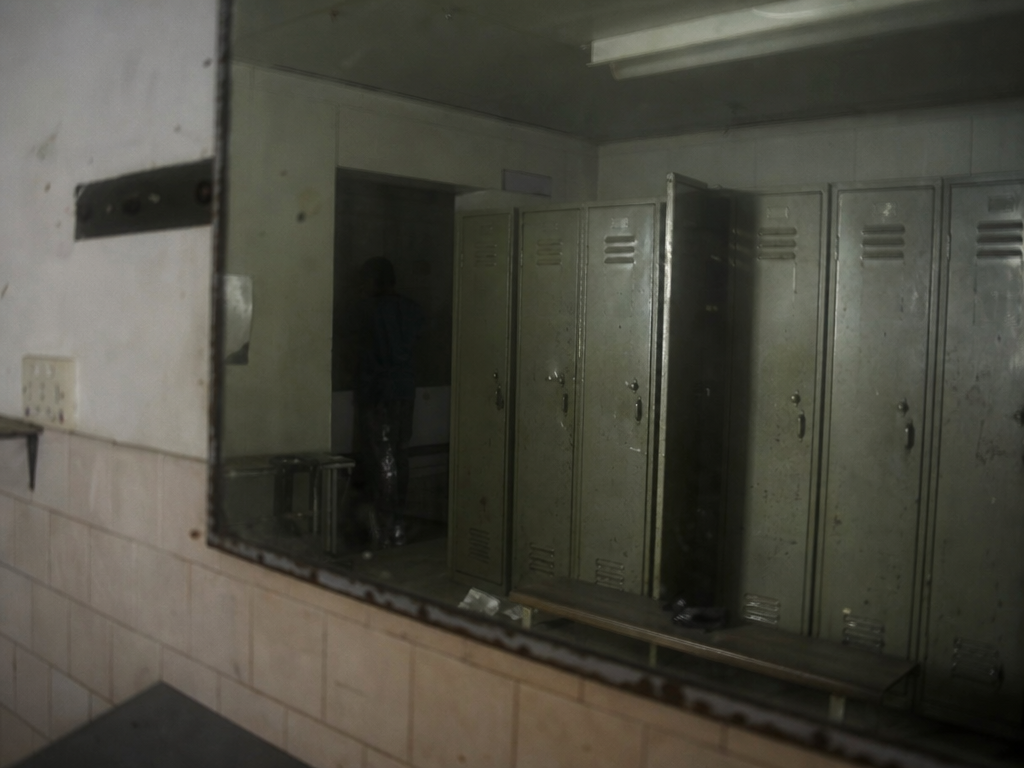
Then someone noticed the dark shape behind the lockers.
This account does not prove an apparition was present. What makes it worth examining is narrower: the image reportedly disagreed with the access records, the layout made the figure difficult to place, and ordinary explanations only solve part of the problem.
Detail 1: The Photo Was Supposed to Be Routine
The Harrow Mill account begins after the textile operation had already shut down. A small night crew was reportedly allowed inside for maintenance checks, inventory confirmation, and insurance documentation before the property changed hands.
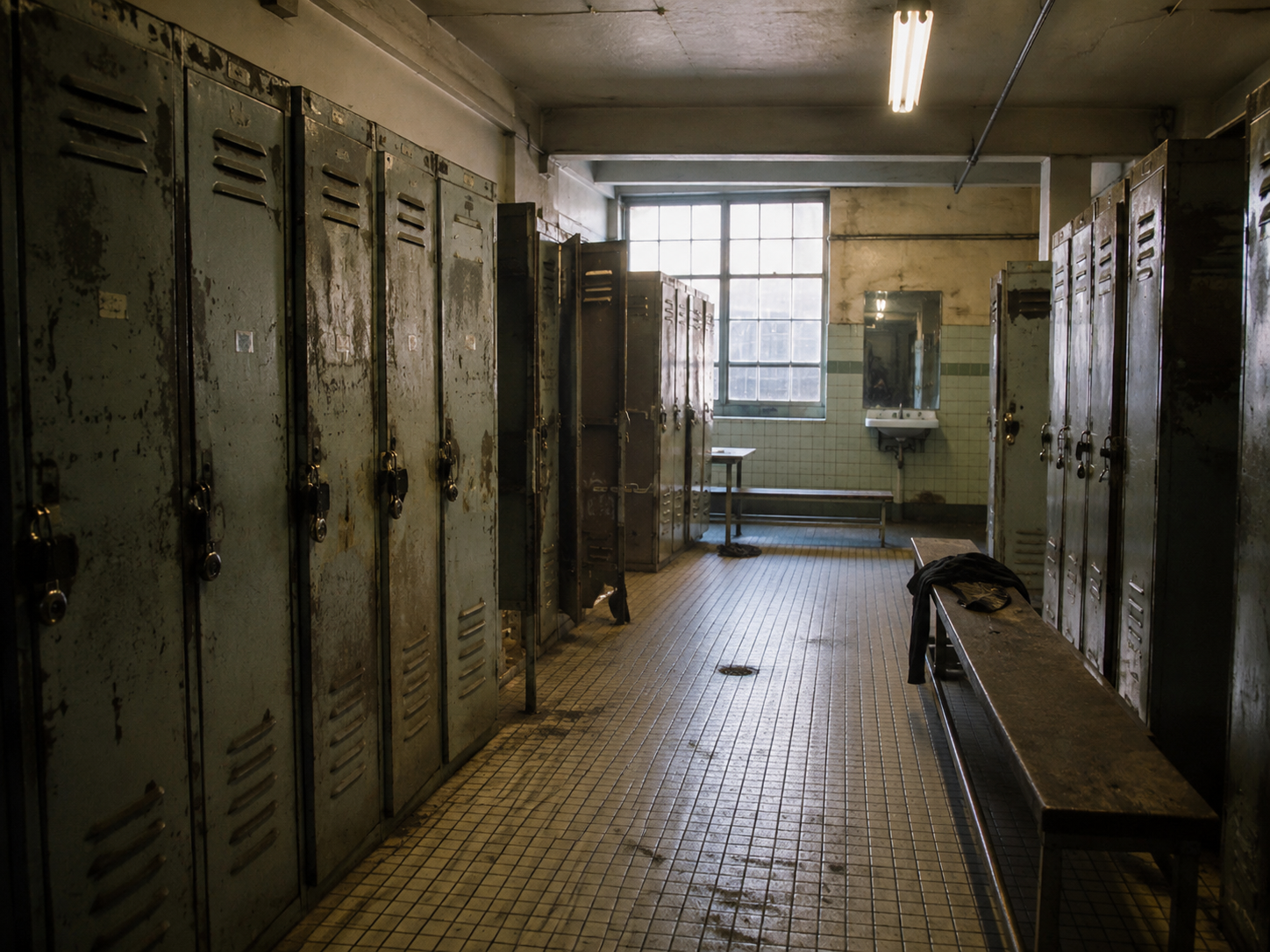
The locker room was not the center of the job. It was simply one of the rooms that still had fixtures attached to the building: employee lockers, benches, sinks, and a long wall mirror with cloudy edges.
The photo was said to document the room’s condition. That matters because staged ghost images often begin with the desire to frighten. This one, at least according to the account, began as paperwork.
The photographer stood near the doorway and aimed toward the mirror. The reflection showed the opposite wall and a narrow strip of space behind the locker row.
That strip became the problem.
Detail 2: The Shape Was Not in the Obvious Place
The dark figure was not described as a pale face or a full person standing in the center of the room. It was less theatrical than that.
In the reconstructed description, the shape appeared partly behind the lockers, broken up by vertical metal lines. It read as human-shaped because of its height and shoulder-like outline, but it showed no clear face, clothing, or expression.
That makes the image less dramatic, but more difficult to settle. A clear figure can sometimes be checked against a person or costume. A partial figure forces a different question: was anything standing there, or did the mirror combine shadows into a body-like form?
The account says viewers noticed it only after zooming into the mirror area and comparing the photo with other inspection shots. That delayed recognition feels less staged, but it also calls for caution. Once someone points out a body shape, the mind is very good at keeping it there.
Detail 3: The Access Logs Complicated the Easy Answer
The strongest part of the Harrow Mill story is not the figure alone. It is the reported access-log contradiction.
According to the account, entry to the mill after closing was controlled through a limited door system. Workers signed in, keyed through a main access point, or were noted by the night supervisor. The locker room had no reason to be occupied after the inspection crew moved on.
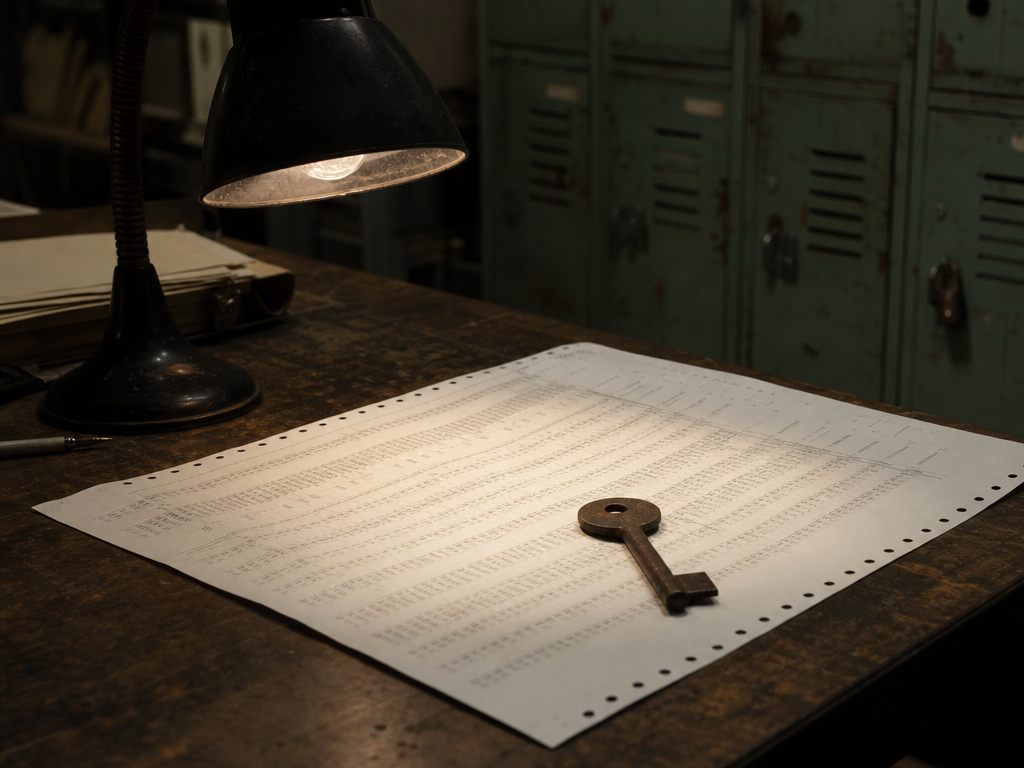
When the photo was reviewed, the room was supposedly checked against those records. No additional worker was listed as entering that section at the time. No guard reported being in the locker room. No contractor admitted stepping behind the lockers.
This does not eliminate every normal explanation. Access logs can be incomplete. Older industrial buildings often have side doors, shared keys, and habits that never reach official paperwork.
But it narrows the question. If the figure was a person, why was that person unrecorded, unmentioned, and standing in a cramped area where nobody had a task?
Detail 4: The Mirror Both Helps and Hurts the Case
Mirror evidence is always difficult. A mirror can reveal a hidden part of a room, but it can also confuse distance, direction, and what is actually being reflected.
Here, the mirror is the only reason the alleged figure is visible. Without it, the camera would have captured a plain locker room from the doorway. The figure appeared in the reflected view, apparently behind the lockers rather than in front of the photographer.
That gives the image a specific geography. The shape is not floating in empty darkness. It seems tied to a physical space.
At the same time, the mirror weakens certainty. A doorway shadow, hanging coat, broken locker door, or the photographer’s own shadow could become more suggestive in reflection.
The photo remains interesting because the shape is said to align with the area behind the lockers, not with the photographer’s position. Still, a mirror-based image should never be treated as simple proof. It has to be handled slowly.
Detail 5: The Locker Room Had Weight Without Needing a Legend
Many strange-location stories attach themselves to a dramatic tragedy. The Harrow Mill account is quieter.
The building was a closed textile mill, the kind of workplace where generations passed through the same changing rooms before and after long shifts. Lockers held boots, coats, lunch tins, and the private routines of people who wanted to get home.
That history is not supernatural. It simply gives the room human weight.
A closed industrial locker room can look haunted without being haunted. It preserves signs of ordinary life after the people are gone. The mirror doubles that emptiness and makes the room feel watched.
The account is stronger when it does not ask for a famous ghost. It only asks whether one photograph caught something that did not match the room’s expected emptiness.
The Most Reasonable Explanation Is Still Imperfect
The most reasonable explanation is that the figure was not a figure at all. It may have been a shadow formed by lockers, pipes, hanging material, open doors, or uneven light.
Textile mills are full of visual clutter. Even after machinery is removed, they keep rails, vents, hooks, brackets, rolled mats, and scrap material. A mirror can compress all of that into a dark vertical form.
Another possibility is that someone was present but not logged correctly. A guard, caretaker, or contractor could have crossed into the room and forgotten the moment later.
A third possibility is photo quality. Low-light phone images and compressed files can deepen shadows, blur edges, and make ordinary objects look more human than they were.
These explanations should be taken seriously. The case would be weaker, not stronger, if it ignored them.
What remains unresolved is that none of them, in the account as told, explains every part at once: the human height of the shape, its placement behind the lockers, the reportedly empty access record, and the lack of a remembered person in that part of the building.
Why the Figure Behind the Lockers Matters
The most memorable detail is not only that a dark form appeared in a mirror. It is where it appeared.
Behind lockers is a strange place for a person to stand. It is not a doorway where someone might pause. It is not a central aisle where a worker might pass. It is a narrow, awkward zone that reads more like a hiding place than a workspace.
That placement changes the emotional meaning of the image. If the shape had been in the open, viewers might imagine a forgotten employee, a guard, or the photographer’s reflection. Behind the lockers, it feels more secretive.
This is also the detail Worker 1 should translate for Facebook. A reflection alone can be too subtle in a fast-scrolling image. The stronger visual is the dark, human-shaped presence actually lurking behind the locker row, half blocked by metal doors and visible without needing a red circle.
That does not make the story more true. It makes the central visual clearer: an empty room that may not have been empty.
Why the Harrow Mill Mirror Photo Still Lingers
The Harrow Mill locker mirror account lingers because it sits between two kinds of evidence.
On one side, it has the weakness of a mirror image: distortion, darkness, and mistaken perception. On the other, it has the strength of a workplace record: a specific time, a controlled access point, and a room that was supposed to be empty.
Neither side wins completely.
That is what makes the case fit Apparition Evidence. Not because it proves a haunting, but because it shows how a small mismatch can make a familiar place feel unstable. The photograph asks viewers to compare what the room looked like with what the records said should have been there.
Maybe the figure was a shadow. Maybe it was an unrecorded person. Maybe the mirror turned ordinary objects into something the mind could not ignore.
Or maybe the unsettling part is simpler: the photo preserved the feeling of being watched in a room where everyone had already gone home.
For now, the Harrow Mill night shift locker mirror remains a reconstructed account, not a settled case. Its value is not certainty. Its value is the way one dark shape behind a row of lockers keeps pulling the whole room back into question.
Reader Context
This Weird Witnessed story is an editorial reconstruction, written as eerie visual storytelling rather than a verified report. For more context, see Apparitions and Hauntings Guide and How WeirdWitnessed Creates Reconstructed Horror Stories.