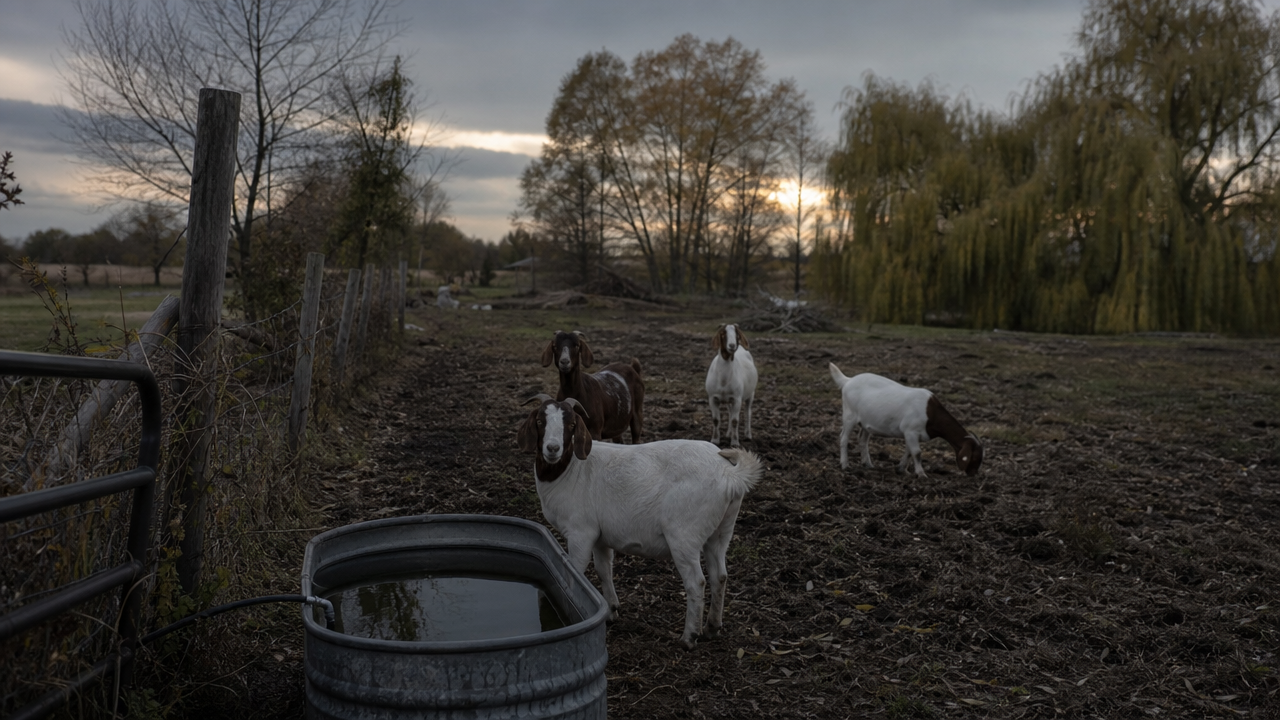
The first morning, the empty trough looked like a chore someone had forgotten to finish.
By the third morning, it looked like a question the pasture itself was asking.
The Blackwillow account comes from a small goat property bordered by wet timber, a drainage ditch, and a row of old willow trees that gave the place its local name. The family kept goats there for brush control and milk, not for spectacle. Their problems were usually broken latches, muddy hooves, and coyotes calling beyond the fence.
Then the water trough began turning up dry before dawn.
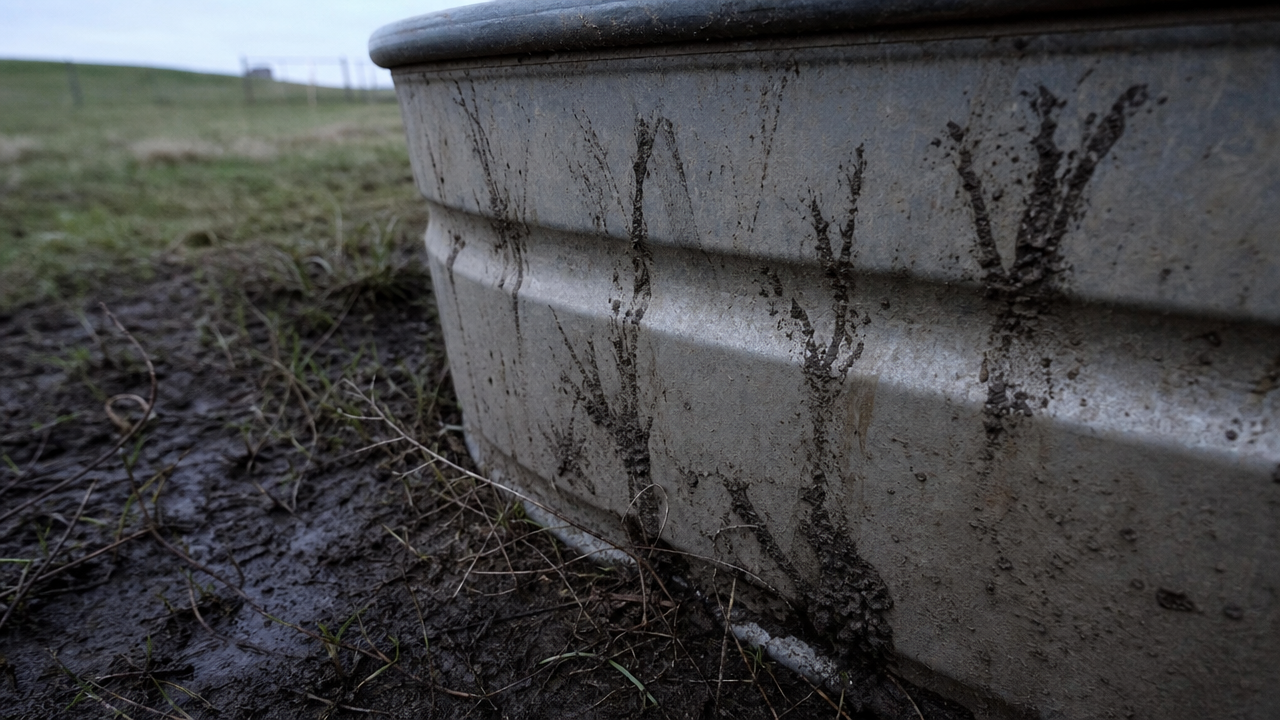
That would not have made a story by itself. Livestock troughs leak. Goats knock things loose. Raccoons climb where they should not. But this trough did not simply lose water. Its outside wall began showing repeated muddy marks, each set shaped like three narrow toes pressed upward against the metal, as if something had braced itself while climbing or leaning over the rim.
A distant fence camera later added the detail that made people use the word chupacabra, even if they said it half jokingly.
A Trough That Should Not Have Emptied
The trough sat near the north fence, close enough to the tree line that leaves collected in it after storms. It was a common galvanized stock tank fitted with a simple refill line and float valve. According to the family, it had worked without much attention for years.
The first drained morning came after a humid night with no hard freeze and no obvious damage. The goats were standing away from the trough, bunched near the open shed. The family assumed the float had stuck or the valve had failed.
They cleaned it, checked the fittings, and refilled it.
The second time, the trough was dry again, but the ground around it was not flooded. That mattered. A cracked line or leaking tank should have left mud in a wide wet patch. Instead, the mud was concentrated along one side, directly below several fresh smears on the metal.
By the third incident, they began photographing the marks before washing the trough.
The Three-Toed Mud Marks
The marks were not tracks in the usual sense. They were not clean impressions left in flat soil. They were streaked deposits of mud on the outside of the trough, usually starting low and rising toward the rim.
Still, their shape bothered people.
Several showed three separated points at the upper end, with a heavier smear beneath them. The spacing was uneven, too small for a large dog and too long for an ordinary raccoon hand. In some photos, the marks looked like a narrow three-toed foot had pressed and slipped.
That is exactly where caution is necessary. Mud on curved metal distorts easily. A single paw can drag into shapes that look stranger than the animal that made them. Goat hooves, bird feet, raccoon prints, and sticks caught in wet clay can all create misleading patterns.
But the family said the marks kept appearing on the outside of the tank, not on the nearby boards or gate. Whatever made them seemed interested in the water.
The Goats Changed Their Routine
Livestock behavior is easy to overread after something unusual happens. Animals cluster for ordinary reasons: insects, weather, feed, or the mood of one dominant goat.
Even so, the family noticed a change.
On normal mornings, the goats pushed toward the trough and hay rack as soon as the gate opened. During the week of the drained troughs, several stayed under the shed roof. One older doe reportedly refused to cross the muddy strip until the family poured fresh water into a separate bucket.
There were no dramatic wounds. No bloodless carcasses. No missing animals. That separates Blackwillow from the louder chupacabra folklore that often centers on dead goats and impossible injuries.
This was quieter: water disappearing, mud marks repeating, and goats acting as if that corner had become a place to avoid.
That quietness is what made the case feel less like a campfire story and more like an unresolved farm problem with a strange edge.
The Fence Camera Shape
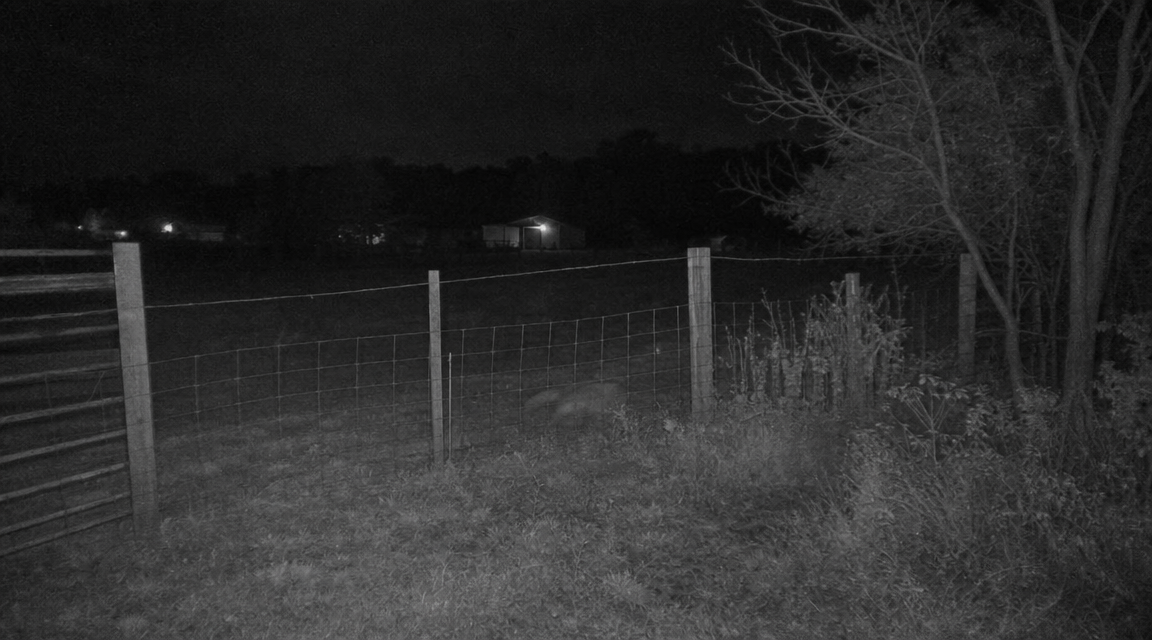
The only image connected to the case did not come from a camera aimed at the trough. It came from a fence camera mounted farther down the pasture, originally placed to watch for coyotes cutting along the ditch.
The frame people remember shows a low blurred shape moving near the fence line in the early morning dark. It is not close or sharp. It shows no glowing eyes, spines, fangs, or theatrical monster features.
That is part of the problem.
The shape is low to the ground, with what looks like a long back and a forward dip where the head might be. Motion blur smears the legs into a darker patch beneath it. Behind it, the fence posts and grass are clearer than the animal itself.
Skeptics called it a coyote, stray dog, or raccoon caught at the wrong moment. Others pointed to the body height and the way it seemed to move parallel to the fence before angling toward the trough.
The image proves only that something crossed the camera’s view. It does not prove what drained the water.
Why Chupacabra Entered the Conversation
The chupacabra label appears quickly whenever goats, rural nights, and unexplained animal activity share the same sentence. That does not mean the label is useful.
Modern chupacabra reports often blend older livestock legends with sightings of sick coyotes, mangy dogs, and misidentified wildlife. Many photographs that circulated as monsters later showed ordinary animals in bad condition.
Blackwillow has none of the classic dramatic evidence. There are no puncture wounds to examine, no carcass pattern, and no clear animal in the frame. Calling it chupacabra is more a cultural reflex than a conclusion.
Still, the word stuck because the evidence felt creature-like without being identifiable. The three-toed marks did not look like normal hoof scuffs to the people who found them. The trough repeatedly emptied at night. The goats avoided the area. A low shape appeared on camera during the same period.
The case sits in that uncomfortable middle ground where folklore gives people a name before evidence gives them an answer.
The Ordinary Explanations Are Strong
A practical explanation starts with water loss. A float valve can fail intermittently. A tank can siphon under the right conditions. A small leak can drain into porous soil without leaving the dramatic puddle people expect.
Wildlife also fits much of the account. Raccoons are expert climbers and leave hand-like marks that can distort into three long points. Opossums, feral cats, dogs, coyotes, and birds could all visit a stock tank at night. A raccoon leaning over the rim repeatedly might smear mud up the metal in odd patterns.
The blurred fence image is especially vulnerable to ordinary explanation. Infrared cameras flatten distance and make common animals look unfamiliar. A coyote turning its head or a dog trotting through weeds can become a creature with the wrong proportions.
If this were an investigation, the next steps would be simple: inspect the valve, place a camera on the trough, photograph the marks with a scale, and track the muddy approach from the ditch.
Without that, the safest answer remains wildlife plus equipment trouble.
What Keeps the Story From Closing
The reason Blackwillow still earns attention is not that any single piece is impossible. It is the repetition.
The trough reportedly drained several times in a short span. The mud marks returned after cleaning. The goats remained uneasy around the same corner. The camera shape appeared during the same window.
Patterns can be built accidentally. Once people start watching a place, every smear becomes evidence and every animal movement becomes part of the plot. But patterns can also point to a real visitor with habits the owners have not yet understood.
That visitor does not need to be supernatural. It could be a raccoon with a nightly route, a dog squeezing under the fence, or a coyote bold enough to drink from livestock water. But the three-toed marks give the account a physical detail harder to dismiss than a feeling.
The marks make the story tactile. Someone can stand beside that trough and imagine a muddy foot pressing against cold metal in the dark.
The Best Evidence Is Also the Weakest
The fence camera image is the most shareable part of the Blackwillow case, but it is also the least reliable. Blurred shapes invite belief because they leave room for the viewer to complete them.
The trough marks are less dramatic, yet more interesting. They are repeated, physical, and tied directly to the drained water. Unfortunately, they were not documented with enough rigor to identify the maker. No scale appears in every photo. No clear trackway connects the tank to the fence. No camera watched the rim.
That leaves the case suspended between farm evidence and rural folklore.
The most responsible conclusion is modest: an unidentified animal, or several ordinary animals, likely visited the trough at night while a mechanical issue may have helped drain it. The more unsettling possibility is that one animal learned to reach the water in an unusual way, leaving marks the family did not expect.
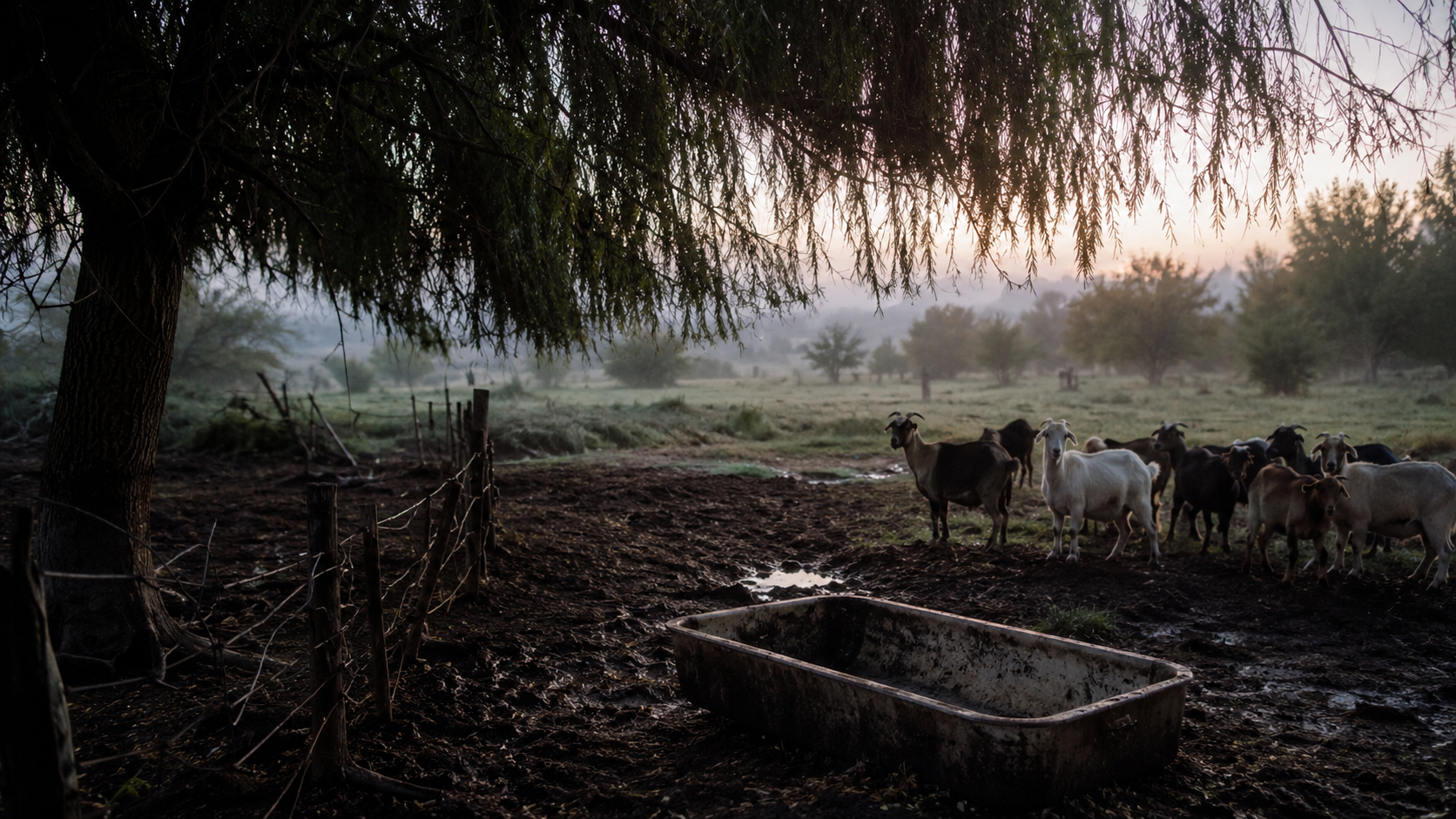
Blackwillow does not need a monster to remain eerie. It only needs the image it already has: a silent pasture before dawn, goats holding back under the shed, an empty trough, and three muddy toes pointing upward on the metal side.
Reader Context
This Weird Witnessed story is an editorial reconstruction, written as eerie visual storytelling rather than a verified report. For more context, see Creatures, Crawlers, and Cryptid Stories Guide and How WeirdWitnessed Creates Reconstructed Horror Stories.