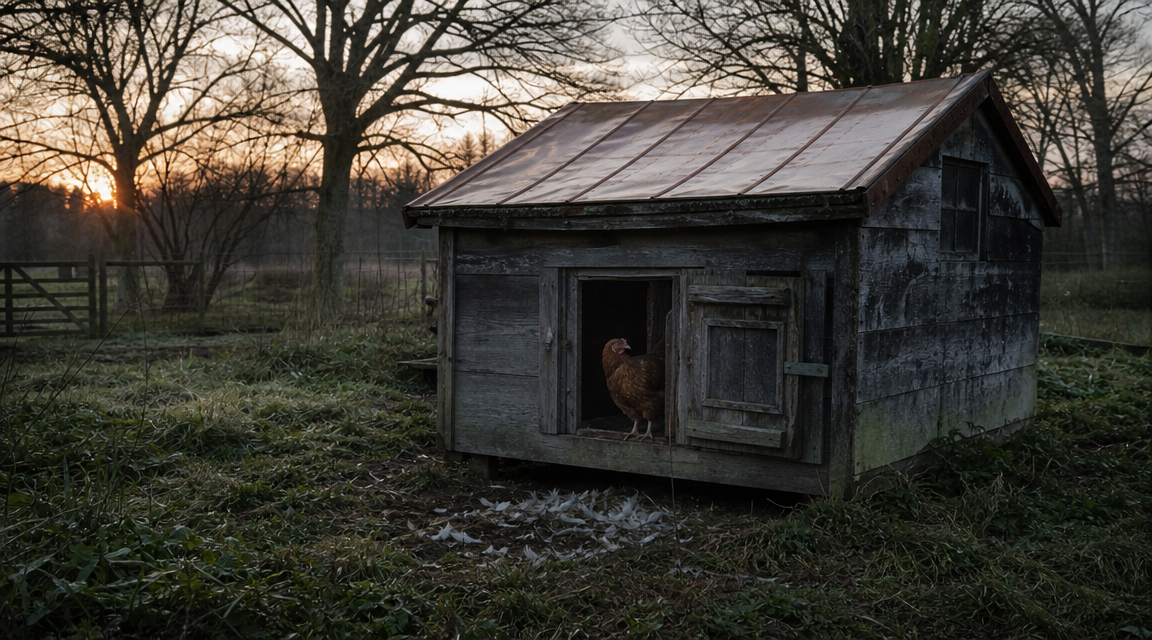
The Henhouse With the Copper Roof
The story began with a small henhouse locals remembered for one reason: its roof shone copper.
It sat behind a farmhouse on the edge of scrubland, where pasture met mesquite and a narrow creek. The building was not historic or famous. It was just a tidy coop with a warm metal roof, a latch, and laying hens.
Then the birds started vanishing.
At first, the owner blamed raccoons. That was sensible. But the first missing hen left no struggle. The second left a small fan of feathers under the copper eave. By the third week, the family had stopped calling it a nuisance and started calling it the thing under the henhouse.
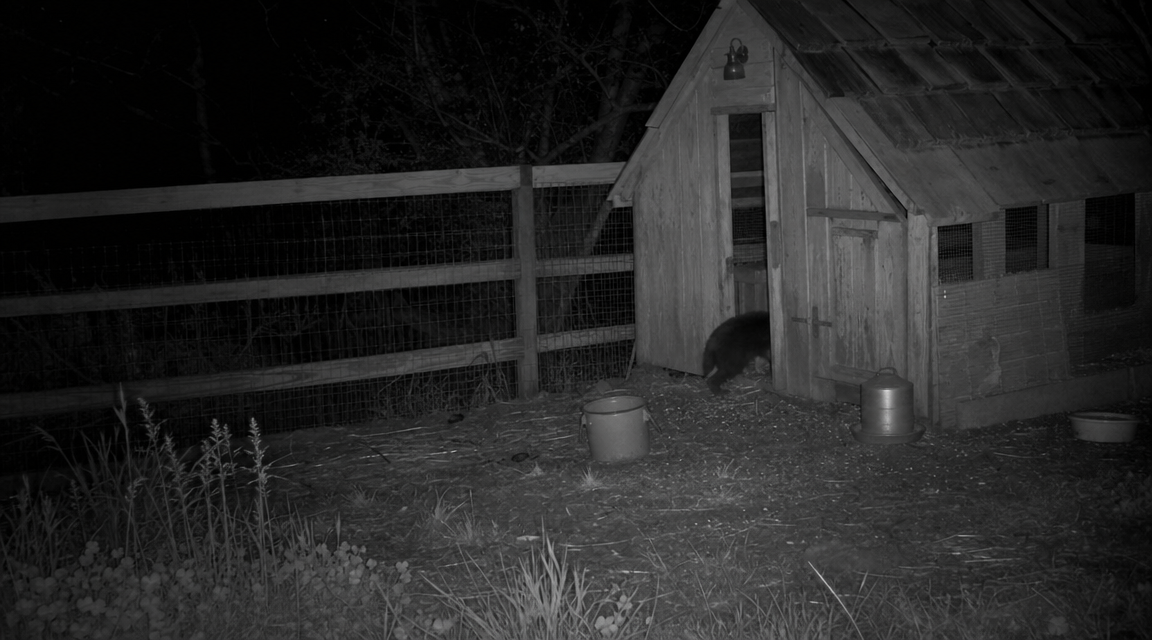
That name stuck because of where the movement seemed to come from. Not from the woods. Not from the creek. Under the raised floor.
The First Morning Evidence
The first careful inspection happened after five hens were lost in nine nights.
The owner walked the coop line after sunrise and noticed the dust under the structure had been disturbed. The henhouse stood on short blocks, leaving a dark crawl space beneath it. In that shadow, the dirt looked swept, as if something had been dragging itself or circling.
There were feathers, but not many. There was no blood trail leading away. There was no obvious den entrance. The wire was intact on three sides, and the fourth had been reinforced after the second loss.
What bothered the family most was the latch. It had not been opened. The door was shut, the hook still down, and the birds inside were frantic.
A raccoon could kill through wire. A fox could dig. A bobcat could wait at a weak spot. But the pattern felt wrong to the people who lived there. Farmers know ordinary losses. They may not always know the culprit, but they usually know the rhythm.
This one did not have a rhythm.
Tracks That Did Not Settle the Matter
The tracks were the first reason the case became more than a private farm problem.
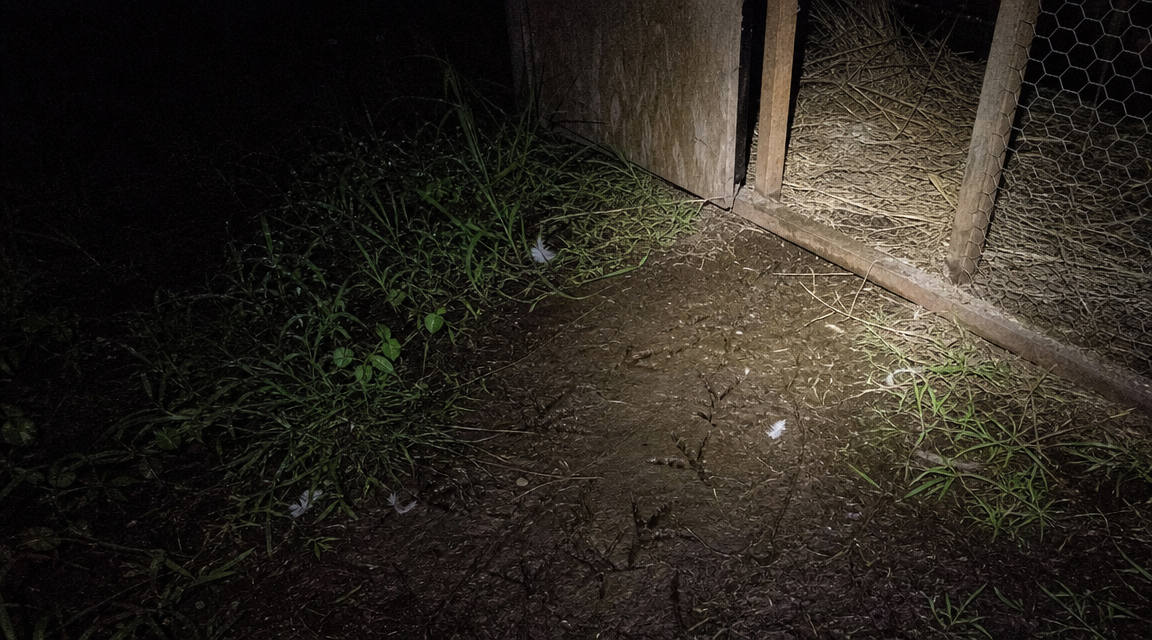
A neighbor photographed impressions in the damp soil near the back corner. They were partial, shallow, and frustrating. One print looked like a canine paw. Another seemed longer, with narrow toe marks pressed at an angle. A third was too smeared to read, but it showed a heel-like drag.
Everyone saw what they expected to see.
The neighbor who hunted coyotes said coyote. The retired deputy said stray dog. A cousin who had trapped raccoons for years said the marks were not clean enough to identify. Someone else mentioned chupacabra, partly as a joke and partly because livestock stories often drift that way after dark.
The problem was not that the tracks were impossible. They were incomplete. A half-track can become almost anything if enough people stare at it.
That is where many creature cases begin to harden into legend. Not with perfect evidence, but with evidence too damaged to close the door.
The Night the Coop Went Quiet
The most unsettling account came from the owner’s daughter.
She had been awake past midnight when the usual clucking stopped all at once. Anyone who has kept chickens knows the sound of a disturbed coop: wingbeats, alarm calls, bodies hitting roosts. This was different, she said. There was a quick burst of panic, a heavy thump beneath the floor, then nothing.
She looked from a back window and saw movement near the copper roofline, but the moon was low and the yard light did not reach the ground clearly. She described it as a low shape, not tall, not upright, moving in two short bursts.
Her description became a source of argument later. Some retellings made the creature hairless. Others gave it glowing eyes or a hopping gait. Those details do not appear in the plainest version.
In the plain version, she saw a dark shape near the coop and heard something under the boards.
That is not enough to name a creature. It is enough to make a family stop sleeping well.
The Blurred Camera Frame
A trail camera was mounted on a fence post after the seventh missing bird.
For three nights it captured insects, a cat, a possum, the owner’s boots, and hens shifting behind wire. On the fourth night, just after 2:00 a.m., it captured the image that kept the case alive.
The frame showed the henhouse door, the copper roof washed white by infrared, and a dark shape at the lower edge of the crawl space. The shape was close to the ground. It had no clean outline. One brighter spot appeared where an eye might have reflected, but it could also have been a wet leaf or nail head.
People wanted the image to solve the mystery. It did the opposite.
If it was a dog, why was it so low? If it was a raccoon, why did the body seem long? If it was only shadow and motion blur, why did it appear on the same night another bird disappeared?
The camera did not prove a monster. It proved only that something was there, and that the camera was not good enough.
Why Chupacabra Entered the Story
The chupacabra label arrived because the losses had the right shape for rumor.
There were small livestock deaths. There was a rural setting. There was a strange shadow, uncertain tracks, and a family convinced they were not dealing with a normal predator. That combination is enough to pull older stories into a new event.
In many modern reports, the word chupacabra is applied to almost any unidentified animal that appears thin, hairless, nocturnal, or unusually bold around livestock. Many such animals later turn out to be coyotes or dogs with mange.
That does not make every witness foolish. It means the category is elastic: a placeholder for a predator people cannot fit into the usual boxes.
The copper henhouse case fits that pattern. No one produced a clear photograph of a fanged creature. No carcass was recovered. No laboratory report noted anything exotic. The name attached itself because the facts were incomplete.
Something was taking birds from a locked coop.
The Ordinary Suspects
There were several practical explanations, and none can be dismissed.
A raccoon remains one of the strongest candidates. Raccoons can reach through openings, kill chickens in confined spaces, and leave confusing sign. If one found a weakness under the floor, it might have used the crawl space repeatedly.
A fox or coyote could explain the tracks and missing bodies, especially if there was a gap that later collapsed or was overlooked. Predators do not always leave dramatic evidence.
A feral dog is another possibility. Dogs can behave strangely around poultry, killing without eating or returning because the chase itself excites them.
Each explanation leaves a small discomfort. The wire looked intact. The latch stayed closed. The camera shape did not read cleanly as any one animal. The tracks were suggestive but not final.
Mysteries survive in those gaps.
The Evidence That Was Missing
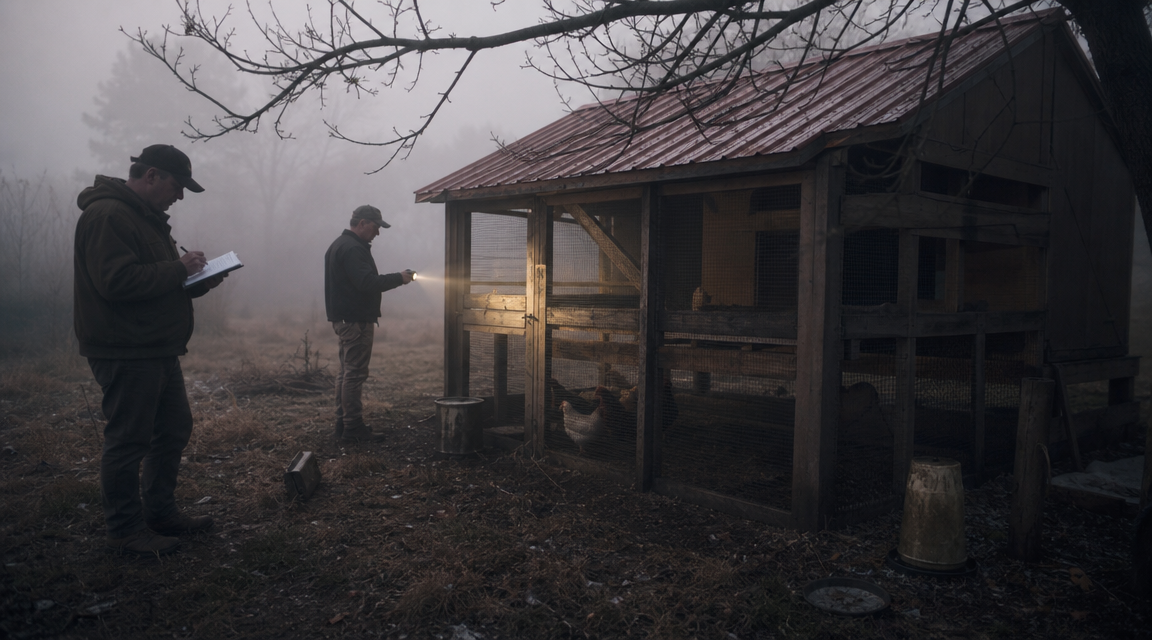
The most important evidence in the case is the evidence no one collected in time.
No plaster casts were made. No hair sample was preserved from the wire. No scat was bagged. No veterinarian examined a fresh carcass because the missing birds were usually gone.
That is common in small farm cases. People do not treat the first loss like an investigation. They repair wire, move feed, set a camera, and hope the problem stops. By the time the story becomes strange, the earliest clues are already ruined by weather, boots, and time.
The copper roof also played an accidental role. It made the henhouse memorable, so the story traveled easily. But a memorable setting is not the same as strong evidence.
Once the case circulated, the details became less stable. The shadow grew larger. The tracks became more monstrous. The number of missing hens changed. The actual evidence stayed small: feathers, partial prints, a blurred image, and witness concern.
Small evidence can be real. It can also be insufficient.
Why It Was Never Identified
The creature under the copper henhouse was never identified because the case sat exactly between the ordinary and the unknown.
There was enough evidence to show that something disturbed the birds. There was not enough evidence to determine what that something was. Every likely animal had a weakness as an explanation, but every strange explanation had a larger one: no clear proof.
That is the honest center of the case.
The chupacabra interpretation remains possible only in the broad cultural sense, as a name people give to a predator they cannot identify. In the stricter sense, there is no evidence here of an unknown species or anything beyond known wildlife behaving oddly under poor conditions.
Still, the story endures because identification is not just about naming an animal. It is about restoring confidence. The family wanted to know what had been under the boards and why their normal defenses failed. They never got that answer.
The henhouse was reinforced again. The crawl space was blocked. The losses stopped.
That ending points toward a natural predator, but it does not name one. It only tells us that whatever used the space could no longer get in.
The copper henhouse mystery remains a useful kind of evidence case: not a detail people read as a monster, not a detail people read as a hoax, but a reminder that rural nights are full of animals we often identify only after they make a mistake.
This one did not.
Reader Context
This Weird Witnessed story is an editorial reconstruction, written as eerie visual storytelling rather than a verified report. For more context, see Creatures, Crawlers, and Cryptid Stories Guide and How WeirdWitnessed Creates Reconstructed Horror Stories.