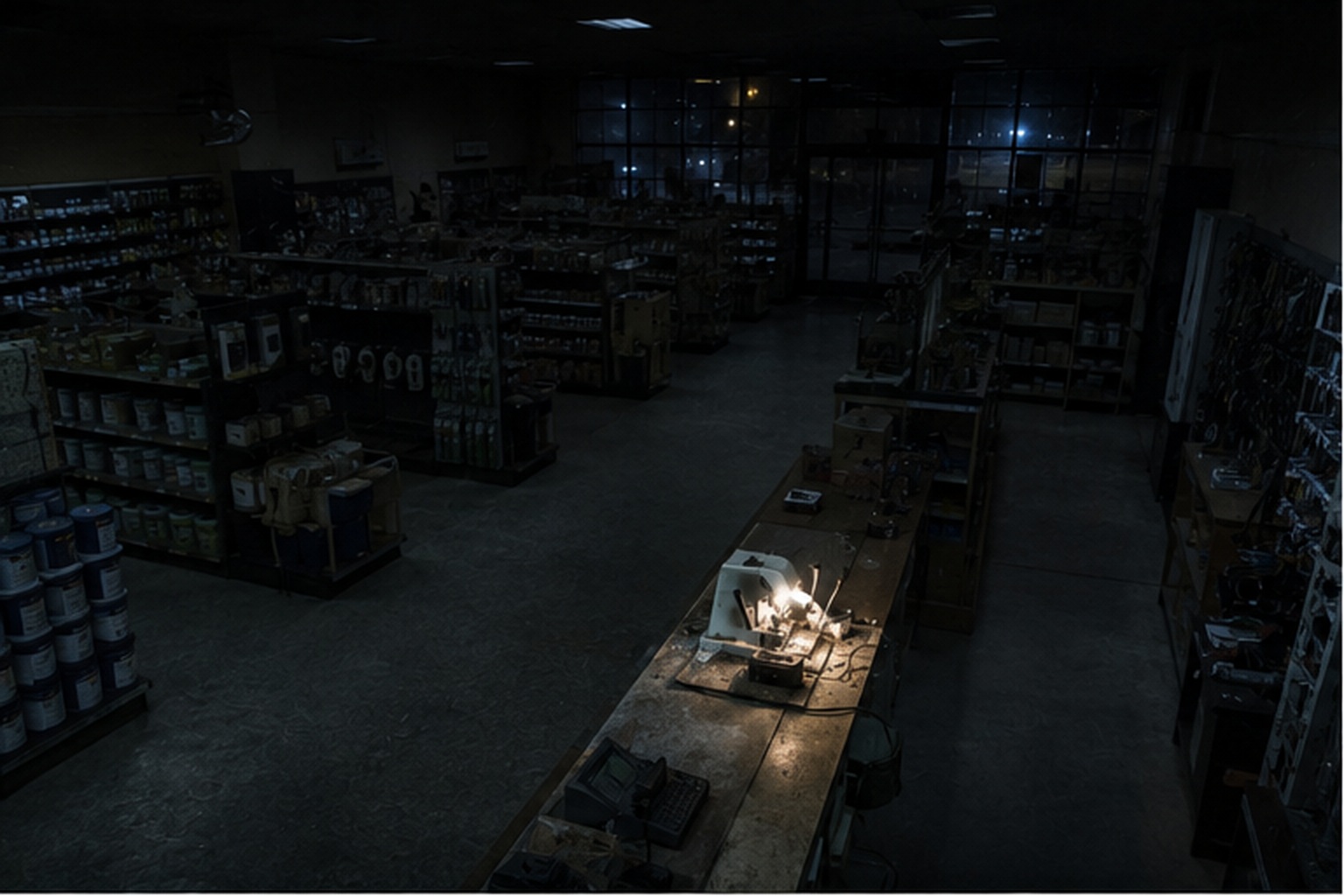
The hardware store had a closing sound everyone knew.
It was not the bell over the front door, or the register drawer sliding shut, or the metal gate being pulled across the paint aisle. It was the small click from the alarm panel beside the office, followed by the building settling into its own after-hours hush.
On the night the key machine ran, that hush should have held until morning. The store sat at the edge of an older shopping strip, the kind with a dry cleaner, a barber, and a pizza place that kept later hours than everyone else. By nine, the hardware store was dark behind its glass doors. The employees had swept the entry mats, counted the drawers, and locked the back room where the extra key blanks and service tools were kept.
The sensor on that back-room door logged nothing until opening time. But the camera over the service counter recorded the key machine turning on.
The Counter Near The Back Wall
The key station was not hidden. It sat beside the customer service counter, under a pegboard filled with brass blanks, house keys, padlock keys, and a few odd shapes for older vehicles nobody asked for anymore.
During the day, it was one of the busiest corners of the store. Customers came in with a key on a ring and left with two copies in a paper sleeve. The machine itself was loud, practical, and completely unromantic. A clamp held the original. Another clamp held the blank. A spinning cutter copied the shape while a wire brush smoothed the burrs.
At closing, the assistant manager wiped the counter and checked that the machine was off. The drawer of loose blanks went into the back room. The pegboard remained out front, but the uncommon blanks and the calibration tools were locked away.
The last employee left through the rear exit at 9:18 p.m. The alarm set normally. The back-room door sensor showed closed. No motion alerts were flagged in that corner of the store for more than an hour.
A Light On The Machine
The security camera was mounted high enough to see the service desk, the key station, the paint counter, and the first few aisles of hardware. Its record was grainy in the way store cameras often are, but the layout was clear.
At 10:41 p.m., a small work light on the key machine came on.
It did not brighten the whole store. It only made a pale pool across the counter, catching the chrome edge of the cutter and the teeth of hanging key blanks behind it. Everything else remained still. The front doors did not open. No shadow moved through plumbing or electrical. The back-room door stayed shut.
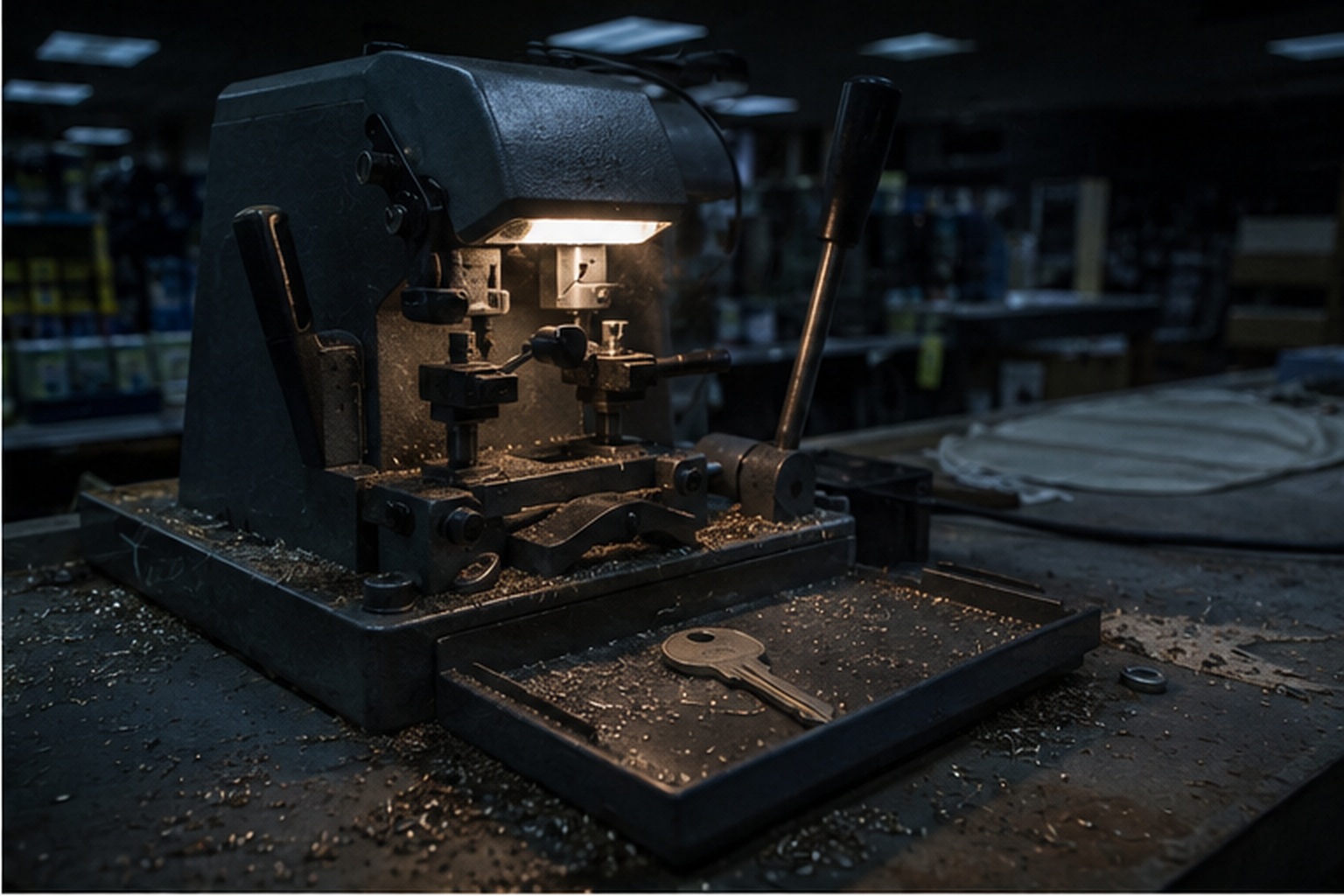
Then the motor started. In the silent camera record, the sound is not available, but the movement is visible. The cutter head shivers. A narrow spray of brass dust appears beneath it. The machine does what it was designed to do, which somehow makes the scene worse.
It performs a small task for no visible person.
The Blank In The Tray
The next morning, the opener noticed the key first.
It was lying in the machine tray, clean enough to catch the overhead light, with fine metal shavings gathered around it. At first glance, it looked like any key copy that had been forgotten by a customer. Then she picked it up and saw there were no teeth.
The blank had been marked by the cutter, but not shaped into a useful key.
There were shallow scratches along one edge, as if the machine had started a copy without an original pattern in place. The cut was not deep enough to open anything. It looked like an imitation of work, not work completed.
That was strange, but not frightening on its own. Employees forget things. Machines can be bumped. Customers sometimes leave half-finished requests during busy hours.
The problem was the shavings. The counter had been wiped before closing. The tray had been empty. The fresh brass dust was exactly where it should have been if the machine had run in the night.
No Entry Logged
The manager checked the alarm report before reviewing the camera record. That was the practical order. If someone had gone into the back room, the system should have shown it.
It did not. The back-room door sensor stayed closed from 9:16 p.m. until 7:03 the next morning. The rear exit opened only when the last employee left and when the opener arrived. The front doors remained locked. The motion sensor nearest the service counter did not mark a person passing through.
The camera record added the part nobody wanted.
For several minutes before the machine light came on, the store looked ordinary and empty. There was a faint reflection from the pizza place sign outside. There were tool handles hanging in rows. There were stacked buckets near the paint counter and a ladder folded against the wall.
Then the key machine activated. No hand enters the frame. No sleeve crosses the counter. No employee appears from the back room. The machine simply wakes, cuts, stops, and leaves the blank in the tray.
The Key That Opened Nothing
Staff tried the blank in the obvious locks, partly because they knew it was foolish and partly because nobody wanted to admit the alternative feeling.
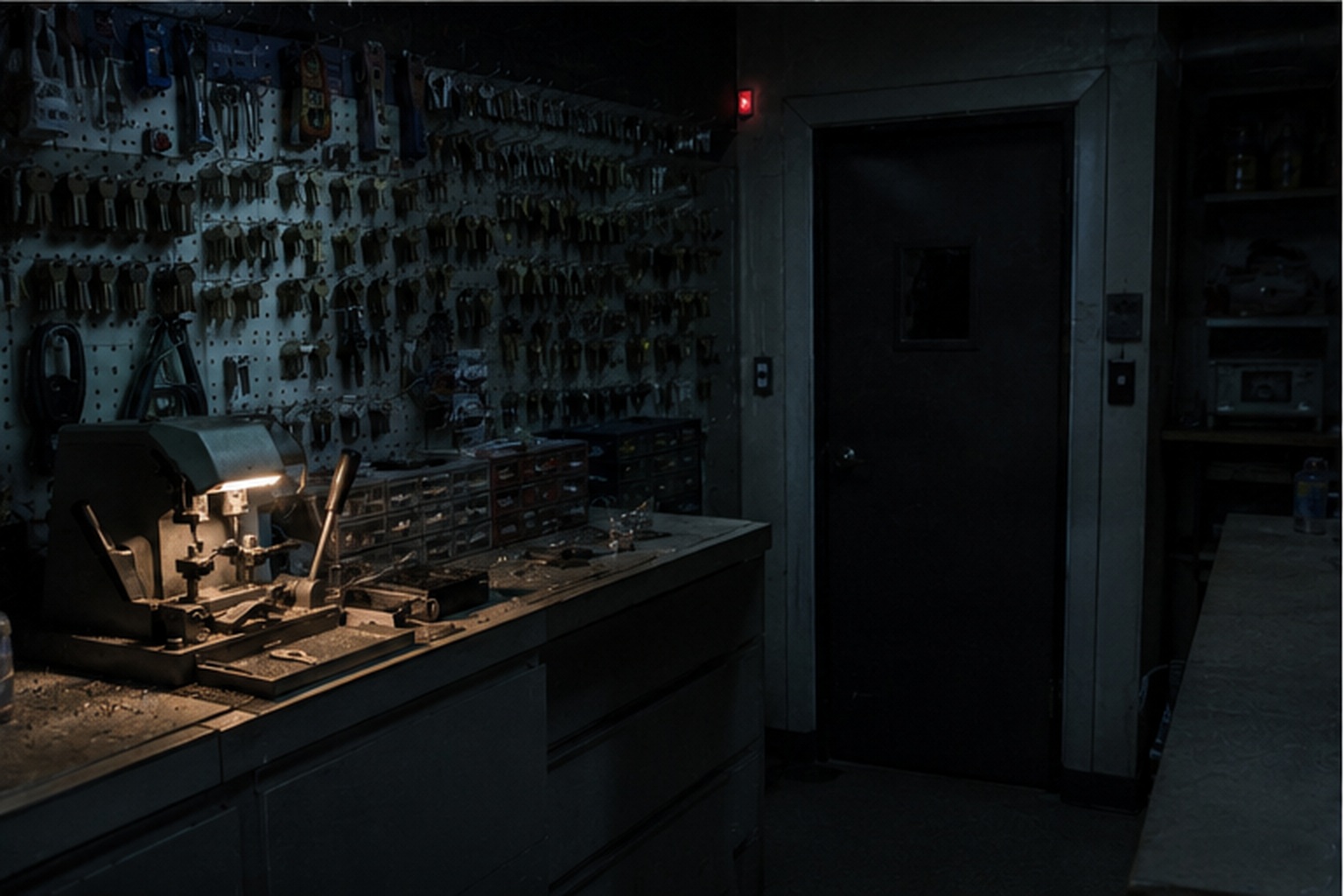
It did not open the front door. It did not fit the back room. It did not match the office, the padlock cabinet, the glass case, or the old restroom lock in the hallway. It appeared to be a common house-key blank, but the edge was wrong in a way that made it useless.
The assistant manager said it looked like the machine had been asked to copy a key that was not there.
That sentence stuck. A useful key would have been easier to explain. A prank might make a copy of the store door. A thief might cut a working key. A careless employee might start a customer order and leave it behind.
A blank key with the suggestion of teeth felt like a message that had failed to become readable.
It was a piece of metal shaped by intention, but not enough intention to serve any purpose.
The Names On The Key Board
After the camera record spread among employees, people began remembering older stories about the store.
The building had once held a locksmith counter before the chain bought it. Older customers still came in asking for the man who used to run it, though he had retired years earlier and later died. One employee remembered finding labels in the back room with handwritten names for apartments that no longer existed. Another said the key board sometimes rattled when the air conditioner started.
Those details may mean nothing. Still, the night record made the pegboard look different. Rows of blanks hung like tiny teeth along the wall. Each one had the potential to become access to a house, a garage, a school locker, a deadbolt, a room that was supposed to remain private.
Keys are ordinary until they appear where nobody made them.
The blank from the tray was placed in a small envelope and taped inside the manager's desk. Not as a relic, exactly. More as something nobody wanted loose in a drawer.
Possible Explanations
There are normal ways to account for parts of the event.
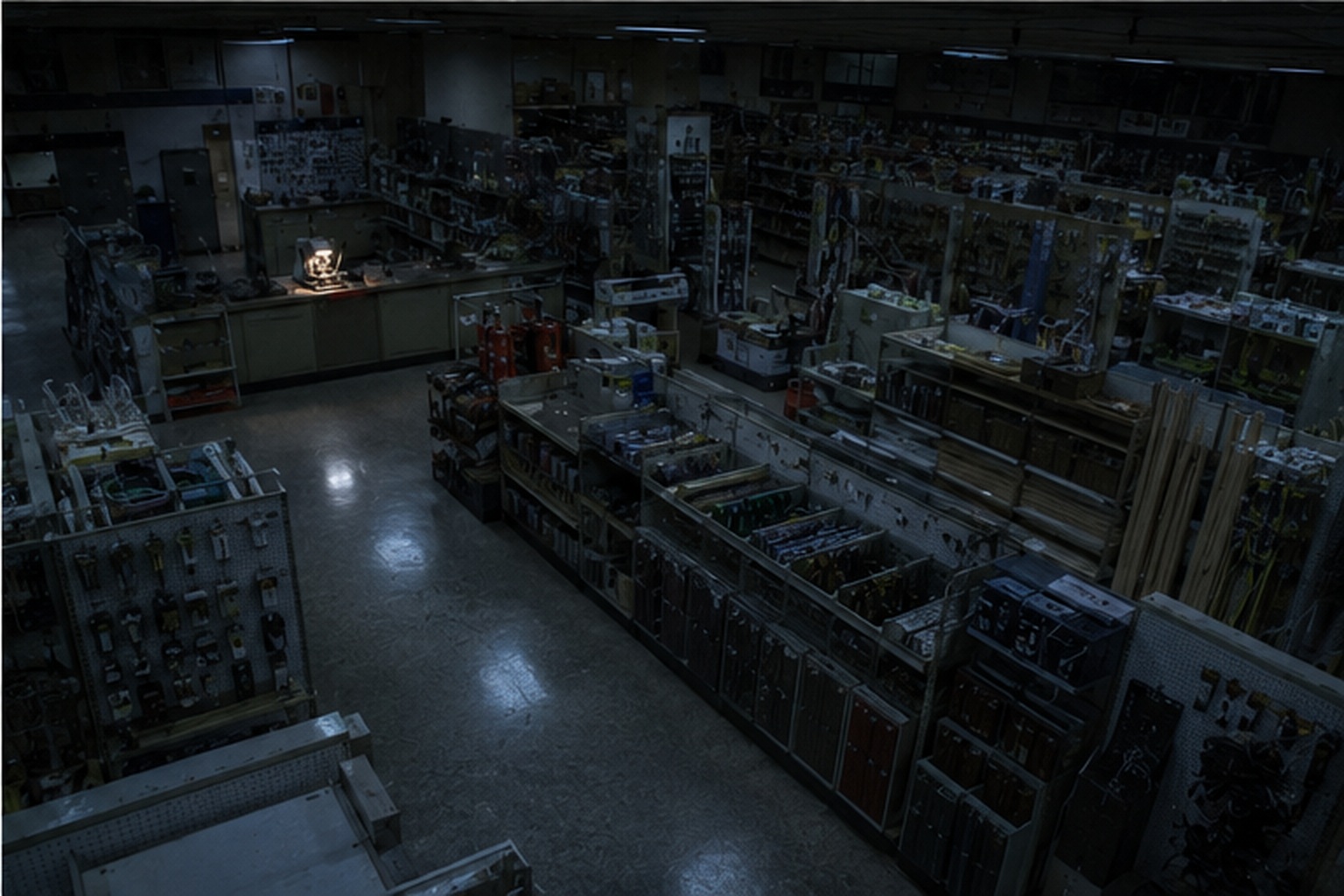
The machine may have had a stuck switch or a failing relay. A vibration from the building could have shifted a blank already left in the clamp. Some models have lights that can come on with a power fluctuation. A cutter motor can spin briefly if a control fails in the wrong position.
The sensor log is helpful, but not magical. It can miss a door that never opens. It cannot say whether a blank remained in the machine from earlier. It cannot identify a maintenance fault or a human mistake made before closing.
The blank might have been loaded by an employee during a busy afternoon, forgotten, and dragged lightly by a cutter that activated later.
That explanation is possible. It just does not settle the image of the empty counter, the small light, and the machine doing careful work in the dark.
What The Camera Left Behind
The store did not shut down after the incident. By the next weekend, customers were again asking for paint rollers, picture hooks, drain cleaner, and copies of keys they carried in their pockets.
The machine kept working. Employees joked about not leaving blanks in the clamp. Someone taped a note beside it that said to check the power switch twice.
But closing changed.
The last person out began looking toward the service counter before setting the alarm. The assistant manager started wiping the tray even when it was already clean. The opener would pause at the pegboard and listen for the smallest hum.
Nothing else as strange was recorded. That almost made it worse. A machine that runs every night becomes a repair problem. A machine that runs once, makes one useless key, and falls silent again becomes a story people test against memory.
The blank stayed in its envelope.
It had no teeth and opened nothing. Yet everyone who handled it seemed to understand the same uncomfortable thing: something in the closed store had wanted a key badly enough to start the machine, but not enough to know the shape of the lock.