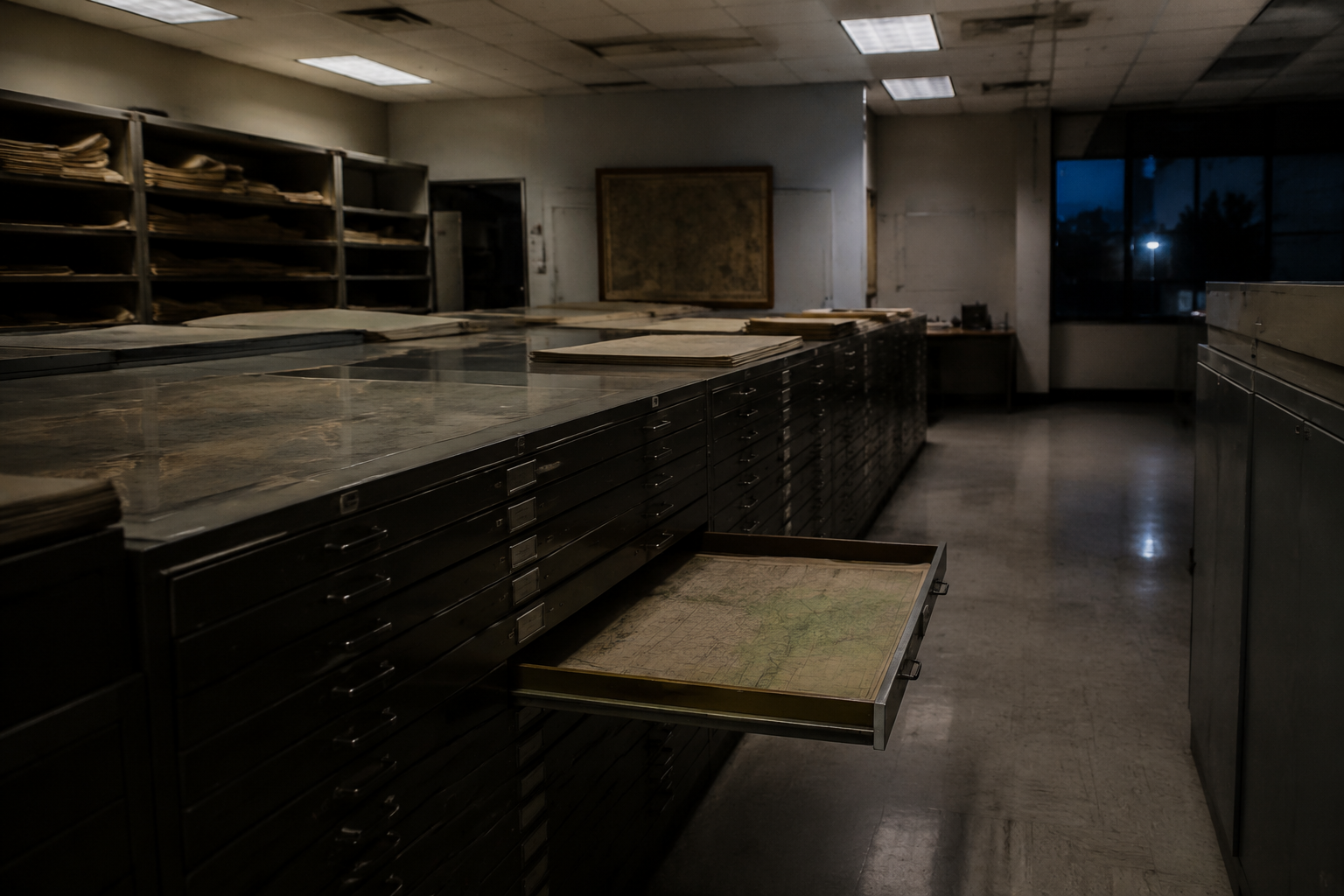
A flat-file drawer in a closed county map room was the first detail people noticed in the after-hours camera account. The drawer was not wide open. It was pulled out just enough to catch a strip of weak ceiling light across the metal face. On its own, that could have meant nothing more than a staff mistake. What made the scary reconstructed moment last was the badge log, because according to the account, no employee entry appeared between the time the archive closed and the moment the drawer was seen open.
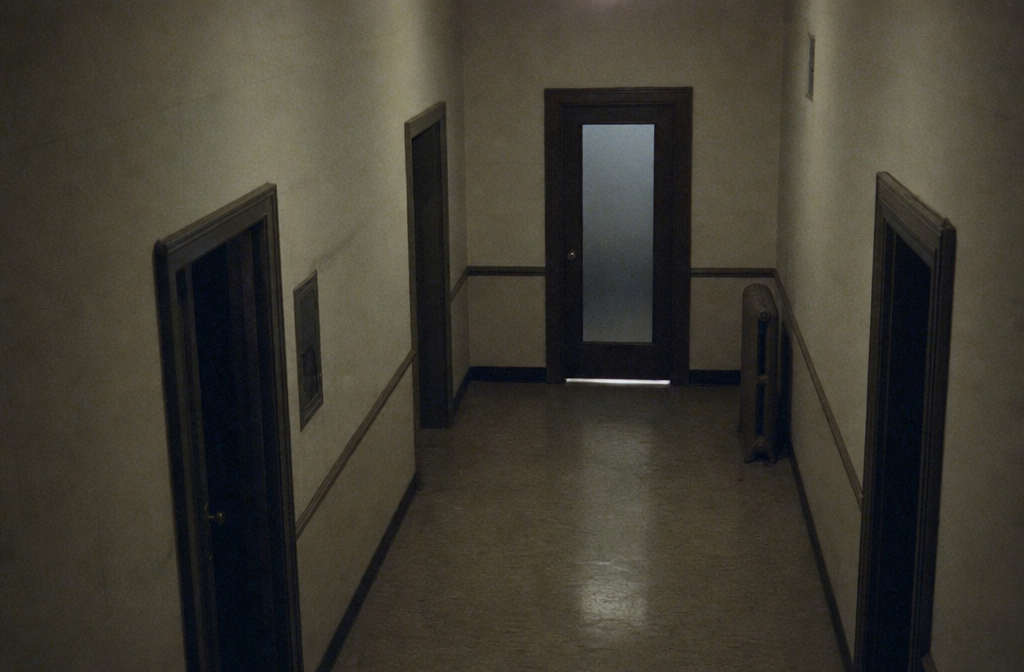
WHAT THE CAMERA ACCOUNT DESCRIBES – A closed county archive map room after public hours. – One shallow flat-file drawer appearing open on the overnight camera. – A short camera gap before the drawer position changed. – A hallway light line visible under the locked door. – A dark shape near the far cabinets that some viewers interpreted as a figure.
The incident is best treated as a recreated scary moment and editorial reconstruction, not verified a detail people read as anything supernatural. Still, the details explain why the story kept being passed around.
1. The Drawer Was Not the Kind Staff Usually Left Open
County map rooms are usually arranged around flat-file cabinets: wide, shallow drawers made for storing maps, plats, survey sheets, and old property records. In the account, the drawer was not left hanging from the cabinet in a careless way. It sat open only a few inches, as if someone had pulled it slowly and then stopped. That small angle is what made the frame feel strange to people who saw the still image later.
A fully open drawer would have been easier to dismiss as a mistake from the afternoon. A barely open drawer suggested a more recent movement, or at least gave viewers a reason to look closer. The archive workers reportedly said the drawer belonged to a cabinet that was normally checked before closing because it sat near a narrow walking path. That does not make the account impossible to explain.
It simply gives the story its first hook: a small object in the wrong position.
2. The Badge Log Was the Detail People Came Back To
The strongest part of the account is not the drawer. It is the access record. According to the local version, the archive door used an employee badge reader after the public counter closed. The log reportedly showed the closing employee leaving, then no new entry before the overnight camera frame showed the drawer partly open.
That is the sort of detail that makes a story travel because it creates a practical contradiction. If someone entered, why did the door not record it? If nobody entered, why did the drawer change position? There are ordinary possibilities. Badge systems can miss events, especially if a door is held open, if a reader fails, if the system is synced later, or if a staff member uses a maintenance key. A scary reconstructed moment can also grow cleaner as it gets repeated.
The version people remember may not include every boring administrative detail. But even with those caveats, the badge-log angle gives the account more shape than a simple “drawer moved” claim.
3. The Camera Gap Made the Change Feel Less Mechanical
The account also describes a short gap in the overnight camera images. That gap is important because it prevents the story from being settled by motion alone. If the camera had recorded the drawer sliding out clearly, the explanation might have been easier: a person, a vibration, a loose rail, or a cabinet problem. Instead, the story says the camera feed skipped or failed for a short period, then returned with the drawer in a different position.
A camera gap is not automatically suspicious. Cheap security systems drop frames. Storage devices overwrite badly. Network cameras can freeze when a connection stutters. Compression can also make a still frame look like a clean before-and-after event when the actual change happened gradually. That is the most reasonable mundane explanation.
Still, the camera gap changed the way people read the account. It turned the drawer from a minor after-hours mistake into a sequence with a missing middle.
4. The Dust Line on the Handle Became the Quiet Evidence
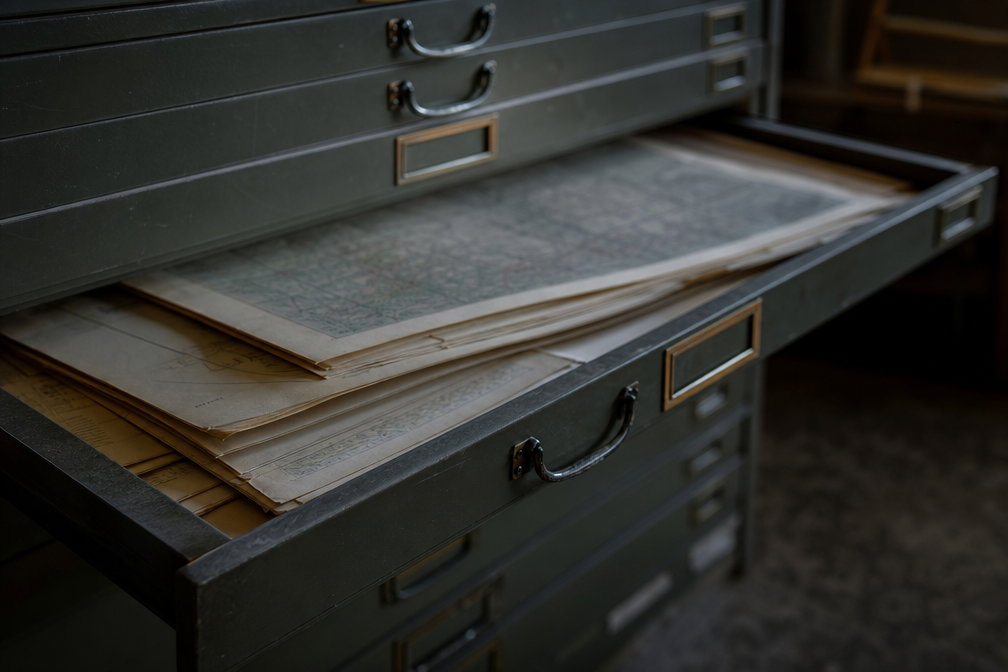
The drawer handle reportedly carried a thin dust line. That may sound like a small detail, but in an archive setting, small details are often what people notice first. Old map rooms are full of dust, paper fiber, cabinet residue, and faint marks left by ordinary handling. In the account, a morning staff member noticed the dust line on the drawer face looked broken, as if the handle had been touched or the drawer had shifted recently.
That does not prove much by itself. Dust can be disturbed by cleaning, air movement, vibration, or a sleeve brushing the drawer earlier in the day. The drawer may also have been left slightly open before closing and only noticed after the camera images was reviewed. But the dust line gave the story a physical detail outside the camera frame.
It was not only “the camera file looked odd.” It became “the drawer looked recently disturbed.” That difference matters for reader attention because it adds a second clue.
5. The Shape Near the Cabinets Was Not the Whole Story
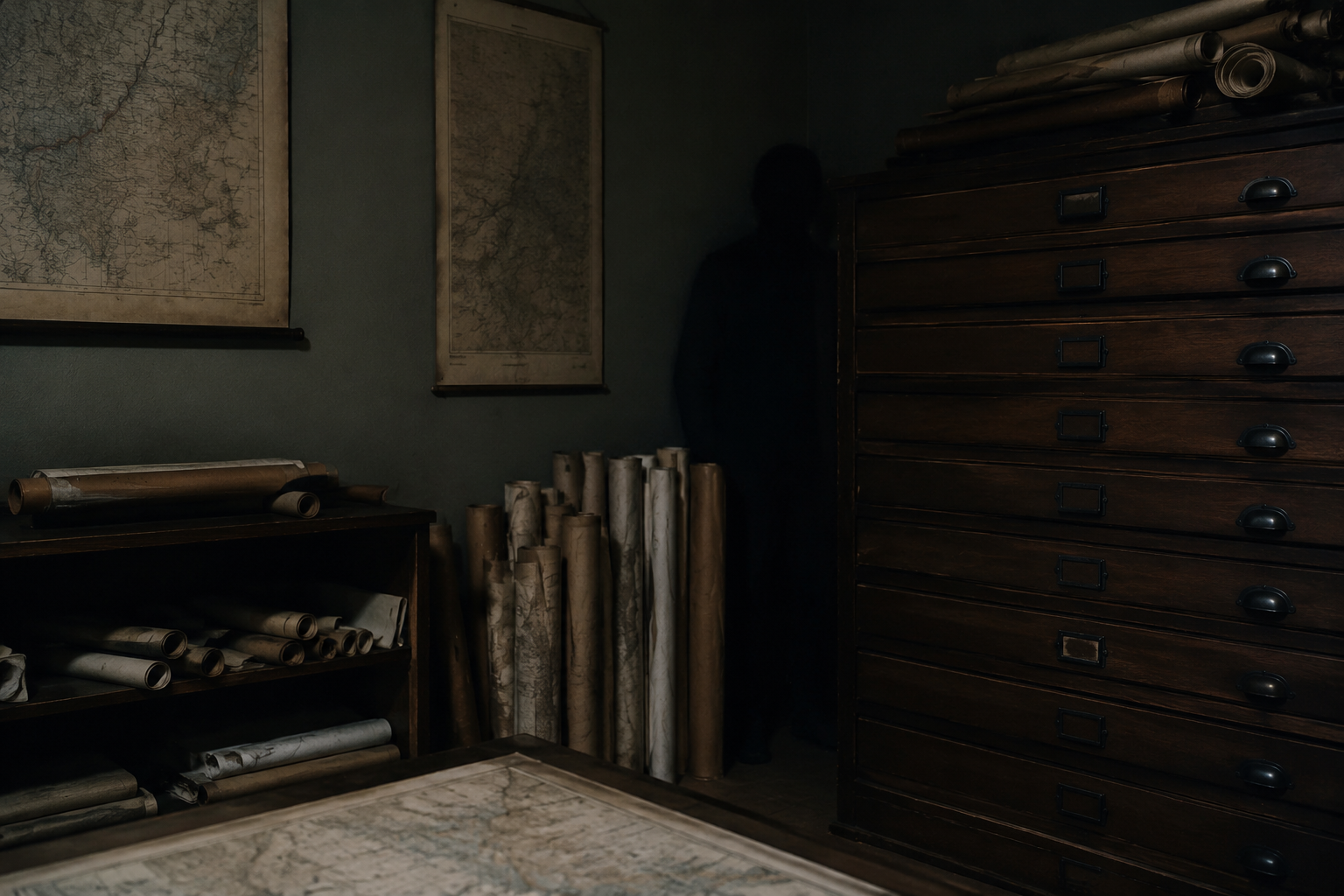
The most shared still from the account was not only the open drawer. It was the far-corner frame. Some viewers said a dark, human-shaped patch appeared near the rolled-map tubes and the cabinet edge. Others argued it was a stack of tubes, a coat-like shadow, compression noise, or a reflection from the hallway glass.
That disagreement is probably why the account survived. If the shape were clear, the story would feel staged. If there were no shape at all, the drawer might not hold attention. Instead, the possible figure sat in the middle: visible enough for some people to point at, vague enough for others to reject.
That is the exact place where many local camera stories live. The article does not need to claim the shape was an apparition. It only needs to explain why people kept returning to that corner after noticing the open drawer.
Why a Simple Staff Mistake Still Fits Part of the Account
The simplest explanation remains a staff mistake. Someone may have left the drawer unlatched before closing. A cleaning worker, maintenance employee, or supervisor may have entered by a method not reflected in the remembered badge log. The drawer slide may have been loose. A small vibration from an HVAC unit, door closure, or nearby equipment could have shifted a shallow drawer that was already sitting unevenly. The camera gap could be ordinary network failure.
The far-corner shape could be shadow, furniture, rolled maps, or compression. Those are all reasonable possibilities. A careful WeirdWitnessed article should include them because the point is not to force a supernatural conclusion. The point is to understand why this recreated scary moment felt unresolved to the people who repeated it.
Why the Story Still Works as an Archive Mystery
The best local mysteries are not always the loudest ones. Sometimes they are built from small mismatches. A drawer sits at the wrong angle. A badge log does not show the expected entry. A camera gap removes the moment that would have answered the question. A dust line looks newly broken.
A corner shadow gives the story a face without giving it certainty. That is why the map room account fits WeirdWitnessed better as an archive-style reconstruction than as a claim of proof. It is strange because the practical details do not line up cleanly in the remembered version. It is also safe to question because every strange detail has at least one ordinary explanation.
The space between those two facts is where the story gets its pull.
The Detail That Makes Readers Look Twice
The image people remember is the open drawer. But the detail that makes them read longer is the access log. A moving object can be explained quickly. A missing entry takes more work. That is the reason this account makes a better article-link post than a simple apparition image. The Facebook hook does not have to say a ghost opened the drawer.
It can say the stranger part was that the room was supposed to be empty. That gives the reader a question the article can actually answer with context, evidence, and doubt.
What Remains Unresolved
There is no need to treat the map room account as noted paranormal evidence. It works better as a cautious local mystery: one drawer, one camera gap, one badge log, and one ambiguous shape near the far cabinets. Maybe the explanation was ordinary. Maybe the story changed as people retold it.
Maybe the camera images looked stranger in a single still than it did in motion. But the account kept circulating because the details did not resolve in the order people expected. If the drawer was already open, why did no one notice it before closing? If someone entered, why did the remembered badge log stay empty?
And if the corner shape was only shadow, why was that the frame everyone kept saving?
Reader Context
This Weird Witnessed story is an editorial reconstruction, written as eerie visual storytelling rather than a verified report. For more context, see Apparitions and Hauntings Guide and How WeirdWitnessed Creates Reconstructed Horror Stories.