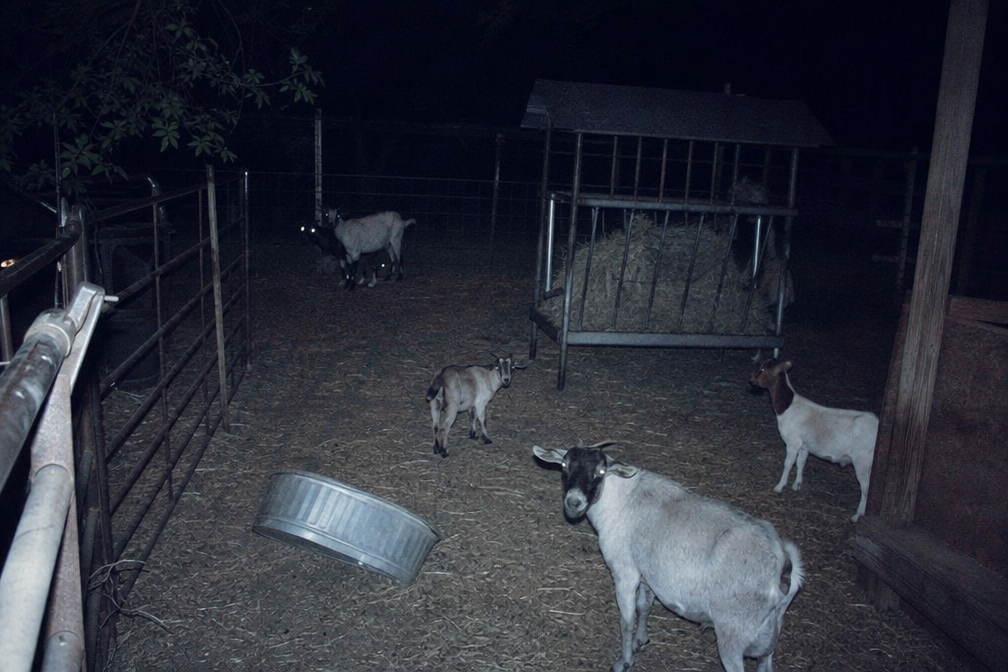
The water trough was not where the feed store owner said it had been left.
In the pen camera camera still, the plastic basin sat several feet from its usual place, angled into the hard-packed dirt as if something had dragged it sideways instead of tipping it over. A mineral block that normally stayed against the rail was flipped onto its clean face nearby.
Most people who hear a story like that reach for ordinary answers first. A loose goat, a stray dog, a raccoon at the feed, or a camera glitch can explain more night camera images than anyone wants to admit.
But the Llano feed store pen camera account keeps drawing attention because the small details do not line up neatly. The low dark shape under the hay rack is not enough to prove a chupacabra, but the trough, block, gap, and posture together make the scene harder to place than a simple midnight animal visit.
1. The Trough Moved Like Weight Was Applied Low
The first detail is the trough itself.
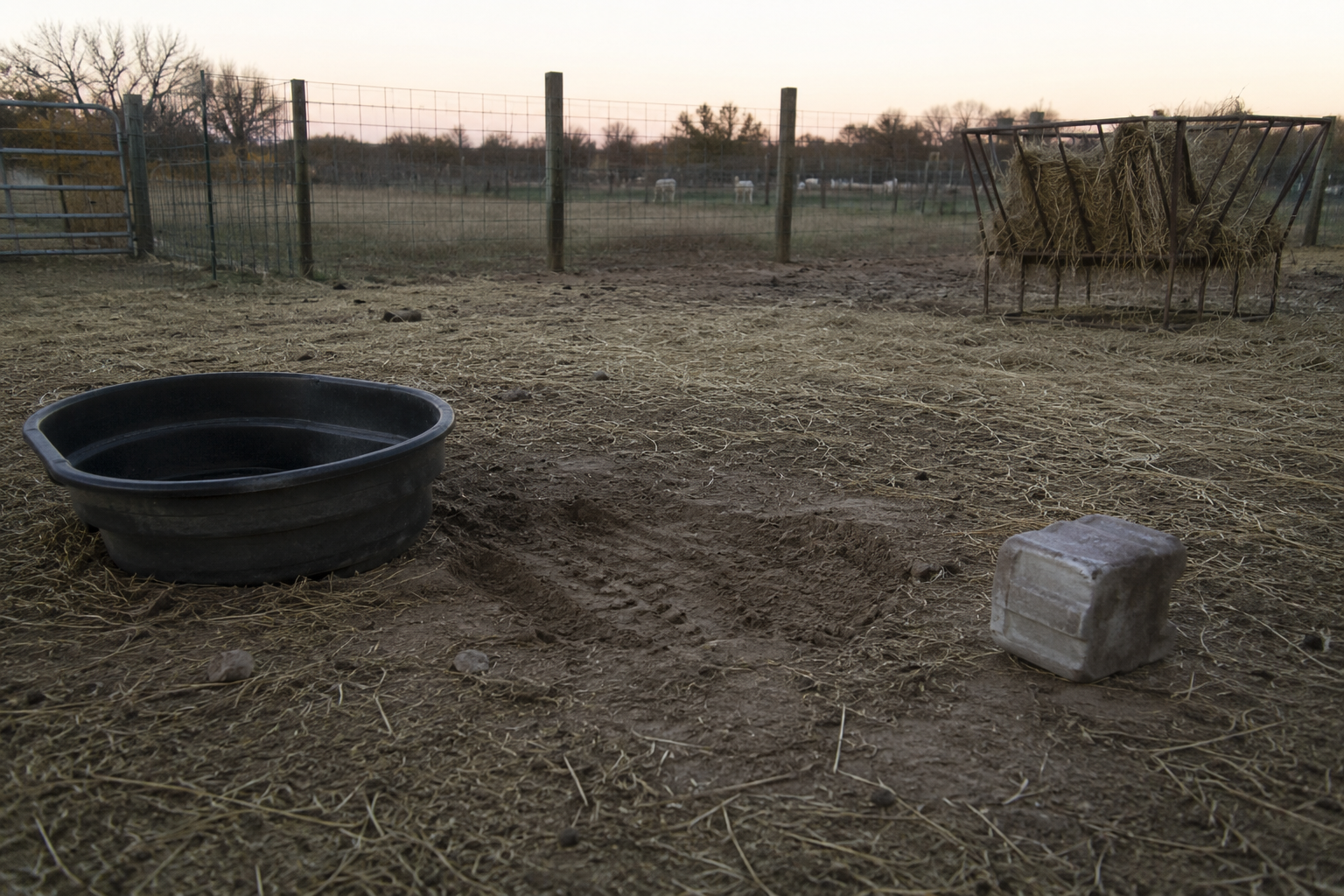
According to the account, the basin was normally set close to the inside rail so goats could reach it without stepping into the service path. By morning, it had shifted out from the rail and left a shallow scrape through the dust.
Goats shove objects. Dogs paw and bite. Wind can move lighter plastic if the trough is empty enough.
What makes this detail linger is the direction of the drag. The reported scrape was not a clean tip mark or splash pattern. It was described as a low, sideways pull, the kind made when pressure stays close to the ground.
2. The Mineral Block Was Turned, Not Scattered
The second detail is quieter but useful.
A square mineral block was found flipped over near the hay rack. It was not broken apart, carried to the fence, or chewed into fragments. It had simply been turned onto a side that had been resting down before.
If this was a normal animal, the block may be the least mysterious part. Goats investigate mineral blocks constantly. A dog or coyote could bump one while moving through the pen.
Still, the block adds sequence. Something disturbed the trough, crossed the same working area, and contacted the block with enough pressure to overturn it.
The account does not show a chaotic pen. It shows a few specific changes clustered near the same corner.
3. The Fence Gap Looks Too Narrow for the Easy Answer
The third detail is the gap.
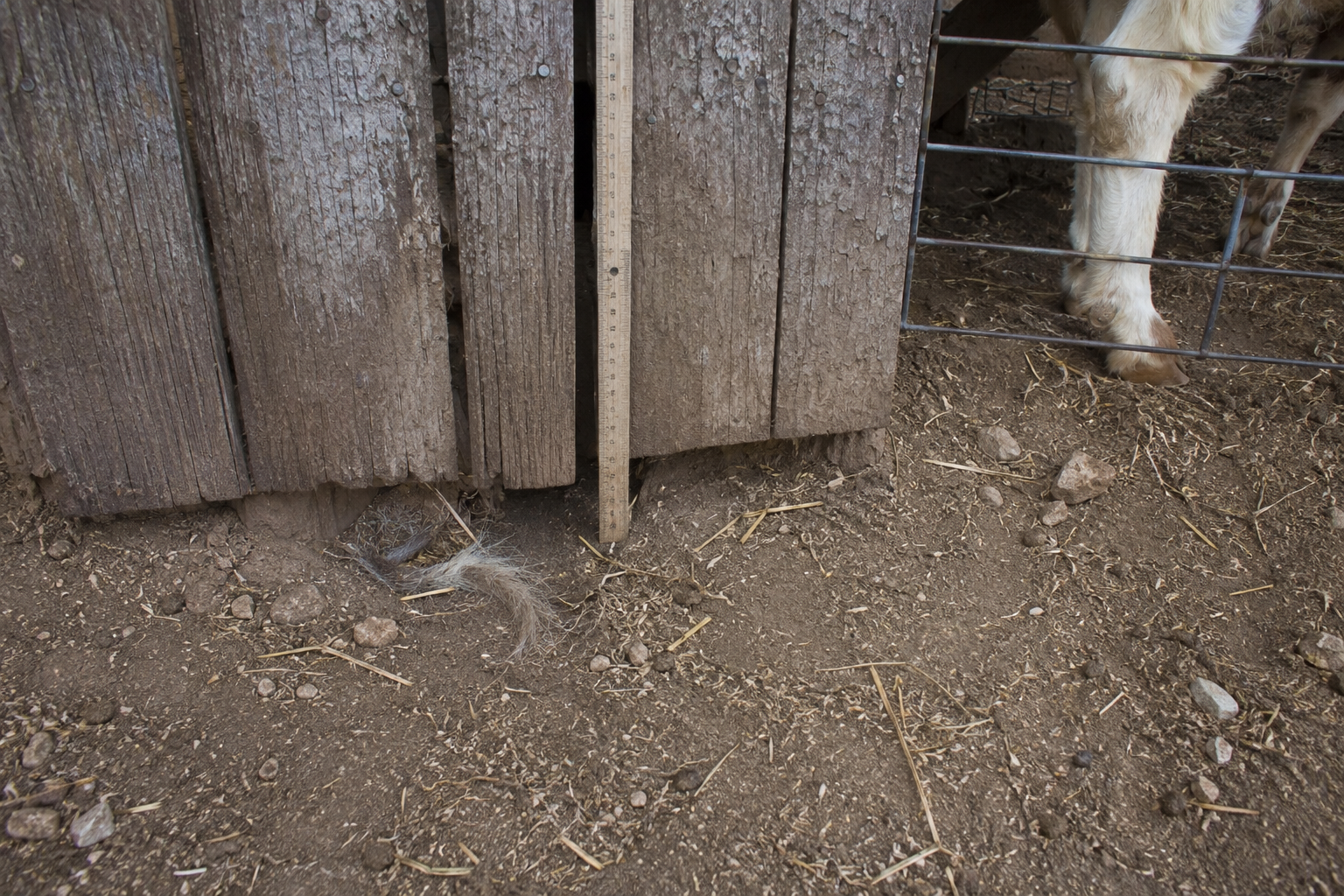
The feed store reportedly had a low opening near one stretch of fence where boards did not meet perfectly. In daylight, it looked like the obvious entry point for a stray dog, raccoon, fox, or thin coyote.
Then measurements complicated the explanation.
The opening was narrow enough that a full-grown dog would have had trouble pushing through without leaving hair, bending wire, or widening the gap. A raccoon could fit more easily, but a raccoon does not usually drag a trough several feet.
A small coyote could be possible. So could a feral cat at the edge of the frame, especially in poor night-camera contrast.
The point is not that the gap proves a monster. It is that the simplest path into the pen does not comfortably match the size and behavior implied by the rest of the scene.
4. The Shape Stayed Under the Hay Rack Instead of Crossing Open Ground
The fourth detail is the most discussed one.
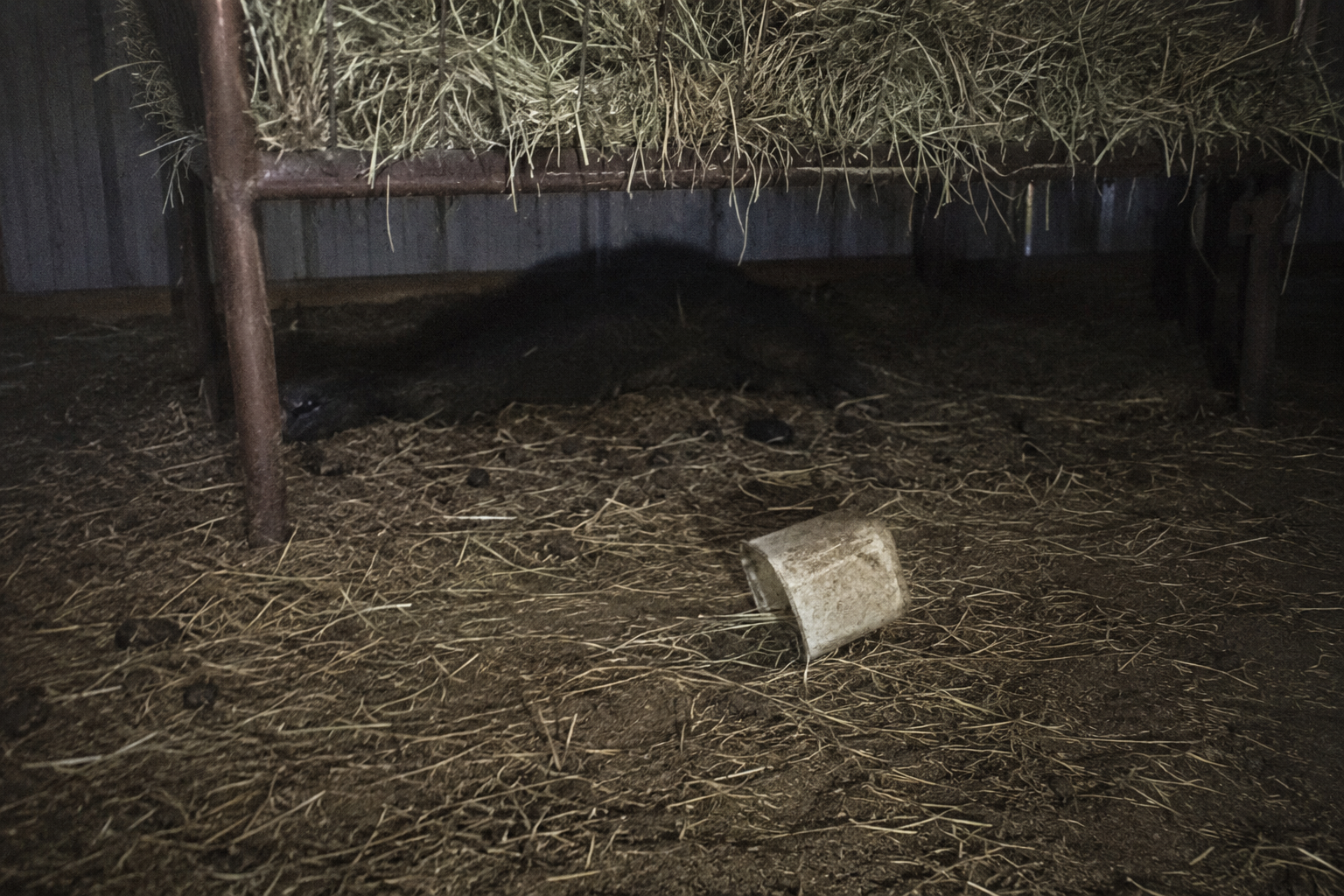
In the camera still, a low dark shape appears beneath or just behind the hay rack. It does not present like a clear animal walking across the pen. It reads more like a flattened mass or crouched body holding to the shadow line.
That may be camera compression. Night camera images can turn moving legs into a single dark smear. Infrared glare can make a normal animal look lower than it is.
Still, the position is strange.
Animals that enter pens usually move along fences, sniff corners, or cross toward food. This shape seems to use the hay rack as cover, staying where the camera has the least clean outline.
That behavior is not supernatural by itself. Predators and scavengers avoid open exposure. But it makes the frame feel less like a passing stray.
5. The Goats Reacted Less Than Expected
The fifth detail is not a scream, a chase, or a dramatic attack. It is the lack of obvious panic.
That absence matters.
If a large dog had forced its way into the pen, most owners would expect the goats to crowd away, kick, vocalize, or keep moving. The account instead describes an unsettled but not wrecked pen, with animals reluctant to approach the hay rack afterward.
There are ordinary reasons for that too. The most intense movement may have happened outside the camera’s active window. The animal, if there was one, may have been small enough not to trigger full panic.
But the subdued reaction fits the low shape better than a loud intruder. It suggests a quiet disturbance, close to the ground, concentrated in one area.
6. The Chupacabra Label May Be a Placeholder, Not a Verdict
Calling the Llano shape a chupacabra is probably premature.
The word carries decades of folklore, from Puerto Rican livestock accounts to later Texas roadside creatures often linked to mange, misidentified canids, and rumor. Once the label appears, people begin looking for a creature that matches the legend instead of studying the camera images.
A better way to use the label is as a placeholder.
It tells us the witness saw something that did not fit the usual categories at first glance: not clearly dog, not clearly raccoon, not clearly goat, not clearly person. The setting matters too. A goat pen, disturbed objects, a low night-camera form, and a rural Texas backdrop naturally invite that comparison.
The cautious position is simple. The camera images does not prove a chupacabra. It shows why the idea was raised.
7. The Most Reasonable Explanation Is Still an Animal
The most reasonable explanation remains an ordinary animal.
A small coyote, fox, stray dog, or raccoon could account for much of the scene, especially if the camera captured only a fragment. Poor night vision makes bodies blur. Fences look smaller or larger depending on angle. Objects that appear heavy may have been partly empty or loose.
There is also the possibility of more than one cause. A goat could have moved the trough earlier. A raccoon could have turned the block. A later animal could have appeared under the hay rack.
That is why this case should not be inflated.
The strongest grounded reading is not that one unknown creature did everything. It is that several small facts resist one easy explanation without more camera images.
8. What Still Makes the Low Shape Hard to Place
Even after the ordinary explanations are put on the table, the low shape remains the detail people return to.
It is not just dark. It is dark in the exact place where the other disturbances seem to point. It appears near the hay rack, close to the overturned block, within reach of the trough’s drag path, and near the section of fence that raises entry questions.
That clustering may be coincidence. Camera clips compress time and attention. Viewers naturally connect dots once they know what changed by morning.
But clustering is also how many genuine animal mysteries begin. The body is not clear enough to identify, the traces are not dramatic enough to settle it, and the witness is left with a short list of details that do not quite agree.
In that sense, the Llano pen camera is less about proving a creature than about showing how uncertainty builds.
9. Why This camera still Fits the WeirdWitnessed Archive
The Llano feed store account belongs in the archive because it is small, specific, and unresolved.
There is no need to add gore, dramatic claims, or a perfect monster silhouette. The unsettling part is the restraint of the evidence: a moved trough, a flipped block, a narrow gap, a dark shape that stays low, and animals that seem disturbed without giving the camera a clear answer.
That is also what makes it useful for readers who care about evidence rather than spectacle.
A hoax would likely offer a better creature. A clear predator camera still would likely end the debate. This one sits in the uncomfortable middle, where ordinary explanations remain available but imperfect.
Maybe the camera caught a small animal at a bad angle. Maybe the objects were moved by separate causes. Maybe a thin, sick canid found its way through a space that looked too tight in daylight.
Or maybe the reason people still discuss chupacabra stories is that rural cameras sometimes capture scenes that do not resolve cleanly, even when everyone involved wants the simple answer.
The Llano shape is not proof. It is a question mark under a hay rack, and for this kind of evidence, that may be exactly why it lasts.
Reader Context
This Weird Witnessed story is an editorial reconstruction, written as eerie visual storytelling rather than a verified report. For more context, see Creatures, Crawlers, and Cryptid Stories Guide and How WeirdWitnessed Creates Reconstructed Horror Stories.