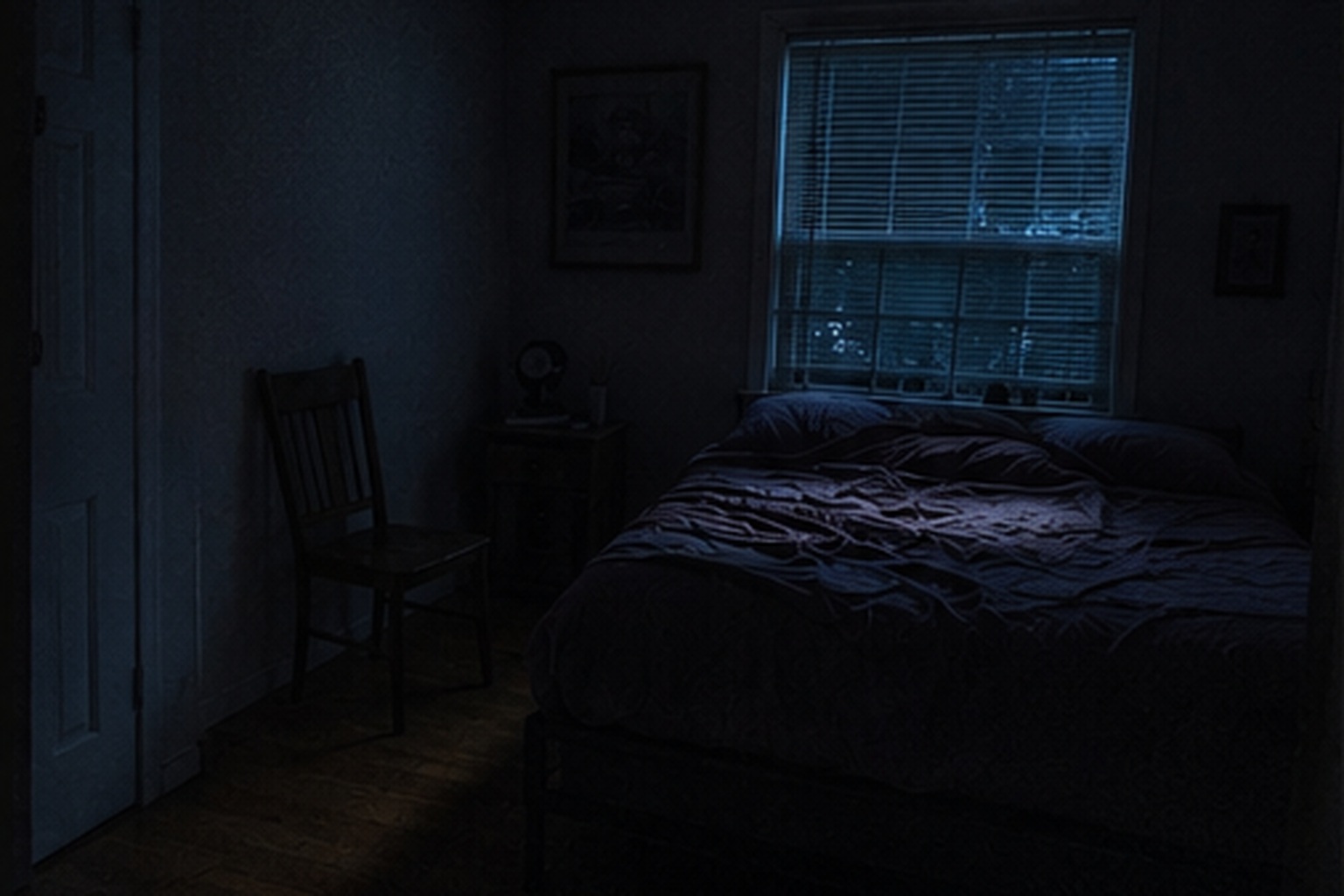
The first thing she noticed was the chair.
It was not an antique. It was not part of any story. It was a plain wooden chair she had dragged into the bedroom because the closet was too full and she needed somewhere to throw clothes before going to sleep.
For two weeks, it stayed where she left it, angled toward the wall beside the bed.
Then, one morning, it was facing her.
The Chair Was Too Ordinary To Be Scary At First
That is why the first morning did not bother her much. A chair can move for stupid reasons. You kick it while half asleep. You hang a coat on the back and the legs scrape across the floor. You forget where you left it because you are tired.
She turned it back toward the wall and went to work.
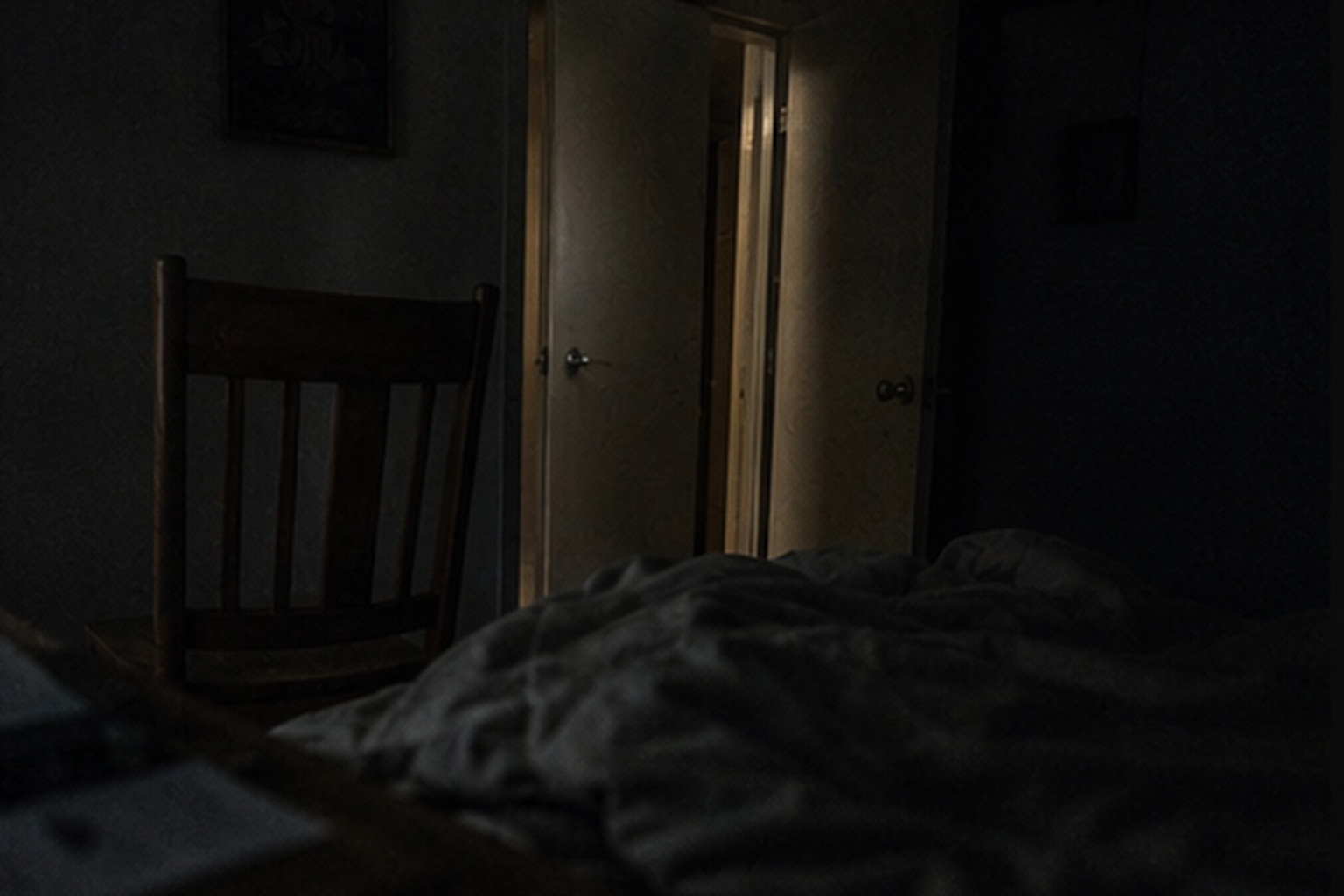
The next morning, it faced the bed again.
This time, the seat was lined up with the pillow, as if someone had sat there and watched the place where her head had been.
She stood in the doorway longer than she wanted to. The apartment was quiet. The hallway light was still on. Nothing had been opened. Nothing had been stolen.
Only the chair had changed.
She Tried To Blame Herself
For the next few nights, she made a small routine out of proving the room was normal.
Before bed, she pushed the chair into the corner. She set the back against the wall. She took a photo of it with her phone. Then she slept with the bedroom door closed.
In the morning, the chair was turned again.
The photo from the night before made it worse. She could compare the angles. The chair had not shifted a little. It had rotated cleanly, carefully, almost respectfully, until it faced the mattress.
She checked the floor. No scratches looked new. No string, no loose board, no tilted rug explained it.
The sensible answer was sleepwalking.
That answer should have helped.
It did not.
The First camera record Only Made The Room Feel Wrong
On the fifth night, she placed her phone on the nightstand and recorded the room while she slept.
The camera saw almost nothing for hours. There was the side of the bed. The thin stripe of light under the door. The chair in the corner, still and black against the wall.
At 3:11 a.m., the phone adjusted exposure.
The chair was no longer exactly where she had left it.
At 3:14, one front leg scraped forward.
The sound was small enough that she did not wake up, but loud enough for the phone microphone to catch it. A dry, wooden drag across the floor.
At 3:17, it moved again.
By 3:23, the chair was facing the bed.
She watched that part three times before she noticed the shape behind it.
The Shape Was Standing Where The Corner Should Have Been Empty
It was not clear at first. The camera was grainy. The corner was dark. Part of the shape could have been the hanging coat on the closet hook.
But the coat did not have a head.
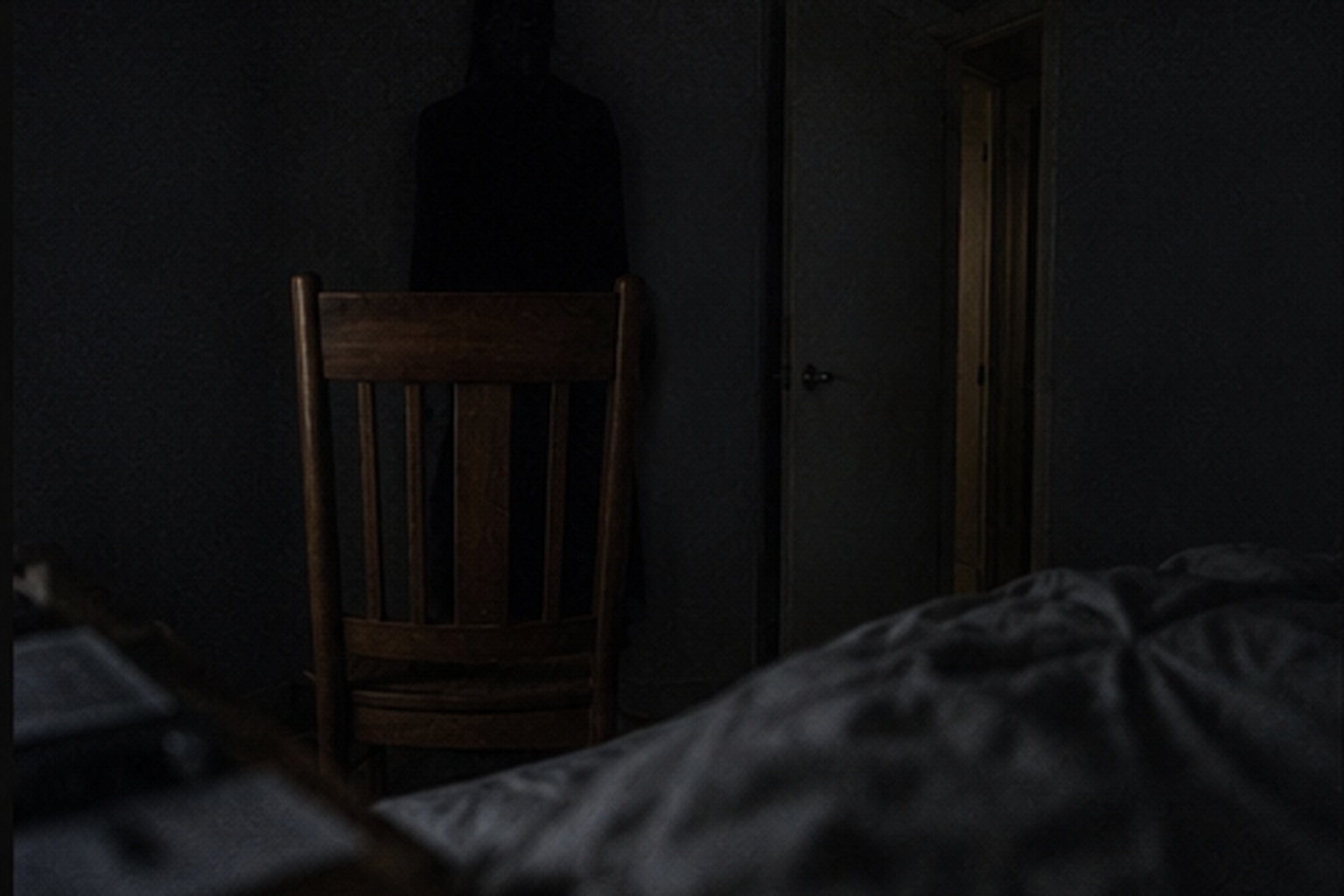
The figure stood behind the chair, pressed into the corner as if it had been there before the camera record began. It was taller than the door handle and darker than the rest of the shadows. No face showed. No clothing detail showed. Only a narrow head, shoulders, and a long body that bent slightly forward.
The worst part was the stillness.
The chair moved in small steps.
The figure never did.
It stood there while the chair turned, as if the chair was moving for it.
The Mundane Explanation Fell Apart Slowly
She sent the camera record to a friend who worked with cameras. He did not give her the answer she wanted, but he did give her a list.
Low light can create shapes. Phone cameras invent detail when they fight darkness. Compression can make a hanging jacket look like a person. Vibrations from the building can move light furniture across smooth flooring.
All of that was possible.
But none of it explained the chair rotating in three separate movements.
None of it explained why the figure appeared darker than the coat in the same corner.
And none of it explained the final sound on the camera record.
At 3:26, after the chair had stopped, something close to the phone whispered once.
It sounded like breath crossing the microphone.
She Slept On The Couch After That
The next night, she did not sleep in the bedroom. She left the chair exactly where it was, facing the bed, and slept on the couch with every light in the apartment on.
At 4:02 a.m., she woke to a scrape from the bedroom.
She did not get up.
In the morning, the chair had been turned back toward the wall.
That should have made the room feel less threatening. Instead it made the whole thing feel more deliberate. The chair had not simply moved toward her. It had been reset, like someone was proving it could face either direction whenever it wanted.
She took the chair outside and left it beside the dumpster.
By evening, it was gone.
For three nights, nothing happened.
The Empty Space Became Worse Than The Chair
On the fourth night, she woke before dawn with the sense that something in the room was arranged wrong.
There was no chair in the corner anymore.
But the corner looked occupied.
Not visibly. Not in the clean way a person stands under a light. It was more like the darkness had a posture. A tall section of it seemed to lean forward from the place where the chair had been, waiting for her eyes to adjust.
She reached for the lamp.
The bulb clicked and did not turn on.
That was when she heard the scrape again.
Not from the corner.
From beside the bed.
What Makes The Recreation So Uncomfortable
The scary part of this story is not that furniture moved. Furniture moving by itself is an old idea.
The scary part is the purpose people attach to it.
A chair facing a bed feels different from a door opening or a cup sliding across a table. It suggests attention. It suggests someone has chosen a place to sit. It turns sleep, the most private and helpless part of the day, into something watched.
That is why the image lingers: the bed, the chair, the dark figure behind it.
The room does not look like a haunted mansion. It looks like an apartment anyone could rent.
That is what makes it work.
The scene also gives the reader something simple to fear after the article ends. Not a complicated mythology. Not a demon name. Just the possibility that an ordinary object in an ordinary room can become a sign of attention. Once that idea is planted, every chair in a dark bedroom starts to look like it has been placed there for someone.
The Last Detail Was The One She Could Not Explain
She eventually moved out before the lease ended. The landlord kept her deposit. Her friends told her that was the worst part of the story because friends say practical things when they do not know what else to say.
A week later, she returned to collect a box from the lobby.
The maintenance man was carrying furniture out of the unit for cleaning. The bed frame. A small table. A lamp with a dead bulb.
Then he carried out a wooden chair.
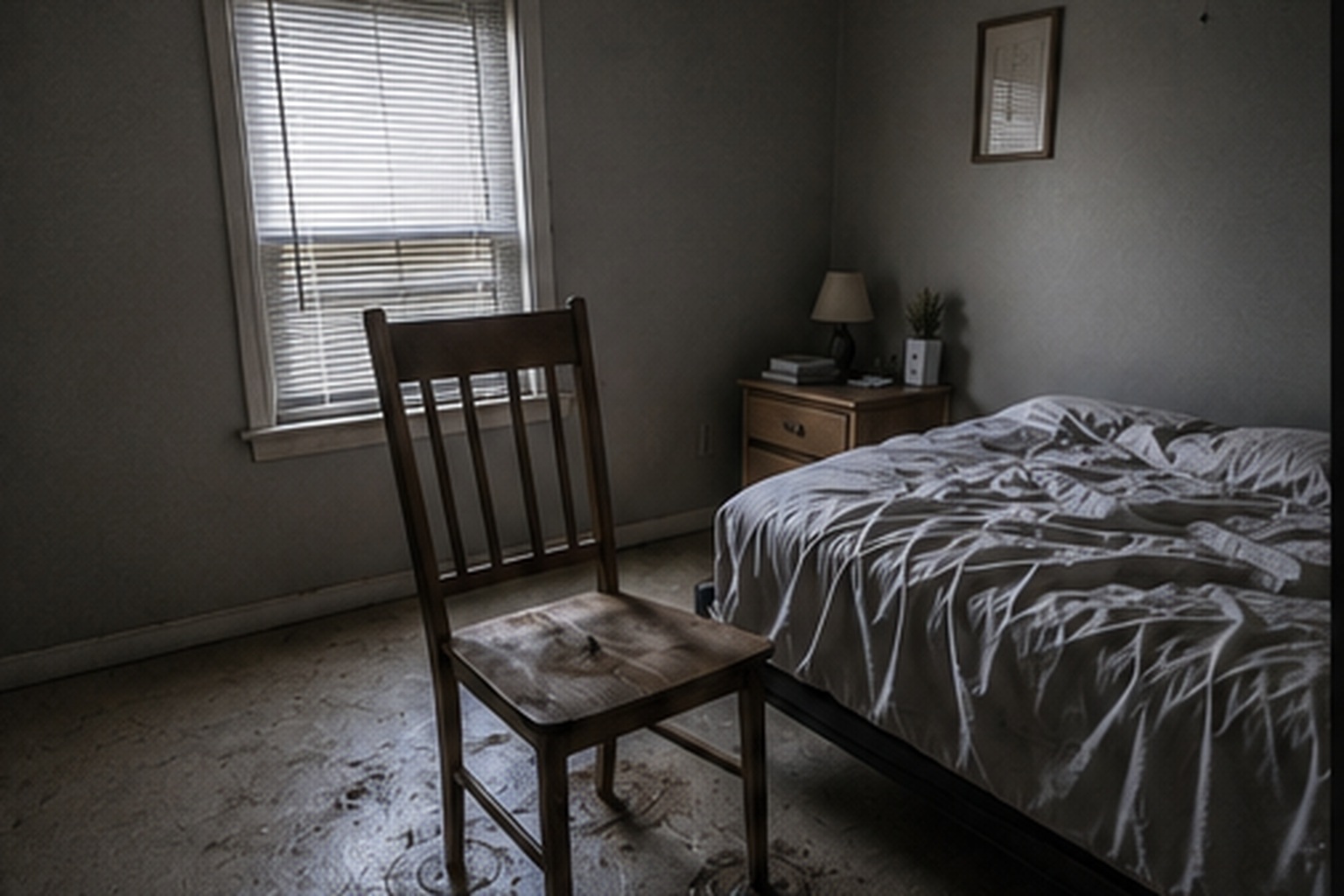
She told herself it was not the same one.
It probably was not.
But when he set it against the hallway wall, the chair slowly settled on the uneven floor until the seat faced her.
And for a moment, before the elevator doors closed, the dark space behind it looked occupied.