The Frame That Was Not Supposed To Matter
The Stillwater Ridge image began as a throwaway frame from a volunteer wildlife camera.
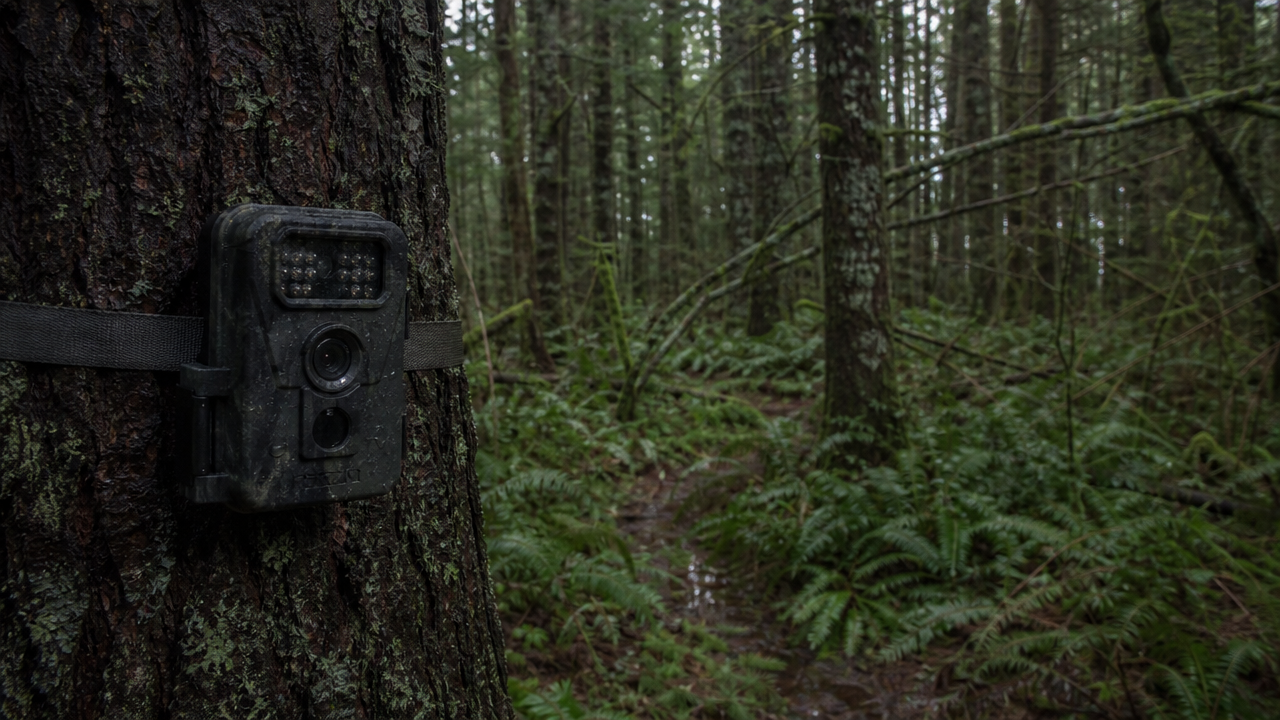
It was not filmed during a sponsored expedition or a dramatic midnight stakeout. The camera had been strapped to a cedar above an old logging cut to monitor elk movement after a washout changed the lower trail.
For weeks, it recorded deer, coyotes, black bears, rain blur, and branches swinging too close to the lens.
Then one image appeared between an empty frame at 3:14 a.m. and another empty frame at 3:15 a.m.
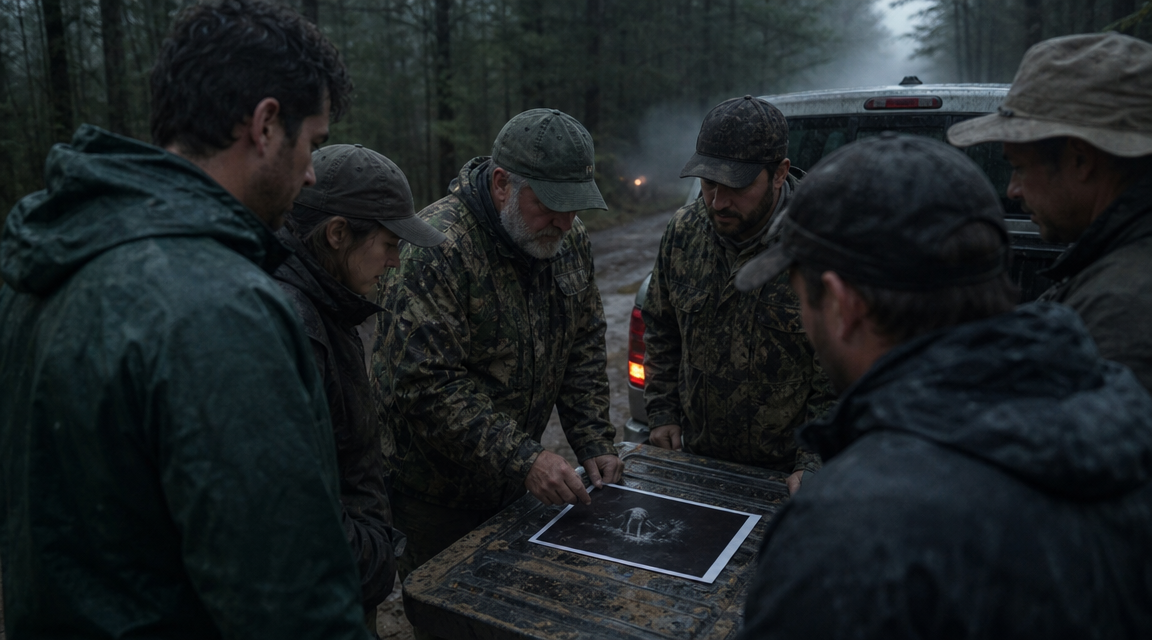
A large dark figure stood near the far edge of the trail corridor. It seemed upright. It seemed broad. It was too vague to call proof, but too structured to delete without discussion.
That is why the argument started.
A Ridge That Makes Scale Unreliable
Stillwater Ridge is a bad place for clean measurements.
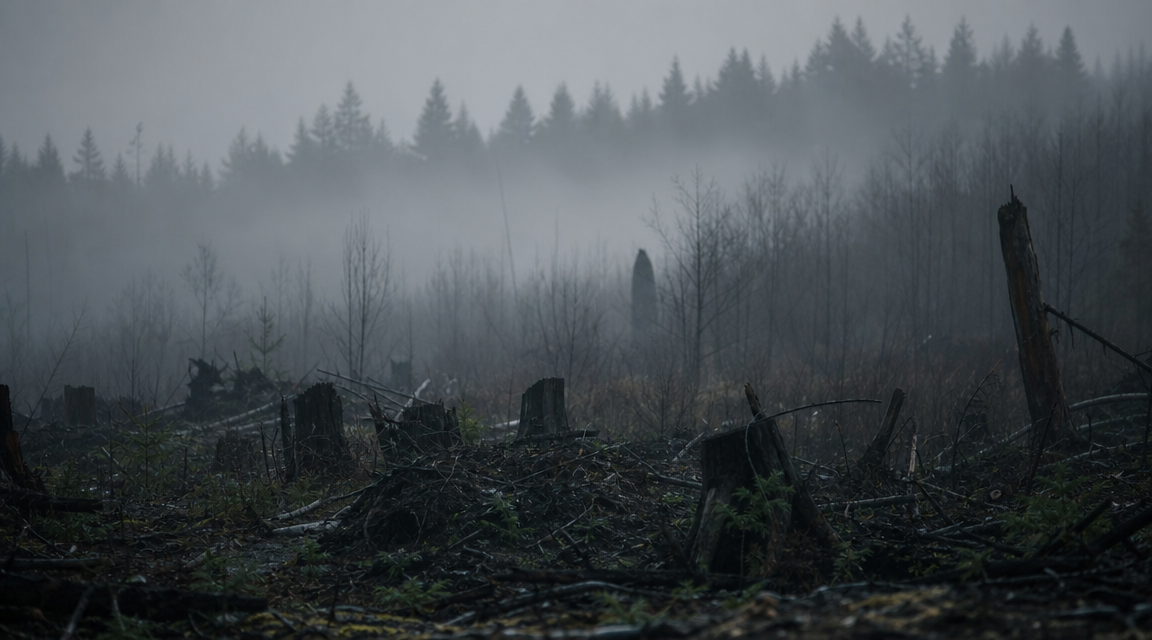
The camera looked across a sloping bench where alder whips, young firs, old stumps, and wet salal overlapped in uneven layers. A subject ten yards behind the first brush line could appear to stand at the brush line. A stump on the downhill side could look taller than it was.
The camera was mounted low because the team wanted animal chest height, not a human surveillance angle. That made vertical shapes seem more imposing.
Rain added another problem. Moisture softened the lens and the infrared flash lit the damp air, leaving hard contrast in some places and gray mush in others.
Several searchers still argued that the shape occupied open ground. If they were right, it was unusually tall and wide. If they were wrong, the frame could be brush, stump, animal, or distance playing tricks.
Why Bear Did Not End The Debate
The first serious explanation was black bear.
That was reasonable. Bears were common on the ridge, and the same camera had captured one near a rotten log earlier that week. A bear standing upright can look strangely human for a second, especially in infrared.
Two team members saw a forward-heavy torso and no clear neck. They thought the animal had paused to scent the air before crossing.
Others disagreed.
The figure did not lean back like many upright bear images. There was no obvious muzzle. The shoulder line looked squared rather than tapered, and the lower half seemed separated enough to suggest a stride.
Nobody could say bear was impossible. The known bear frames from the camera simply did not match well enough to close the file.
For skeptics, an imperfect bear remained more likely than an unknown primate. For believers, the mismatch was exactly the point.
The Human Answer Was Also Awkward
The next explanation was a person in dark rain gear.
Stillwater Ridge is remote, but not sealed. Hunters, mushroom pickers, survey crews, and trespassers all use old roads in the wider area. A person could have stepped into one frame and been gone before the next trigger.
That theory fit the upright posture.
It did not fit everything else.
No fresh vehicle sign was noted at the lower gate that morning, though the road was muddy enough that tire marks should have stood out. No nearby camera caught a person entering or leaving. The apparent shoulder width also bothered the team. If it was a human, they were bulky, carrying something, or distorted by blur.
The human explanation remains strong because humans are common and Sasquatch is unproven.
Still, for the people who walked the site, it felt incomplete rather than satisfying.
The Measurement That Split The Team
The deepest division came from one question: where were the feet?
A retired surveyor in the group used a leaning alder, a cut stump, and the bend in the trail to estimate the figure’s position. His estimate placed it closer to the camera than skeptics preferred. At that distance, the figure became taller and broader than a normal hiker.
Another member called the estimate guesswork. In a compressed night image, he argued, a small depth error could change everything.
Both sides had a case.
Trail camera frames tempt people to treat pixels like tape measures. Yet field familiarity also matters. These were not strangers arguing over a random internet image. They had walked the bench, stood near the alder, and taken daylight reference photos.
The dispute became less about Bigfoot than about uncertainty.
How much can one flawed frame carry before caution has to take over?
What The Follow-Up Search Found
The team returned within forty-eight hours, after more rain crossed the ridge.
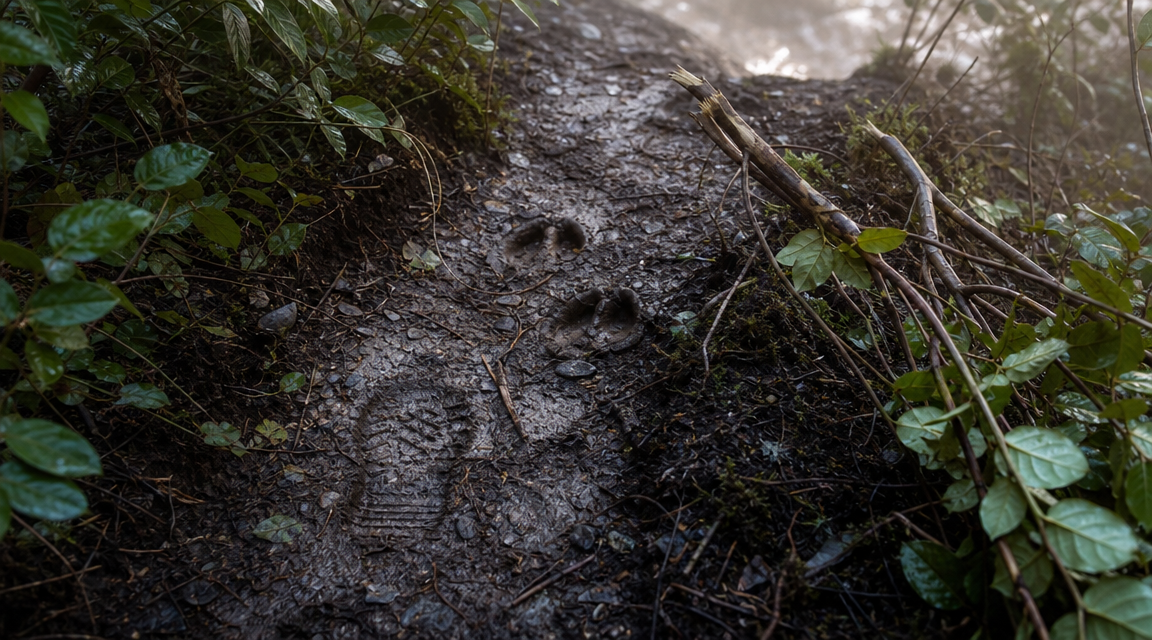
They did not find a clean giant footprint. That absence matters. It prevents the Stillwater frame from becoming a track-supported case.
They did find scuffed mud, disturbed salal, and one broken branch near the estimated crossing point. Unfortunately, those signs were too general. Elk could have made them. A bear could have made them. A person pushing through wet brush could have made them.
The more interesting discovery was negative.
Two other cameras covered likely exit routes. Neither recorded a person, bear, or obvious large animal in the same window. Trail cameras miss things all the time, especially in rain, but the missing follow-up frames frustrated everyone.
A bear should have gone somewhere. A trespasser should have followed a road or trail. Instead, the ridge offered one image and then silence.
Silence is not proof. It is where arguments grow.
Why The Frame Stayed In The Sasquatch File
People who keep Stillwater Ridge in the Sasquatch evidence file usually point to proportion.
They mention the blocky upper body, the apparent arm length, the low head position, and the way the figure seems to stand in the trail without the reflective clutter common in rain gear.
The best argument is not that the image is clear. It is that the image is stubborn.
It resists a clean bear match. It resists an easy trespasser match. It occurred in rough weather, on a wildlife route, with no neat sequence before or after.
That does not make it a detail people read as Bigfoot.
It makes it a possible case worth preserving honestly: ambiguous, limited, and unresolved.
The image does not show a monster posing in the trees. It shows a large upright shape partly hidden by rain, distance, and brush. For some researchers, that is enough to keep asking questions.
The Responsible Ending
Skeptics are right to be careful.
A single trail camera frame is weak evidence. There is no gait sequence, no reliable height marker, no independent witness beside the camera, and no physical trace that can be tied uniquely to the shape.
The human eye is eager to complete patterns. Branches become limbs. Shadows become shoulders. Wet bark becomes hair. Once someone says “Bigfoot,” the viewer starts searching for Bigfoot-shaped details.
Stillwater Ridge has all of those hazards.
Yet careful skepticism does not require pretending every oddity is solved. The honest conclusion is narrower: the frame is insufficient, not worthless.
The search team never reached agreement. Some stayed with bear. Some stayed with trespasser. A smaller group marked it possible Sasquatch, unproven.
The disagreement also changed how they handled later cameras. They began adding reference poles, daylight comparison shots, and wider overlapping coverage wherever possible. In that sense, the disputed frame improved the team’s methods even if it did not answer the larger question.
It reminded them that evidence is not only about what appears in the dark. It is also about what investigators prepare before the dark arrives. A mystery recorded without scale, sequence, and context will always be easier to argue about than to solve.
That may be the most responsible ending available.
The Stillwater image divided the team because it sits in the uncomfortable middle. It is too strange for easy dismissal and too limited for confident belief. It remains one rain-blurred question standing at the edge of the timber.
Reader Context
This Weird Witnessed story is an editorial reconstruction, written as eerie visual storytelling rather than a verified report. For more context, see Bigfoot and Sasquatch Stories Guide and How WeirdWitnessed Creates Reconstructed Horror Stories.