The First Detail People Noticed
The Closed Bridal Shop Window Photo Showed A Bride Where The Mannequin Had Been Removed The bridal shop had been closed for almost a month before anyone noticed the figure.
Its front display window faced a quiet downtown street where people still slowed their cars to admire the elaborate gowns left inside. The owners had promised renovations. Temporary paper signs covered the entrance, but the showroom lights continued to switch on every evening through an automatic timer.
The display itself never changed. At least, that was what everyone believed. The left side of the window had always featured a raised white platform with a single mannequin wearing the store's most expensive wedding dress.
It stood beneath soft spotlights surrounded by silk flowers and mirrored columns. Then contractors arrived. Neighbors watched them remove every mannequin from the showroom before covering the furniture with white sheets.
The expensive gowns disappeared into garment bags, leaving only empty platforms behind dusty glass. For the next several days the storefront looked abandoned. Then someone walking home after sunset paused to take a picture because something about the display no longer felt empty.
Why The Place Felt Ordinary At First
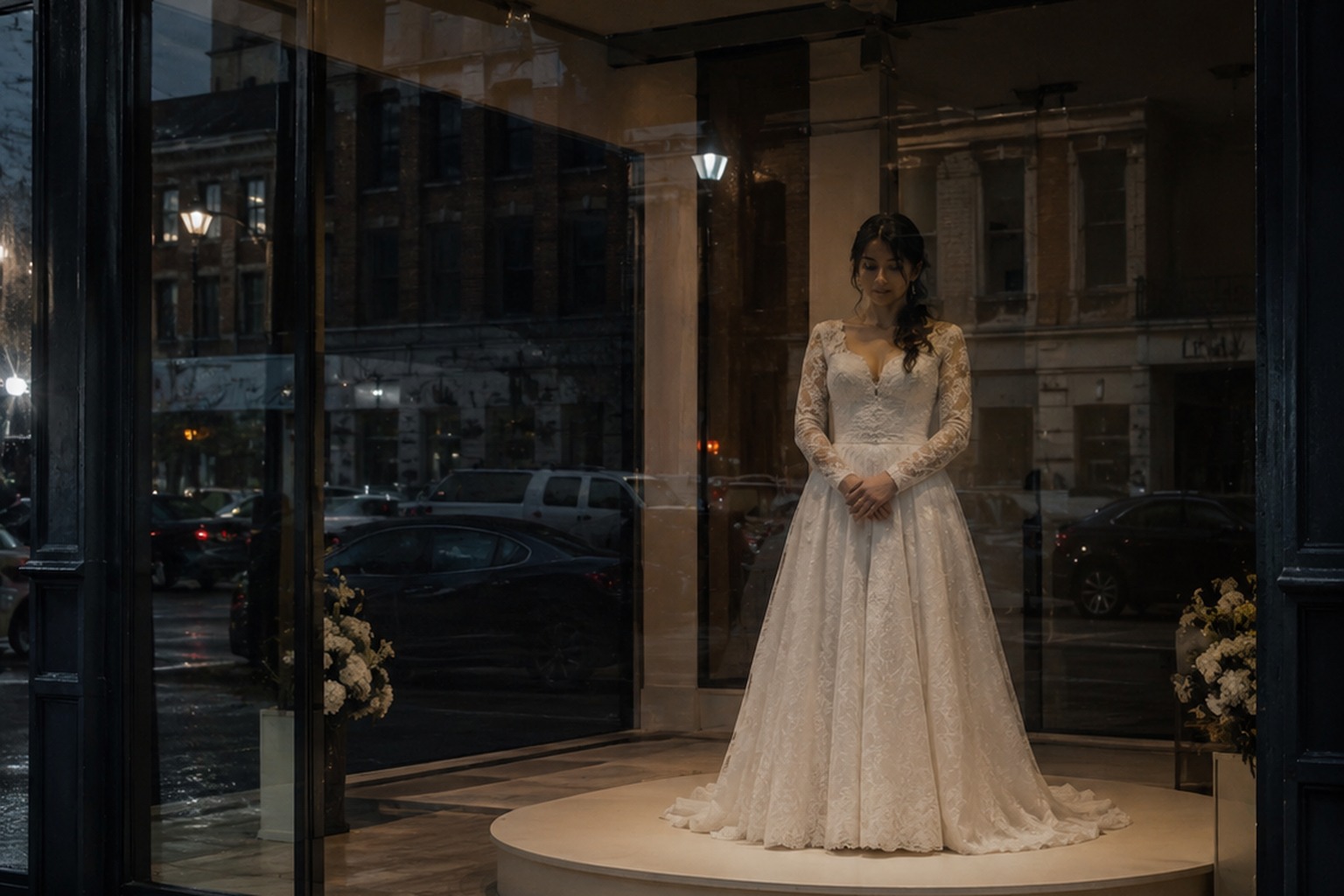
The Platform Was Supposed To Be Bare The photograph looked ordinary at first glance. The storefront reflected streetlights, parked cars, and old brick buildings across the road. Behind the glass sat the familiar display platform.
Only it wasn't empty anymore. Standing exactly where the mannequin had once been was what appeared to be a woman wearing a bridal gown. Not posed. Not smiling. Just standing naturally with her shoulders slightly lowered and her hands resting together in front of her waist.
She looked less like a display and more like someone waiting. The person who took the picture assumed the owners had quietly returned a mannequin to the window. They continued walking.
It wasn't until they compared the image with an older picture from several weeks earlier that something felt strangely wrong. The mannequin had always faced slightly toward the street. The figure in the newer image faced directly toward the camera.
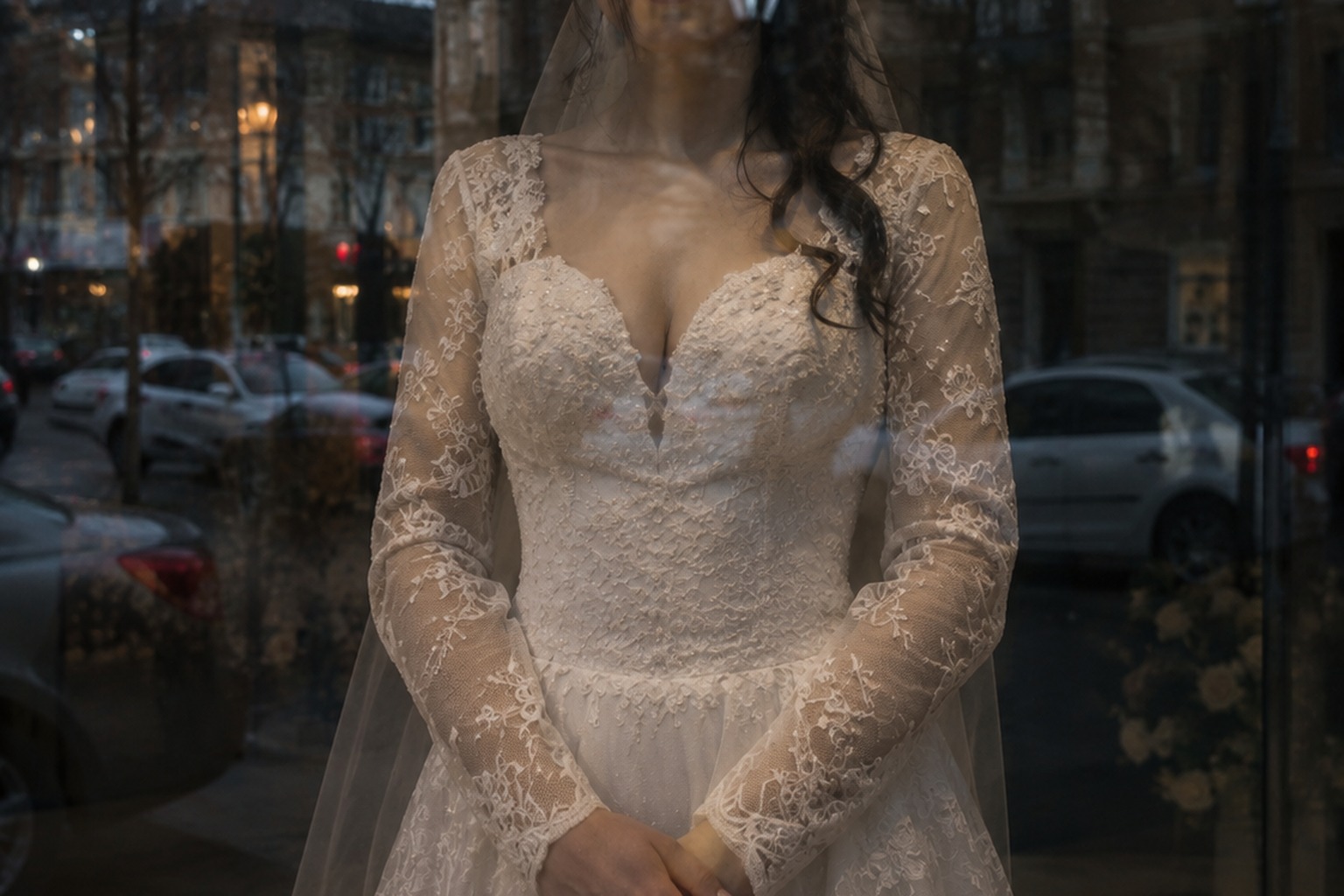
Tiny Details Changed Everything The more people examined the window photograph, the less it resembled a mannequin. The dress wasn't perfectly smooth. Small wrinkles gathered naturally near the elbows. The lace sleeves appeared slightly uneven, as if they rested over actual arms instead of molded plastic.
The Part That Did Not Fit
A loose strand of dark hair hung against one shoulder. Even stranger were the hands. Store mannequins usually have simplified fingers or glossy painted surfaces. These hands showed tiny knuckles.
Visible fingernails. Slight shadows beneath curled fingertips. None of it looked dramatic. It looked quietly human. The face remained impossible to study clearly because reflections crossed the glass, but the head seemed tilted just enough to suggest the figure had been watching whoever stood outside.
That subtle angle bothered everyone who saw the picture. People began stopping outside the store after dark. Most found nothing except an empty platform. A few insisted they saw someone inside until approaching closer.
Then the figure seemed to disappear into reflections. Employees Remembered One Particular Dress Former employees quickly recognized the gown. It wasn't just another wedding dress. It had been displayed only during special events because the lace had been sewn entirely by hand.
Customers often requested to try it on, but management rarely allowed it outside supervised appointments. One employee remembered something else. Whenever that dress stood in the front window, customers frequently asked whether someone had been rearranging the mannequin between visits.
What Changed After The Photo Was Reviewed
The shoulders never seemed quite the same. Sometimes the head appeared slightly lower. Occasionally one sleeve looked differently folded despite no employee touching it. Management always blamed changing reflections from traffic outside.
Eventually nobody mentioned it anymore. After all, bridal stores are full of human-shaped displays. People naturally imagine tiny differences. Still, every worker agreed on one unusual detail. The display mannequin wearing that gown had been removed completely before renovations started.
There should have been absolutely nothing standing on that platform. The Reflection That Didn't Belong Curiosity drew more visitors over the following evenings. Some photographed the storefront from across the street.
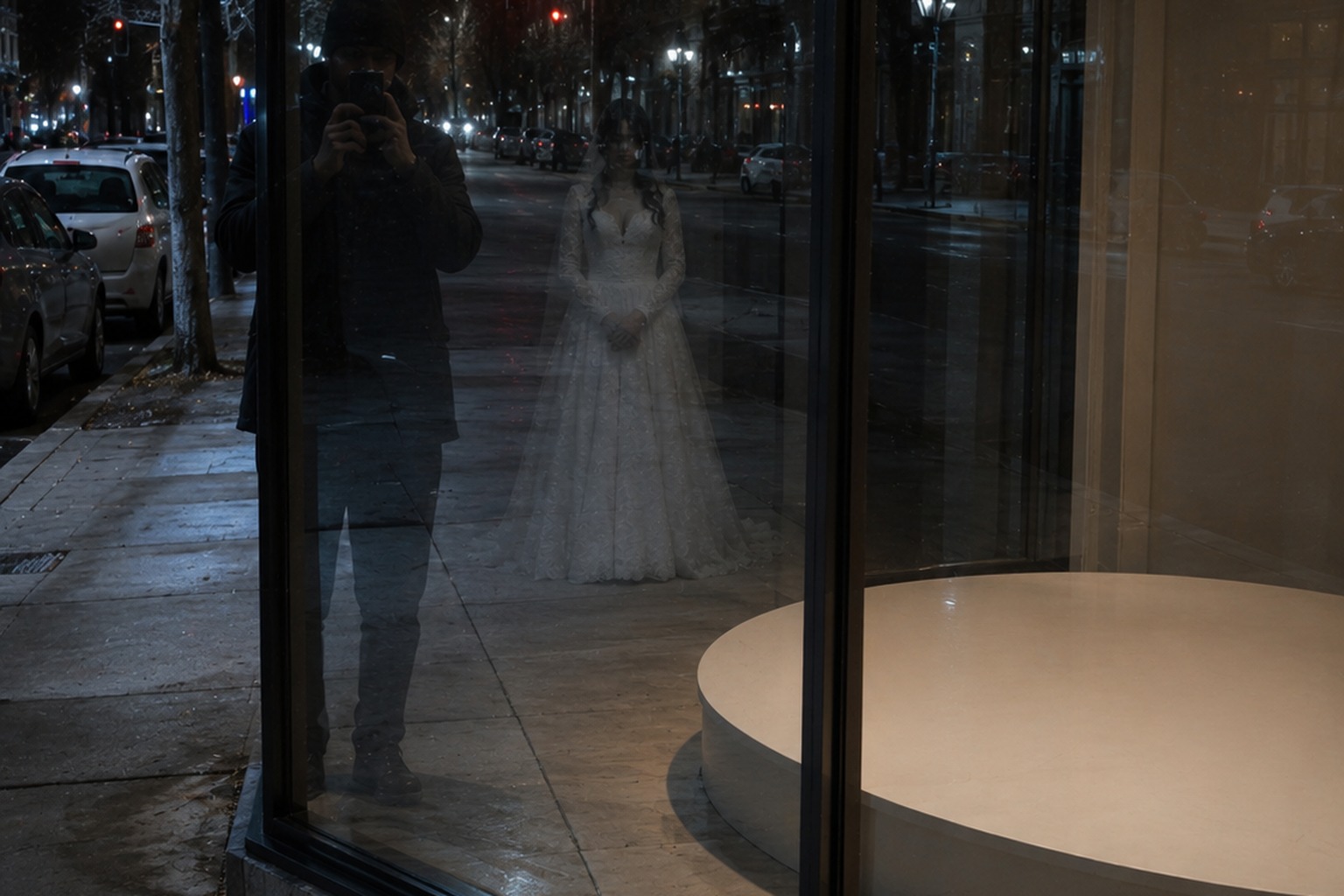
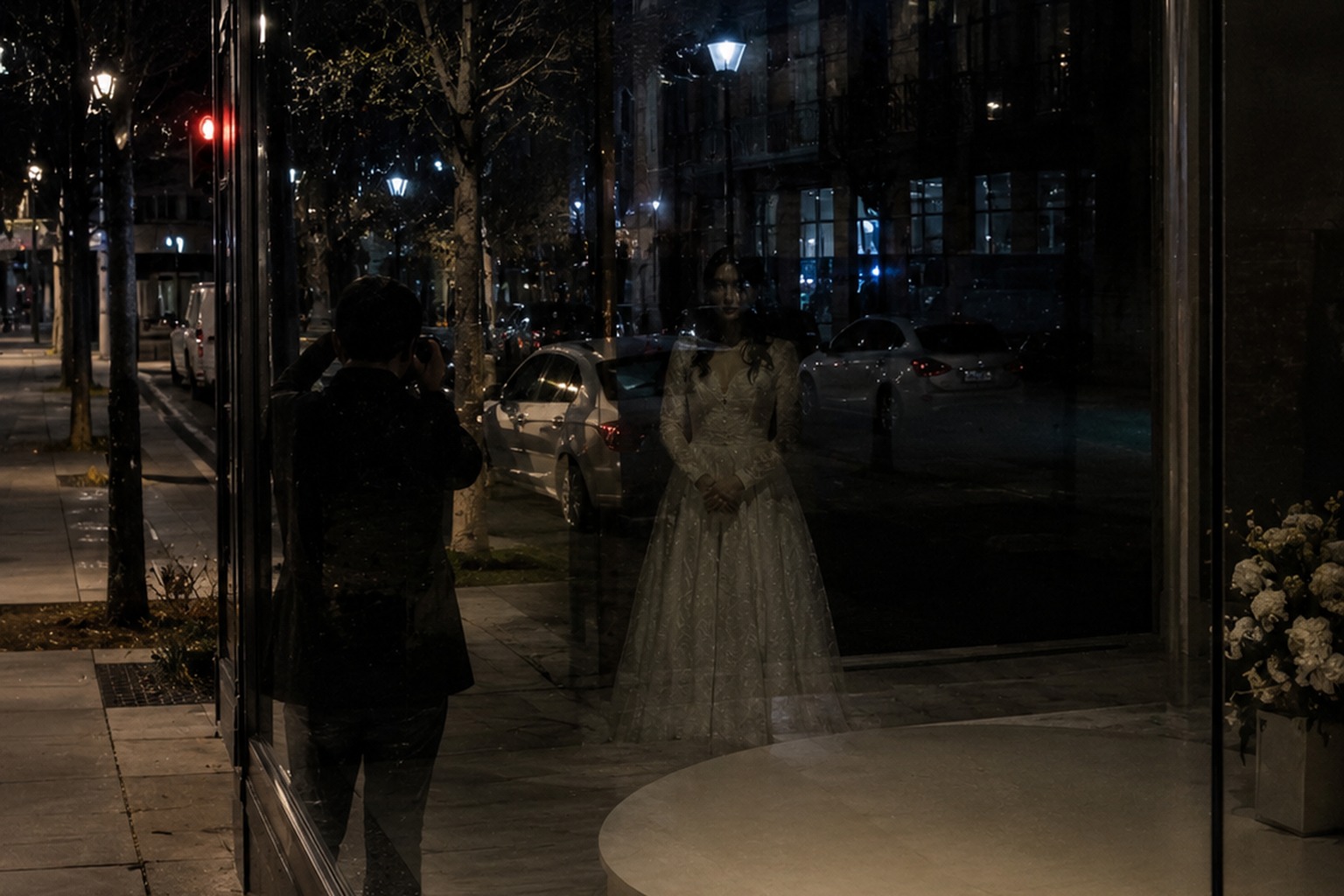
Others stood directly against the glass. Most pictures showed only empty displays hidden beneath dust sheets. But one image became difficult to forget. Taken from an angle near a streetlamp, the window reflected nearly everything behind the photographer.
Trees. Parked cars. A traffic light. Even the photographer themselves. Yet inside the reflection stood another person. A bride. She wasn't reflected beside the photographer. She stood several feet behind them.
The Small Detail People Missed
The problem was simple. Nobody else had been on the sidewalk. The empty street appeared clearly in neighboring reflections. The bride remained inside the glass, almost blending with the showroom beyond it.
Her head seemed slightly lowered. Her veil drifted behind her despite nothing else showing movement. People zoomed closer expecting digital distortion. Instead they noticed something unsettling. The reflection of the bride lined up perfectly with the empty display platform inside the shop.
As though she occupied both places at once. Renovation Morning Brought More Questions Construction crews finally returned early one Monday. Neighbors expected the mysterious display to disappear once workers unlocked the building.
Instead, another strange story began circulating. One contractor claimed every protective sheet inside had somehow ended up on the floor overnight. No windows had been broken. No alarms had sounded.
Nothing appeared stolen. The dust covering the showroom floor showed footprints belonging only to workers entering that morning. Except for one area. The circular platform beneath the front display looked almost spotless.
Why The Story Stayed With Locals
Dust surrounded it. Dust coated every nearby shelf. Yet the platform itself appeared freshly cleaned. One worker joked someone had been preparing for another wedding display. Nobody laughed very hard.
While dismantling decorative mirrors nearby, another employee reportedly found a faded florist's receipt trapped behind the baseboard. The date was nearly thirty years old. The bride's name had faded almost completely away, leaving only the first few letters visible beneath water damage.
Whether it meant anything or not, nobody knew. But people inevitably connected it to the figure seen in the window. The Window Looked Empty Again By the end of renovation week, the storefront looked completely different.
Modern lighting replaced warm spotlights. Minimalist displays took over. Fresh dresses arrived. Brand-new mannequins stood beneath bright ceiling fixtures. Everything felt cleaner. Brighter. Safer. Visitors searched the familiar platform. Nothing unusual appeared.
The mysterious bride seemed gone. At least until someone compared fresh pictures with the earlier photograph. The platform had been rebuilt several feet farther back inside the showroom. Its position no longer matched the exact location where the original display had stood.
What Makes The Image Hard To Shake
Whether that change mattered remained impossible to answer. Customers eventually returned. Wedding appointments filled the calendar once again. Life continued as expected. Yet longtime residents admitted they never looked through that front window the same way again.
Whenever they passed after sunset, they caught themselves searching the reflections first instead of the dresses. Just in case someone was quietly standing where nobody should have been. Some Displays Feel Like They Remember Bridal shops are built around carefully arranged illusions.
Perfect smiles. Perfect dresses. Perfect moments frozen behind polished glass. Most people never wonder how unsettling those displays become once the lights remain on after everyone goes home. An empty platform can feel strangely alive simply because we remember what once occupied it.
Or perhaps memory leaves deeper impressions than we expect. Perhaps places devoted to anticipation and hope collect traces of every person who paused there imagining another future. If so, maybe some reflections become crowded long after the building empties.
The photograph from the closed bridal shop continues to circulate whenever conversations drift toward unusual storefronts and unexplained encounters. Some viewers see nothing beyond layered reflections and unfortunate timing. Others notice the relaxed posture.
The natural hands. The slightly lowered head. Most unsettling of all, they remember the simple fact repeated by everyone who worked there. The mannequin had already been removed. Whatever appeared in that window wasn't supposed to be standing there at all.
And if you stare at the picture long enough, the hardest part isn't deciding whether the figure looks human. It's wondering why she seems to be waiting for someone to unlock the door.