The Detail That Made The Story Hard To Ignore
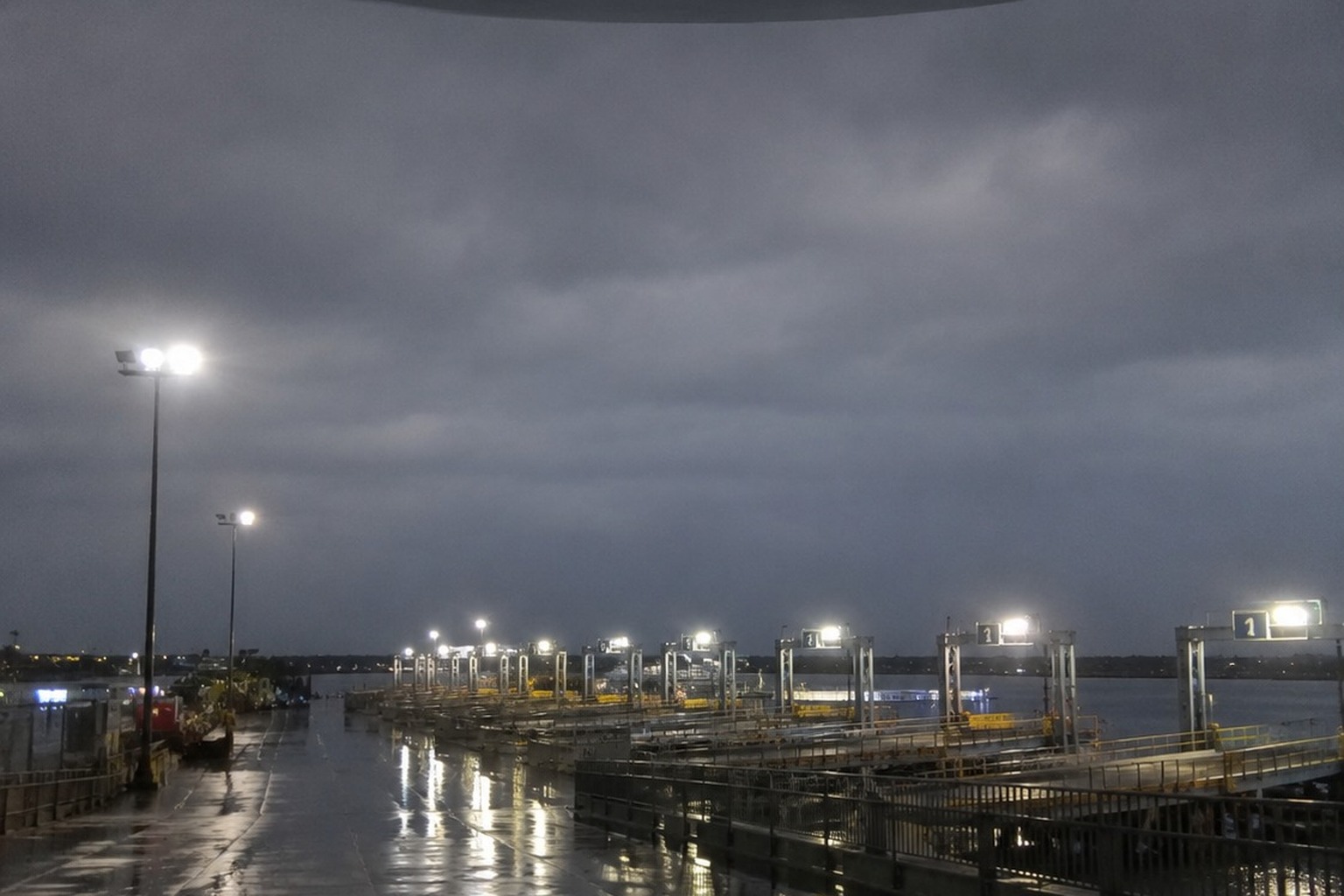
The ferry terminal had the strange kind of silence that only exists after the final departure. The floodlights were still on because they always stayed on until sunrise. Long rows of steel railings led toward empty vehicle ramps where, only an hour earlier, hundreds of cars had been waiting to board. The ticket booths were dark. Wind pushed scraps of paper across wet concrete. Every few seconds, harbor water slapped against the pilings beneath the loading docks.
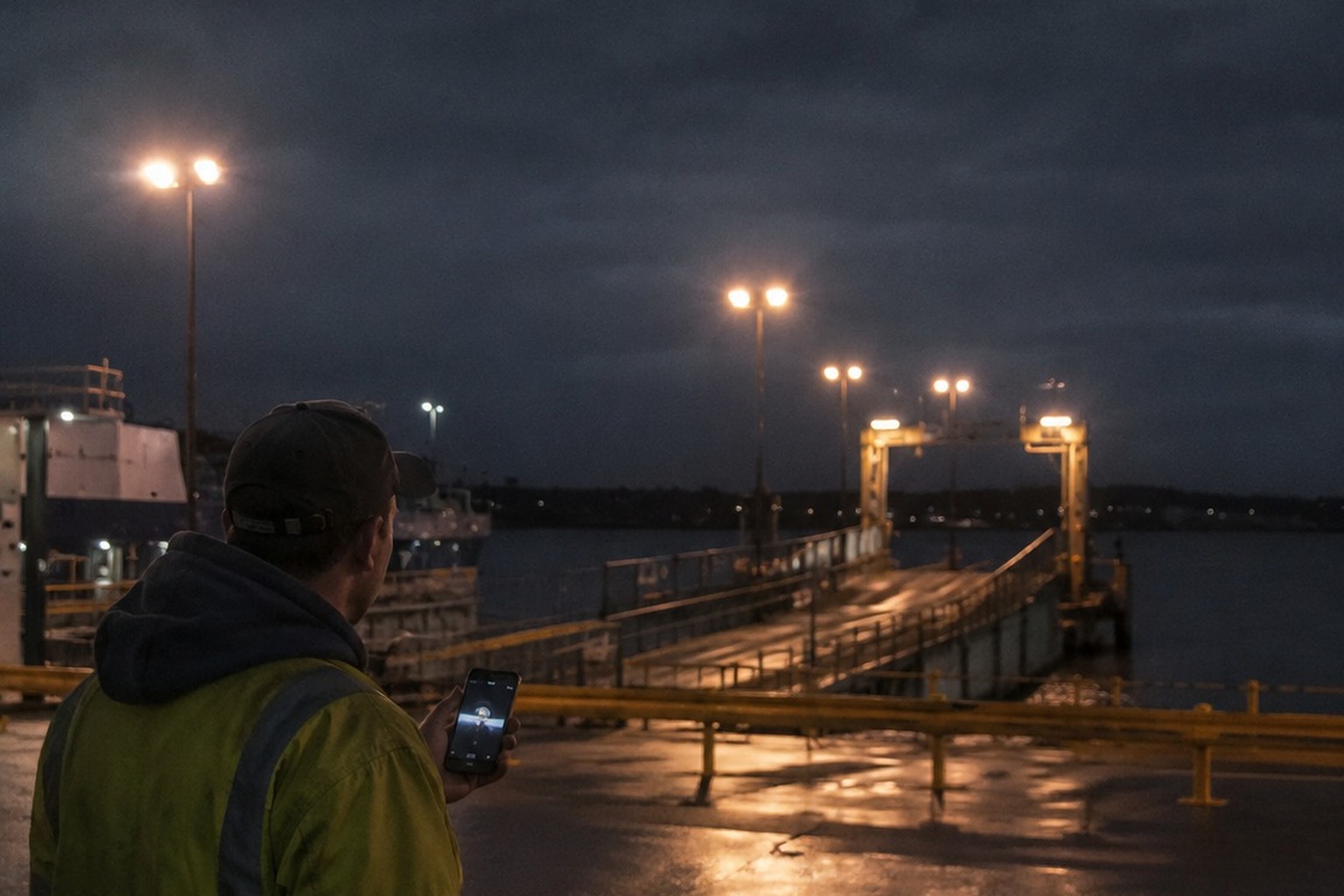
Nothing moved except the tide. That was exactly why the maintenance supervisor decided to take a photograph. He had spent years documenting overnight repairs around the terminal. Whenever something looked unusually quiet after a storm, he would snap a few pictures before crews arrived. Mostly they ended up forgotten in company folders—cracked pavement, damaged light poles, broken signs, flooded drainage channels.
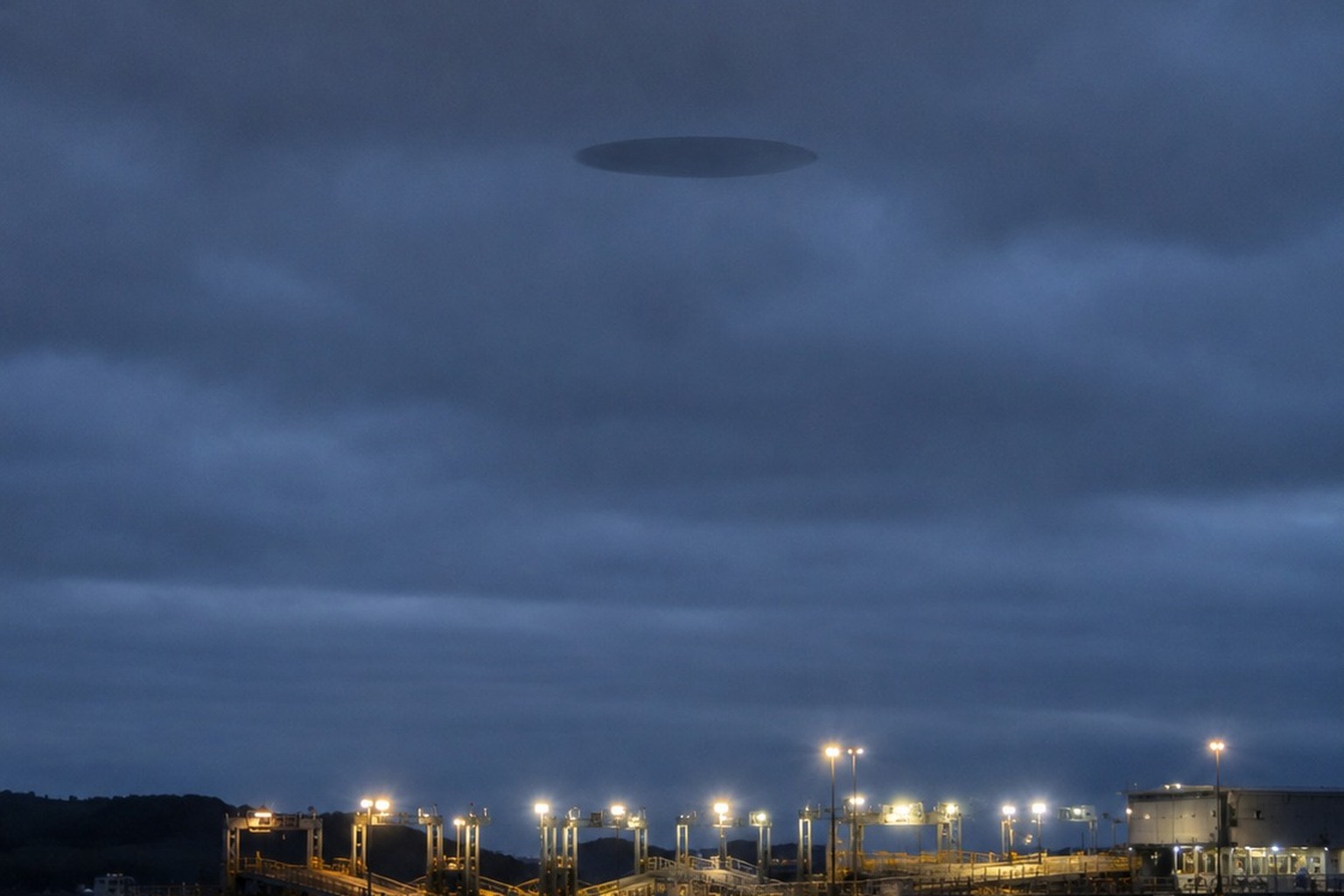
One rainy autumn morning, just before four, he stopped near Vehicle Ramp Three and pointed his phone toward the empty loading lanes. The image looked perfectly ordinary. Until he zoomed in. Above the long row of bright ramp lights floated something that should not have been there.
Not glowing. Not flashing. Not shaped like any aircraft anyone at the terminal had ever seen. Just a dark oval.
A smooth silhouette that somehow appeared darker than the cloudy sky behind it. At first he assumed it was dirt on the camera lens. He wiped the screen. The object remained.
He took another photograph immediately. The second frame showed only clouds. The oval had vanished. For weeks he barely mentioned it.
What The Camera Or Witnesses Noticed First
The harbor had plenty of strange optical tricks. Fog, rain, reflections, distant ships—everyone had stories. Most disappeared once someone looked closer. But this one became harder to dismiss for a simple reason. The photograph wasn't the only odd thing that happened that morning.
The maintenance log showed something almost everyone ignored. Three separate electrical alarms had briefly reported voltage fluctuations along the ramp lighting circuit. The lights never went out. They never visibly dimmed.
Yet the monitoring software recorded tiny synchronized drops lasting less than two seconds. An electrician later checked the wiring. Everything tested perfectly. The incident should have ended there.
Instead, months later, another employee stumbled across the old image while organizing archived maintenance records. He enlarged it on a larger monitor. That's when people noticed its proportions. The object wasn't small.
Perspective had fooled everyone. The floodlights along Ramp Three stood nearly thirty feet tall. Using them for scale, someone estimated the dark oval might have measured over sixty feet across. Maybe larger.
Its underside reflected absolutely nothing. The harbor lights illuminated low clouds all night, creating soft gray highlights across everything overhead. Everything except the oval. It absorbed the surrounding brightness.
Why The Setting Made It Stranger
It looked less like a solid object and more like a missing piece cut from the sky. People argued over it endlessly. Some insisted it was an editing glitch. Others blamed compression artifacts.
A few thought it might simply be a flock of birds captured in unusual formation. Then one of the senior dock workers quietly interrupted the discussion. "I've seen that shape before." Nobody laughed.
Because he wasn't joking. He described arriving decades earlier for predawn shifts when the terminal still used older ferries. Twice during his career, he had noticed an enormous dark object hanging silently above the harbor entrance. Not moving.
Not drifting. Simply waiting. Both times, he had looked away while speaking with coworkers. When he looked back, it was gone.
He had never reported either sighting because there had been nothing dramatic about them. No lights. No sounds. No impossible maneuvers.
Just something that absolutely did not belong above the water. His story made people uncomfortable precisely because it sounded so ordinary. There was no excitement in his voice. Only certainty.
The Detail People Usually Miss
After hearing him, another mechanic admitted something equally strange. He hated working near Ramp Three after closing. Not because he believed in ghosts or UFOs. Because the area sometimes felt… crowded.
He struggled to explain it. The empty terminal would appear completely deserted. Yet he constantly found himself stepping aside, almost instinctively making room for someone passing beside him. Several times he caught himself turning to apologize before remembering nobody else was there.
The sensation vanished the moment he entered the terminal building. Outside, near the ramps, it always returned. Most dismissed the feeling as fatigue. Night shifts played tricks on everyone.
Still, conversations about the photograph quietly spread through different departments. Security guards began comparing notes. One remembered reviewing camera image after a false intrusion alarm. Every exterior camera showed empty pavement.
Yet multiple cameras repeatedly shifted focus toward the same area of sky above Ramp Three. Modern surveillance systems continuously adjust exposure and focus automatically. The cameras behaved as though something large occupied that space. Nothing visible appeared in the camera files.
Only slight focus adjustments. The technician servicing the system later suggested the cameras had detected contrast changes despite camera file nothing identifiable. No explanation followed. Years passed.
The Most Ordinary Explanation
The image remained buried inside archived folders. Then the terminal upgraded its lighting system. The old sodium lamps were replaced with brilliant white LEDs. The change dramatically improved nighttime visibility.
Workers immediately noticed something unexpected. The uneasy feeling around Ramp Three disappeared. Months went by without anyone mentioning strange sensations. No one instinctively stepped aside anymore.
No reports of empty-space discomfort. No stories about silent figures in peripheral vision. It became another forgotten chapter. Until one winter storm.
Heavy rain shut down ferry traffic for several hours. The terminal emptied unusually early. A lone harbor patrol officer parked near the loading lanes while waiting for weather updates. He remained inside his vehicle watching waves crash beneath the ramps.
At approximately three in the morning, he noticed every LED light reflecting across the wet pavement. Except one section. Near the center of the ramp, the reflections simply stopped. Not because the lights failed.
They still shone brightly overhead. But the water beneath them reflected darkness. As if something invisible blocked the light between the lamps and the pavement. He climbed out of the patrol truck.
Why That Explanation Still Feels Incomplete
The missing reflections returned instantly. He stepped backward. They disappeared again. Forward.
Back. Forward. The effect repeated perfectly. Only while standing in one precise location.
He eventually walked away without understanding what he'd seen. When maintenance crews inspected the lights the following day, every fixture operated normally. The patrol officer never mentioned invisible objects. Only "strange reflection problems."
His report was filed alongside weather notes. Months later, someone remembered the old photograph. The location matched exactly. Interest returned.
This time, employees searched through older personal phones. Hundreds of nighttime harbor pictures surfaced. Vacation shots. Storm photographs.
Snapshots of unusual sunsets over the docks. Most revealed nothing. Then someone found another image. Taken almost five years earlier.
The Part That Keeps The Story Alive
Different phone. Different employee. Different season. The picture showed the terminal from across the harbor shortly before dawn.
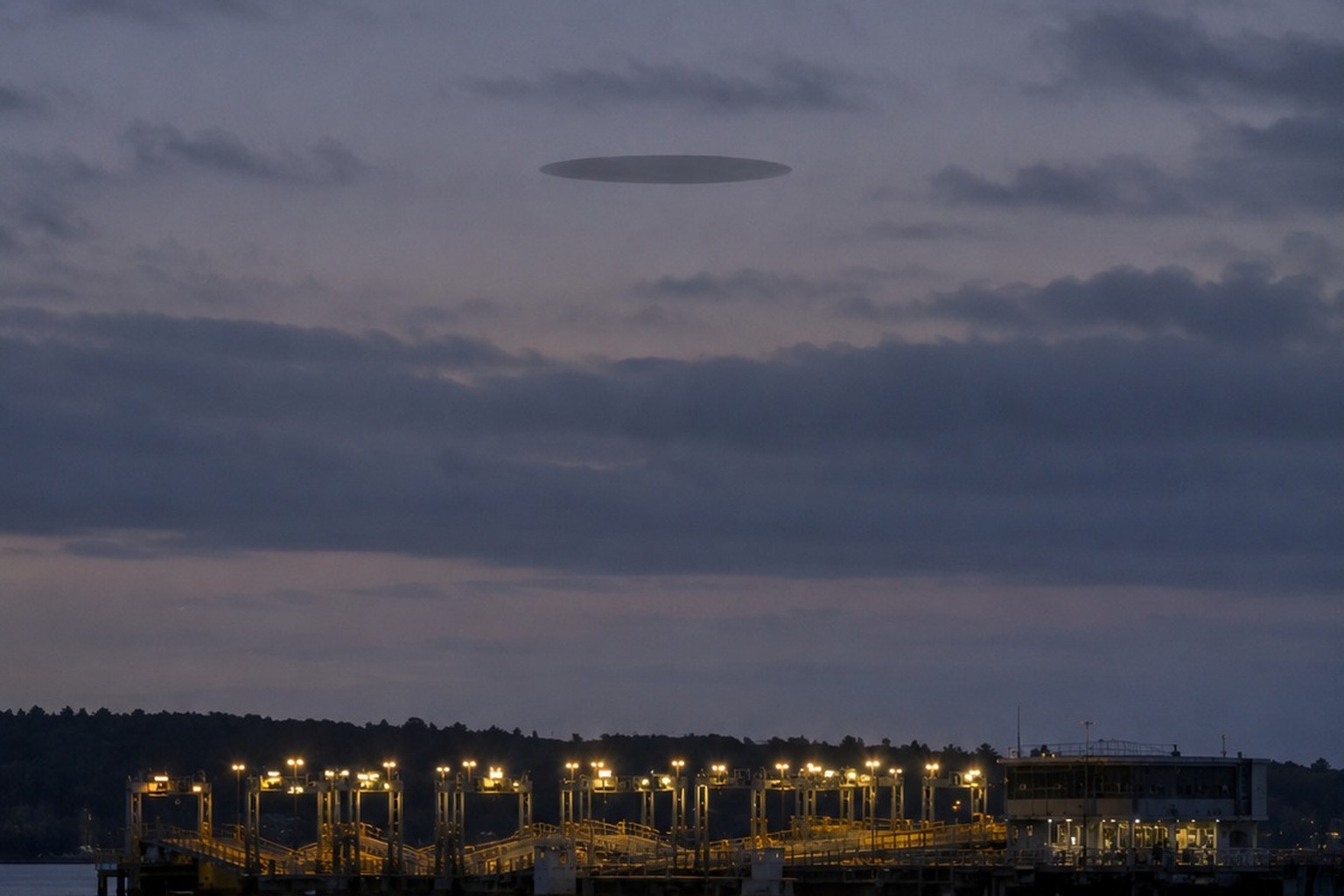
Nobody had noticed anything unusual because the focus had been the sunrise beginning behind distant clouds. Only after comparing it with the saved image did someone enlarge the center of the frame. Above Ramp Three floated a faint dark oval. Much farther away.
Barely noticeable. Exactly the same shape. Again without lights. Again perfectly silent.
Again darker than everything surrounding it. The two photographs shared one unsettling detail. Neither object cast a visible shadow. Neither reflected ambient light.
Neither appeared blurred despite slight motion elsewhere in each frame. It looked as though the camera accepted the object as perfectly still while everything around it remained exposed normally. No one could explain why. Eventually, the photographs stopped circulating.
New employees never heard the story. The harbor changed. Buildings were renovated. Equipment modernized.
Old workers retired. The image drifted into forgotten folders once more. Yet every so often, someone assigned to overnight maintenance near the loading ramps experiences the same peculiar moment. They look toward the rows of lights stretching over the empty concrete.
Everything appears normal. Perfectly ordinary. Then an odd hesitation arrives. Not fear.
Recognition. A brief certainty that something enormous occupies the darkness above the lights where the clouds seem just a little too black. By the time they fully raise their eyes, the feeling disappears. The harbor returns to silence.
The tide continues rising beneath the ramps. The floodlights reflect across wet pavement exactly as they should. And anyone taking a photograph at that moment would almost certainly capture nothing unusual at all. Almost.
Because tucked away inside forgotten storage folders are two unrelated photographs taken years apart by people who never compared notes. Both show the same empty ferry terminal. The same loading ramps. The same quiet hour before dawn.
And above the neat row of bright ramp lights hangs the same impossible dark oval, suspended without motion, without sound, and without explanation—as though whatever passed over the terminal had never intended to be seen, only accidentally remembered by a camera that happened to be looking in exactly the right direction for a single silent second.