The Detail That Made The Story Hard To Ignore
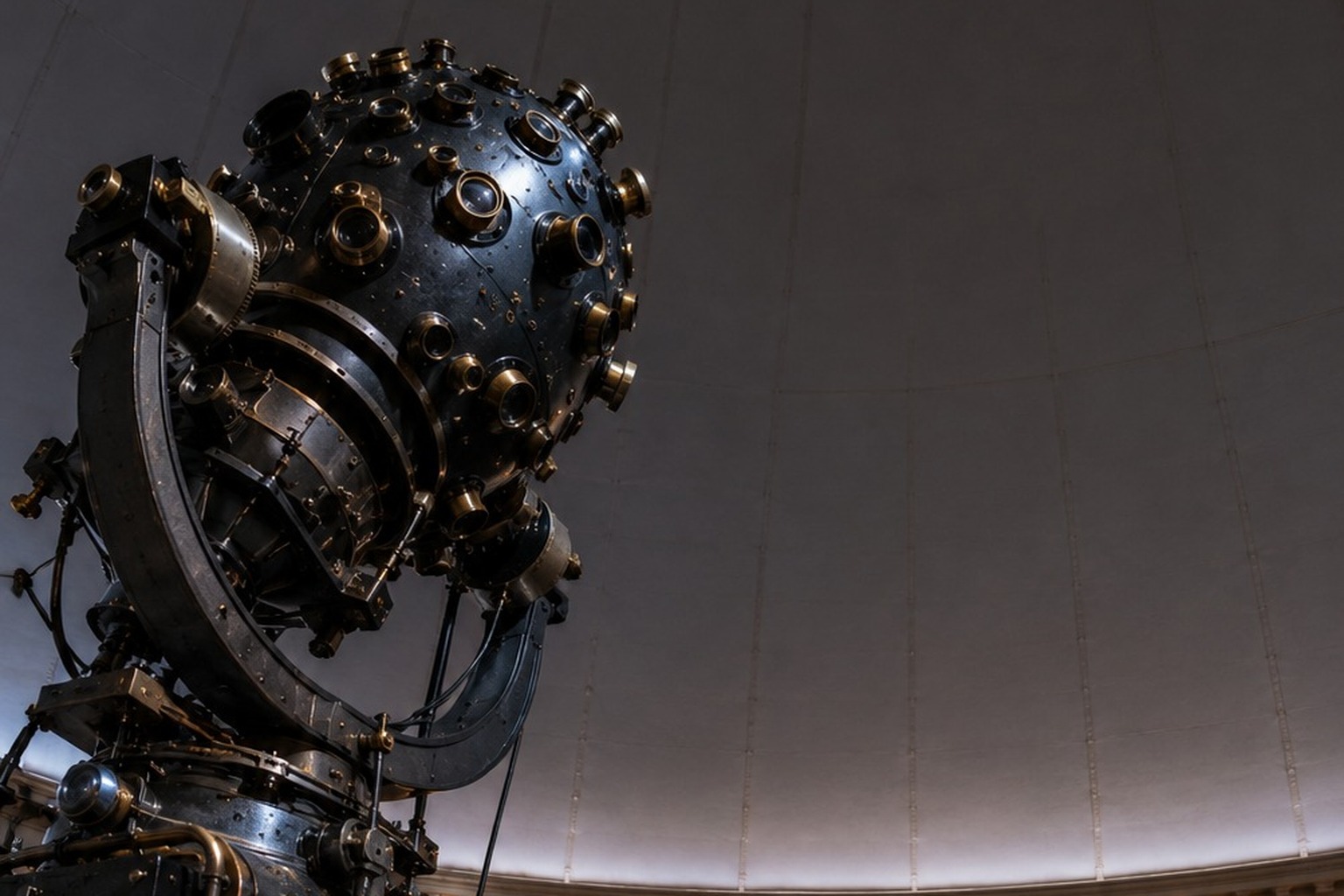
The Museum Planetarium Projector Turned Toward A Star That Wasn't On The Map No one could remember the last time anyone had touched the manual controls. The museum's planetarium had been automated for years. Every morning, a technician powered the aging projector, selected the day's presentation, and let the massive machine perform exactly as it always had. The enormous brass-and-black instrument—its dozens of gleaming lenses resembling the compound eyes of some impossible insect—was considered as much an exhibit as the stars it projected.
Visitors loved it because it felt alive. No one expected it to actually behave that way. The museum sat on a hill overlooking a quiet river town, its planetarium occupying the oldest wing of the building. Decades earlier, before digital projectors became common, schoolchildren would sit beneath the mechanical star projector as thousands of tiny pinpoints slowly drifted across the dome. The machine hummed with gears, belts, and precision motors that seemed almost organic in the darkness.
Retired volunteers often joked that the projector had a personality. Sometimes it paused before beginning. Sometimes it made sounds no technician could explain. Sometimes it seemed to "look around" before starting the nightly sky.
Everyone laughed. Until one Tuesday evening. The last public showing had ended shortly after six. The audience left.
The lights came up. The operator shut down the presentation computer and began the normal inspection before locking the dome. That was when the projector moved. Not the smooth programmed rotation used during shows.
A deliberate turn. The great steel body slowly pivoted on its pedestal with every motor disengaged according to the control panel. No warning lights appeared. No commands had been entered.
What The Camera Or Witnesses Noticed First
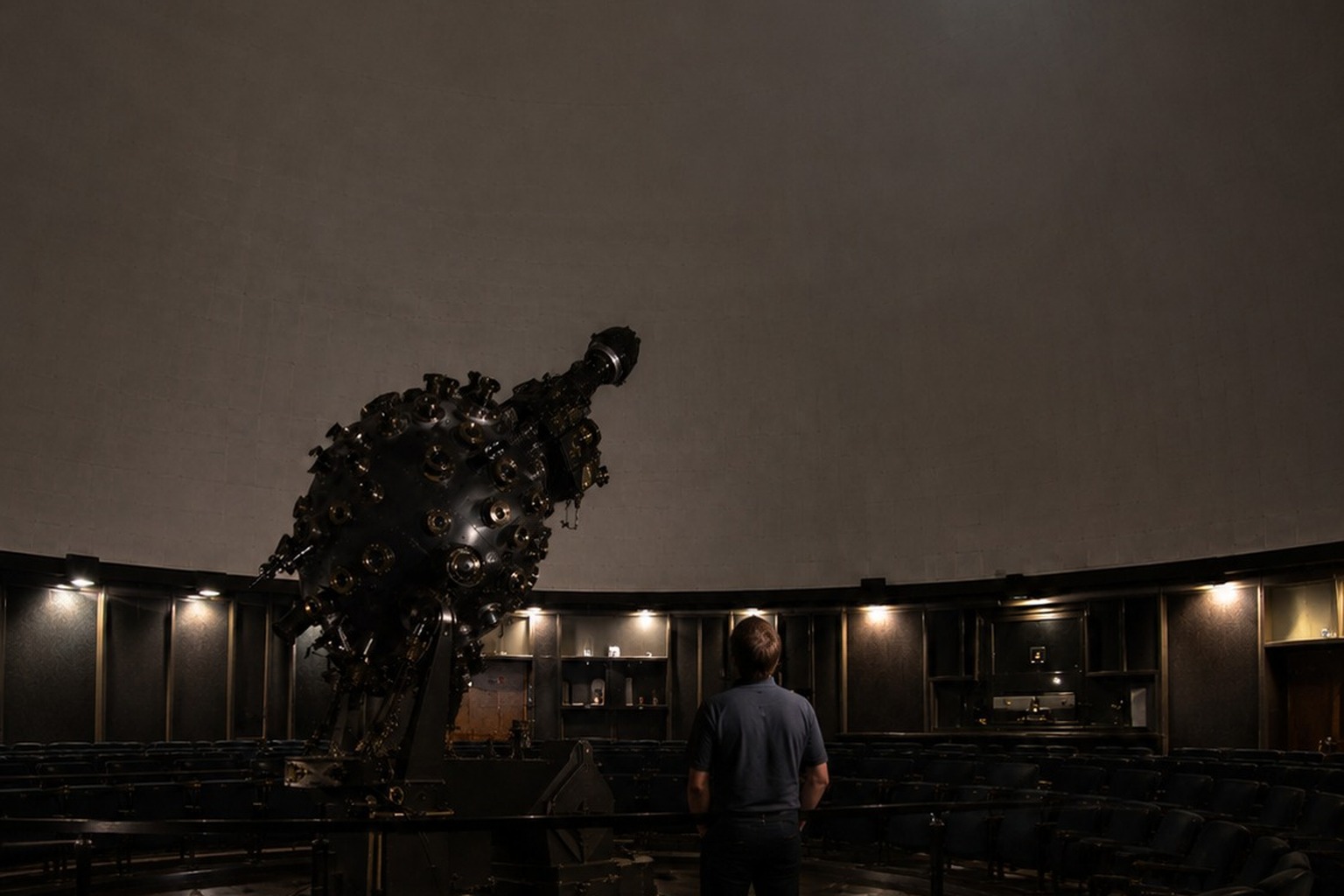
The movement lasted nearly twenty seconds. It stopped with every lens aimed toward one narrow section of the dome. The operator stared upward. Nothing was projected.
Only blank white plaster. Then one lens clicked. A single point of light appeared. Not a constellation.
Not a planet. Just one impossibly bright star. It remained motionless. The operator assumed the system had malfunctioned.
He powered everything completely off. The light remained. Only after disconnecting the main breaker did it finally disappear. Maintenance arrived the following morning expecting electrical faults.
They found none. Every calibration matched factory specifications. Every encoder reported perfect alignment. Every motor brake worked flawlessly.
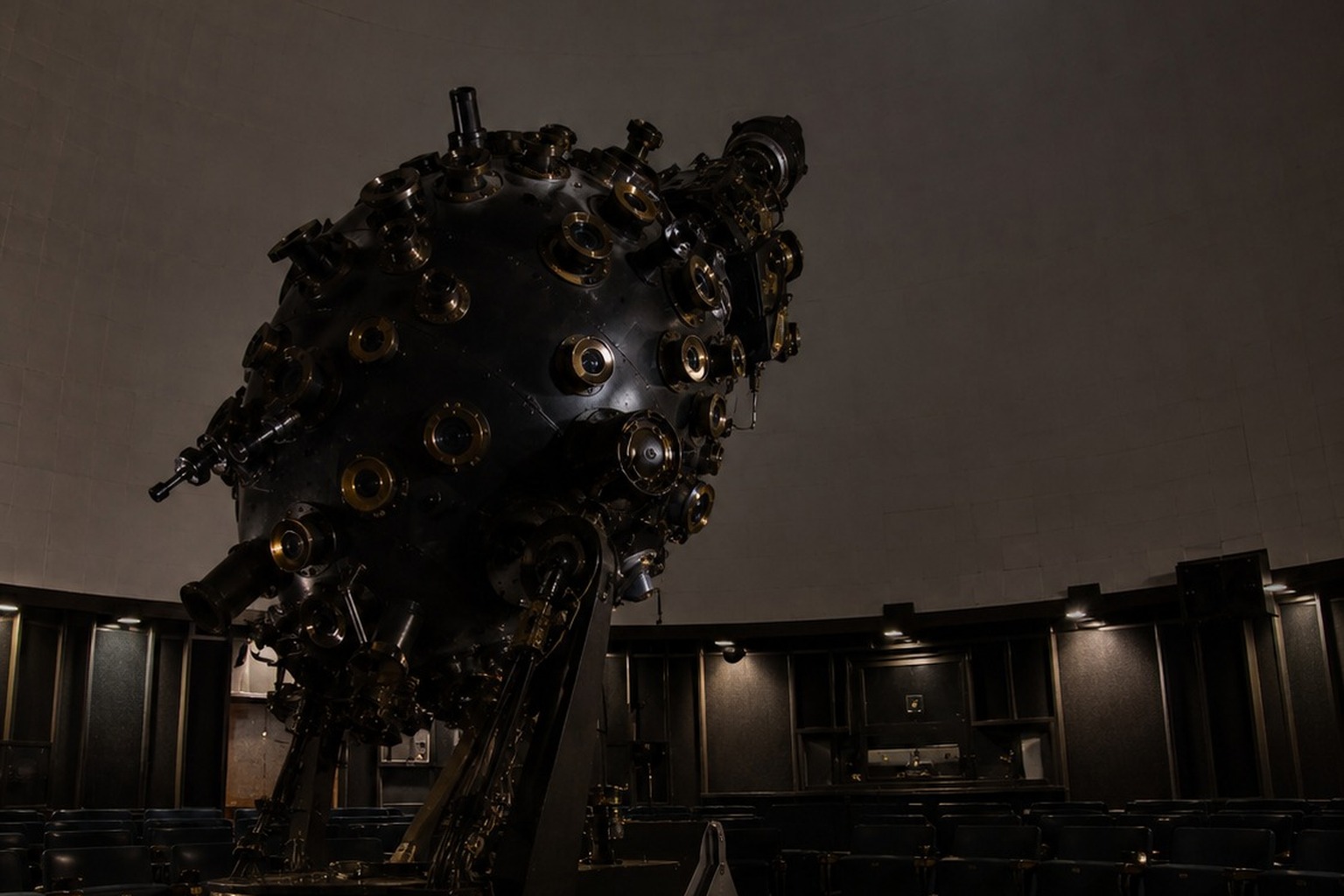
The projector shouldn't have been capable of moving without computer control. Yet the position logs showed it had rotated exactly 17.4 degrees after shutdown. No command existed explaining why. The museum director quietly instructed staff not to mention the incident.
Why The Setting Made It Stranger
Visitors never noticed. Life continued. A week later, another operator stayed after hours to clean the seats beneath the dome. The projector had already been powered down.
The room was nearly dark except for aisle lights. Without warning, gears began turning. Softly. Almost politely.
The projector rotated once more. It stopped in precisely the same direction. The operator checked the control booth. Everything remained switched off.
The projector emitted one quiet metallic click. Again, a solitary point of white light appeared on the dome. This time it shimmered faintly. Not flickering.
Twinkling. Exactly like a distant star viewed through Earth's atmosphere. The operator walked beneath it. The light never moved.
He climbed toward the catwalk surrounding the dome. The point remained fixed. No projector lens appeared to be producing it. It seemed embedded inside the dome itself.
The Detail People Usually Miss
When he returned to the floor, it vanished. He never stayed late alone again. Word spread quietly among museum employees. Cleaning crews noticed something stranger.
Whenever the projector faced that direction, the room sounded different. Footsteps echoed longer. Conversations carried farther. Even whispers seemed to linger above the seats before fading away.
One volunteer claimed she heard children laughing during closing hours. There were no children inside. Security image offered little help. The cameras covered entrances and aisles but not the ceiling.
On camera files, employees repeatedly stopped whatever they were doing and looked upward at exactly the same point. Nothing appeared visible. Yet every person reacted almost identically. Some frowned.
Some smiled. One quietly backed toward the exit without ever taking his eyes off the dome. When asked later, none could fully explain why. "It felt like someone had just arrived."
The museum eventually invited a retired astronomer to inspect the projector. He requested complete calibration records. Everything matched historical star maps. Nothing seemed wrong.
The Most Ordinary Explanation
Then he examined the projector's mysterious resting position. He overlaid it against archived celestial charts from different decades. Nothing. Modern sky maps.
Nothing. Older star catalogs. Nothing. Finally, almost absentmindedly, he opened an astronomical atlas printed nearly a century earlier.
There it was. Not a star exactly. A handwritten notation in the margin made by an unknown observer. A tiny ink circle.
No official designation. Only two unsettling words. "Persistent Light." No further explanation existed.
The astronomer assumed it had been someone's private observation. He dismissed it. Yet the coordinates matched almost perfectly. The museum archived the note.
Months passed peacefully. Then came the restoration project. The dome required repainting. The projector had to be temporarily removed.
Why That Explanation Still Feels Incomplete
Workers disconnected every cable and lifted the enormous machine using cranes specially brought inside. For three days the dome sat empty. The building felt strangely ordinary. No unexplained sounds.
No unusual reports. Nothing. After restoration, the projector returned. Freshly polished.
Mechanically perfect. The reopening attracted hundreds of visitors. Everything proceeded normally until the final presentation. As the audience watched familiar constellations drift overhead, the projector hesitated.
Its programmed motion stopped. Silence filled the dome. Then, with agonizing slowness, every mechanical axis shifted simultaneously. Not according to the presentation.
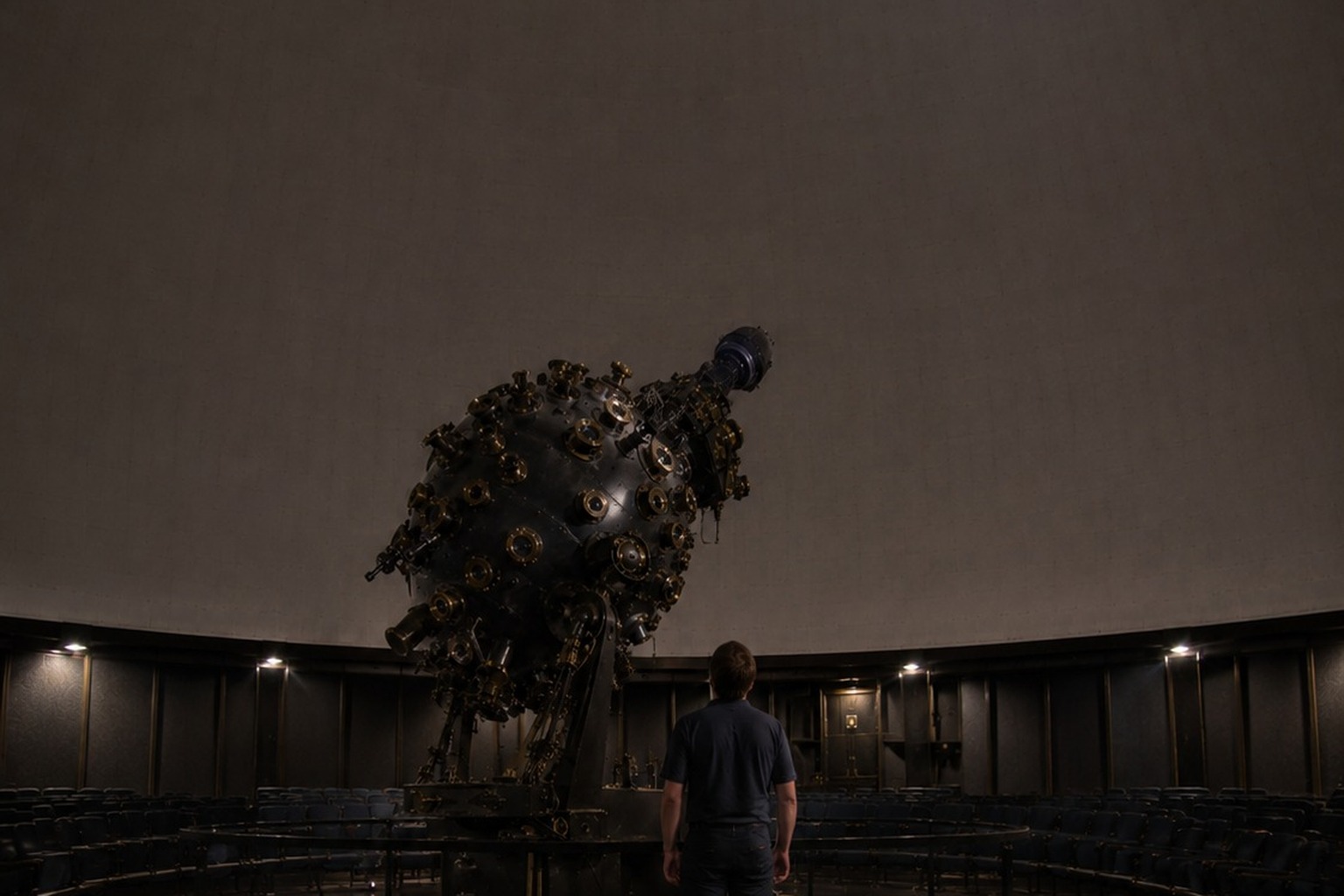
Not according to any star map. The projector pointed toward the same place once again. The narration continued automatically, describing Orion. But Orion was no longer overhead.
The audience looked instead toward the solitary white point that had appeared where no programmed star existed. Several people assumed it belonged to the show. Others noticed the narrator wasn't describing it. Children began asking their parents what star it was.
The Part That Keeps The Story Alive
No one answered. The light slowly brightened. Not dramatically. Just enough that nearby stars seemed to fade beside it.
Then something impossible happened. The audience collectively leaned forward. Not intentionally. As though trying to see something just beyond the light itself.
Several later described the same impression. Not seeing another star. Seeing depth. Like looking through an opening instead of at a projection.
The presentation computer abruptly restarted. Emergency lights illuminated the room. The mysterious point vanished instantly. Technicians blamed corrupted software.
They replaced computers. Updated controllers. Installed redundant safety systems. The projector never malfunctioned again.
Officially. Yet museum staff quietly noticed one final detail. Every morning before opening, the projector required calibration. Each morning technicians manually returned it to its standard starting position.
Each following morning… It had drifted back. Always the same angle. Always facing the same empty section of the dome.
The logs insisted nothing had moved overnight. No motors activated. No power had been supplied. Nothing mechanical explained it.
Visitors still attend shows beneath that old projector today. Most never notice anything unusual. But longtime volunteers sometimes glance toward one otherwise empty section of the dome just before each presentation begins. Almost unconsciously.
Waiting. Not because they expect to see an impossible star. But because, every now and then, for just a heartbeat before the programmed sky appears… They could swear something up there is looking back.
What keeps the the museum planetarium projector turned toward a star that wasn't on the map story from feeling like a simple mistake is the way several small details point back to the same uncomfortable question. One odd frame could be dismissed. One confused memory could fade. But when the setting, the object, and the timing all keep returning to the same spot, the story becomes harder for people to let go.