The Manor With One Detail Left Behind
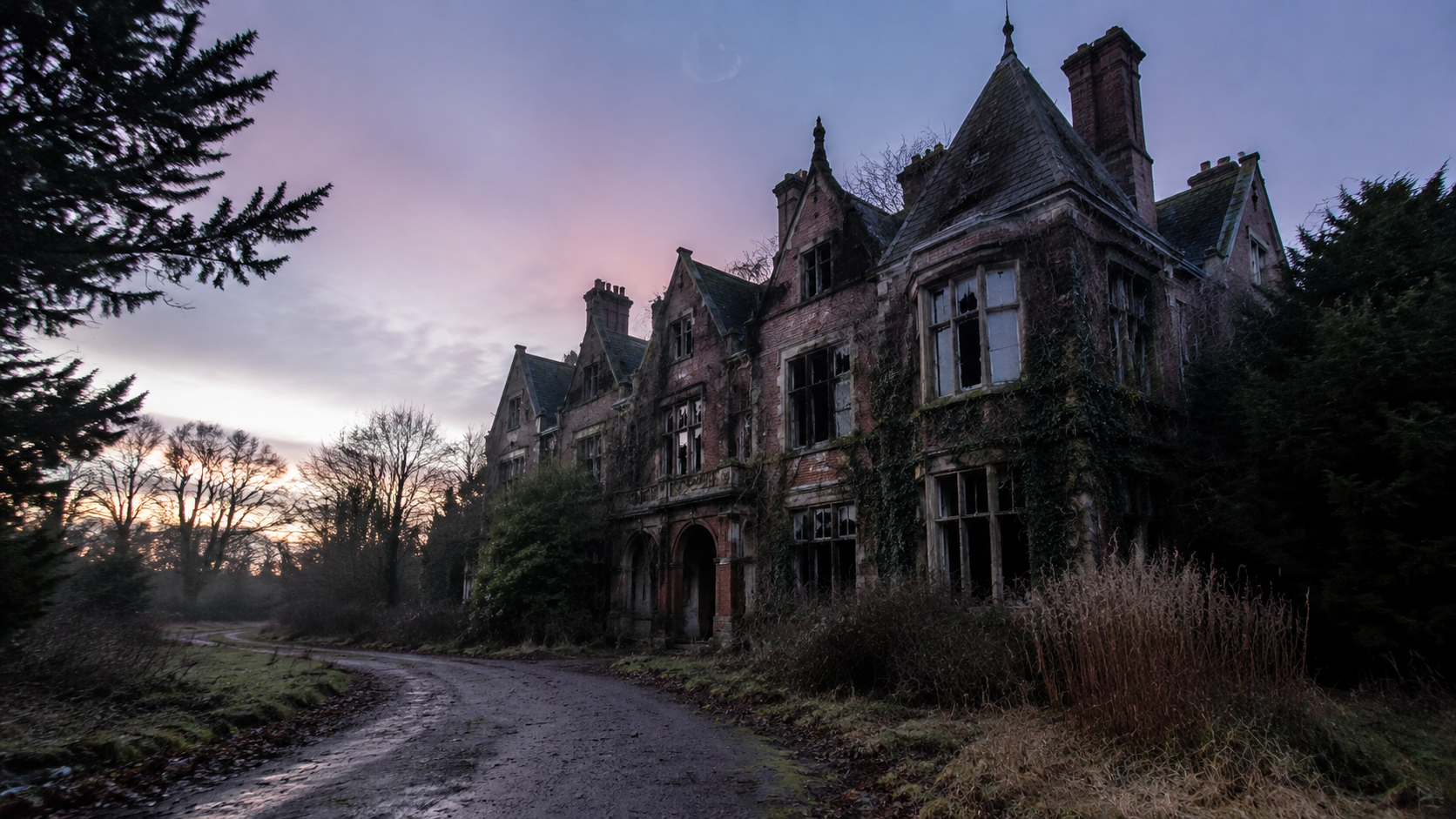
Merrow Hall was not the kind of ruin that needed a ghost story to feel uneasy. By the time local walkers began mentioning the stairwell, the house already had the usual signs of abandonment: slipped roof tiles, rain-blackened brick, a conservatory with more frame than glass, and windows boarded in different decades by different hands.
It stood beyond a belt of sycamores on the edge of a village that had mostly learned to ignore it. People knew the name. They knew the lane. They knew not to send children through the gate, more from fear of rotten floors than anything supernatural.
The odd part was a short run of steps below the rear service passage, leading into what had once been the cellar.
On the left wall of that stairwell, faint chalk marks were said to appear, disappear, and appear again.
A House Built Downward
Merrow Hall was built in stages, which may explain why its lower rooms felt older than the rest of it. The public face of the house was late Victorian: red brick, carved stone trim, a shallow porch meant to impress visitors arriving by carriage.
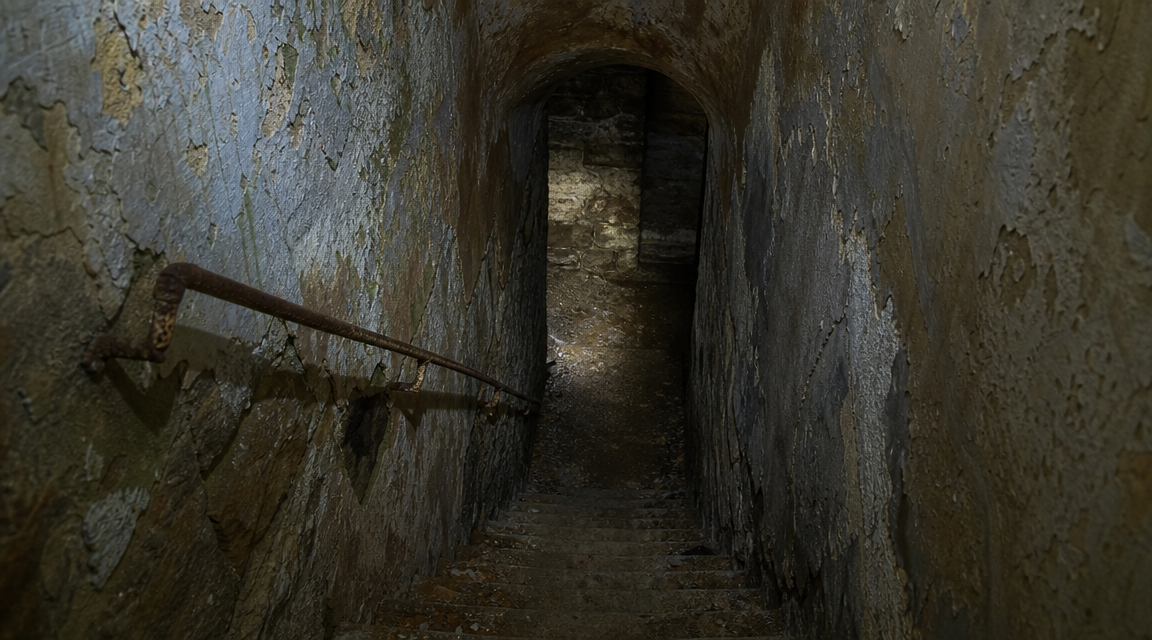
Below that polite surface was a less decorative structure. The cellar walls were rougher, the steps narrow and uneven. A coal chute opened into one chamber, and traces of cold storage racks remained in another.
Even on warm days, the stairwell held a cold, mineral smell. Rainwater found its way down the wall in thin brown lines. The handrail was loose at both ends. Anyone descending had to move slowly.
That might have been the whole story: a neglected service stair, unsafe but ordinary. Then the first reports about the chalk began circulating among people tasked with keeping the building sealed.
The First Cleaning
The earliest account usually comes from a caretaker named Ellis Ward, though the details differ depending on who is telling it. Ward was employed by the trust that briefly held responsibility for the property after the last private owner died. His job was not romantic. He checked doors, replaced boards, called contractors, and kept teenagers from turning the ruin into a weekend dare.
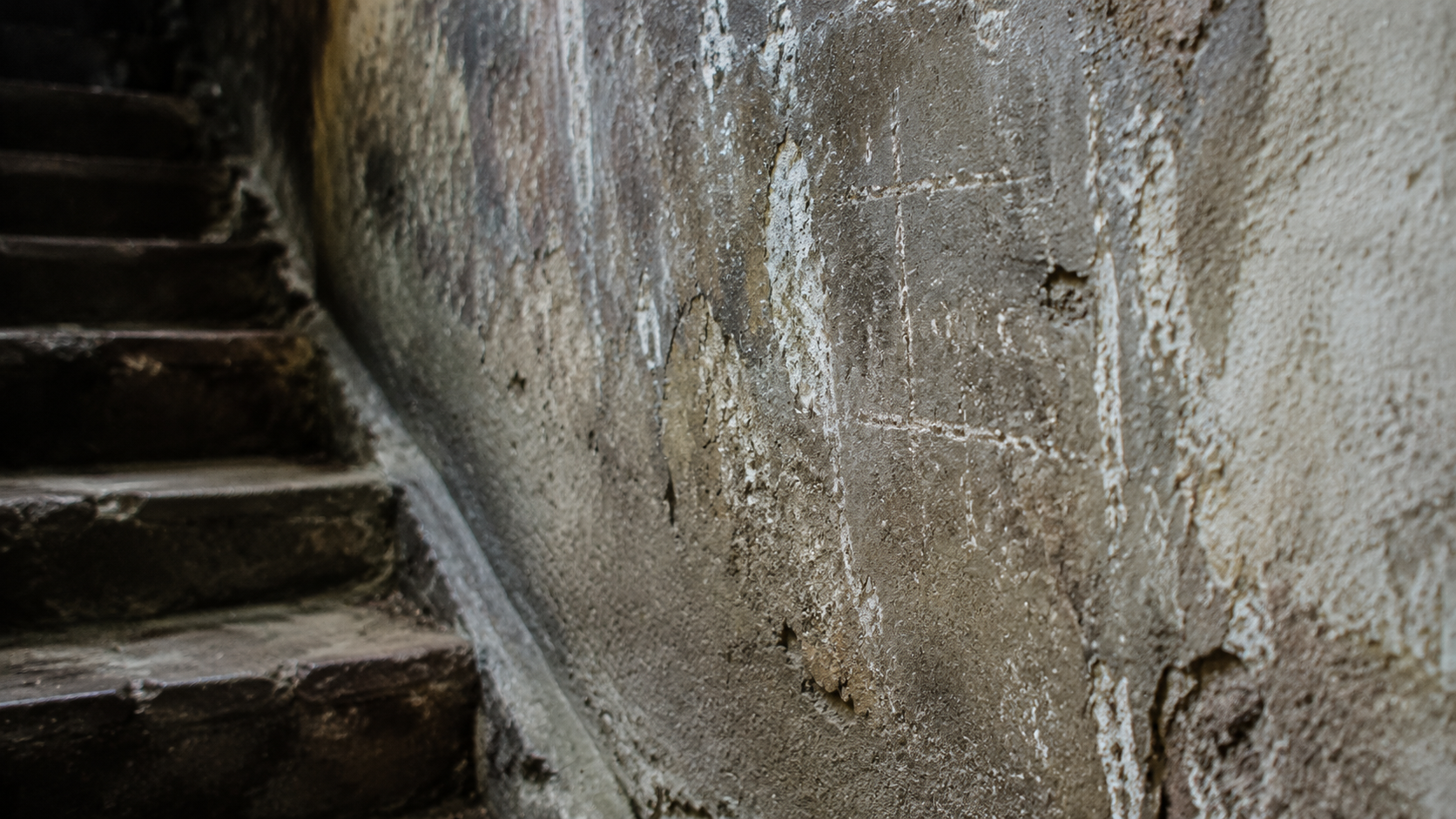
In late autumn, after complaints about trespassers, Ward inspected the cellar access and found chalk marks on the left wall. He assumed they had been made by explorers or vandals. According to the later version, he counted eleven short strokes and one longer diagonal line beneath them.
Ward wiped the wall with a wet rag, then used a stiff brush because the chalk had settled into the damp surface. The marks faded. He locked the rear door and wrote nothing more dramatic than “cellar entry cleaned” in his maintenance notes.
Two weeks later, he found them again.
The marks were in the same place: the same height, the same cluster, the same longer diagonal under the shorter strokes.
Bleach, Paint, and a Practical Explanation
The story becomes more useful when it stays practical. Ward did not announce a haunting. He suspected damp, residue, or someone with a key. Chalk can behave strangely on porous surfaces. Limewash can bloom. Minerals can rise through masonry and leave pale deposits that look intentional.
A contractor later treated the wall with diluted bleach to remove mildew. The marks vanished under the wet glare of a work lamp. A new coat of breathable whitewash was applied over the stairwell wall, partly to discourage graffiti and partly to make future inspections simpler.
For a while, nothing happened.
Then, after a week of heavy rain, the same cluster of pale strokes was visible beneath the fresh coating. Not bright. Not clean. More like an old bruise showing through skin.
The cautious explanation is that the chalk, if it was chalk, had penetrated cracks and was reactivated by moisture. Another possibility is that the marks were mineral salts or old scoring lines. These are reasonable ideas. They are also why the story has lasted.
What the Marks Looked Like
Descriptions of the marks are frustratingly modest. No one described a name, a date, or a complete symbol. They were usually said to be tally-like strokes, roughly vertical, arranged in a loose group about halfway down the stairwell.
Some witnesses insisted there were always eleven. Others remembered nine or twelve. The diagonal line appears in most versions, though not all. A few visitors claimed the marks looked fresher at night or in torchlight, which may say more about angle and moisture than anything uncanny.
Photographs exist, but they are not definitive. The best-known image shows a stained wall with faint white scratches near a flashlight beam. If you know the story, the marks stand out. If not, they could be scuffs, plaster flaws, or old repairs.
That ambiguity matters. Merrow Hall’s stairwell remained unsettling because the marks were plain enough to notice and vague enough to evade certainty.
The Cellar Rumor
Every old house attracts a buried story. Merrow Hall’s involved a former housekeeper, a locked cellar, and a winter storm, though no reliable record ties those pieces together. Another version claimed the marks counted bottles from a hidden wine store.
None of these explanations has been proved. The parish records do not offer the clean tragedy people expect from a haunted manor tale. There is no noted death on the stairwell, no clipping that matches the number of marks, no diary describing a servant counting steps in the dark.
What exists instead is atmosphere and repetition.
Someone saw marks. Someone cleaned them. Someone saw them again. After that, every descent carried the possibility of comparison. Were they darker than before? Had the number changed? Was the diagonal lower? Did the wall look wet only around the strokes?
The Night Visit
The account most often shared online comes from a pair of local history volunteers who entered Merrow Hall with permission during an inventory effort. They were not paranormal investigators. They were there to photograph architectural features before another winter damaged the building further.
One of them later wrote that the upper rooms felt sad rather than frightening. Wallpaper hung in strips. A bird had nested in the remains of a bedroom fireplace. The house made the usual noises of decay: drips, clicks, settling boards, wind pressing at loose sheeting.
The stairwell felt different, she said, because the air seemed still. Their torch beams showed the marks immediately. Pale. Thin. Low-contrast. Present.
The volunteers brought older photographs and matched the wall by its plaster cracks. The cluster appeared to occupy the same place, but one stroke seemed longer than before. They could not tell whether that was new chalk, damp, or camera angle.
They left without incident. No footsteps followed them. No voice came from the cellar. But one of them later admitted she had an irrational urge not to turn her back on the wall.
Why It Stayed Local
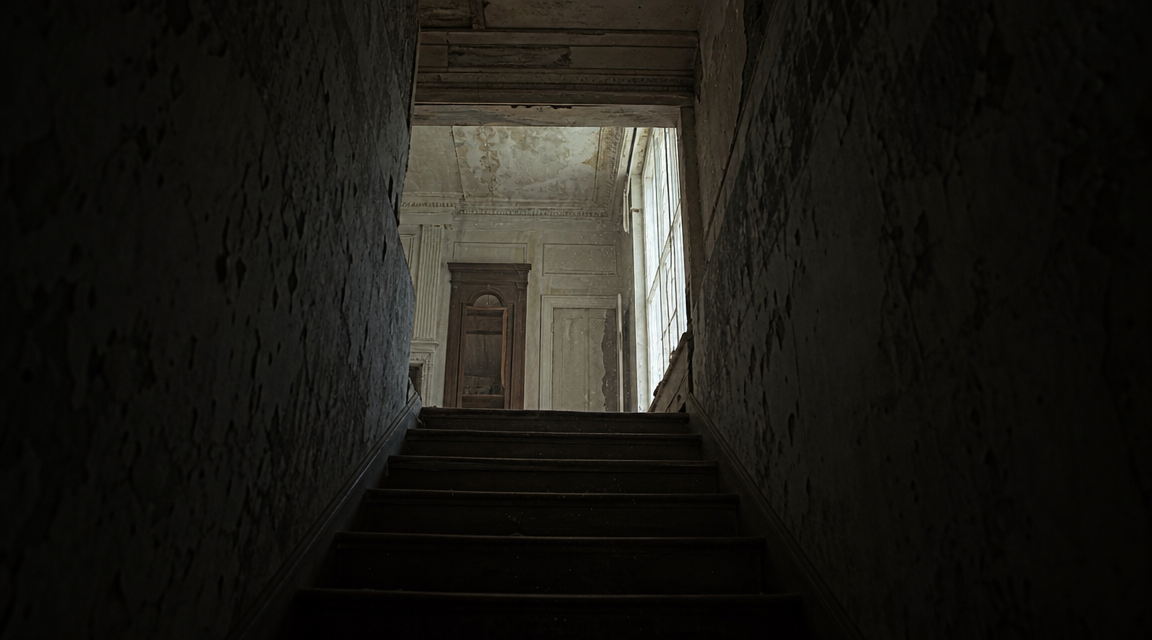
Merrow Hall never became a major haunted attraction. Its location was inconvenient, the structure unsafe, and the story too subtle for dramatic retellings. No famous apparition. No reliable audio. Just a wall with recurring marks.
That restraint protected the story from becoming too polished. Retellings of the scene remained inconsistent. People disagreed over dates, number of strokes, and whether the marks were chalk-white or grey. They agreed mainly on the essential point: the wall had been cleaned more than once, and the marks had returned.
Skeptics pointed to efflorescence, old plaster chemistry, trespassers, or the power of suggestion. All are plausible. In abandoned buildings, moisture can perform patient tricks that look almost deliberate. A wall may remember damage long after a surface coat hides it.
Believers answered with a simpler observation. The marks looked made by a hand.
The Last Report From the Steps
Access to Merrow Hall became more restricted after a partial ceiling collapse in the west wing. The trust changed hands. Warning signs multiplied. The rear service entrance was reinforced with steel mesh, and the cellar stair was no longer part of casual inspections.
One of the last people to document it was a surveyor assessing damp and structural movement. His notes reportedly described “persistent pale markings” on the left wall of the cellar descent, visible beneath flaking limewash. He did not call them chalk. He did not call them unusual beyond the fact that they were persistent.
That is where the paper trail thins.
The house still stands, though more closed than abandoned now. From the lane, Merrow Hall looks like many other rural ruins waiting for funding, weather, or demolition to decide their future. The stairwell is not visible from outside. It remains under the rear of the building, behind locked barriers, in air that likely still smells of stone and rain.
If the marks are mineral stains, they may still be there. If they were left by trespassers, they may have finally been covered by newer decay. If they were something stranger, they have never offered a clearer sentence.
That is what makes the stairwell under Merrow Hall linger. It gives almost nothing away. A few pale strokes on a damp wall. A record of cleaning. A return no one quite explained.
Some haunted places announce themselves with spectacle. Others wait in the part of a house where the light runs out, asking only that you notice what should have been gone.
Reader Context
This Weird Witnessed story is an editorial reconstruction, written as eerie visual storytelling rather than a verified report. For more context, see Apparitions and Hauntings Guide and How WeirdWitnessed Creates Reconstructed Horror Stories.