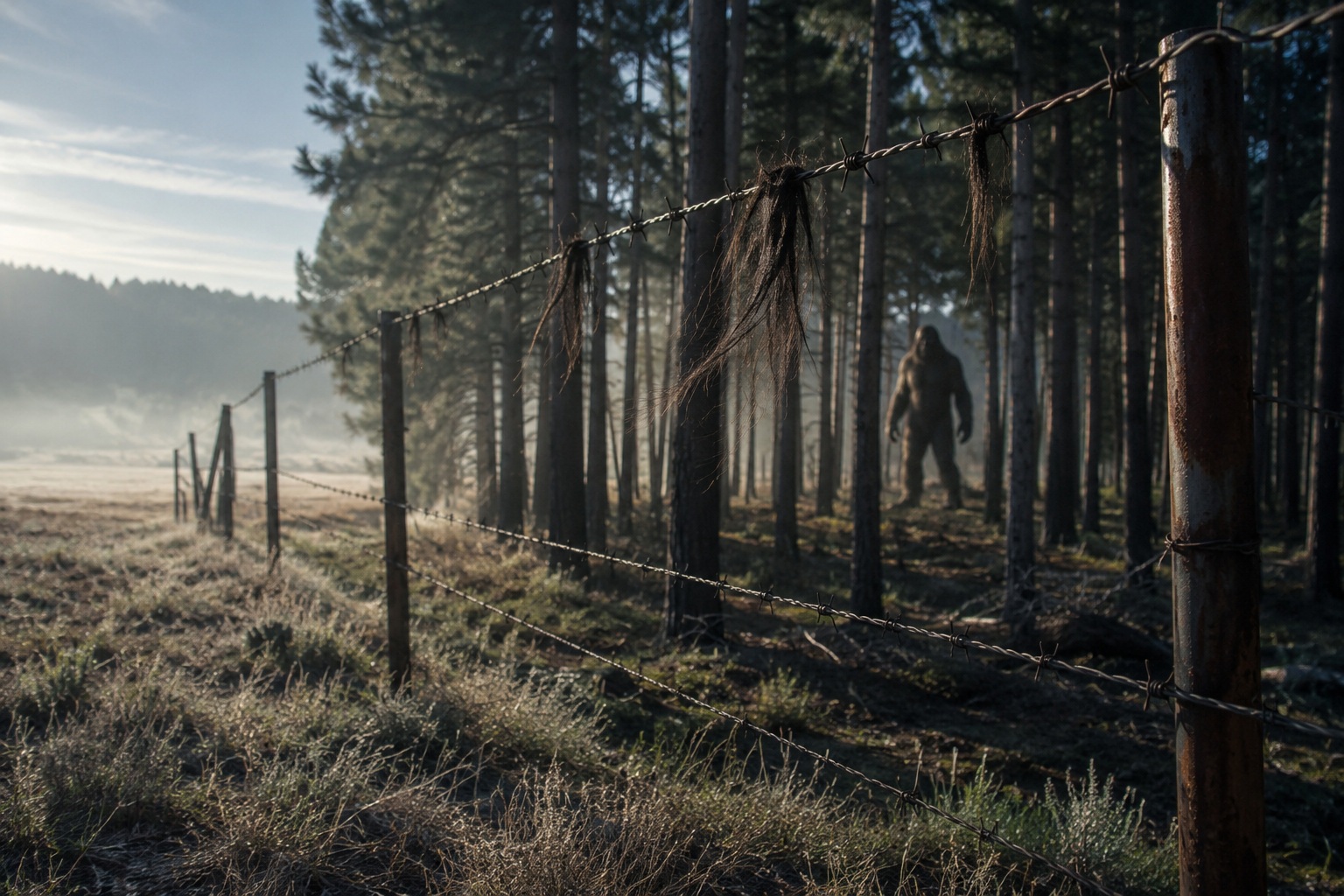
A rancher was checking a stretch of old fence just after sunrise when he noticed something strange. One section of rusty barbed wire had been pulled tight as if something heavy had crossed during the night. A few strands of dark brown hair hung from one barb, twisting gently in the morning wind. At first he assumed it belonged to a deer or a cow. That happened often enough.
But the wire was nearly eight feet off the ground where it crossed a steep rise. There were no hoof marks beneath it. No broken branches. No blood. He climbed the hill and looked into the trees beyond the fence. Everything was silent. The forest looked perfectly ordinary except for one narrow game trail disappearing into thick pines. The hair stayed caught on the wire while the woods remained empty, almost as if whatever had left it was standing somewhere just beyond the first line of trees, waiting for him to leave.
Stories like this appear again and again whenever people talk about Bigfoot. Long before anyone claims to see a huge hairy figure, someone notices hair caught on barbed-wire fences, rough bark, or broken branches. Why does this detail appear so often, and why does it make these stories feel so unsettling?
Why Hair On A Fence Feels Different From A Footprint Many Bigfoot stories begin with footprints. Others begin with strange sounds. But hair caught on a fence creates a different kind of mystery.
The First Time It Happened
Unlike a distant shape disappearing between trees, hair suggests that something physical passed through a very specific place. It leaves behind a small reminder that something large crossed the landscape only hours earlier. That detail gives the imagination something solid to focus on. People immediately begin asking simple questions.
What animal crossed here? Could it have been a bear? Did livestock rub against the fence? Has anyone else noticed this stretch?
The ordinary explanations are usually the first ones considered. That is exactly why these stories spread. The witness often starts with a completely normal assumption before wondering whether the situation fits what they expected. Barbed-wire fences are common along forest edges, ranches, logging roads, and mountain trails. Large animals regularly brush against them.
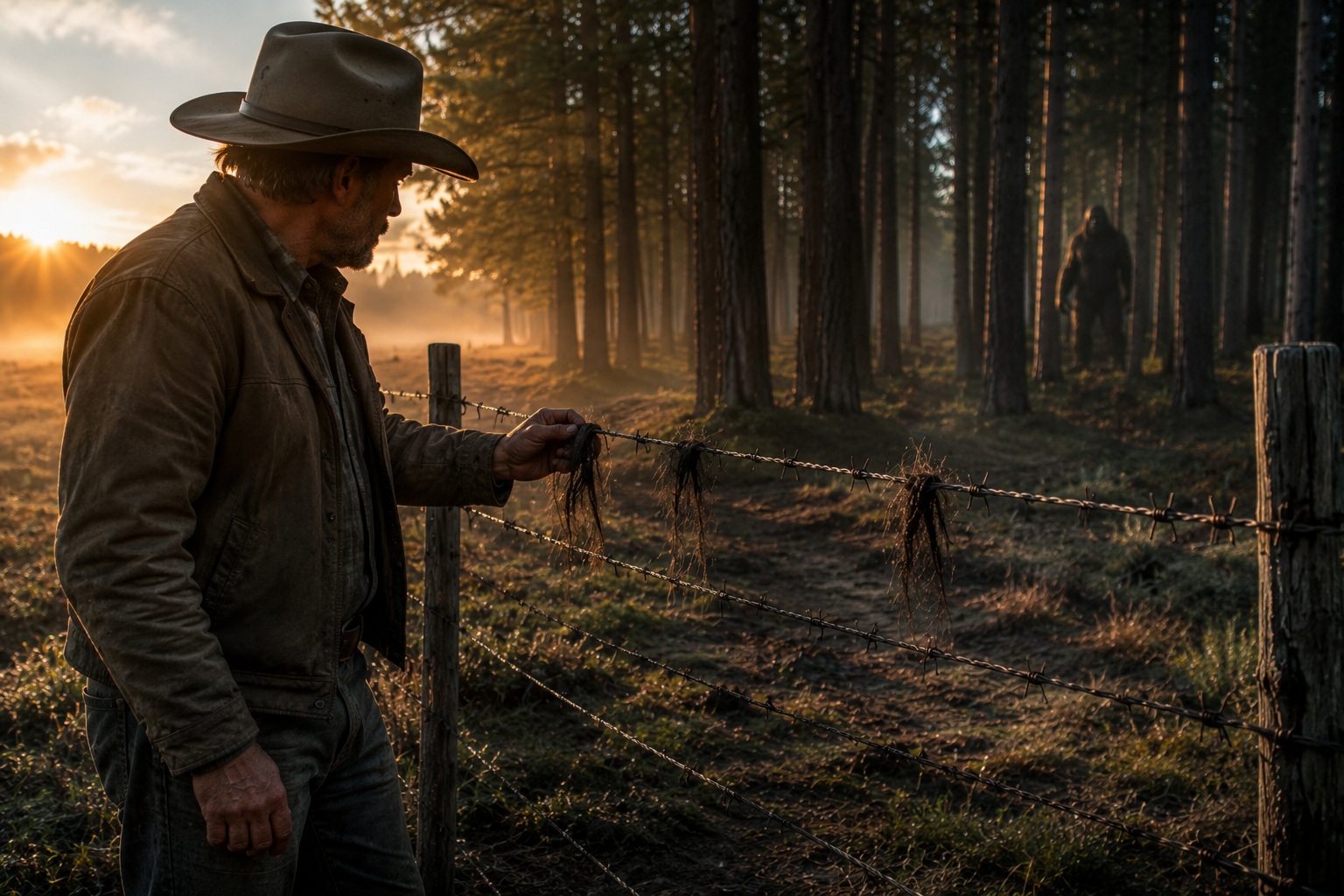
Because of that, finding hair itself is not unusual. What changes the feeling is when the location seems difficult to explain or when several strange details appear together. Perhaps the wire is much higher than expected. Perhaps there are unusually long stride marks nearby.
Why The Place Felt Wrong
Perhaps someone heard heavy walking shortly before sunrise. The fence becomes only one piece of a larger puzzle.
Witnesses Usually Check The Area First One interesting pattern appears in many witness stories.
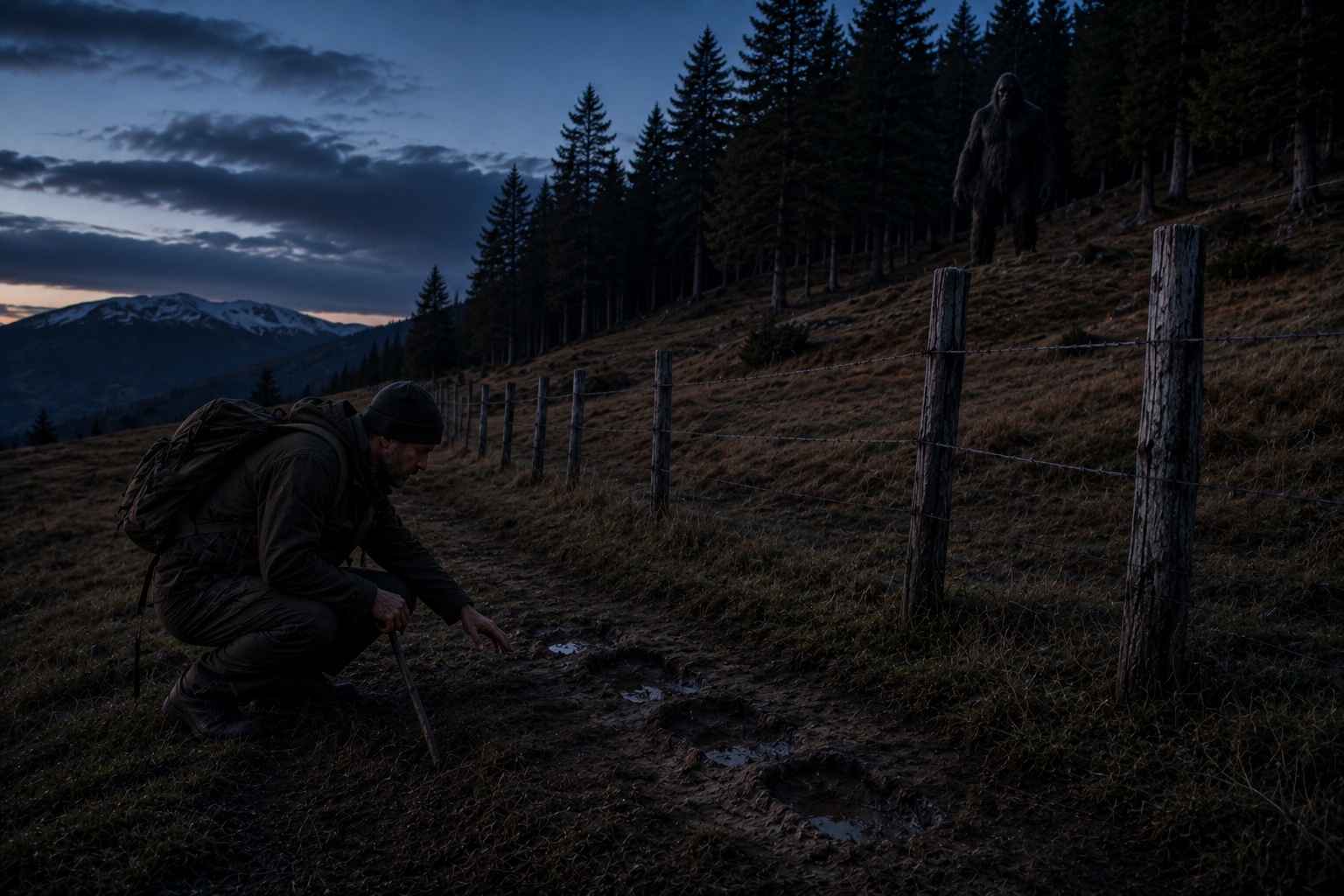
Very few people immediately think about Bigfoot. Instead, they begin investigating the area. They look for tracks in soft ground. They search for broken limbs.
They examine nearby trees for bark rubbed away. Some follow trails leading into thicker woods. Others notice strong smells, snapped saplings, or piles of disturbed brush. Only after several unusual details appear together do some witnesses begin wondering whether the story resembles others they have heard.
This step-by-step reaction makes these reports feel more believable to readers. The person is not chasing a mystery. They are trying to solve an ordinary problem first. Even if every detail eventually has a normal explanation, the process itself creates suspense because each answer raises another question instead of ending the search.
The Detail Nobody Could Explain
Readers imagine themselves making the same decisions. They would probably check the ground. They would probably inspect the fence. They would probably look into the trees.
That familiar behavior makes the stranger parts of the story easier to picture.
Fences Keep Appearing In Bigfoot Stories Barbed-wire fences create natural crossing points. Wildlife encounters them every day.
Deer jump over them. Bears squeeze beneath them. Elk sometimes break sections entirely. Because fences interrupt movement across the landscape, people naturally inspect them for signs of passing animals.
What They Checked Afterward
Hunters do it. Farmers do it. Wildlife officers do it. Anything caught on the wire immediately attracts attention.
That makes fences memorable locations inside scary stories. If someone later reports hearing heavy footsteps nearby or briefly seeing a towering hairy figure disappear uphill, the earlier discovery of hair suddenly feels much more important. Whether connected or not, readers mentally join those events together.
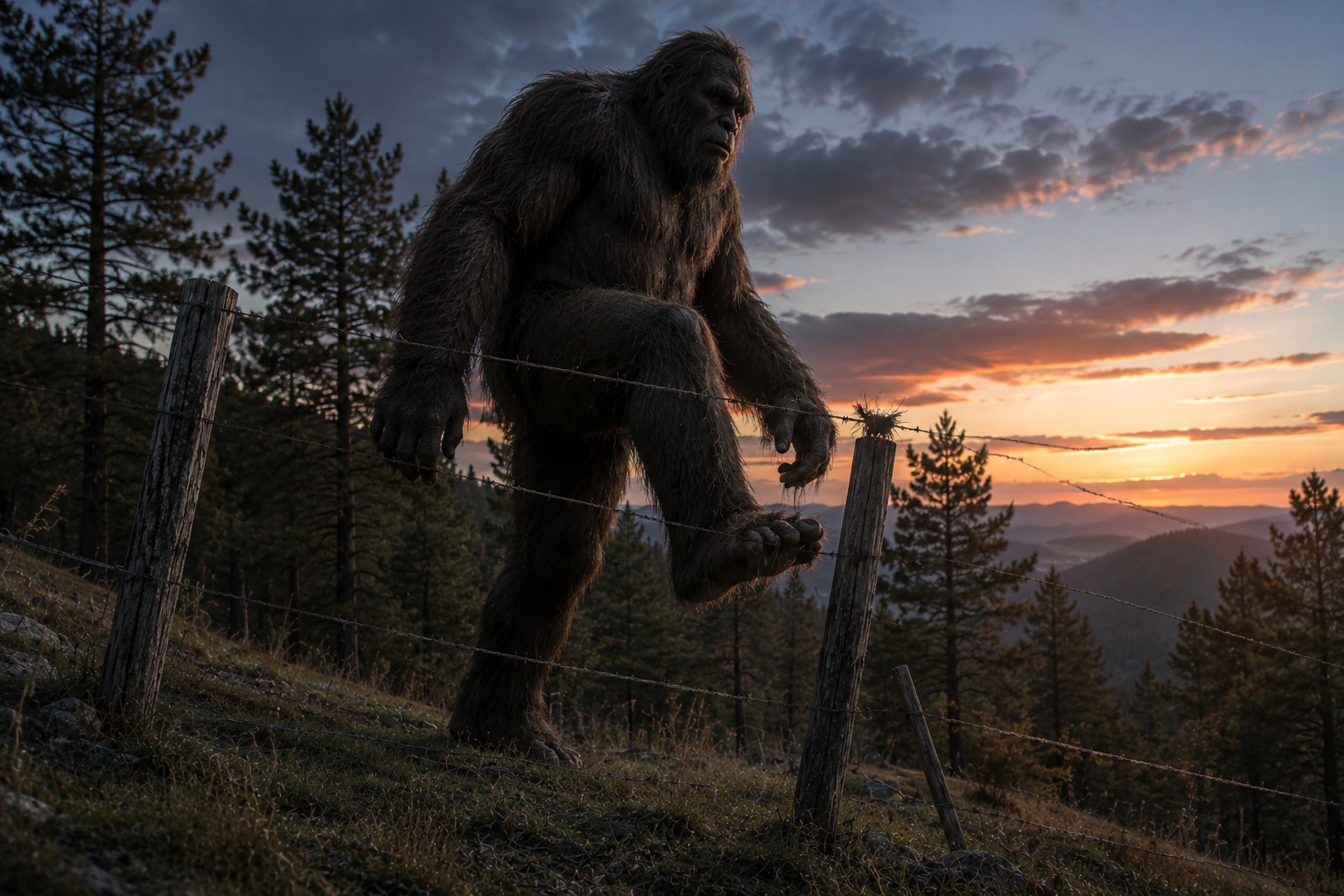
The fence also creates an interesting visual contrast. A simple man-made object sits quietly in the middle of wild country. When something huge appears capable of stepping over it—or brushing against the highest strands without stopping—it emphasizes size without needing dramatic action.
That is why artists often recreate these moments. The fence becomes a measuring stick. Readers immediately understand how tall the figure must have been.
The Moment It Became Harder To Ignore
The Small Detail Often Becomes The Creepiest Part
Surprisingly, many people remember the hair more than the creature. A brief glimpse can be dismissed as poor lighting. A distant silhouette may disappear before anyone gets a second look. Hair hanging quietly from a barb remains behind after everything else is gone.
It creates the uncomfortable feeling that someone arrived only moments too late. The woods are empty now. Whatever crossed is gone. But the small clue remains.
That idea appears in many forms of scary storytelling. An empty swing still moving. Fresh footprints ending at the tree line. A porch chair turned toward the forest overnight.
None of those moments show the mysterious visitor directly. Instead, they suggest recent presence. The audience fills in the missing pieces. That often feels scarier than seeing the whole figure.
Why People Avoided That Spot Later
Bigfoot stories use the same approach. The fence quietly says that something large interacted with an ordinary object before disappearing into places people cannot easily search.
These Stories Continue To Fascinate People Hair found on barbed wire does not automatically mean anything unusual happened.
Wild animals leave fur behind every day. That simple fact is important. Yet the detail keeps returning because it fits naturally into places where people already expect wildlife to travel. When several unusual observations happen close together, witnesses often remember the fence as the first moment that made them stop and look more carefully.
The discovery becomes the turning point of the story. Instead of beginning with a giant figure in the distance, the mystery starts with something small enough to hold between two fingers. That gradual build makes the tale feel more personal. Readers imagine walking the same fence line.
Why The Story Still Gets Shared
They imagine reaching toward the wire. They imagine realizing the hairs are longer than expected. Then they imagine looking up. The empty tree line suddenly feels much larger.
Many reported Bigfoot stories follow similar patterns beyond fences as well. Witnesses often mention unusually broken branches, tree knocks echoing through quiet forests, powerful unfamiliar smells, or footprints that seem to stop without explanation. Each detail by itself may have an ordinary cause. Together, they create the uneasy feeling that someone—or something—passed through just ahead of the witness.
Perhaps that is why the image of hair on old barbed wire continues to stay with people. It is quiet. It is simple. It is something anyone could imagine finding during an ordinary walk.
And once you notice those strands gently moving in the wind, it becomes difficult not to wonder what was tall enough to leave them there before slipping silently back into the trees.