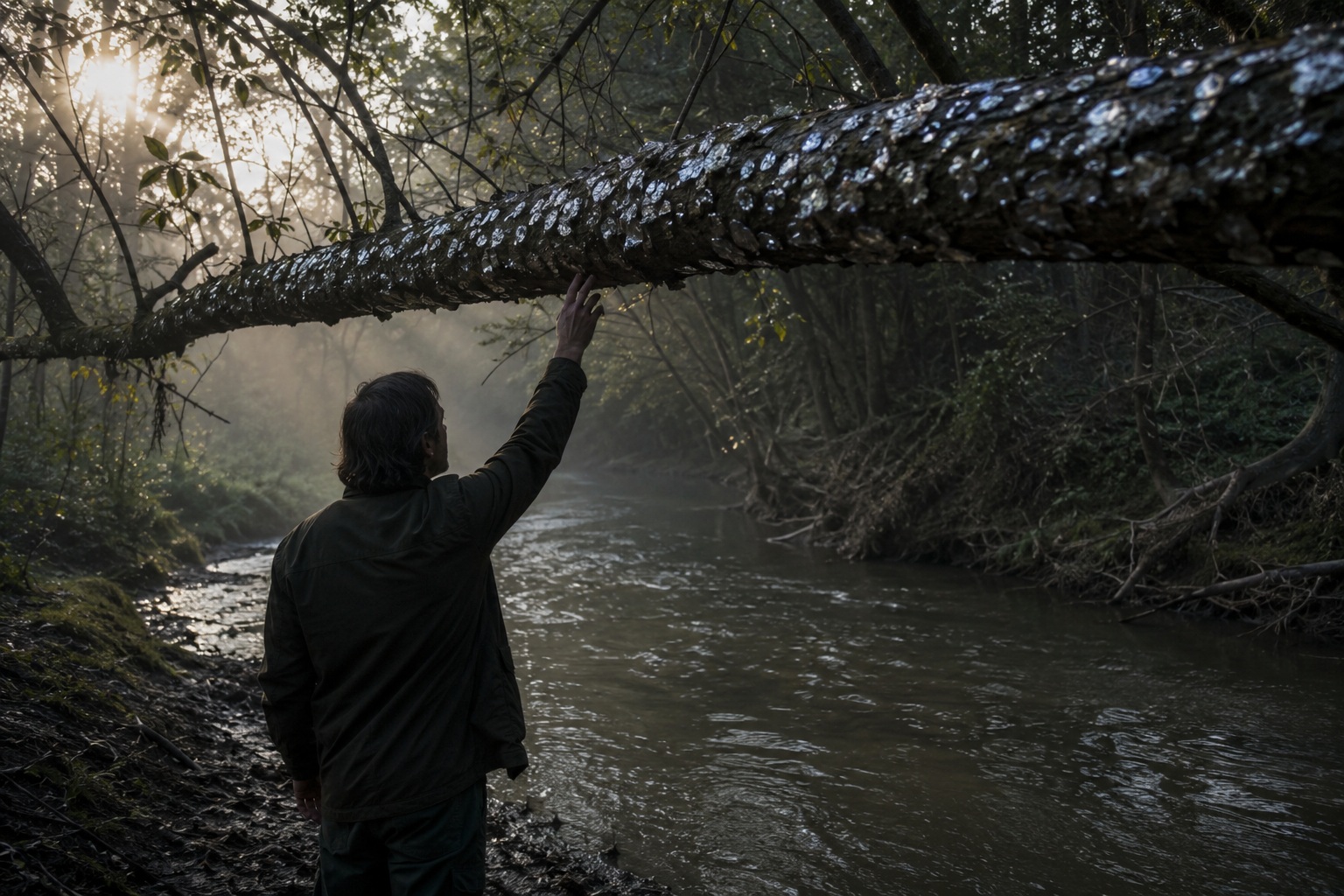
The first thing the fisherman noticed was that the branch should not have been wet. It hung over a narrow creek no wider than a pickup truck, only chest high above the muddy bank. Every leaf around it was dry after two sunny days, yet that single branch glistened as though it had just been lifted from the water. Tiny silver fish scales clung to the bark, catching the morning light like bits of broken glass.
He reached up to brush one away. Instead of falling, it stuck to his fingertip with a slick layer of fresh slime. The creek below barely held enough water for minnows, yet dozens of scales were scattered across three branches stretching several yards along the bank. There were no feathers. No signs of a bird's nest. No raccoon tracks. Just fresh mud leading out of the water for a short distance before stopping beneath the trees.
When he mentioned it later, someone quietly asked whether he had looked back at the creek before leaving. He hadn't.
Stories like this appear in many collections of creek monster, river creature, and swamp cryptid sightings. The strange detail is rarely the creature itself. Instead, witnesses remember the ordinary clue left behind afterward: fish scales hanging from branches that seem too low for birds but too high for fish. Whether those stories describe unknown animals, misunderstood wildlife, or frightened memories growing over time, the image of shining scales in the trees keeps returning.
The First Time It Happened
Most creature stories are frightening because of what someone thinks they saw. Creek stories often work differently. The witness may only catch a glimpse of movement in dark water, hear splashing behind reeds, or notice something slipping beneath an overhanging bank. Those moments are easy to question later.
The fish scales are harder to ignore because they remain after the fear has faded. People return in daylight expecting to find an ordinary explanation. Instead, they discover tiny reflective scales stuck to branches, exposed roots, or low shrubs several feet above the water. That changes the emotional tone of the story.
Instead of asking, "Did I imagine something?" the witness begins asking, "How did these get here?" The object feels normal. The location does not. That combination appears repeatedly in folklore because ordinary objects found in impossible places are naturally unsettling.
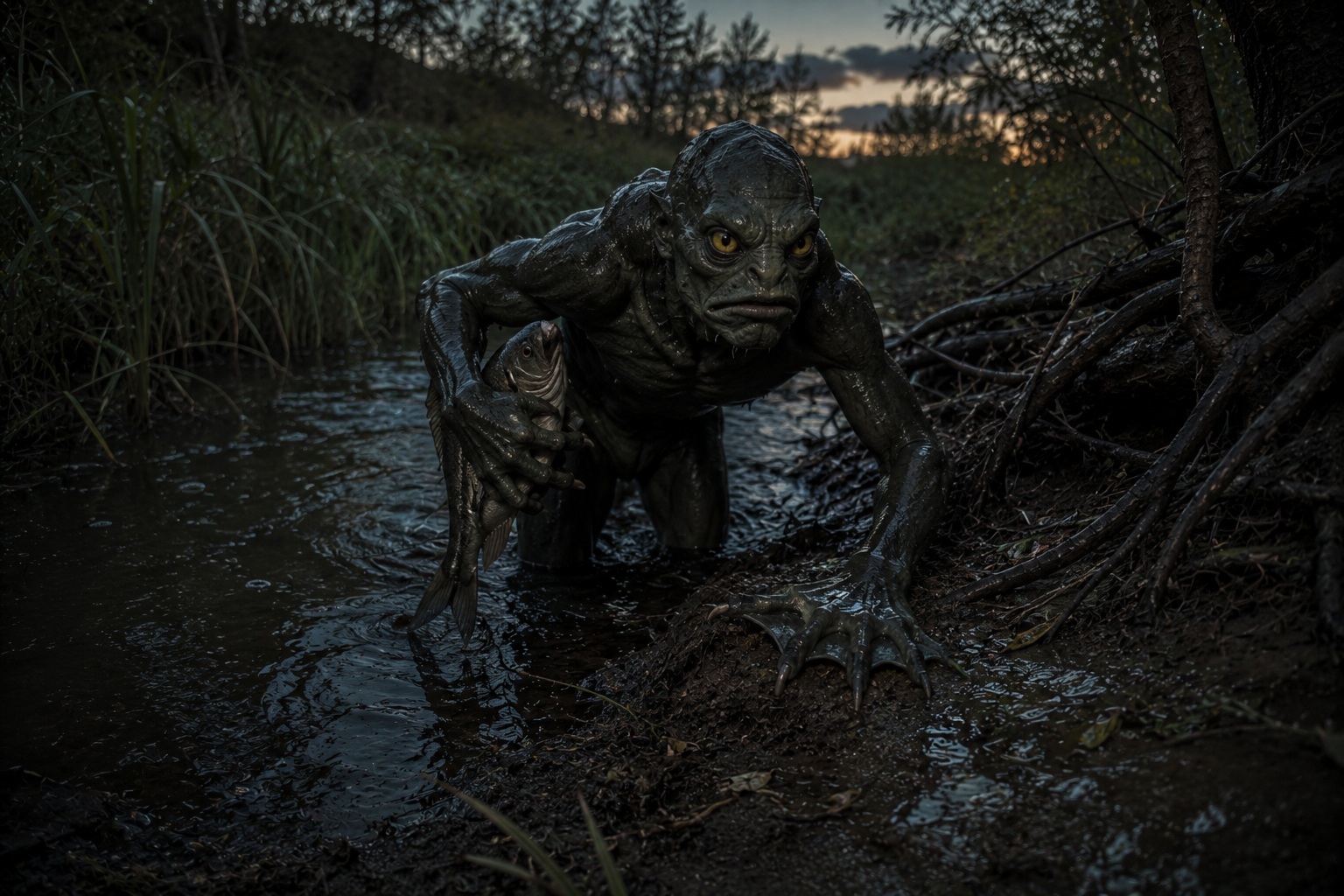
These stories almost always happen along slow-moving creeks rather than wide rivers. Small streams create enclosed spaces. Trees lean over the banks. Roots twist into dark openings beneath the soil.
Why This Pattern Feels So Specific
Shadows remain long after sunset because the canopy blocks the remaining light. Many reports describe someone walking beside the creek when they hear repeated splashing that seems too heavy for fish but too quiet for large mammals. Sometimes the sound stops whenever they stop walking.
Sometimes it keeps matching their pace from behind bends in the creek. Only later do they notice scales on branches several feet inland. That detail matters because witnesses often describe the scales as leading away from the water rather than simply resting above it. The impression is not that something jumped.
The impression is that something climbed.
Most people immediately think of birds. Herons, kingfishers, ospreys, and eagles frequently carry fish into nearby trees.
That explanation deserves serious consideration. Birds often leave scales, bones, and partially eaten fish beneath favorite perches. Witnesses familiar with local wildlife usually check for exactly those signs. They look for feathers.
They search for droppings beneath the branch. They examine broken twigs where a large bird may have landed. Sometimes that solves the mystery immediately. But the stories that continue are the ones where those familiar signs seem absent.
The Detail That Makes People Stop
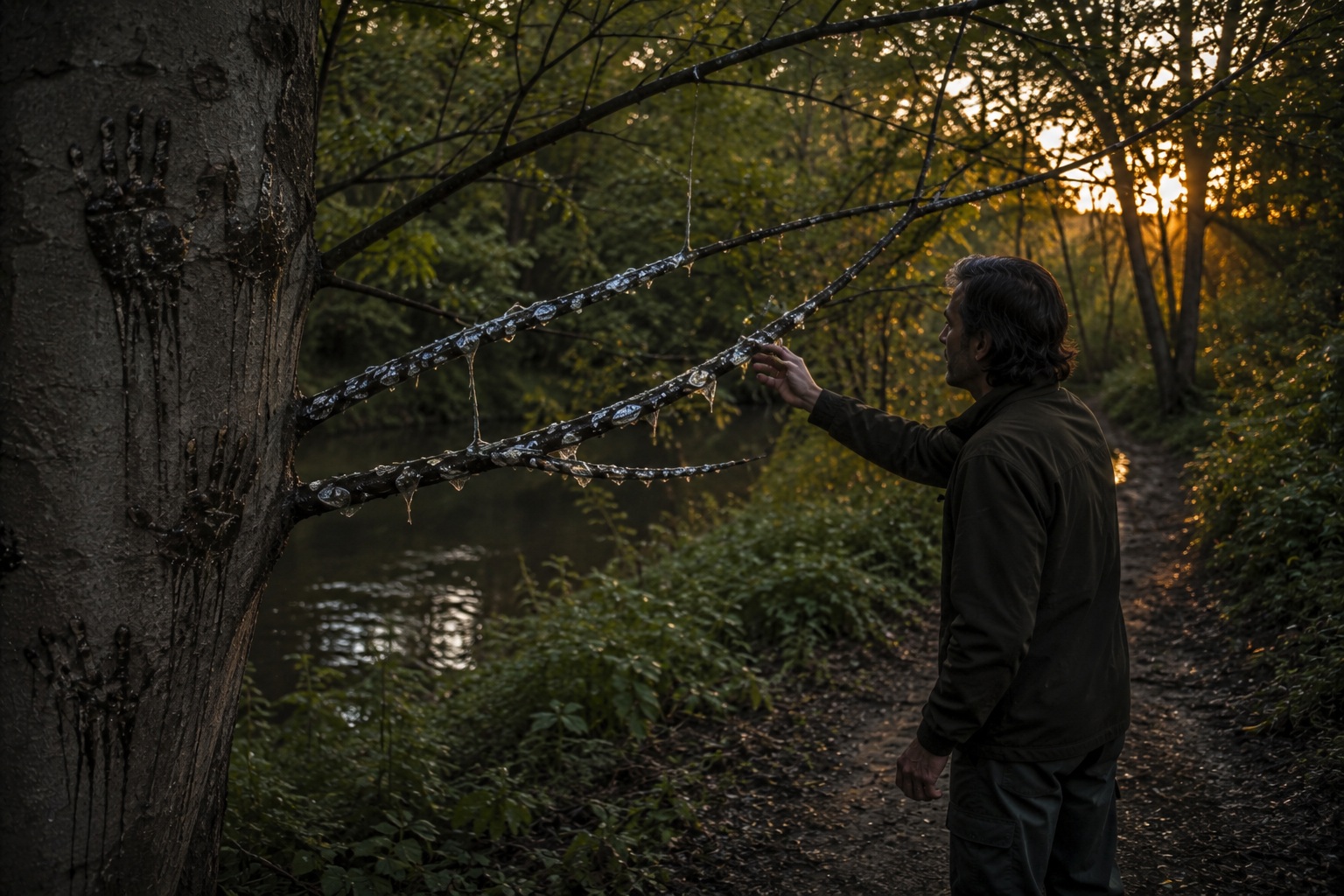
Instead, people describe scales spread across several branches instead of concentrated beneath one perch. Others mention slime on bark that extends downward as though something wet brushed past while climbing. Some remember bark scraped in long vertical lines that resemble claws more than bird talons.
None of those details automatically point toward anything mysterious. They simply keep witnesses from feeling satisfied with the first explanation.
One surprisingly common detail involves branch height.
The branches are usually low enough for a standing adult to touch. That feels strange because many fishing birds prefer higher, stable perches where they can eat safely. Again, nature offers exceptions. Young birds.
Storm damage. Temporary resting spots. Every creek is different. Still, witnesses often emphasize that the branches appear awkward rather than practical.
Ordinary Explanations People Check First
Some are directly over narrow trails. Others grow from bushes instead of sturdy trees. Several stories describe scales hanging from flexible saplings that bend under little weight. People instinctively imagine a bird landing there and reject the image because it seems unstable.
That gap between expectation and observation leaves room for stranger ideas. Folklore quickly fills empty space. Instead of picturing a bird, listeners imagine something emerging quietly from the creek itself, lifting dripping fish into nearby trees before disappearing again beneath the water. The branch becomes memorable because it suggests movement from below rather than above.
Fish scales create unusually vivid memories. They sparkle. They cling to skin.
They remain visible long after water dries. Unlike footprints that wash away or sounds that fade into memory, scales can stay attached to rough bark for days depending on weather. That makes them perfect storytelling details. Someone can revisit the location later.
The Moment It Became Harder To Ignore
Friends can see the branch. Everyone agrees the scales are there. What changes is the explanation. One person sees evidence of feeding birds.
Another sees signs left by raccoons carrying fish. Someone else remembers hearing splashes at midnight and quietly wonders if something larger was using the creek. The scales become a blank space where imagination begins working. That's one reason similar details appear in monster traditions around the world.
Stories grow strongest when they begin with something ordinary.
Nature explains most reports surprisingly well. Fishing birds scatter scales while eating.
Raccoons carry fish onto logs and low branches. Mink and otters drag prey through vegetation. Floodwater can throw fish remains into bushes before receding. Even strong winds during storms occasionally move lightweight scales farther than expected.
Creeks also collect debris in unusual ways. Branches that seem impossible during dry weather may have been underwater only days earlier after heavy rain. Water levels change constantly. People often forget how different the creek looked before.
Why People Avoided That Spot Later
These possibilities should always come first. They account for many strange discoveries without needing anything unusual at all. That careful approach makes the remaining stories more interesting rather than less.
A small number of reports include details that continue bothering witnesses. The scales look fresh despite dry weather. They appear along several branches stretching away from the creek instead of gathering beneath one feeding spot. Witnesses describe hearing slow movement through shallow water immediately beforehand.
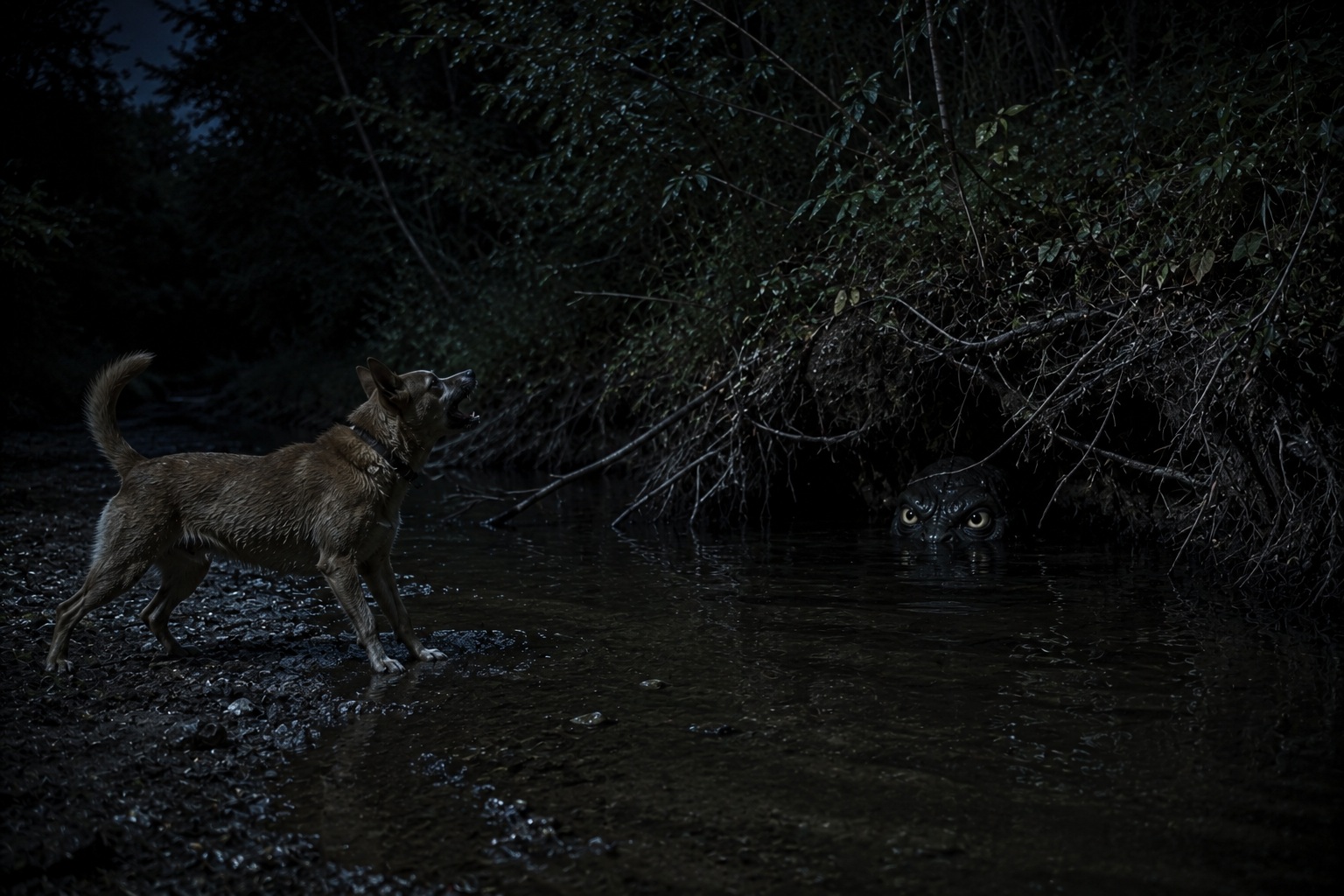
Dogs refuse to approach the bank. Fresh mud appears on tree trunks several feet above the ground. Occasionally someone notices an unmistakable webbed handprint pressed into wet moss or clay nearby. No single detail means very much by itself.
Together, however, they create the feeling that something passed through shortly before people arrived. That feeling often becomes stronger over time. Witnesses stop remembering the splash. They stop remembering the brief shape disappearing into reeds.
Why This Pattern Keeps Coming Back
Instead, they remember touching a silver scale that should never have been hanging from a branch at shoulder height. That ordinary physical detail becomes the center of the story.
People rarely agree on what they saw near lonely creeks.
Some describe oversized salamander-like animals. Others imagine ancient water spirits, swamp creatures, or unknown predators hiding beneath tangled roots. Many eventually decide they simply frightened themselves in fading light. Yet even after those explanations settle in, one image often remains.
A quiet creek. An ordinary branch. Fresh fish scales shining where no one expected them. Whether the cause was wildlife behaving in an unusual way or something that still resists an easy explanation, that detail keeps returning because it asks a simple question instead of offering an answer.
How did something from the water end up there? The branch itself becomes a reminder that fear often begins long after the strange moment has passed. Sometimes it starts the next morning, when daylight makes everything look ordinary except for one small clue glimmering above the creek.