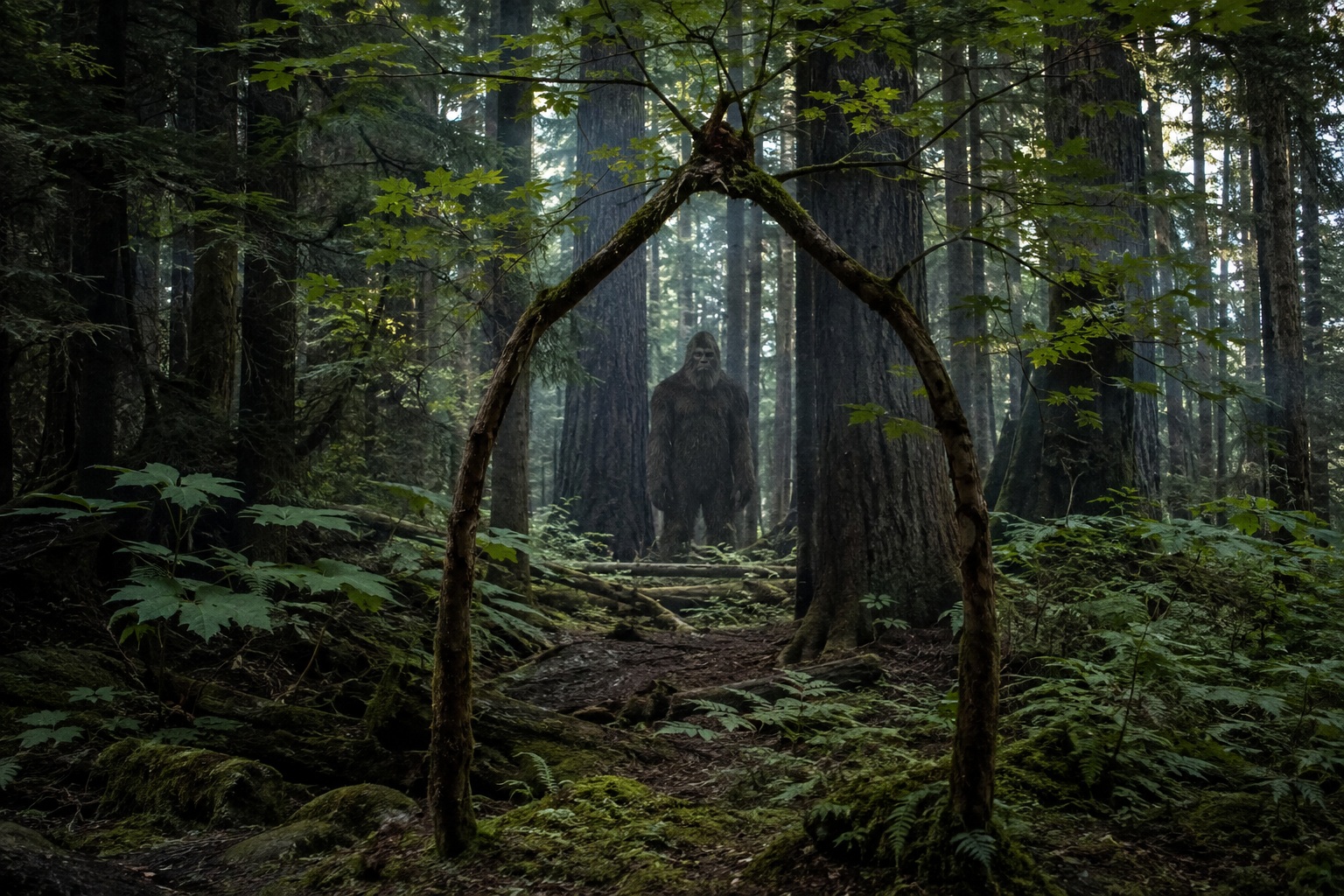
The opening in the trees looked too neat to belong there. Two young pine trees had been bent toward each other until their tops touched, creating a doorway just wide enough for a person to walk through. It wasn't on a hiking trail or beside a campsite. It stood fifty yards inside thick forest where almost nobody would have reason to build anything.
A hiker stopped to take a closer look. The trunks were still alive. Their bark wasn't split. Moss had already begun growing over the curved wood, suggesting they had been bent months or even years before. Then he noticed something stranger. On the other side of the doorway, about thirty feet deeper into the trees, stood a massive hairy figure. It wasn't hiding behind a trunk. It simply stood motionless, almost as though it had been waiting for someone to step through the arch. After several silent seconds, the figure slowly turned and disappeared between the trees without making the crashing noise that something so large should have made.
The hiker never walked through the opening. Stories like this appear surprisingly often whenever people discuss unusual tree structures connected with Bigfoot reports. They raise a question many people ask after seeing photographs of bent saplings or strange forest arches online: why do witnesses keep describing twisted trees that resemble doorways, and why do those structures feel so unsettling?
The answer combines ordinary woodland processes, human psychology, and one of the oldest recurring themes in Bigfoot folklore.
Forests are full of broken branches. Storms snap trunks. Heavy snow bends young trees toward the ground. Wind pushes saplings into unusual shapes. Animals rub against flexible trunks. Nature rarely grows in perfectly straight lines.
The First Time It Happened
Most hikers accept these sights without giving them a second thought. But a pair of bent saplings forming what appears to be an intentional entrance creates a completely different feeling. Humans naturally recognize patterns that resemble places made for people. A doorway suggests invitation.
It suggests that something exists on the other side. Even when nobody built it, the shape immediately changes how the brain understands the surrounding forest. Instead of seeing random trees, people suddenly feel as though they have reached the entrance to somewhere they were never supposed to find.
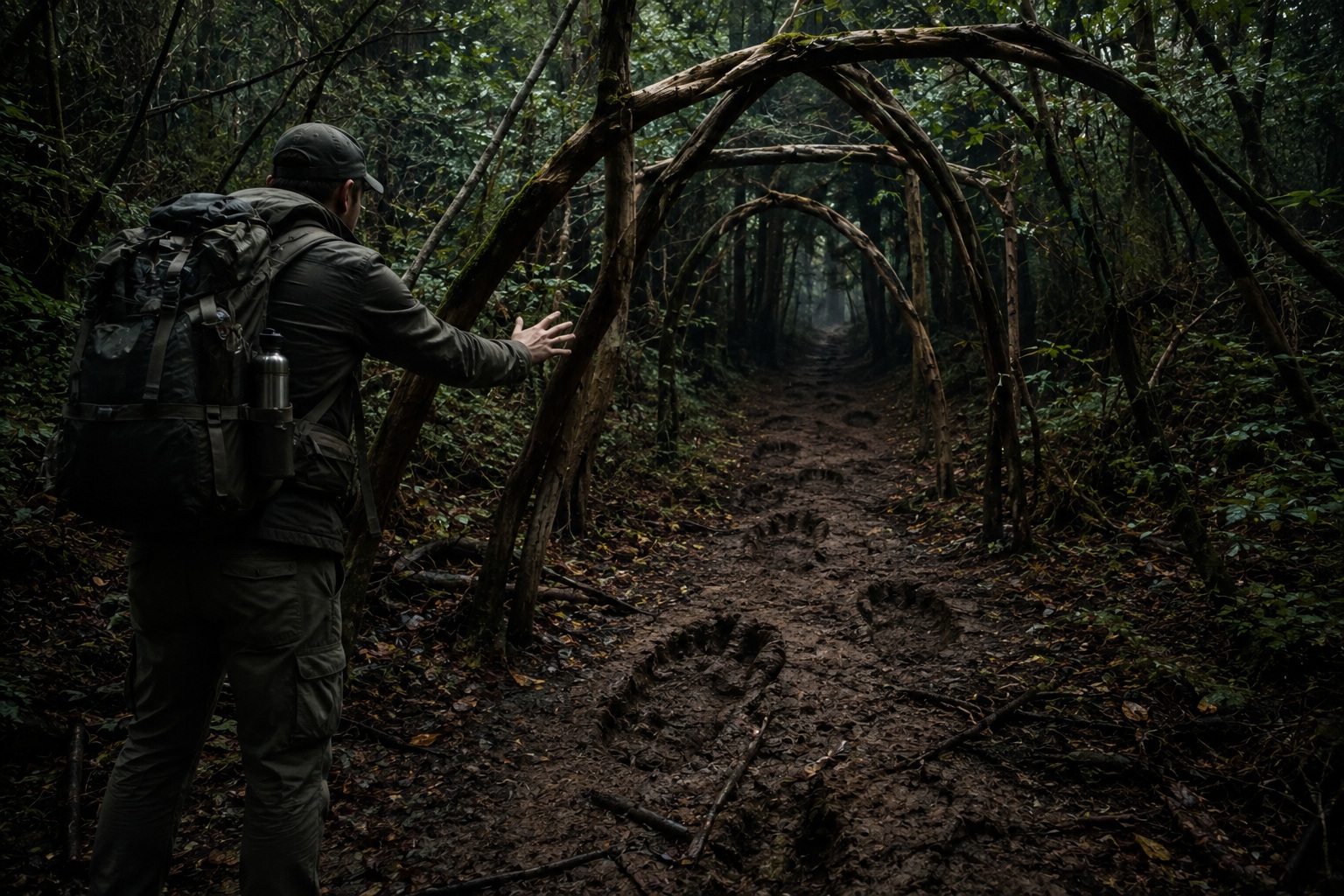
That emotional shift explains why witnesses often remember these structures long after forgetting dozens of ordinary fallen trees from the same hike.
Bigfoot reports involving twisted saplings rarely stop with the trees themselves. People often describe several details appearing together.
The doorway stands away from maintained trails. The surrounding woods become unusually quiet. Game trails seem to disappear nearby. Fresh branches appear woven together in ways that seem deliberate.
Why This Pattern Feels So Specific
Large footprints, snapped limbs, or strong smells are sometimes reported within the same area. Not every story contains every detail. But many follow the same basic rhythm. Someone notices an oddly shaped structure.
They approach because curiosity wins. Then they begin noticing additional things that suddenly make the forest feel wrong. Sometimes they hear heavy footsteps. Sometimes they smell wet fur or something like damp earth mixed with old animals.
Sometimes they catch sight of a huge figure standing farther back between the trunks. Whether those experiences have ordinary explanations or not, the doorway often becomes the moment where the entire memory changes direction.
Yes, nature can bend trees into these shapes in many ordinary ways.
Many twisted saplings have simple explanations. Heavy snow can press young trees toward the ground for an entire winter. As they continue growing, they curve instead of returning upright. Fallen trees can trap smaller saplings underneath them for years before eventually rotting away. Animals may repeatedly push flexible trees while rubbing antlers or searching for food.
The Detail That Makes People Stop
Even neighboring trees competing for sunlight can slowly redirect each other's growth. People also create tree arches. Children build forts. Hunters make temporary blinds.
Campers arrange branches. Artists sometimes weave living trees into decorative shapes. Old logging work can leave surprising patterns that remain visible decades later. Because of all these possibilities, seeing a bent sapling is not unusual by itself.
The question becomes more interesting when witnesses describe several unusual details appearing together rather than focusing on one twisted tree alone.
People who spend years hiking often say they quickly recognize ordinary storm damage. Broken tops point in similar directions after strong winds.
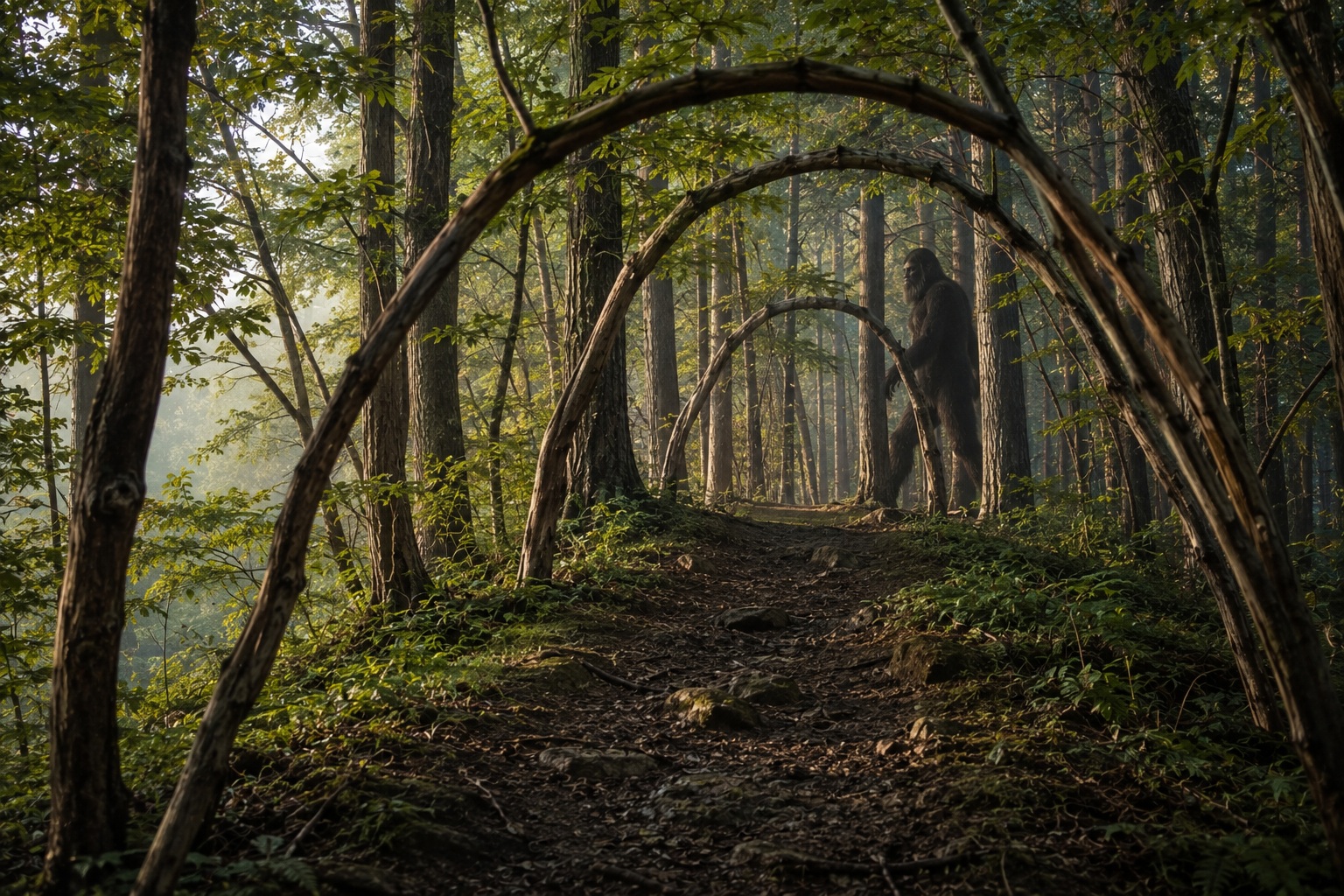
Snow-bent trees usually lean together across an area instead of appearing individually. Natural arches often include cracked bark, exposed roots, or signs showing exactly how the tree bent. Some reported doorway structures seem different to the people who found them. Witnesses describe two living saplings bent toward each other with surprisingly similar curves.
Ordinary Explanations People Check First
Several arches may appear one after another along a ridgeline. Freshly woven branches may sit beside older bent trees. Large snapped trunks may lie nearby while much smaller flexible trees remain untouched. None of these details automatically point toward anything mysterious.
Still, unusual combinations encourage people to stop looking only at the trees. Instead, they begin examining the surrounding forest. That is usually when reports become stranger. ## The Huge Figure Beyond The Opening
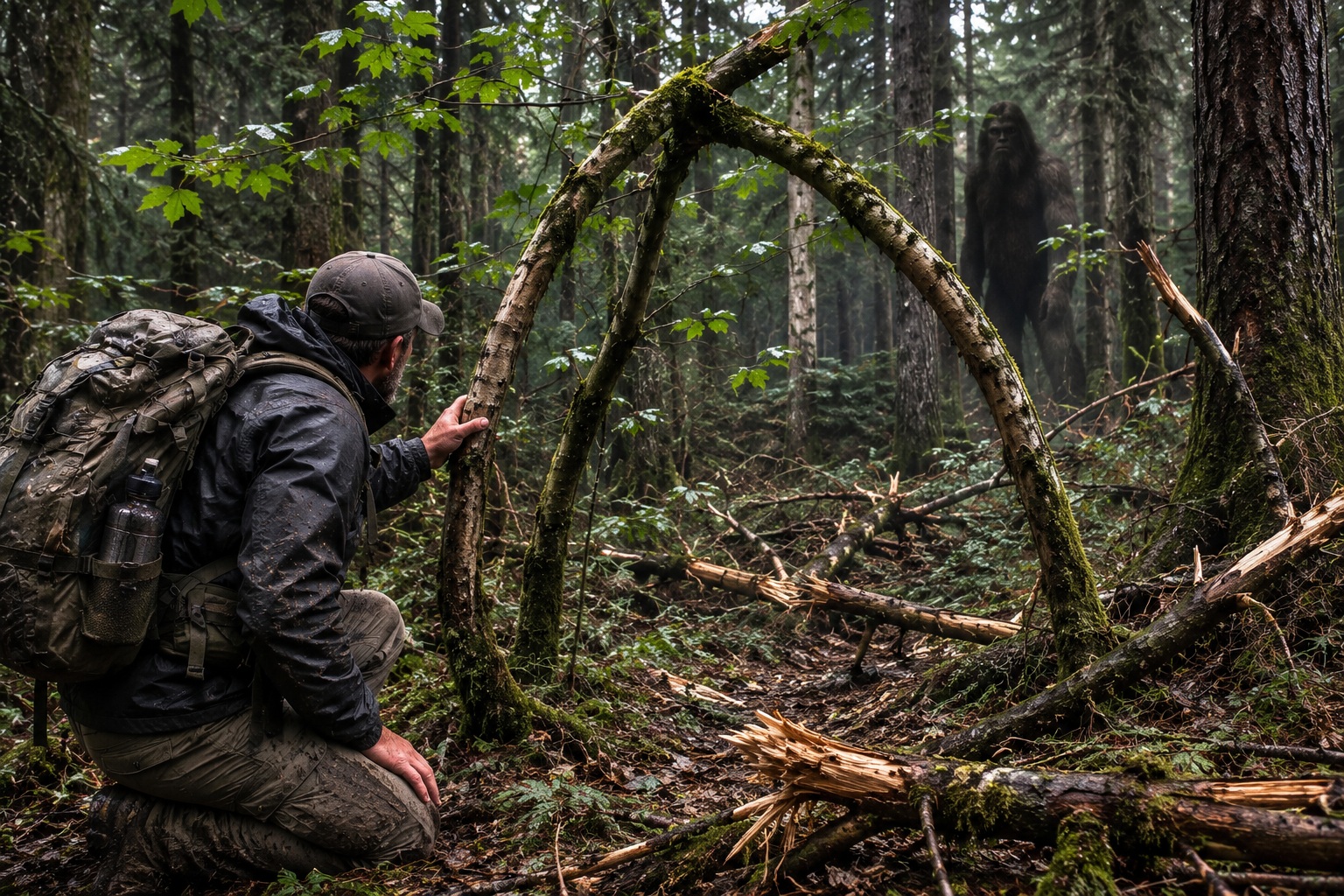
One detail appears often enough to stand out. The reported figure almost never stands inside the doorway. Instead, witnesses describe seeing something beyond it. A massive hairy shape watches from deeper among the trees.
Its height becomes obvious because nearby trunks provide scale. The figure often remains completely still. Witnesses frequently say the silence feels worse than movement. If the figure ran, they could explain it as a bear or another animal.
Instead, they describe something apparently watching without curiosity or panic. Many reports say the figure turns away only after several long seconds. Others describe it stepping sideways behind a tree that seems too narrow to hide something so large. Whether the witness misidentified an animal, experienced heightened fear, or encountered something they cannot explain, the doorway becomes inseparable from the memory.
The Moment It Became Harder To Ignore
Years later they often remember the bent trees before they remember the figure itself. ## Why People Wonder What The Structure Means
Bigfoot enthusiasts believe twisted saplings serve as markers. Different ideas appear repeatedly.
Some think they mark travel routes through dense forest. Others believe they warn strangers away from hidden areas. Some imagine they identify food sources or sleeping locations. Another popular theory suggests the arches simply help family groups recognize familiar paths.
These ideas remain speculative. No single explanation accounts for every reported structure. There is also an important practical problem. If a large intelligent creature really lived in forests, there would be little reason to advertise its location with obvious tree sculptures visible to anyone passing through.
That question has led many researchers to stay cautious. Some unusual structures may be meaningful. Many are almost certainly natural. Others may have been built by people years before someone connected them with a Bigfoot story.
Why People Avoided That Spot Later
Perhaps the most interesting part of these reports has nothing to do with the trees. It is the decision people make after finding them. Again and again, witnesses describe reaching the opening before suddenly deciding not to continue.
Nothing physically blocks the path. No fence stands across it. No warning sign appears nearby. The forest simply feels different.
Birdsong may stop. The wind may seem quieter. The space beyond the arch looks darker even during daylight because closely packed branches reduce the light. Psychologists would point out that unfamiliar environments naturally increase alertness.
The brain becomes more cautious whenever visibility decreases. A doorway shape strengthens that response because people instinctively expect transitions. Crossing a doorway means leaving one place and entering another. In a forest, where there are no real rooms, that expectation creates a powerful emotional effect.
Why This Pattern Keeps Coming Back
Whether or not anything unusual is present, many hikers describe an overwhelming sense that they should turn around.
The image is unforgettable. A giant footprint can fade.
A strange sound can be forgotten. Even a glimpse of something large disappearing through trees becomes uncertain after enough time has passed. But two living trees bent into an almost perfect doorway create a picture that stays in people's minds. The shape is simple.
Anyone can imagine standing before it. Anyone can picture wondering what might be waiting beyond. That combination makes these reports easy to retell. People remember the entrance because it transforms an ordinary forest into a place that feels divided into "before" and "after."
Whether the doorway formed through snow, wind, old human activity, or something nobody expected to find, it becomes the point where curiosity meets fear. Most hikers eventually keep walking. A few step through. And in many Bigfoot stories, those who continue beyond the twisted trees are the ones who later describe hearing heavy footsteps pacing somewhere just out of sight—or catching one last look at an enormous hairy figure quietly watching from the deeper woods before disappearing without a sound.