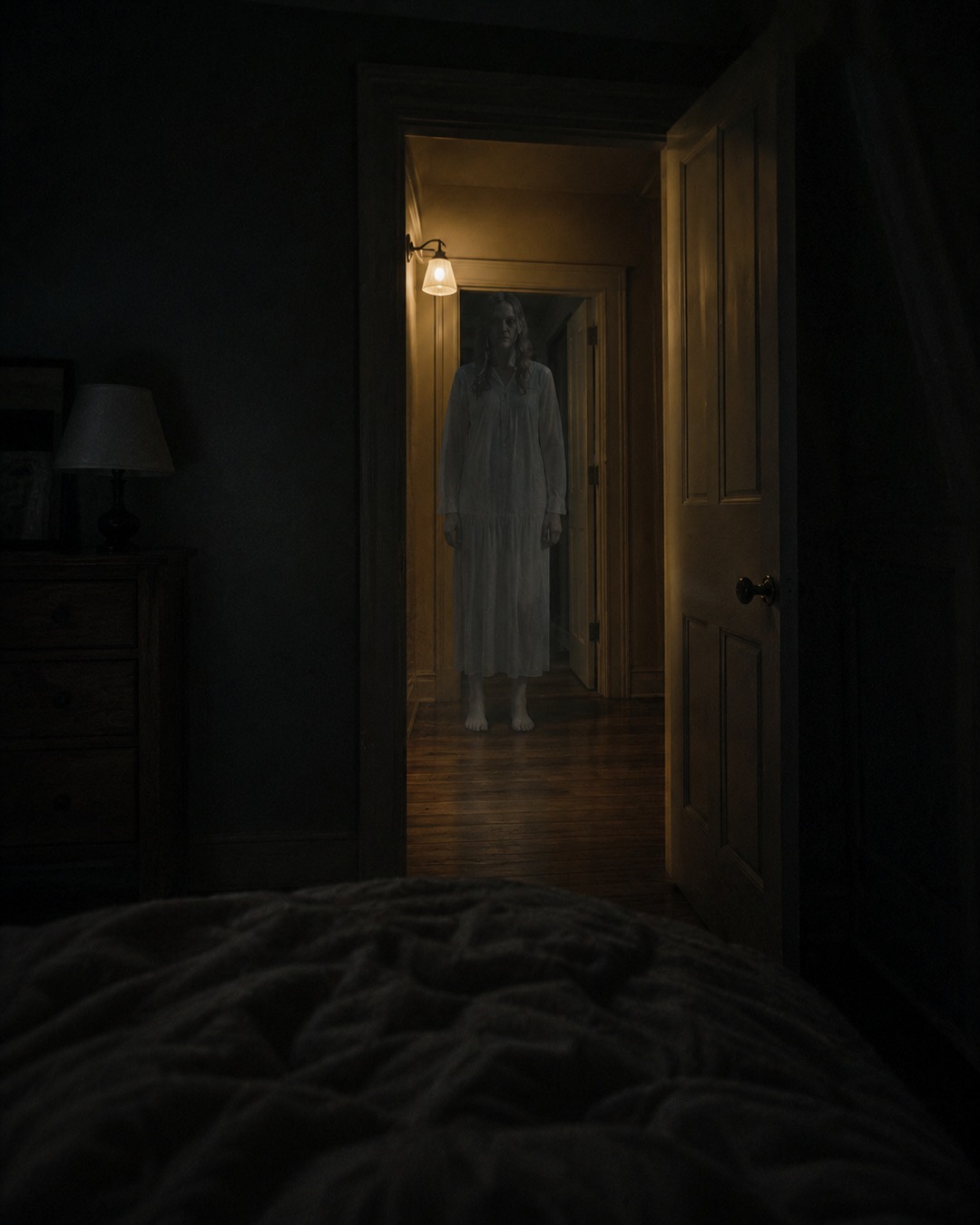
Illustrative reconstruction
Imagine a report from an old house after midnight. The heat has gone quiet, the rooms are still, and someone hears three knocks from the wall beside the staircase. A few minutes later there is a soft step overhead, although nobody else is home. By morning, the story has already taken on a shape: something in the house seemed to answer.
That scene is an illustrative reconstruction, not a documented case. Weird Witnessed uses scenes like this to show why a report feels unsettling. The research question is different: what kinds of ordinary sounds can create that impression, and why do people interpret certain noises as a presence?
Short answer
People hear knocking, footsteps and voices in houses for several overlapping reasons. Buildings expand and contract with temperature changes. Plumbing, heating ducts, vents, loose framing, appliances, animals, wind pressure and outdoor noise can all produce sharp knocks or traveling sounds. At night, lower background noise makes small sounds easier to notice and harder to locate.
That does not mean every person who reports a haunting is lying. It means the sound itself is often ambiguous. Once a sound happens in a place already believed to be haunted, the mind naturally asks whether it had agency: did it answer, follow, repeat, or happen at exactly the wrong moment?
What people actually report
Haunting accounts often describe repeated knocks, footsteps in empty rooms, voices from hallways, laughter, whispers, radios changing to static, baby monitors making strange sounds, and noises that seem to move through walls. The important editorial distinction is that these are reported experiences, not verified proof of a ghost.
A useful report should record what was heard, where it seemed to come from, what systems were active in the building, who else heard it, whether it repeated, and whether the sound was captured before people began discussing what they thought it meant.
Ordinary explanations worth checking first
Temperature and building movement
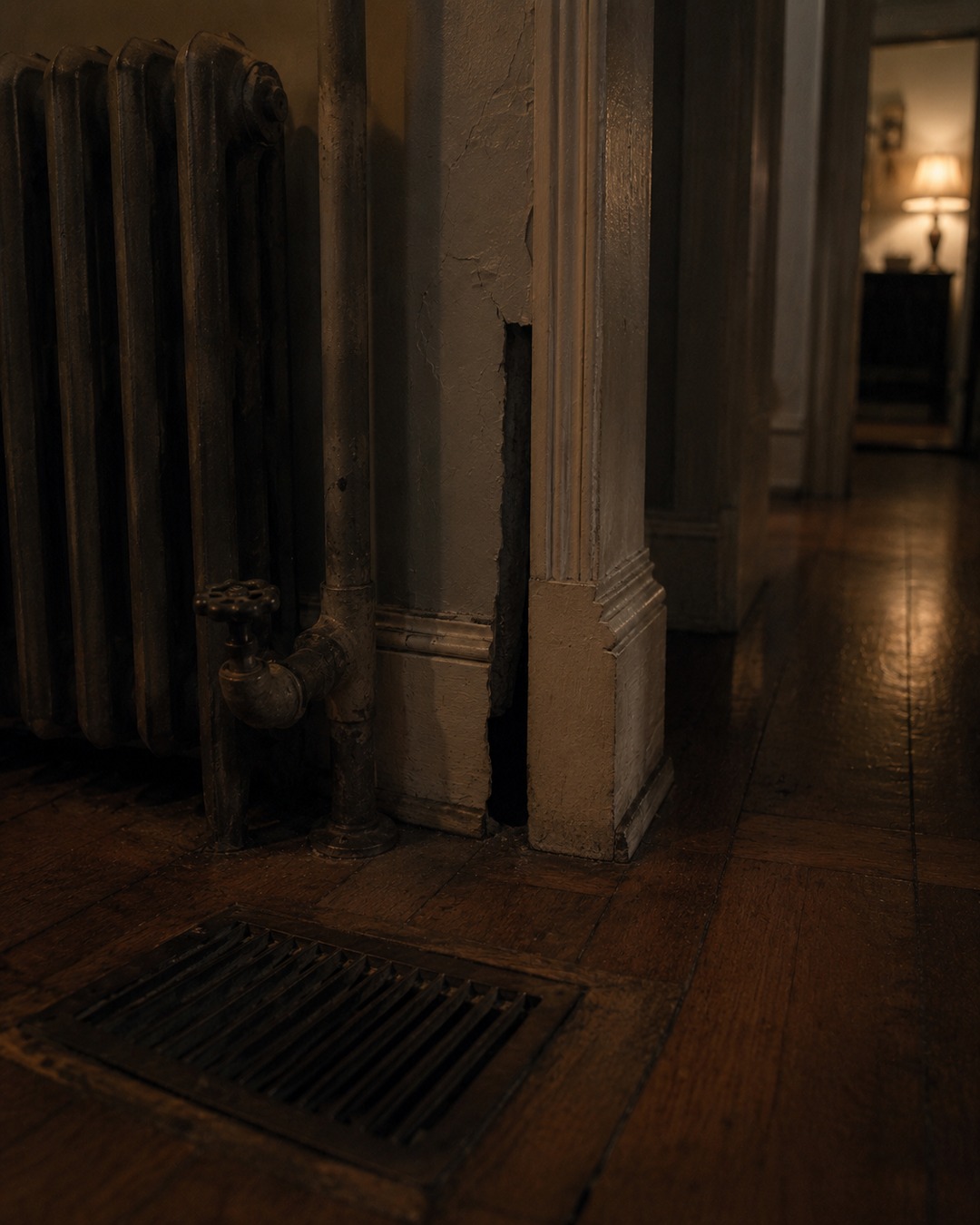
Wood, metal, ductwork and framing can change shape as temperatures shift. A house that is quiet during the day may become active at night when heating cycles change and outdoor temperatures fall. A single pop from framing or ductwork can sound like a knock because the listener hears the sudden release, not the slow physical change that caused it.
Plumbing and water pressure
Pipes can knock, tick or shift inside walls. Water pressure changes, drain lines, toilets refilling and hot-water pipes cooling can create sounds far from the fixture that caused them. The wall becomes a speaker.
HVAC ducts and vents
Metal ducts can tick, pop or boom as air pressure and temperature change. Vents can also carry voices, television audio or outdoor sound from another part of the building, making speech seem to come from a wall, ceiling or empty room.
Air leaks and drafts
ENERGY STAR’s home air-sealing guidance is useful because it reminds readers that hidden gaps around attics, basements, wiring penetrations, pipes, windows and doors can move air through a house. Air movement can make curtains shift, doors tap, and rooms produce intermittent sounds.
Animals
Rodents, raccoons, birds, bats and insects can create scratching, tapping, running and chewing sounds. Their movement can sound oddly human when it travels through ceilings, wall cavities or insulation.
Safety note: carbon monoxide and indoor air
Most unexplained knocks are not a carbon monoxide issue. But any responsible haunted-house guide should mention indoor safety because carbon monoxide can affect health and perception. The EPA describes carbon monoxide as an indoor air pollutant that is dangerous because it is colorless and odorless. If people in a building experience headaches, dizziness, nausea, confusion, weakness or symptoms that improve outside, safety checks come before folklore.
Why the sounds feel paranormal
The fear comes from interpretation. A random house noise becomes more frightening when it appears to respond. Three knocks after a question feel different from one pop in the wall. Footsteps above an empty room feel different from one creak. A whisper that resembles a name feels different from indistinct air through a vent.
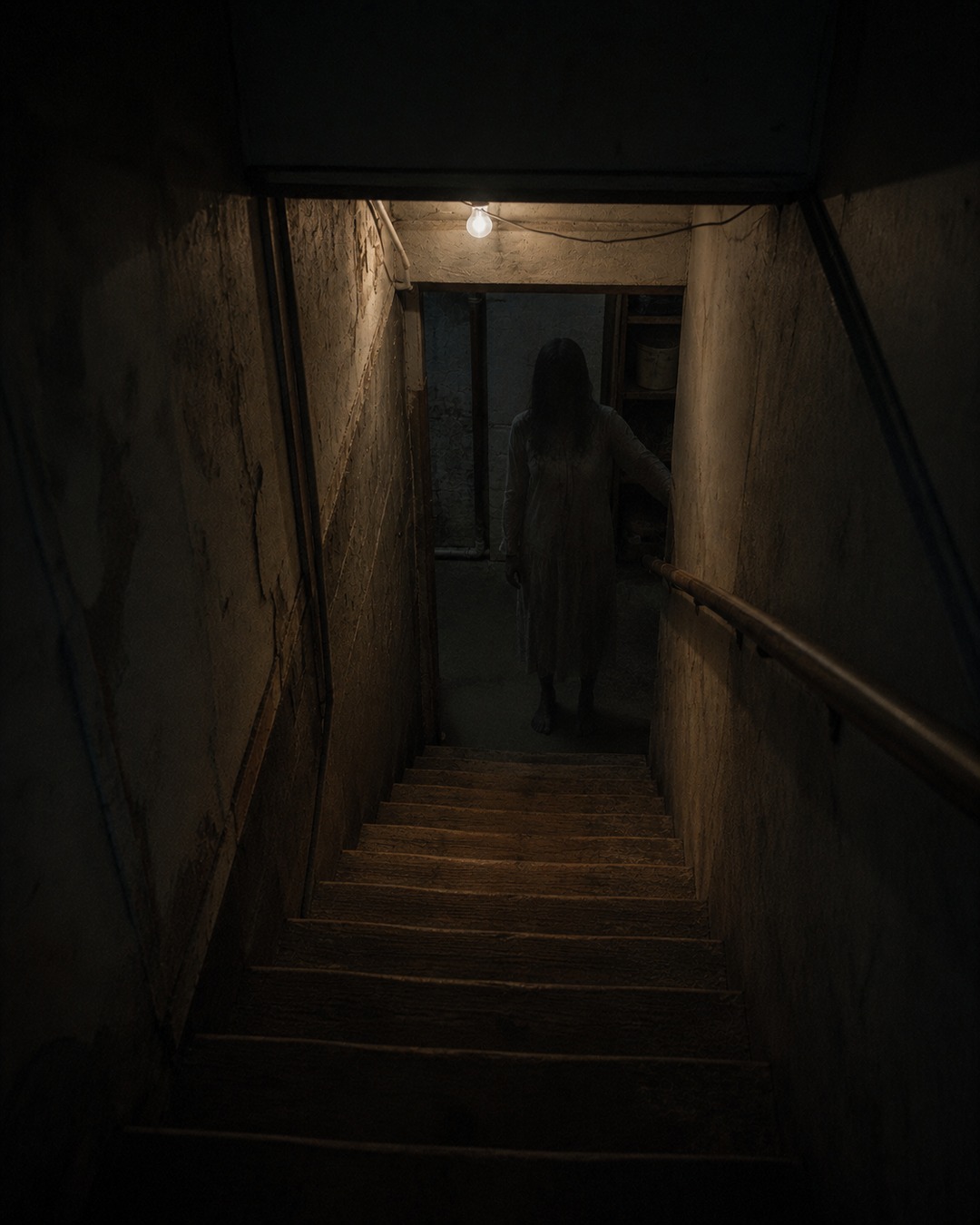
Humans are also pattern-seeking. At night, with less visual context, the brain has more room to assign meaning. This is why a sound that might be ignored at noon can become unforgettable at 2:17 a.m.
Folklore and the meaning of knocks
Knocking has a long place in ghost and poltergeist tradition. Stories about rapping spirits, death omens and answers from walls turned ordinary sound into a kind of supernatural language. Once a culture teaches that knocks can mean communication, an ambiguous knock becomes easier to interpret as a message.
Weird Witnessed should phrase this carefully: knocking sounds are commonly described in ghost stories and paranormal investigations. That does not mean the sound itself proves a spirit.
How to investigate a repeating knock
| Question | Why it matters |
|---|---|
| What exact time does it happen? | Heating, cooling and appliances often follow schedules. |
| Does weather change it? | Wind, rain and temperature swings affect buildings. |
| Does it follow plumbing use? | Pipes can knock after faucets, showers or toilets. |
| Does it happen near vents? | Ducts carry sound and expand with heat. |
| Are there animal signs? | Droppings, scratching, insulation damage or entry holes matter. |
| Can a recording capture it? | Repeated audio helps separate rhythm from memory. |
| Does anyone feel sick or confused? | Safety checks, including CO detectors, come first. |
What would make a case more interesting?
A case becomes harder to dismiss when the sound is repeatable, recorded from more than one location, tied to no obvious mechanical system, and documented before witnesses discuss what they believe it means. Even then, “unexplained” is not the same as “supernatural.” It only means the available evidence has not identified a cause.
What we can and cannot say
We can say that unexplained house sounds are common, that ordinary mechanisms can produce surprisingly human-like noises, and that ghost folklore changes how people interpret them. We cannot say a knock is caused by a ghost unless evidence rules out the building, environment, animals, appliances and human error.
What this page adds that a generic result usually does not
A haunted sound report becomes more useful when the timing, room layout, heating system, pipes, vents and animal access are documented. The strange feeling matters, but the strongest version of the story is the one that lets a reader compare ordinary house sounds with the witness pattern.
Sources & Further Reading
- EPA — Carbon Monoxide’s Impact on Indoor Air Quality
- EPA — Improving Indoor Air Quality
- ENERGY STAR — Seal and Insulate with ENERGY STAR
- National Park Service — Natural Sounds
Related Weird Witnessed guides
- Why haunted houses seem to have moving objects, doors and strange room events
- Why cold spots become associated with ghosts