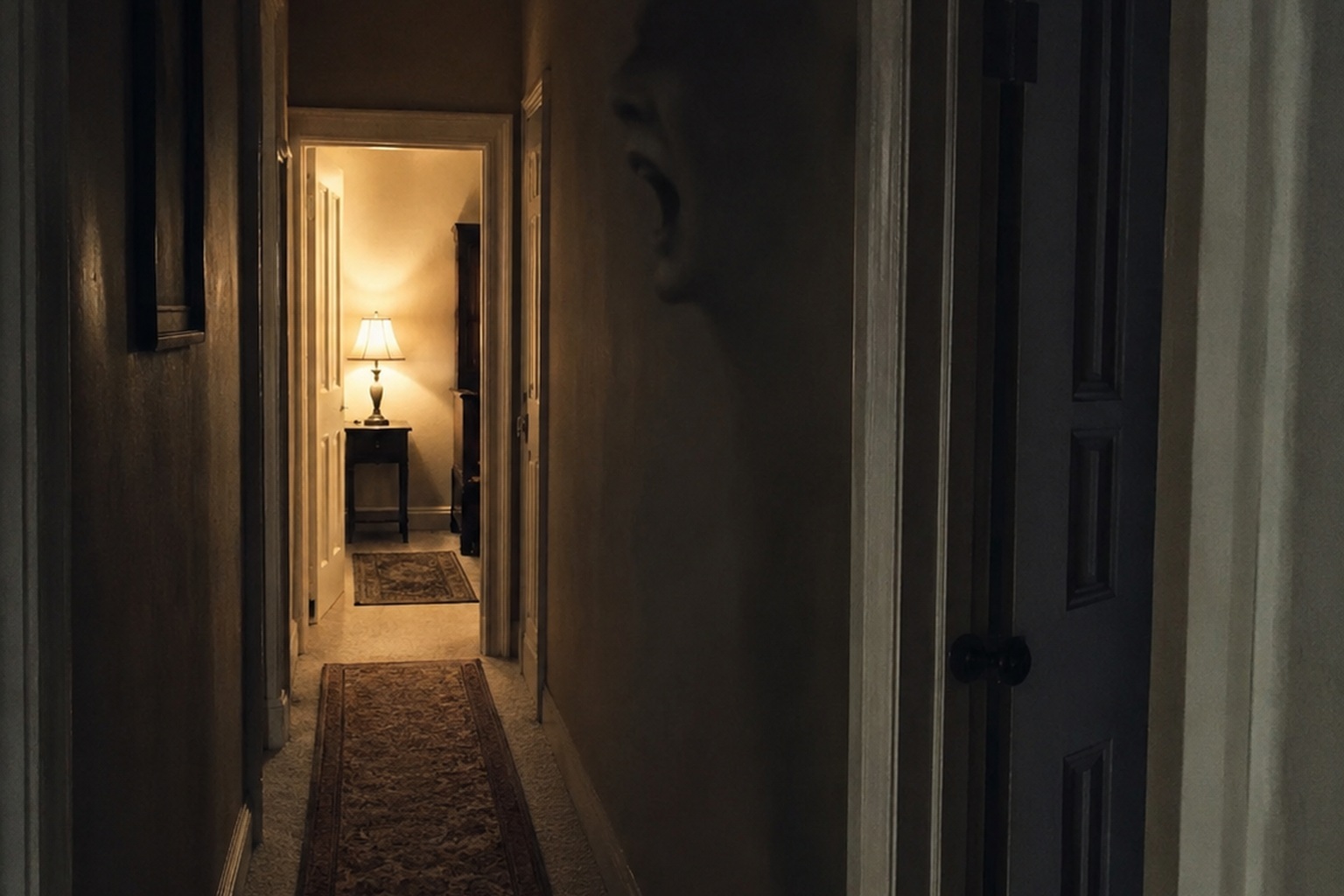
The whisper came from the upstairs hallway just after midnight. It wasn't loud. It wasn't dramatic. It sounded exactly the way his wife usually said his name when she wanted him to come upstairs. Soft. Calm. Close enough that he answered without thinking.
"I'm coming." There was no reply. He climbed the stairs expecting to find someone waiting in the hall. Instead, every bedroom door was closed. The landing light was off. The hallway stretched away in complete silence. His wife was asleep downstairs on the couch where she'd been watching television.
As he stood there, wondering whether he had imagined it, he noticed something that made him stop moving. The whisper had sounded as if it came from the far end of the hallway, yet the carpet there showed the family dog lying perfectly still. The dog hadn't looked up. Hadn't wagged its tail. Hadn't reacted at all.
Then, a second whisper floated through the darkness. His name again. This time it sounded farther away, almost as if whoever spoke had taken one slow step deeper into the empty house.
Stories like this appear everywhere people share strange experiences. Whether someone believes they heard a ghost, a trick of the mind, or something they still cannot explain, the details are surprisingly similar. The voice is usually familiar. It often speaks only once or twice. It comes from an ordinary place like a hallway, staircase, or empty room. And the person who hears it almost always walks toward the sound before realizing nobody should have been there.
The First Time It Happened
So why do empty hallways appear so often in these stories, and why is hearing your own name one of the most unsettling experiences people report?
Most strange sounds are easy to dismiss. A creaking floor can be old wood expanding. Pipes knock. Air vents whistle. Wind rattles doors.
But hearing your own name is different because your brain treats it as important before you even think about it. From childhood onward, our names become signals that demand attention. Someone calling your name usually means they want something. Ignoring it feels wrong. That automatic response explains why so many witnesses answer immediately.
They don't pause to question what they heard. They answer. Only afterward do they discover nobody was standing in the hallway, doorway, or room where the voice seemed to come from. That tiny delay between hearing and realizing is what gives these stories so much power. For a few seconds, everything feels completely normal. Then the situation changes all at once.
Hallways connect the places where people actually live. They separate bedrooms from living rooms, stairs from kitchens, one familiar space from another. Unlike a bedroom or office, a hallway is usually empty by design. That emptiness matters.
Why The Place Felt Wrong
When someone hears a whisper from an empty hallway, there are fewer obvious explanations. There isn't supposed to be anyone standing there. Witnesses often describe the voice as having no echo. Instead of sounding distant, it feels strangely close, almost as if someone is standing just around the nearest corner.
Many reports describe voices coming from: Upstairs landings Long apartment hallways Hotel corridors
Hospital hallways late at night School corridors after everyone has left Narrow hallways inside older houses These places naturally hide what lies just beyond sight.
A single corner can completely block your view while still allowing sound to travel. That uncertainty makes people instinctively walk toward the voice.
After realizing the hallway is empty, witnesses nearly always begin checking ordinary explanations. Was someone still home?
The Detail Nobody Could Explain
Did the television remain on? Could a neighbor's voice have echoed through an open window? Did another family member call without remembering? Many also look at pets.
Dogs and cats become unexpected reference points because owners expect them to notice unusual sounds. Sometimes the animal reacts immediately. Sometimes it keeps sleeping. Interestingly, both reactions tend to make the story more memorable.
If the dog suddenly stares into the hallway, people wonder whether it noticed someone they couldn't see. If the dog sleeps through everything, witnesses wonder whether the voice existed only for them. Neither reaction answers the mystery, but both become unforgettable details that remain attached to the experience.
There are many reasons people may briefly think they heard their name. A distant conversation can blend with television dialogue. Wind moving through vents sometimes changes the shape of ordinary sounds.
What They Checked Afterward
Fans, air conditioners, and white noise can make the brain organize random sounds into familiar speech. Researchers even have a name for the tendency to recognize meaningful patterns where none were intended. Our brains constantly search for familiar voices, faces, and words because missing an important signal would be far more costly than occasionally being mistaken.
Fatigue also matters. Many stories happen late at night, early in the morning, or during periods of stress when attention shifts between waking and sleeping. That doesn't mean every report has the same explanation. It simply explains why hearing a familiar voice is more common than many people expect.
The reports that stay with people usually include one additional detail. Instead of hearing a single whisper once, something else happens immediately afterward. Some witnesses hear their name from a different location only seconds later.
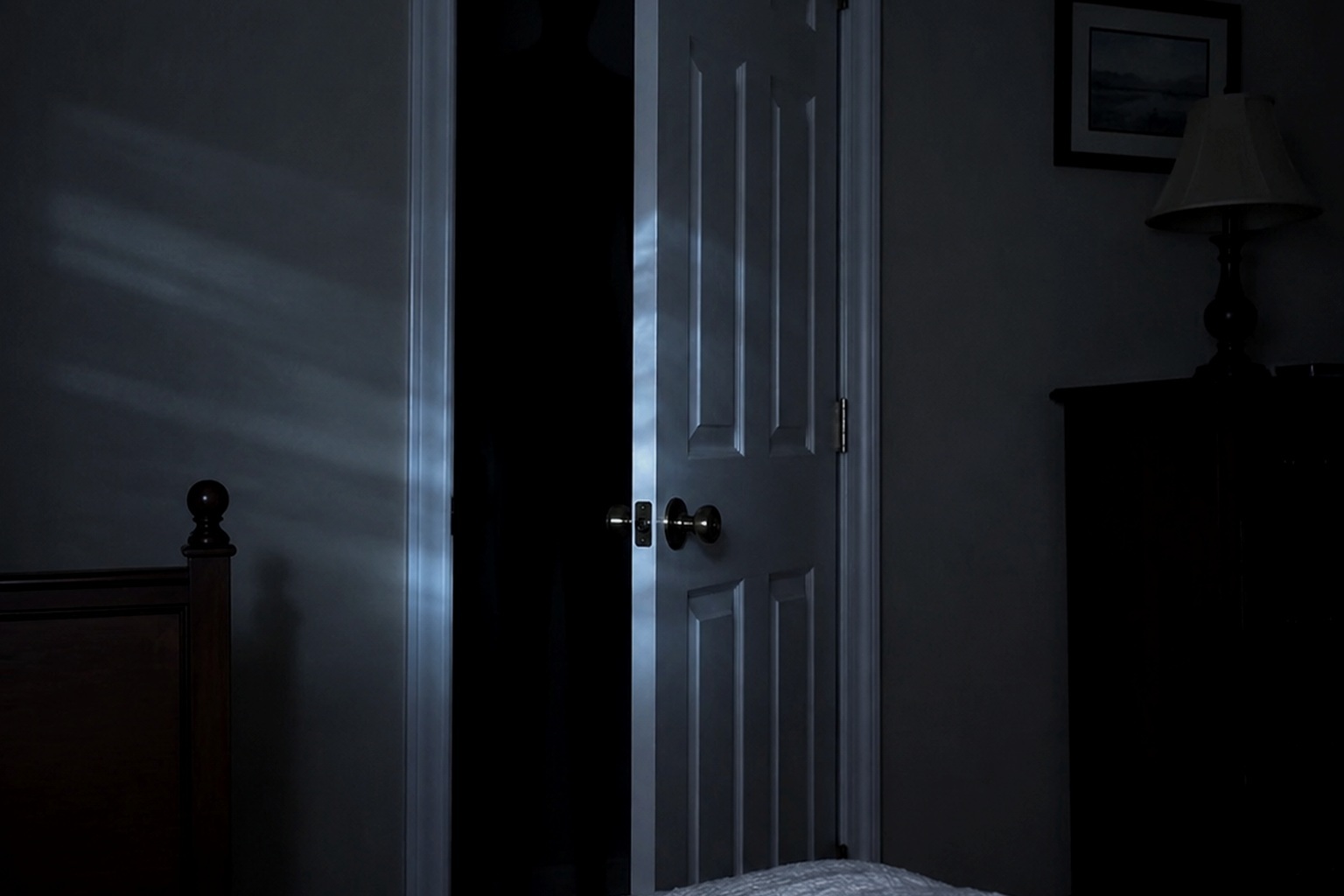
Others report that the whisper moves farther down the hallway each time, always remaining just out of sight. Some describe opening every door only to find empty rooms. Others notice that every sound in the house seems to disappear after the whisper, creating a silence that feels unusually complete.
The Moment It Became Harder To Ignore
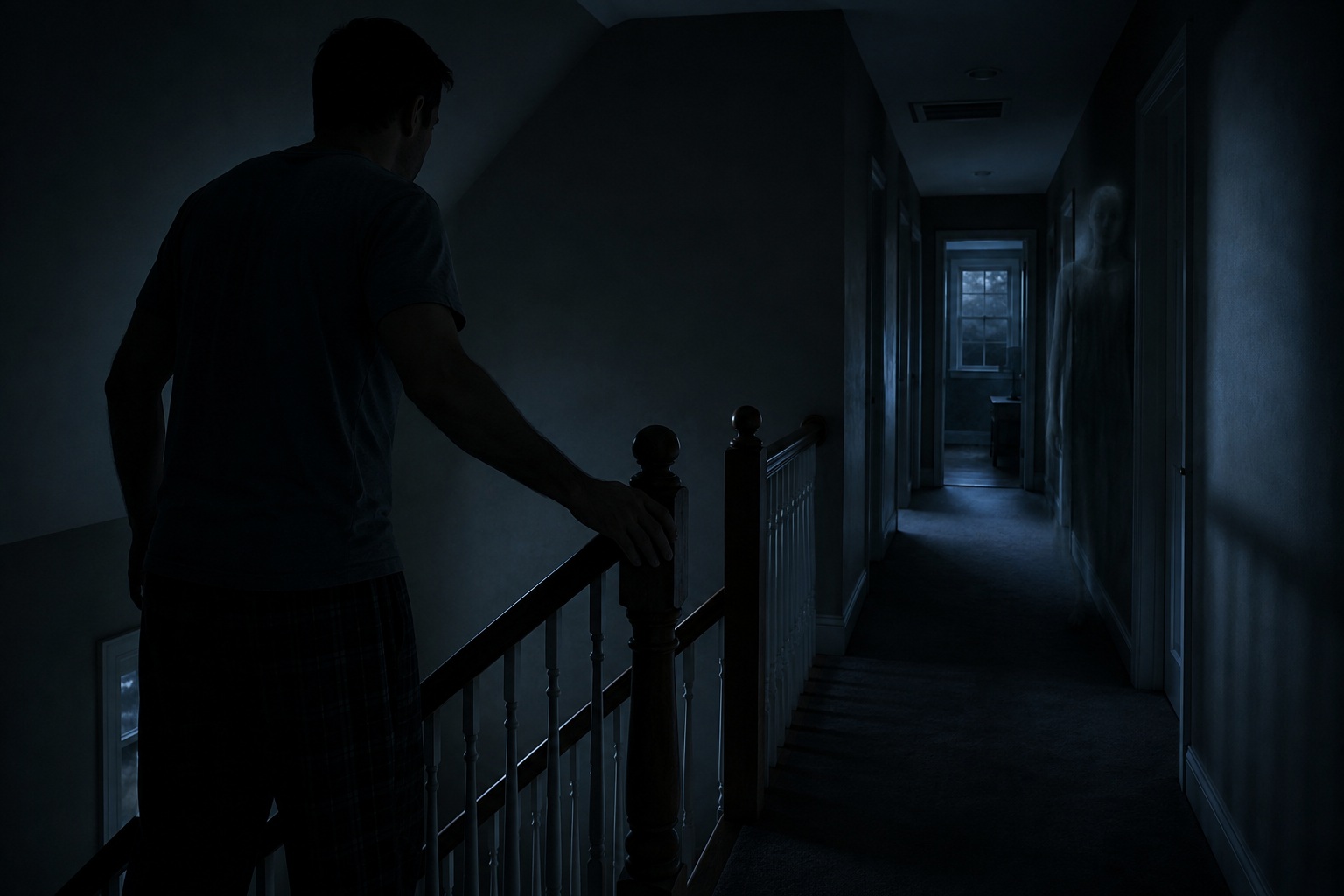
A smaller number of stories include someone briefly seeing a person-shaped figure at the end of the hallway. The figure is rarely described as a normal person. Instead, witnesses often mention one impossible detail. The shape appears blurred.
Its face cannot be made out. Part of its body seems to fade into the wall. Or it quietly disappears when the hallway light comes on. Those details shift the story away from a simple misunderstanding and into the kind of experience that people remember for years.
Whether the figure existed or not, the witness often recalls that single wrong detail more clearly than anything else.
Almost everyone knows what it feels like to hear someone call their name. That shared experience makes these stories immediately believable on an emotional level.
Readers don't have to imagine an impossible monster. They only have to imagine answering a familiar voice. The fear comes from the tiny change afterward. Instead of finding a family member, the hallway is empty.
Why People Avoided That Spot Later
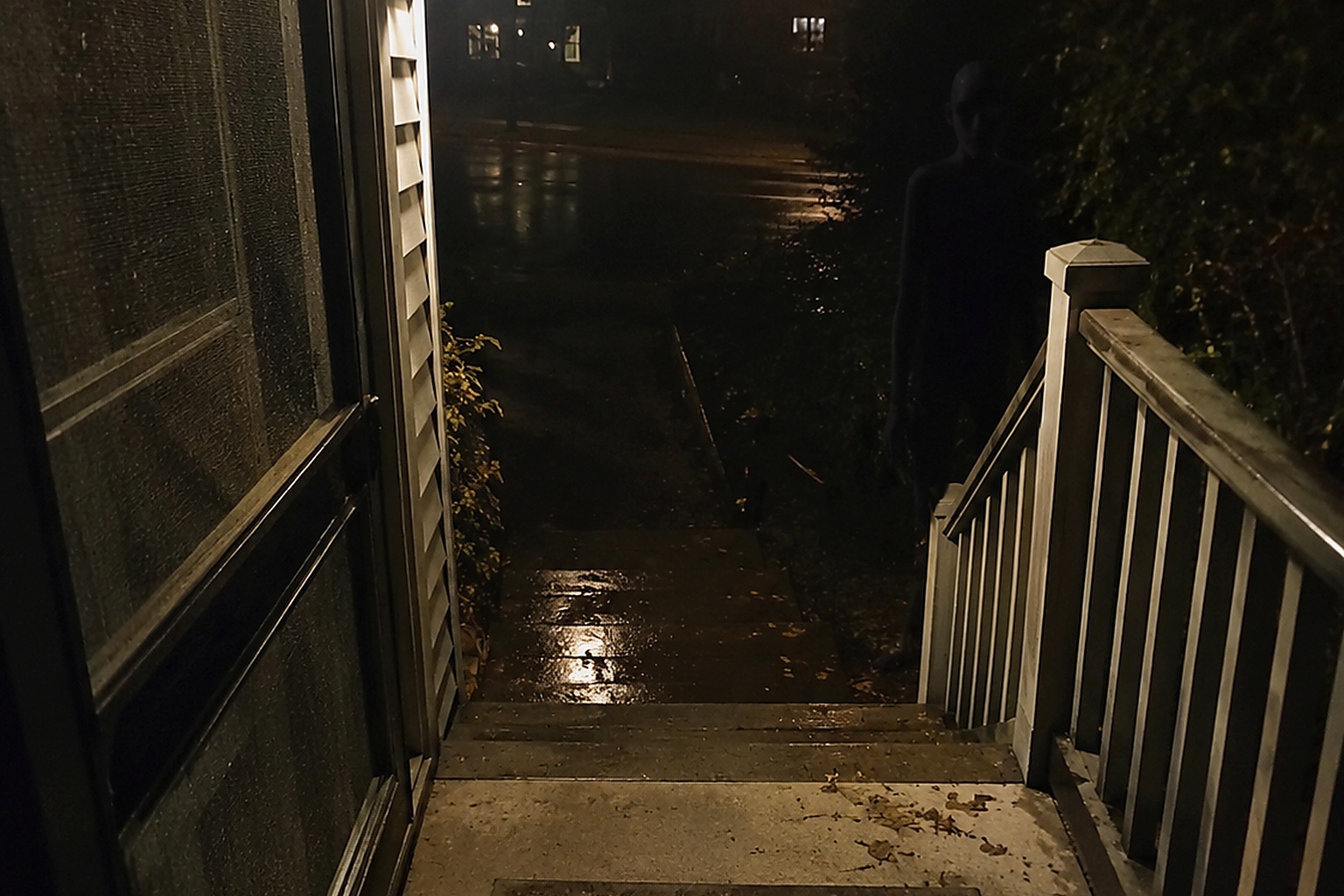
Instead of hearing another sentence, silence returns. Instead of seeing someone waiting, there is only an ordinary corridor stretching into darkness. The ordinary setting makes the strange moment stand out even more. People also tend to remember experiences that interrupt expectations.
If someone hears a random bump, they may forget it within hours. If someone clearly hears their own name spoken inside an empty house, the memory often stays vivid because it conflicts with everything they expected to find. That conflict keeps people replaying the event, wondering whether they missed some simple explanation.
One interesting pattern appears in many personal stories. The first time, people investigate immediately. The second time, they hesitate.
After discovering the hallway empty once, they become reluctant to answer another whisper. Some even describe waiting silently instead. If another voice follows, they listen without responding. Whether that decision comes from caution or fear, it changes the experience.
Instead of walking toward the sound, they stay where they are and notice everything else around them. The refrigerator hum. The ticking clock. The distant traffic outside.
Why The Story Still Gets Shared
Many later say they became much more aware of how quiet a house can feel after hearing something unexpected. Even if nothing else happened, that silence became part of the memory.
Most reports of whispered names probably have ordinary explanations.
Houses make strange sounds. Voices travel farther than expected. Tired minds occasionally mistake random noise for familiar speech. Those possibilities should always be considered first. Yet the stories that continue circulating usually contain one stubborn detail that refuses to fit comfortably. The whisper sounds too clear.
It uses the person's name exactly once. It comes from a hallway that is obviously empty. And for just a second, before logic catches up, the listener is completely certain someone is waiting around the next corner. That brief certainty is what people remember.
Not because they believe they solved a mystery. Because they never fully did. Long after the house grows quiet again, they still remember how ordinary the hallway looked—and how impossible it felt to hear a familiar voice coming from a place where nobody was standing.