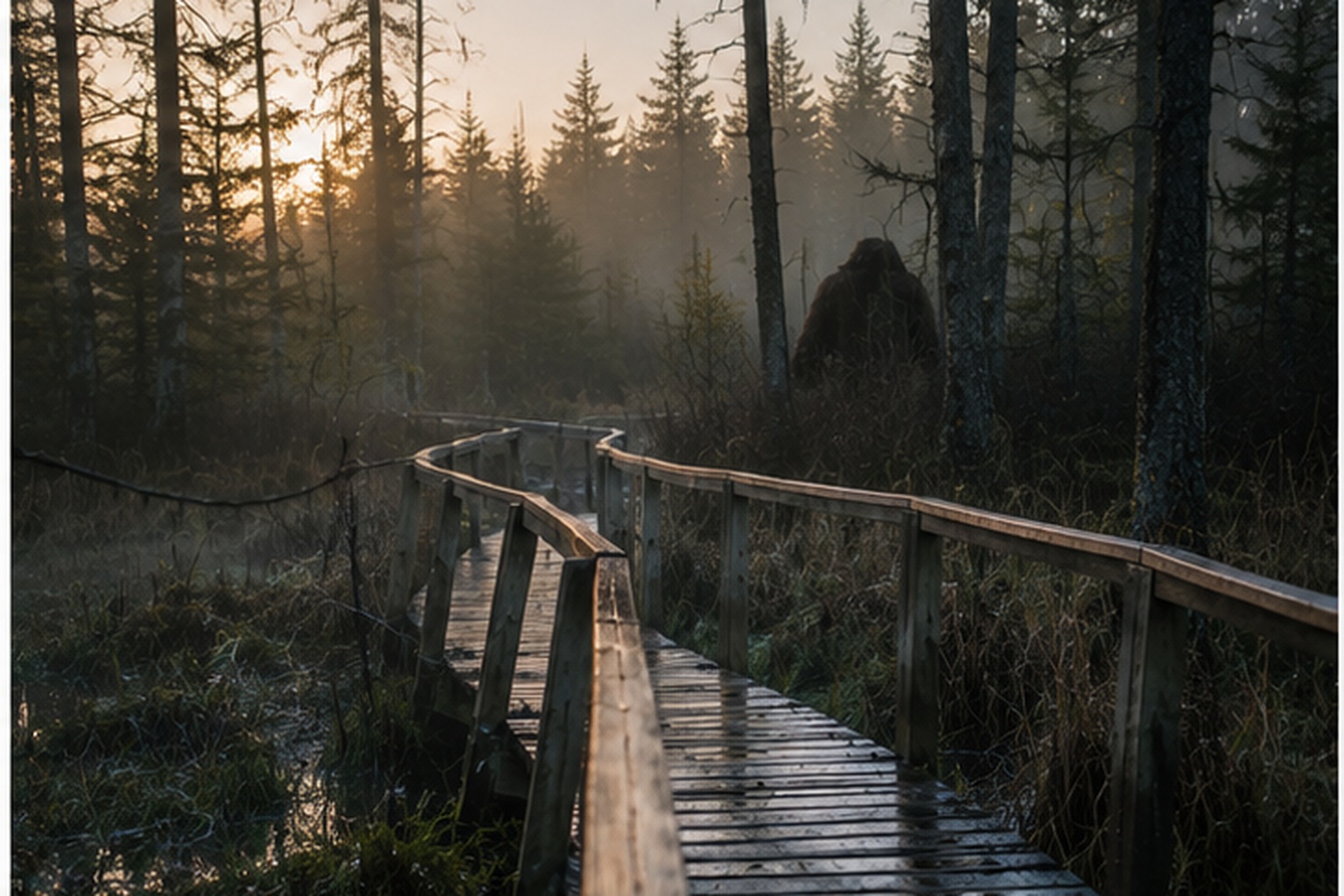
The picture did not look frightening at first. It looked like the kind of dawn scene people stop for on wetland trails: pale fog, slick boards, black water under the planks, and cedar branches hanging low enough to drip on anyone passing beneath them.
The boardwalk ran through a northern cedar swamp where the ground never quite became ground. On both sides, marsh grass leaned over pools the color of tea. Tamaracks stood farther back in thin rows, their trunks straight and gray in the early light.
Whoever took the picture seemed to be aiming at the morning itself. The wet rail caught a faint shine. The path curved away. Nothing obvious stood in the center demanding attention.
Then the second look happened.
The Quiet Part Of The Trail
There is a particular silence in a cedar swamp before sunrise. It is not empty silence. It is layered with hidden water, small birds moving before they sing, and the soft creak of soaked wood settling after a cold night.
That is what made the image feel believable as a simple nature stop. No dramatic pose. No close encounter. No face staring through the trees. Just a trail at the hour when people are still alone with their own footsteps.
The first unsettling detail was not the dark shape in the background. It was the right-hand rail near the foreground, bowed outward toward the marsh. A vertical support beside it leaned just enough to make the straight lines of the boardwalk feel unreliable.
Old boardwalks bend. In a wetland, that is normal. Frost heave moves posts. Snow loads pull rails down. Maintenance carts bump wood. Flood water lifts debris and wedges it where it does not belong.
But this bend sat high. It was not down near the mud, where floating logs and spring ice would have done their work. It was at the height where a tall person might brace a shoulder or where something heavy might lean while stepping off the boards.
When The Rail Became A Marker
Once the rail looked wrong, the rest of the scene changed around it. The eye followed the bend outward and down into the grass.
There, below the rail, the reeds did not look evenly wind-combed. A rough strip seemed pressed away from the boardwalk, angling toward the tamaracks.
That could be nothing more than wet grass after a night of rain. It could be a deer path, a muskrat run, or water moving through a shallow channel beneath the stems.
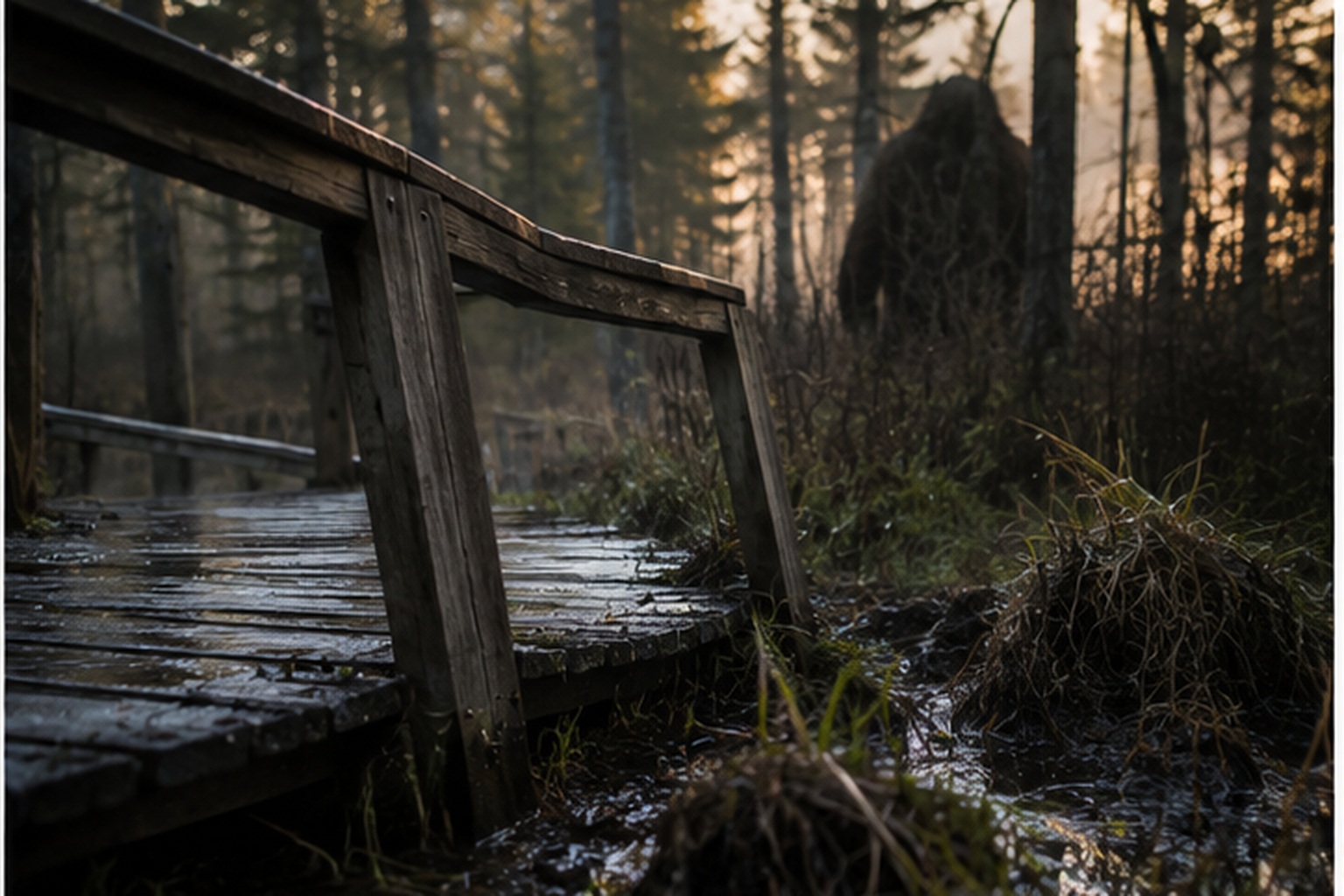
Still, the photograph began to feel less like a view and more like the moment after something had passed through. The boardwalk no longer looked empty. It looked recently vacated.
And that is when people noticed the shoulder.
The Shape Behind The Tamaracks
Behind the marsh grass, partly screened by the thin trunks, was a solid dark curve. It was not a full body. It was not clean enough for certainty.
Most of it disappeared behind tamarack trunks and brush, leaving only a massive upper portion, black-brown and rounded, set higher than the surrounding deadfall.
The shape looked like a shoulder turned away from the camera. Not a face. Not a dramatic outline. Just the broad side of something that seemed to be standing where the swamp was supposed to be too wet, too tangled, and too uncomfortable for a person to pause.
That partial quality made it worse. A clear figure would have invited faster dismissal. A blurry costume shape in the middle of the path would have felt staged.
This did not present itself. It hid badly.
A Place Built For Cover
Cedar swamps are good at making ordinary things look alive. A black stump can appear to hunch. A fallen root plate can resemble a rib cage. A wet cedar bough can turn into fur when the morning light catches only one edge.
The mundane explanation has to start there, because the setting is full of traps for the eye. Maybe the shoulder was a root mass. Maybe it was a dark stump lined up with a trunk behind it.
Maybe it was a bear, half turned and partly concealed. Maybe someone in dark clothing had stepped off the boards to photograph the fog from another angle. All of those are possible.
But none of them completely softened the unease, because the shape seemed to occupy the exact place the bent rail and flattened grass were pointing toward.
The picture kept building its own little path: rail, reeds, shoulder, trees.
The Second Look Felt Wrong
The strangest part of the image was how late the fear arrived. At first glance, it was still just a wetland. A person could scroll past it without stopping.
The fog was pretty. The boardwalk was ordinary. The far tree line was cluttered, the way swamp tree lines always are. Then the viewer returned to the foreground.
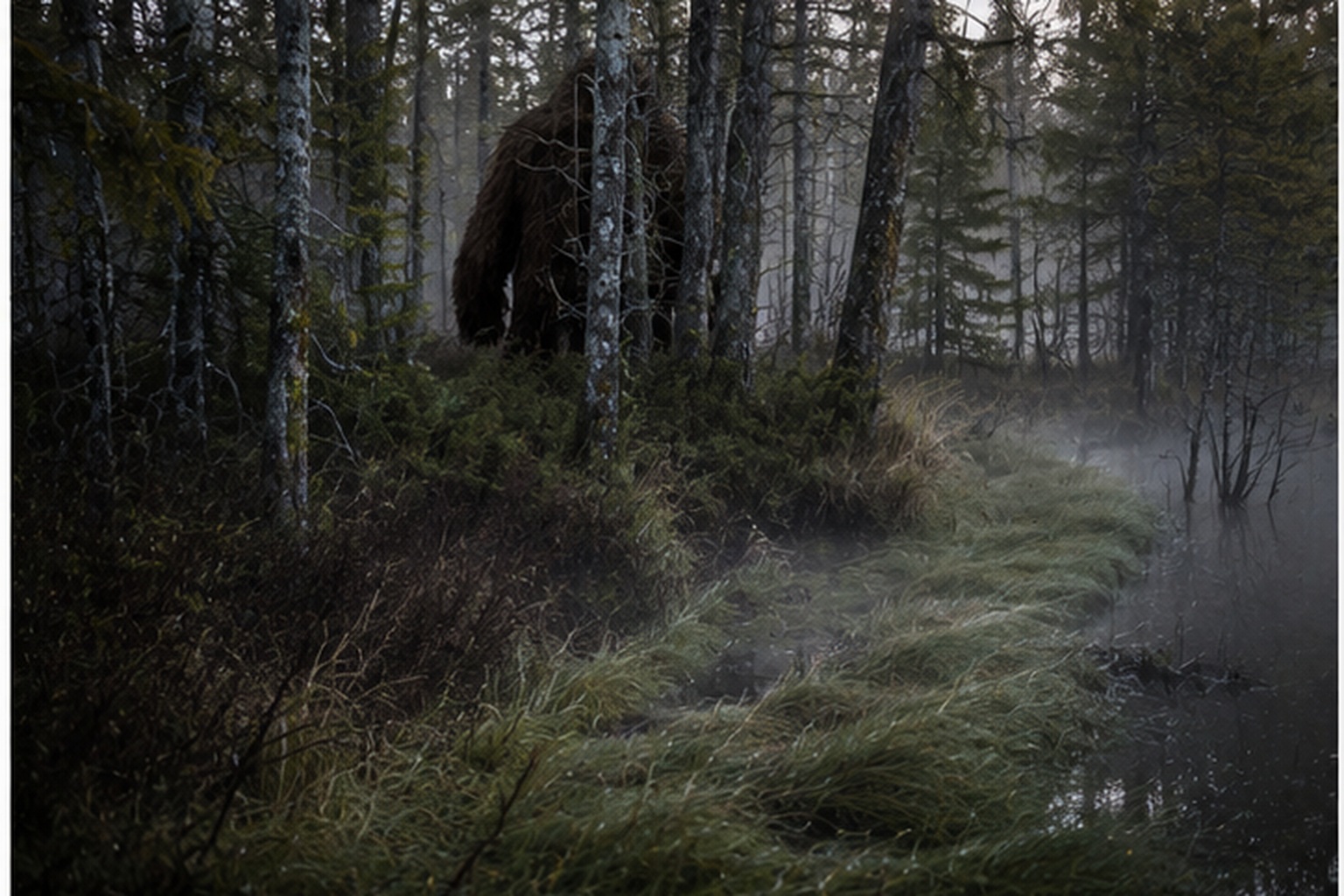
The rail leaned outward. The grass below it seemed disturbed. The dark mass between the tamaracks no longer blended into the woods.
After that, the scene became difficult to reset. Even if the mind accepted the practical answers, the body reacted as if it had just noticed someone standing too close behind a curtain.
It was the feeling of realizing a room was not empty after you had already entered it.
Why A Person Does Not Fully Fit
A person could have made the shape. A dark jacket, a backpack, a hood, and bad dawn exposure can turn an ordinary hiker into something enormous.
If the ground was firmer there than it appears, someone might have stepped off the boardwalk without trouble. That explanation is sensible, and it may be the right one.
But the pose felt odd. The figure was not centered in the scene. It was not waving, crouching, or looking toward the camera. It was mostly blocked by trunks, as if the photographer had caught a side of it rather than the subject itself.
The size also felt difficult to settle. The tamaracks offered a rough scale, but swamp distance is deceptive. A nearby stump can seem huge. A far object can seem close. Mist flattens the space between rails and trees until everything looks stacked together.
Even so, the visible shoulder appeared too broad for a casual hiker standing in marsh grass. Not impossible. Just uncomfortable.
The Ordinary Answer Still Matters
The safest reading is still ordinary damage and ordinary swamp clutter. The rail may have been bent months earlier by weather, equipment, or a fallen limb.
The grass may have been pressed by water, deer, or wind. The dark shape may be wood, shadow, animal, or person. Nothing in the picture demands a monster.
A return trip in brighter light could probably remove much of the mystery. Someone could measure the rail height, photograph the same angle, and walk to the tamaracks if the ground allowed it. The dark shoulder might become a stump in ten seconds.
That possibility matters because cedar swamps manufacture false alarms better than almost any landscape. They are wet, vertical, cluttered, and dim. They turn partial things into bodies.
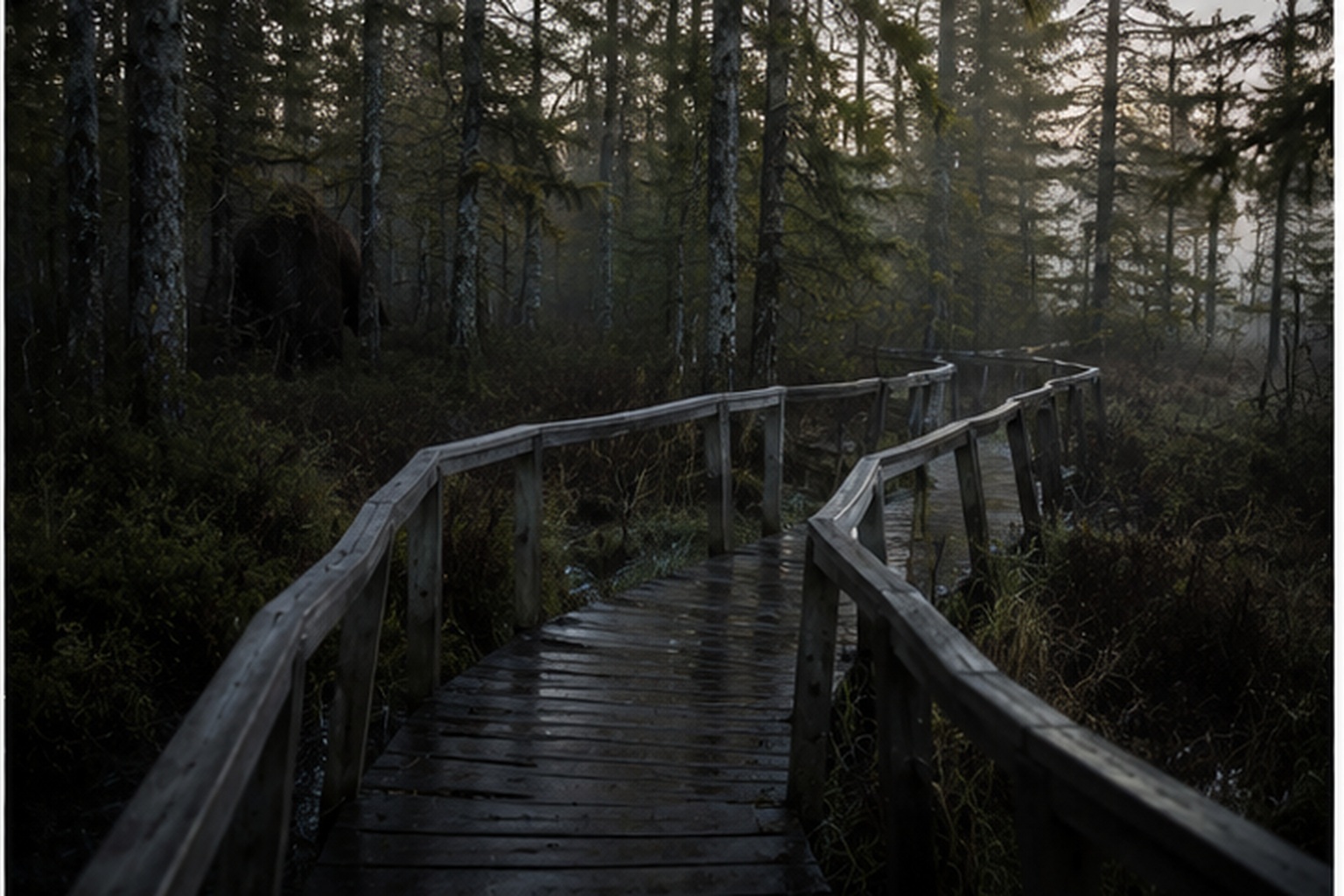
But this image stayed with people because the ordinary answer had to explain several things at once, all lined up in the same direction.
What The Dawn Did Not Explain
Dawn explained the softness. It explained the uncertain edges. It explained why a stump might seem rounded and why a shadow might look deep enough to have weight.
It did not fully explain why the rail looked bowed at that height. It did not fully explain why the grass below seemed to lead away from it.
And it did not fully explain why the dark shape looked so solid behind the tamaracks, as if it had mass separate from the tree shadows around it.
That is the space where the story lives. Not in certainty, but in the stubborn feeling that the wetland picture should have gone back to normal once the mind named the likely causes.
Instead, it kept feeling occupied.
The Thing Left Unsettled
Maybe nothing happened on that boardwalk except sunrise. Maybe an old rail leaned because winter had bent it. Maybe the grass lay flat because water pushed it down. Maybe the shoulder was a stump waiting for daylight to turn it back into wood.
That is the calm version, and it is probably close to the truth. The other version is quieter.
Something tall had been near the rail before dawn. It heard footsteps on wet boards. It stepped down into the marsh, heavy enough to push the reeds aside, and stopped behind the tamaracks with only one dark shoulder showing.
The photographer lifted the camera for fog and cedar trees, not for whatever had just moved away from the path.
Only later did the picture start to feel wrong. By then, the boardwalk was empty, the swamp was still, and whatever had been behind the trees had already been given all the time it needed to leave.