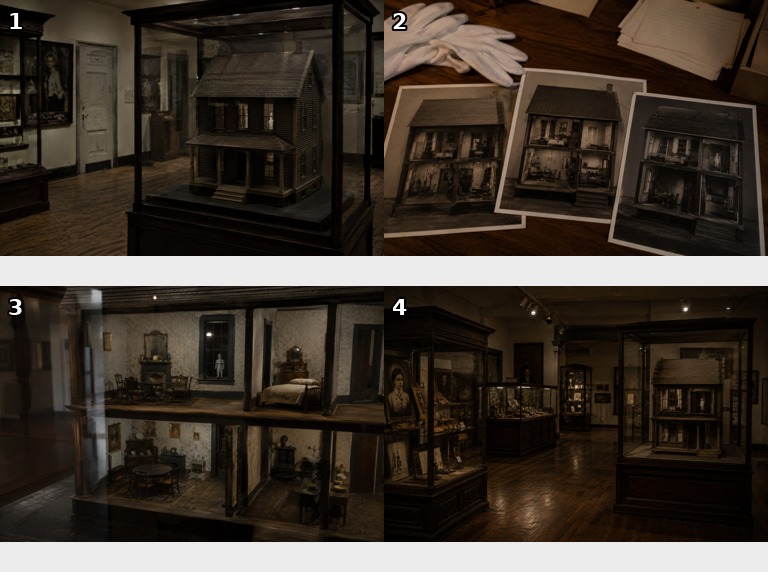
The first photograph looked harmless enough.
It showed a miniature farmhouse behind glass in a county museum, with a typed label, a braided rug, and fluorescent reflections sliding across the case. The second photograph was supposed to show the same exhibit, only taken years later for a grant folder.
Same dollhouse. Same corner of the local history room. Same quiet place where school groups passed arrowheads, military uniforms, and faded wedding dresses.
But when a volunteer compared the archive images, the little rooms did not line up. A parlor seemed to have moved. A stairwell showed where a wall had been. The kitchen table faced the wrong direction.
And in the newest image, behind an upstairs window that appeared empty in earlier records, a tiny white figure seemed to be standing inside.
The Dollhouse In The County Room
Most county museums have one object people remember better than the rest.
In this story, it was the dollhouse: a handmade miniature donated decades ago by a family whose name appeared on farms, cemeteries, and old plat maps throughout the area.
It was not a bright toy-store house. It looked like a serious memory of a real home, with dark trim, stiff beds, narrow rooms, tiny curtains, and wallpaper too somber for play.
Visitors bent down to peer through the windows. Children liked the stove with little black doors. Adults noticed the sewing room and miniature portraits no larger than postage stamps.
The museum kept it in a locked case. According to the label, the house had been restored once, then left as a permanent display. That word, permanent, would later feel less reassuring.
A Project In The Archive
The comparison reportedly began with routine archive work, not a ghost hunt.
A volunteer was scanning old exhibit photographs, many taken for insurance records or grant applications. They were flat, practical images meant to prove what the museum owned and where it sat.
The dollhouse appeared in several sets: one from the late 1980s, one from a renovation folder in the 1990s, and one digital image taken after new labels were installed.
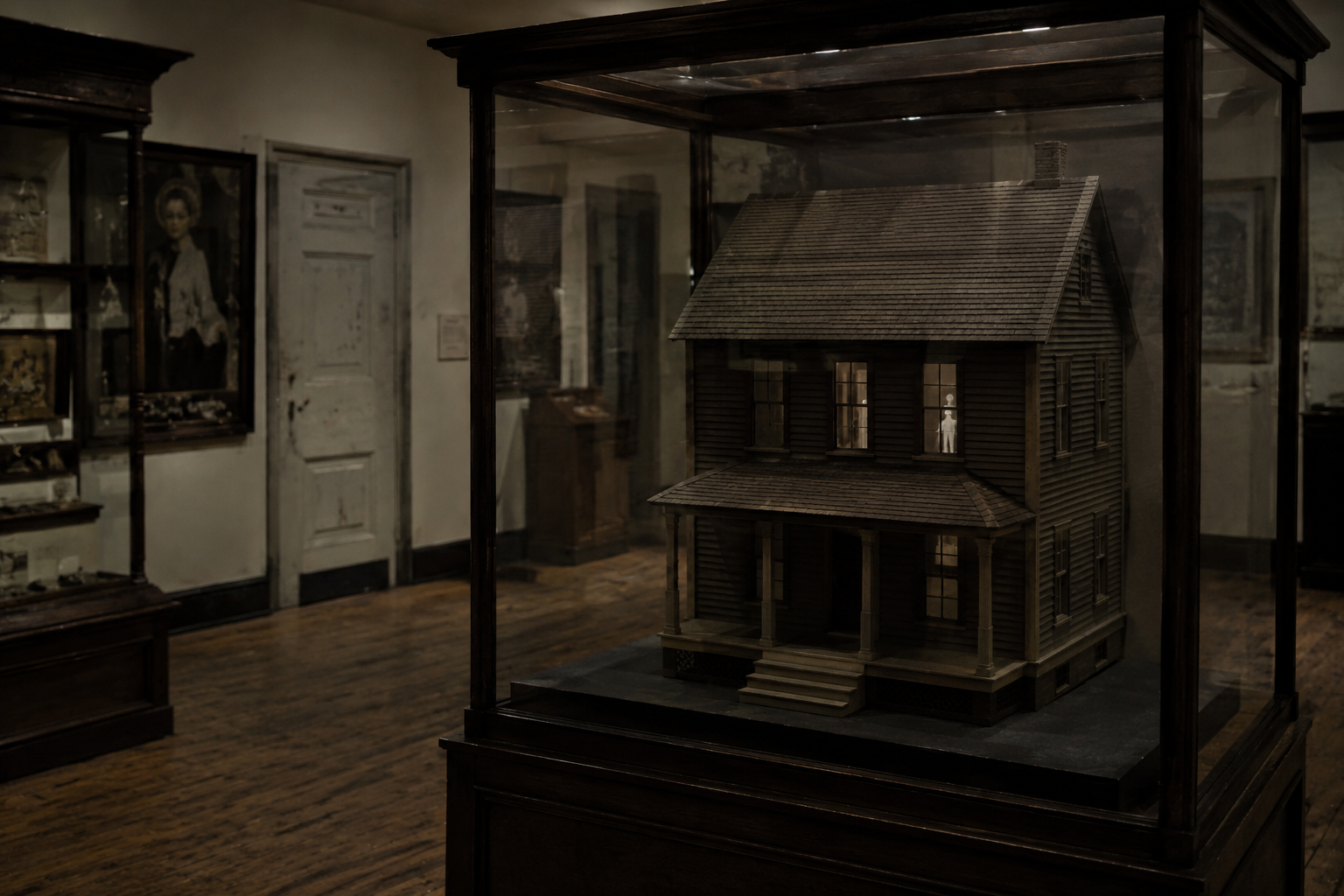
At first, the volunteer only wanted dates. Then she noticed that the front rooms visible through the cutaway side seemed slightly different between years.
A chair was not where it had been. A tiny screen appeared in one picture and vanished in another. That might have been nothing. Miniature furniture shifts, cases are opened for cleaning, and small adjustments get forgotten. But the stairs were harder to dismiss.
The Rooms That Did Not Match
In one archive photo, the staircase rose along the left interior wall and disappeared behind a bedroom.
In another, the stairs looked central, visible through a different window, with the parlor arranged around them as if the little house had been built on another plan.
The accession sheet reportedly described one fixed handmade dollhouse with six furnished rooms. It did not mention interchangeable floors, removable walls, or alternate arrangements.
That does not make a strange explanation necessary. Old dollhouses can be modified. Roofs lift off, front panels swing open, and rooms photographed through glass can deceive the eye.
Still, side by side, the pictures gave an uncomfortable impression: the house was remembering itself differently.
The changes were not dramatic enough to prove anything. They were worse because they were quiet. A bed moved from under a window to beside a door. A hall seemed longer. A visible room became wallpapered shadow. Then came the newest image.
The White Shape At The Window
The most repeated detail is the upstairs window.
In older photographs, it was dark. Depending on the angle, it showed a curtain, a shadow, or the reflection of museum lights.
In the later image, a pale vertical shape stood behind it.
People who saw the scan described it cautiously. Some said it resembled a tiny white doll. Others thought it looked like folded cloth, a paper silhouette, or a little figure wearing a plain dress.
It was small and set back from the pane, just far enough to seem inside the room rather than reflected on the case.
The unsettling detail was proportion. The shape looked too small for a human reflection and too upright for glare. It seemed like something had been placed in the miniature room after the earlier photographs were taken. No catalog note mentioned adding a figure.
Behind The Glass
Museum cases make simple things complicated.
Glass reflects ceiling lights, visitors, exit signs, and anything bright behind the photographer. A pale sleeve can hover over an object like an apparition. A camera flash can turn a window into a white patch.
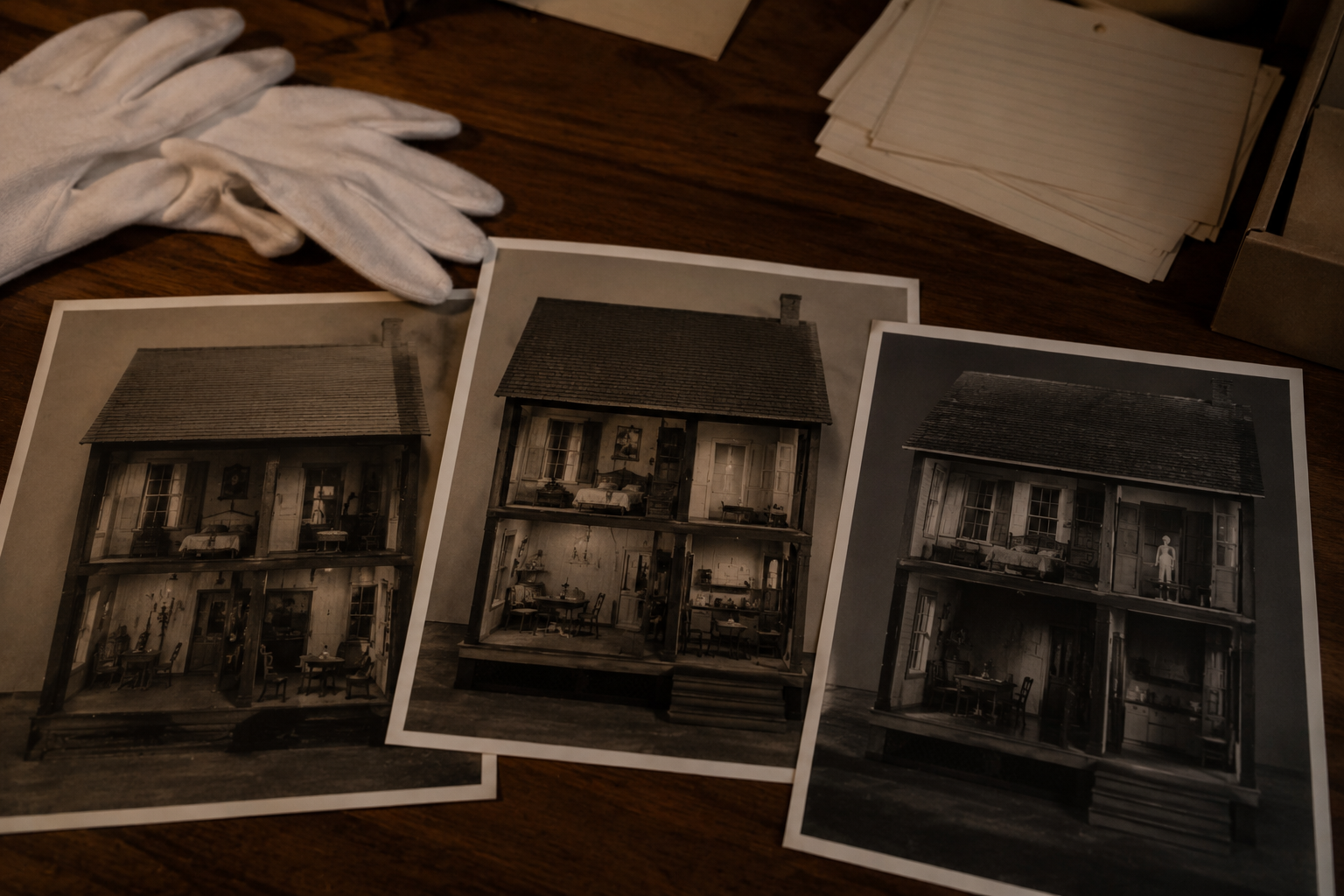
That is why responsible versions of the story avoid claiming the photos prove anything supernatural.
The case was locked, but locks are opened. The exhibit was called permanent, but permanent exhibits still get dusted. Volunteers retire, curators change, and undocumented adjustments happen in quiet rooms everywhere.
The dollhouse itself may have been more flexible than the label suggested. If a front panel was opened between photos, or if the photographer stood at a slightly different angle, the visible rooms could seem to shift. A mirror, reflective plastic window, or loose interior wall might create a false second layout.
The little white figure could have been tissue, a misplaced conservation pad, or a decorative piece that belonged elsewhere in the house.
What The Staff Checked
According to the local retelling, the volunteer showed the images to a staff member who knew the collection.
They did not announce a haunting. They checked folders, accession cards, restoration notes, and old case inventories.
There were references to the donor family. There was a note about minor repairs. There was a record of the case being moved during a gallery refresh.
Nothing in the available notes clearly described a white figure in the upstairs room.
When someone looked at the actual dollhouse, the window did not give an easy answer. The room behind it was dim, and the case angle made the furnishings overlap into strange shadows.
Some versions say the white shape was visible for a while, tucked near the back wall. Other versions say it was not there when staff checked, which may be why the story grew sharper in retelling. A missing object can become stranger than a found one.
The House It May Have Copied
The historical hook, if true, made the dollhouse more troubling to local listeners.
The miniature was said to be based loosely on a real farmhouse that no longer stood, or on a family home remembered by the maker. County museums often receive objects like that: not exact models, but personal versions of places altered by memory.
A room may be where it felt like it was, not where a blueprint would put it.
That matters because the archive photos may not show a changing object so much as a confusing one. Handmade miniatures can contain false doors, shallow rooms, odd perspective, and decorative windows that do not match interior spaces.
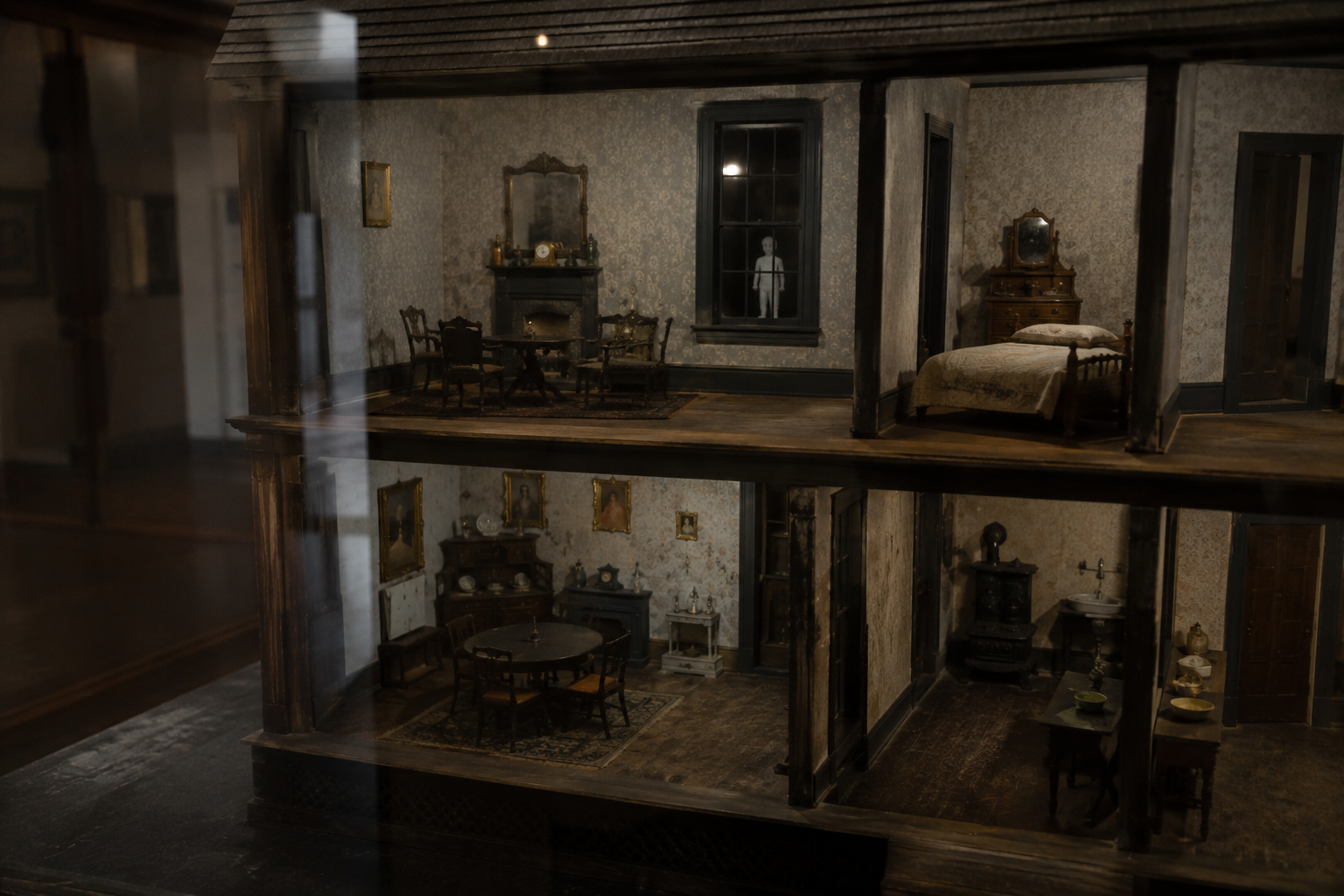
If the maker built from memory, the house may always have been a little impossible.
But that idea did not make the white figure feel less eerie. It made the small house feel as if it had gained a resident after everyone stopped paying attention.
The Sensible Explanations
There are several mundane possibilities. The archive photos may show different angles of the same interior. A restoration may have rearranged furniture without a written note. The white figure may be a reflection from a label, sleeve, or ceiling light caught in one small pane.
It might also be a cataloging mix-up. Museums sometimes photograph similar objects years apart, and files can be mislabeled after staff changes or database migrations. A second dollhouse, temporary loan, or study model could have been confused with the permanent exhibit if captions were vague.
Even the feeling of changed rooms can come from lens distortion and the strange geometry of miniatures photographed through glass.
None of those explanations ruins the story. They are part of why it works. The photographs are not a clean case. They are a puzzle made of museum habits, aging records, and a tiny house designed to be looked into but never entered.
Why The Story Stays With People
The dollhouse story is frightening because nothing moves while you watch it.
There is no slamming door, no face in a hallway, no midnight sighting. There are only records, compared years apart, and the suspicion that a miniature room has been quietly edited.
That is the kind of unease museums create better than almost anywhere else. They preserve objects by removing them from ordinary life, then ask us to believe the objects have stopped changing.
A dollhouse is already a trap for attention. It invites you to imagine the life inside it, to shrink yourself down and stand in the parlor, beside the bed, under the stair.
So when a white shape appears behind a window in one image and not another, the mind supplies the rest. Maybe someone moved a tiny decoration and forgot. Maybe the photo caught a reflection at exactly the wrong angle.
Or maybe the little rooms have always been less fixed than the label promised, waiting in the museum corner with their curtains drawn, changing only between photographs.