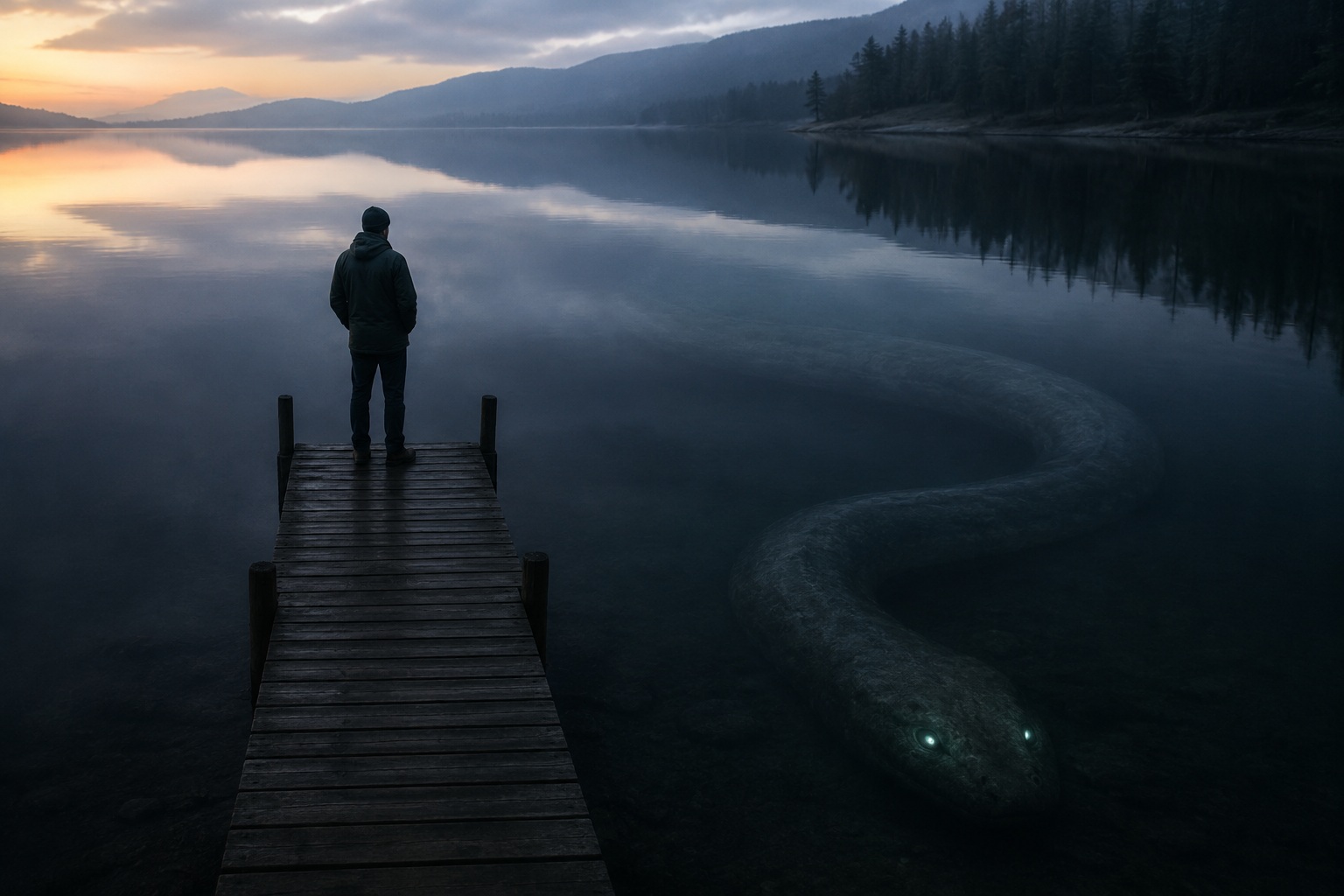
The dock was only twenty feet from shore, close enough that the porch light from the old lake cabin reached the first few wooden posts. It should have felt safe. A man stepped onto the weathered boards just before sunrise to untie a fishing boat. The lake was perfectly still. No wind. No birds. Even the usual ripples against the pilings had stopped.
Halfway to the end of the dock he noticed a long dark shape beneath the water. At first it looked like a fallen log resting between the posts. Then it moved. Not quickly. Slowly enough that he questioned whether it had moved at all. The shape drifted deeper until only two pale eyes remained visible below the surface. They seemed too far apart to belong to any fish he had ever seen.
He stood frozen. The water never splashed. Nothing broke the surface. Whatever was below simply watched him for several seconds before slipping into water too dark to see through. Later that morning he searched the dock from every angle. He found no giant fish. No floating timber. Nothing caught under the boards.
Stories like this appear around lakes all over the world, and they raise the same question every time: why do so many lake monster reports begin at ordinary docks instead of out in the middle of the water? Docks are where people stop looking at the shore
The First Time It Happened
Most people visit a lake to enjoy the view, fish, launch a boat, or relax. While standing on shore, attention stays mostly on land. A dock changes that. The moment someone walks onto one, they leave solid ground behind while still remaining close enough to feel safe.
Instead of looking toward the trees, they begin looking down. That simple change matters because the water beside a dock is often darker than the open lake. Wooden pilings create shade. Algae grows beneath them.
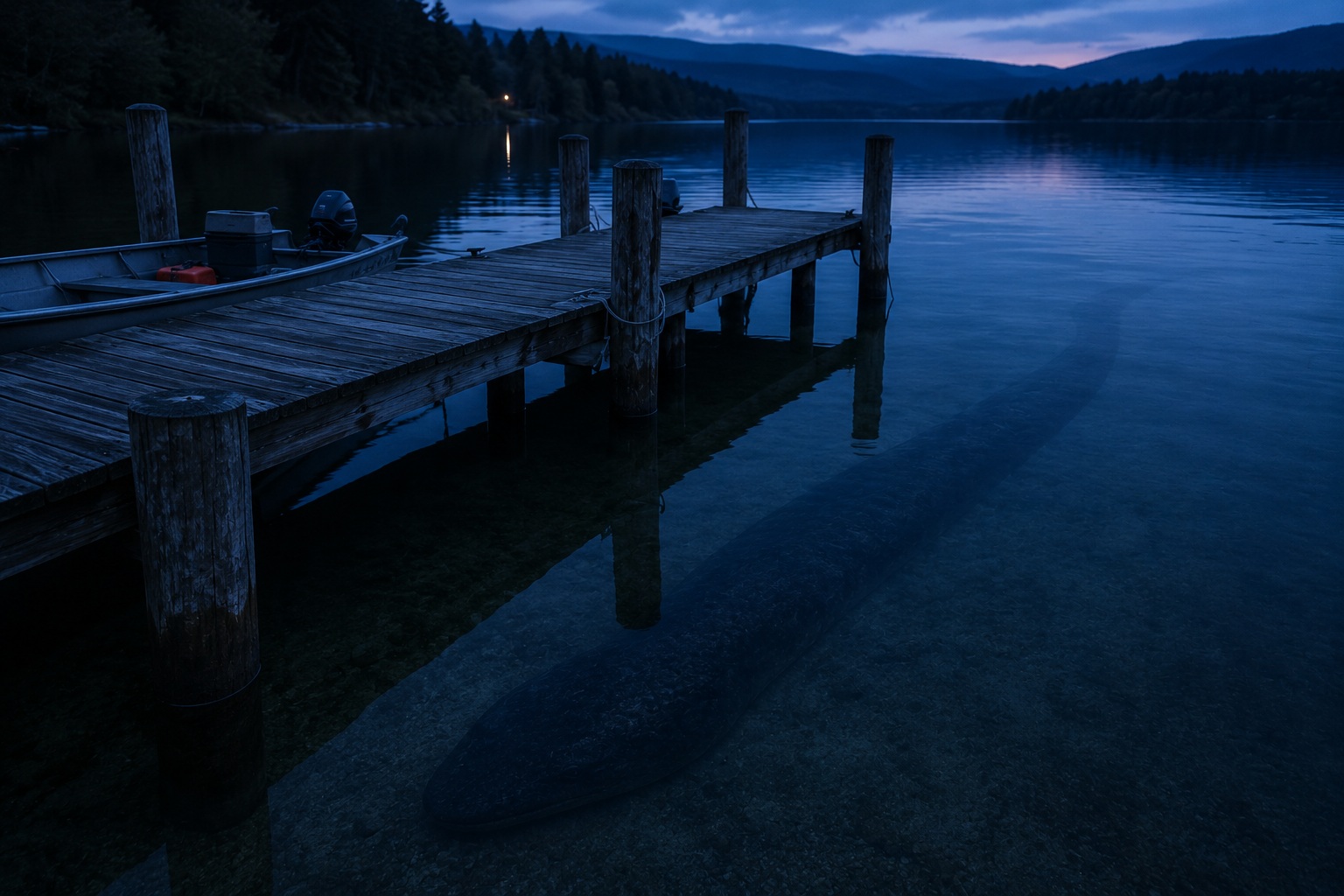
The lake floor usually drops away more quickly than it does along a beach. Even in daylight, the water beside a dock can become a dark window where only part of whatever is below is visible. Many reported monster stories begin with someone noticing a shape they were never expecting to see.
They were not searching for monsters. They were tying a rope. Dropping a fishing line. Cleaning a boat.
Why This Pattern Feels So Specific
Watching a child feed ducks. The strange thing appears only because they happen to look straight into deep water for several quiet seconds. The dock creates an uncomfortable feeling of being watched One detail appears again and again in lake monster stories.
People often say they felt watched before they saw anything unusual. That feeling is surprisingly easy to understand. Humans naturally pay attention to movement above ground where predators, people, and animals usually appear. Water hides movement.
Anything beneath the surface can remain invisible until it is directly below someone. Standing on a dock places empty space beneath your feet. Even though the boards feel solid, you know something could be swimming below without making a sound. That thought alone creates tension.
Many witness stories describe hearing gentle bumps against the pilings. Others mention small waves even though the rest of the lake remains calm. Sometimes they hear slow splashes behind them after turning toward shore. When they look back, nothing is there except dark water between the posts.
The Detail That Makes People Stop
Whether someone believes in lake monsters or not, the setting naturally encourages people to wonder what cannot be seen. That uncertainty becomes part of the story. Many famous creature stories begin in ordinary places Popular culture often imagines lake monsters appearing far from shore beside boats in heavy fog.
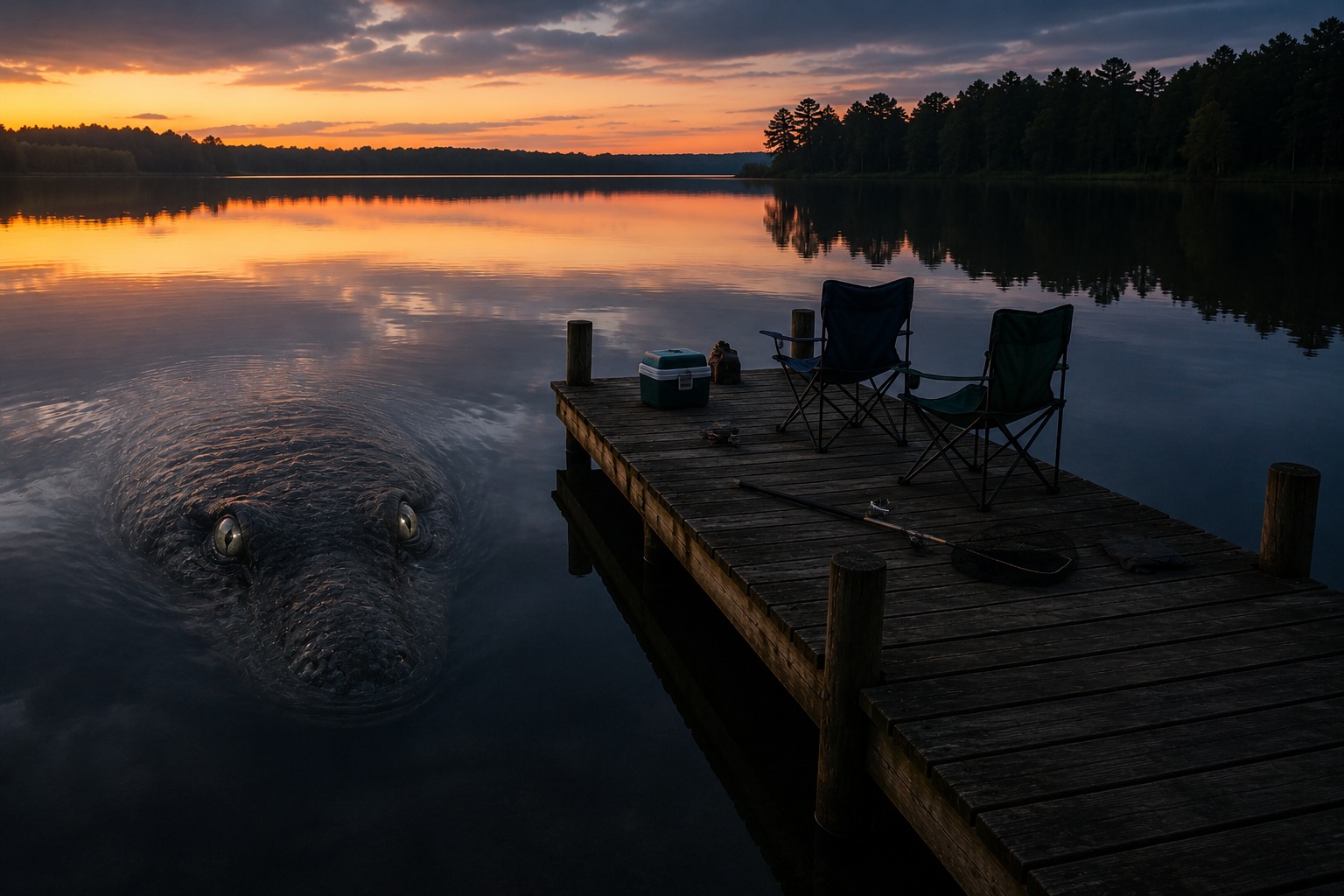
Reported stories are often much simpler. Someone walks to the end of a neighborhood dock. A teenager skips stones after sunset. A couple sits with their feet hanging above the water.
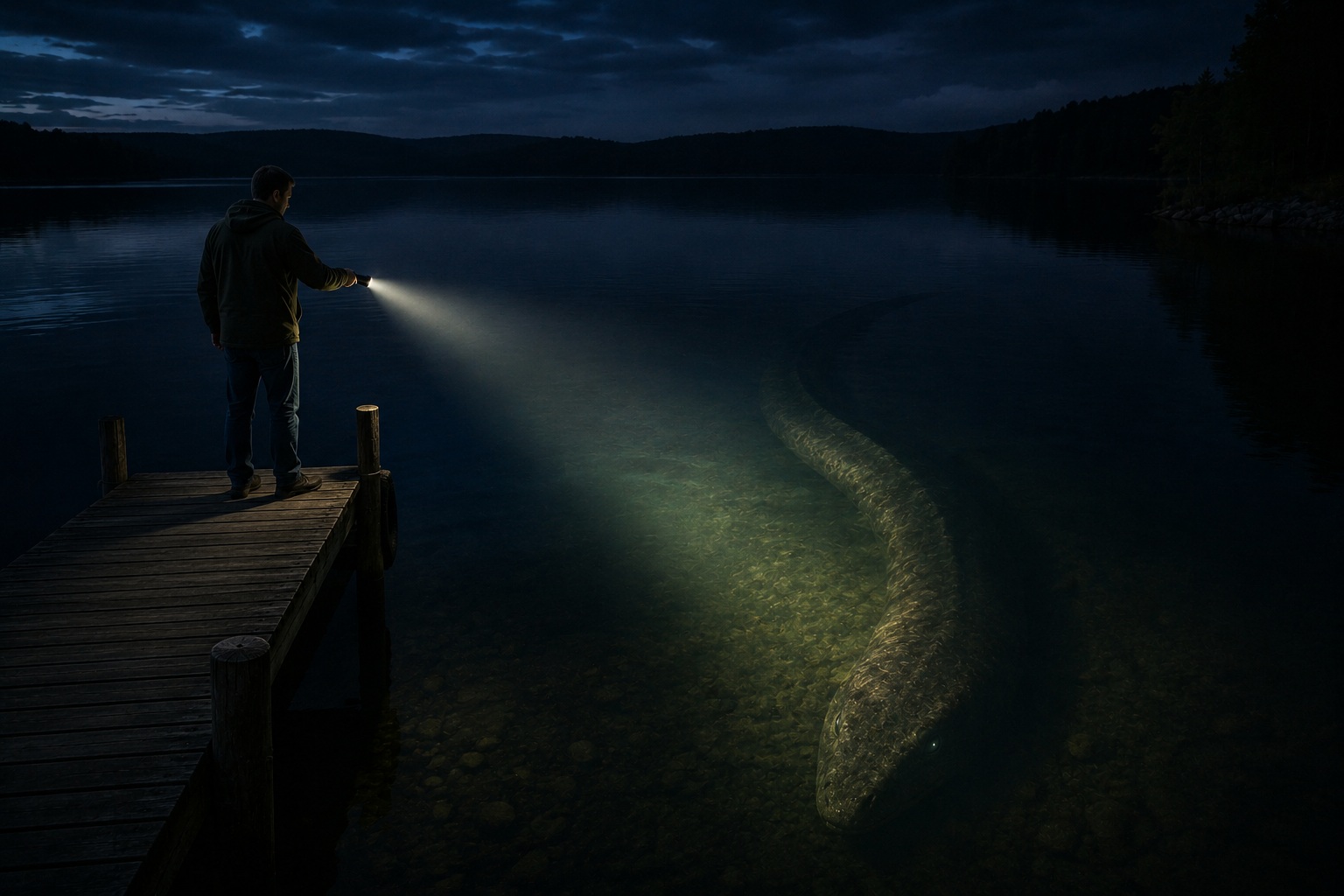
A fisherman shines a flashlight beside the boat before launching. These ordinary moments make the stories easier to imagine because they happen in familiar places. Witnesses rarely describe giant attacks or dramatic chases. Instead they usually remember one wrong detail.
A neck that seemed much longer than expected. Eyes that stayed above the surface without blinking. A back that looked too wide to belong to any known fish. A shape that moved without creating the ripples they expected.
Ordinary Explanations People Check First
The story becomes frightening because everything else feels normal. The dock is familiar. The weather is calm. Nothing else appears unusual.
Only one impossible-looking thing interrupts an otherwise quiet evening. That contrast makes the memory difficult to forget. What people usually check after seeing something unusual One reason dock stories spread so widely is that people immediately begin checking ordinary explanations.
They look for floating logs. They search for large fish. They ask whether a beaver or otter was nearby. They study old tree branches drifting beneath the surface.
Sometimes those checks solve the mystery. Large fish can appear surprisingly wide in dark water. Swimming deer have startled more than a few people on quiet lakes. Floating weeds can briefly resemble long necks or moving bodies.
The Moment It Became Harder To Ignore
Changing reflections can stretch familiar shapes into unfamiliar ones. But many witness stories continue because the person believes those explanations did not match what they remember seeing. Perhaps the object moved against the current. Perhaps the eyes stayed in exactly the same place while the body disappeared below.
Perhaps the shape seemed much larger than anything normally living in the lake. Whether those details have an ordinary explanation or remain unexplained, the witness usually spends far more time checking the scene than watching the strange shape itself. That is another common pattern. The experience is brief.
The searching afterward lasts much longer. Water hides size better than almost anywhere else Another reason docks appear so often in monster stories is that water makes judging size extremely difficult. Only a small part of an object may be visible.
Everything else remains below the surface. People naturally imagine the hidden portion continuing much farther than it really does. This happens with logs. It happens with floating debris.
Why People Avoided That Spot Later
It happens with large animals swimming low in the water. It also happens in stories about mysterious creatures. A visible head may seem connected to an enormous unseen body. A single curved shape can suggest something much larger beneath it.
Docks make this effect even stronger because the support posts provide fixed reference points. If something slides silently between them, witnesses immediately compare it with the known size of the dock. If it appears longer than the spacing between the posts, the mind begins estimating how much more remains hidden below.
That uncertainty feeds the mystery. Unlike seeing something standing in a field, only part of the subject is visible. The rest exists entirely beneath dark water. Why dock stories continue to fascinate people
Lake monster stories have survived for generations because they combine two powerful ideas. The first is familiarity. Almost everyone has stood on a dock. Almost everyone has looked into deep water and wondered what might be below.
Why This Pattern Keeps Coming Back
The second is uncertainty. Unlike forests or empty buildings, lakes naturally hide what is beneath their surface. You cannot easily check everything below you. Even clear lakes become dark after only a short distance.
That hidden world allows imagination to fill the missing pieces. Whether the strange shape was an unusually large fish, drifting debris, changing reflections, an unknown animal, or something the witness never identified, the story often begins in exactly the same place. A quiet dock. Still water.
One person looking down for just a little longer than usual. That combination continues appearing in stories because it places someone at the edge of two worlds. Solid ground is behind them. Deep water waits below.
And for a few silent seconds, it feels entirely possible that something beneath the surface is looking back. Readers who enjoy lake monster stories often notice similar patterns in other unexplained tales involving rivers, bridges, marshes, and isolated boat ramps. Those places share the same unsettling quality: ordinary settings where calm water hides almost everything beneath it, allowing one brief glimpse to become a story remembered for years.