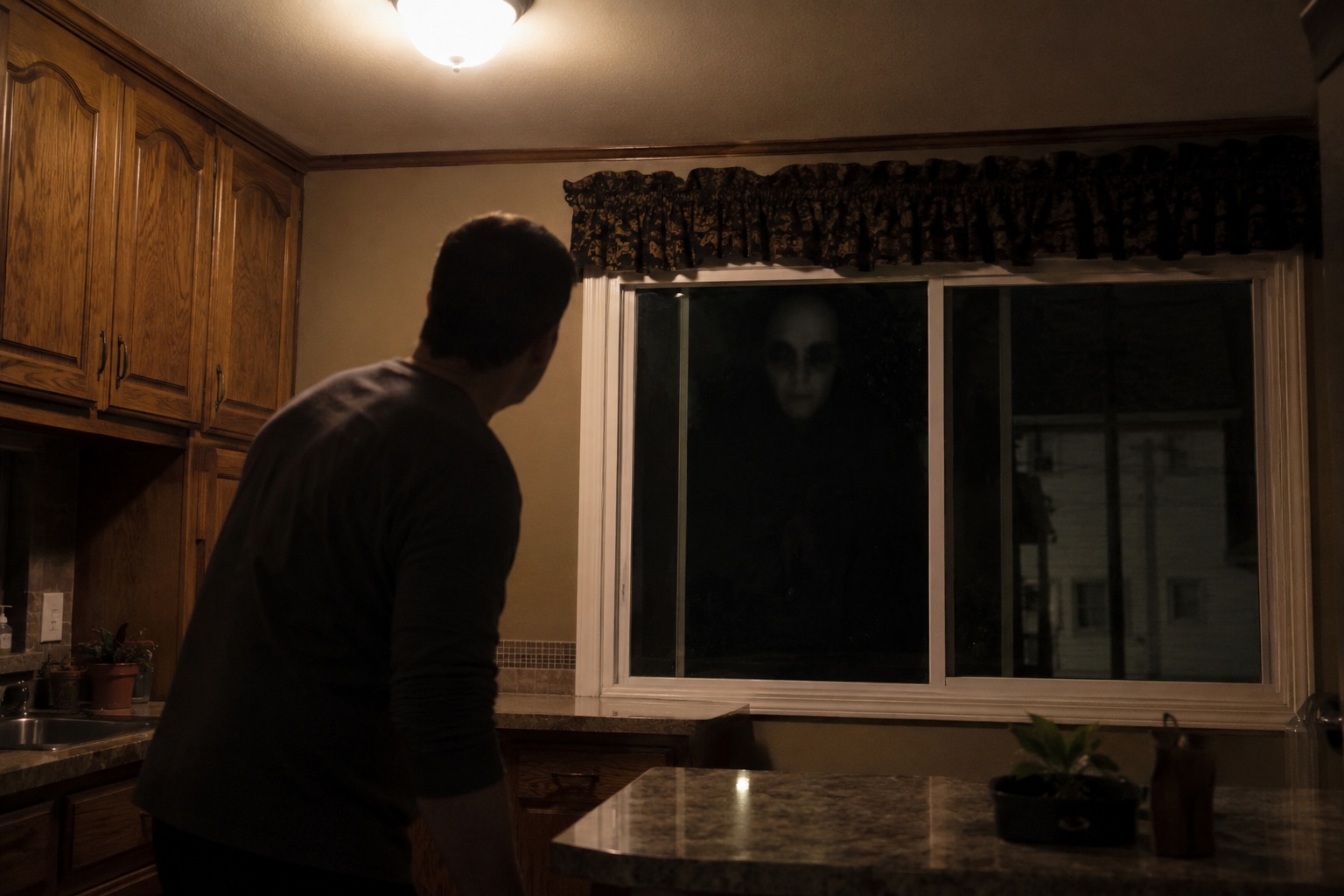
The face disappeared the moment the kitchen light came on. For several seconds, it had been perfectly still outside the back window. Not moving. Not knocking. Just looking in. The woman had walked downstairs after waking to the sound of her dog quietly whining near the patio door. The yard beyond the glass looked empty except for the reflection of the room behind her. Then she noticed one detail that did not belong. Above the reflection of the dining table floated a pale face with no visible body beneath it.
It wasn't standing outside on the deck. It seemed much too high, almost level with the second-floor windows, as though someone were looking through the glass from impossible height. The skin looked gray. The mouth never opened. The eyes were only dark hollows.
She reached for the switch beside the doorway. The kitchen filled with warm light. The face vanished instantly, leaving only her own reflection and the dark outline of the trees beyond the yard. The next morning she searched for footprints beneath the window, expecting at least some sign that a person had stood there. The flower beds were untouched. The deck boards were dry except where rain had collected earlier that evening. Nothing explained why the dog had refused to go near the glass for the rest of the night.
Stories like this appear again and again whenever people ask why faces seem to appear in dark windows after midnight. The locations change. Sometimes it is a farmhouse. Sometimes an apartment. Sometimes the window belongs to an office, hospital, or quiet suburban home. Yet the central detail stays remarkably similar: an ordinary window becomes frightening because someone appears to be looking through it when nobody should be there.
Windows Feel Different After Midnight
A window does something unusual once darkness falls. During the day it lets you see outside. At night it becomes both a reflection and a view into darkness at the same time. Your own room appears in the glass while whatever lies outside fades into black. That mixture creates uncertainty. Your brain tries to separate reflection from reality, and every small movement becomes more noticeable.
This is why so many witness stories begin with a quick second glance. Someone catches what looks like a face near the edge of the window. They assume it is their own reflection until the shape stays still while they move. Or they realize the reflection contains features that do not match anything inside the room.
That moment of doubt is what transforms an ordinary window into something deeply unsettling.
The Wrong Detail People Remember Most
Very few stories describe a perfectly normal-looking person outside. Instead, witnesses almost always mention one impossible feature.
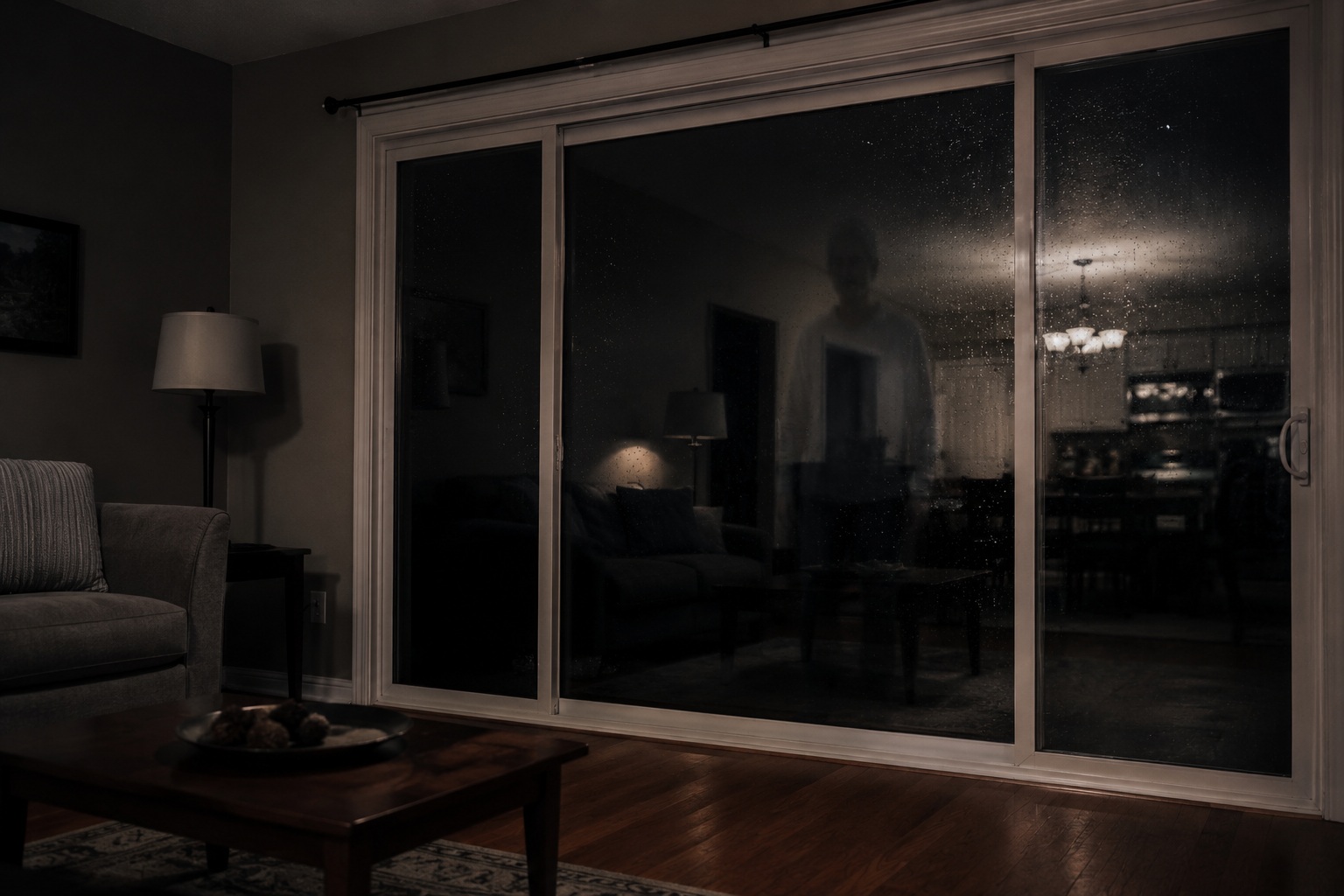
The face has no clear eyes. The mouth looks too wide. The figure fades into the glass instead of standing in front of it. Only the head is visible while no shoulders or body can be seen beneath.
Sometimes the face seems transparent enough for tree branches or curtains to remain faintly visible through it. Other reports describe a person whose head appears tilted far beyond what would feel comfortable, or whose expression never changes no matter how long someone watches. That single wrong detail often becomes more memorable than the face itself.
People tend to forget clothing, height, or hairstyle. They remember the impossible part. A face with no body. A reflection that smiles first. Someone standing outside a second-story window where nobody could possibly stand.
These are the moments that continue to replay in memory because they interrupt the normal rules people expect from familiar places.
The First Things Witnesses Usually Check
Once the immediate fear fades, most people begin looking for simple explanations. They switch on exterior lights.
They check whether a tree branch or bush could have created the shape. They look for neighbors, visitors, or anyone walking nearby. Some step outside after sunrise to search for footprints or signs that someone approached the house. Others clean the glass, thinking dirt or streaks may have created strange patterns.
Many discover ordinary causes. A reflection from another room lines up strangely with outdoor shadows. Streetlights combine with curtains to create facial shapes. Passing headlights briefly illuminate objects at unusual angles.
Human brains are exceptionally good at recognizing faces, even when none actually exist. This tendency helps explain why random patterns sometimes appear surprisingly human. Yet many witness accounts continue because the people involved insist they checked every obvious possibility and still felt something remained wrong.
Whether that feeling points to a genuine mystery or simply an unforgettable trick of light depends entirely on the situation.
When Reflections Stop Acting Normally
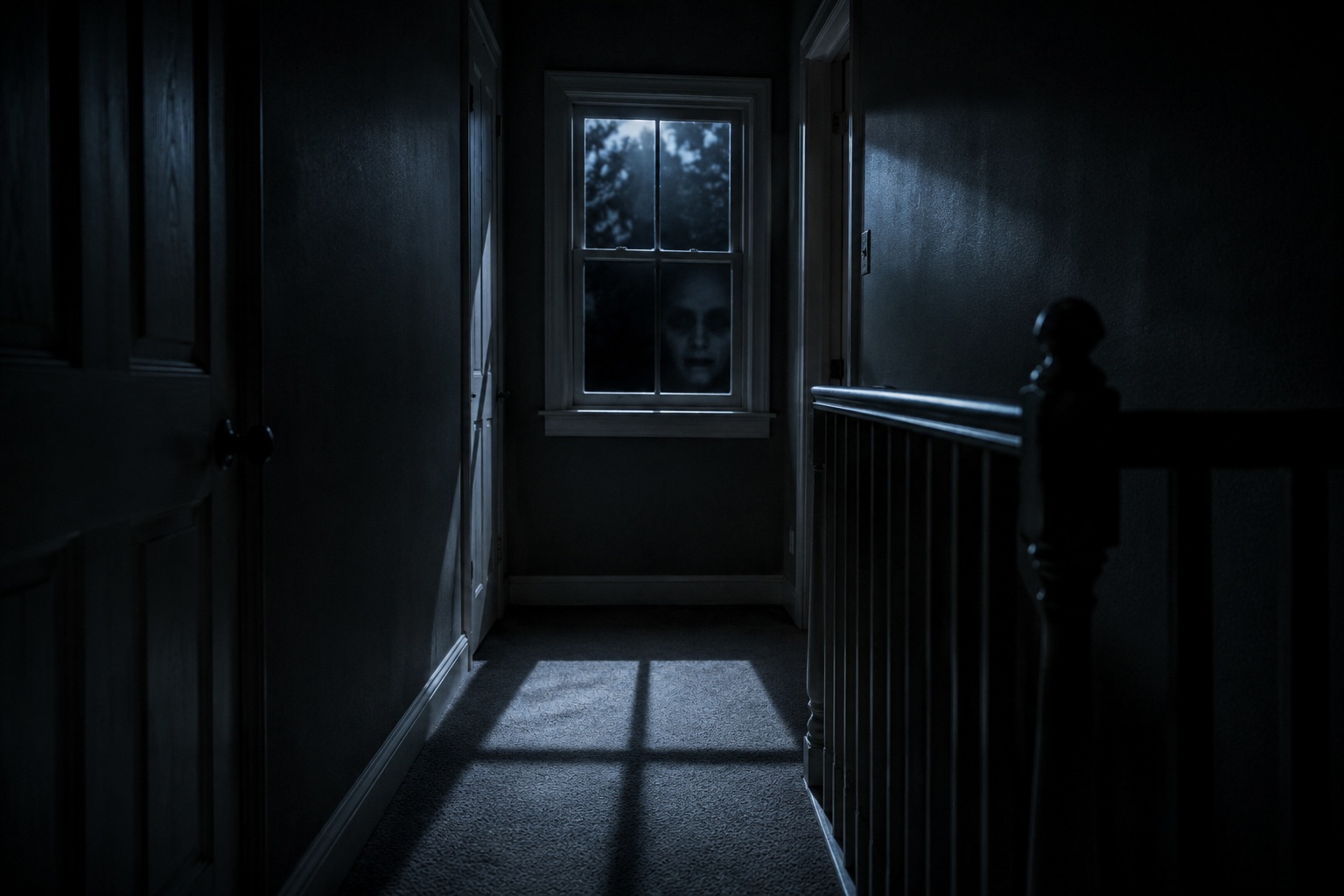
Among paranormal stories, the most unsettling reports involve reflections that behave differently from the person standing nearby. Someone walks past the window and notices another face remaining motionless in the glass.
A person waves experimentally, but the second face does nothing. Someone leans closer only to realize the strange figure appears deeper inside the reflection instead of outside the house. These stories are difficult to forget because they reverse what a window is supposed to do.
Instead of reflecting reality, the glass seems to introduce another presence. Many fictional ghost stories have borrowed this idea because it attacks something people trust every day. We rarely question mirrors or windows until one behaves differently. The moment reflection and reality stop matching, even for a second, people often experience an intense feeling that something is deeply wrong.
Whether that sensation comes from stress, visual confusion, or something harder to explain, the emotional response is remarkably consistent.
Why Faces Appear Near Bedrooms, Kitchens, and Hallways
Witness stories rarely happen in random places. Bedrooms appear frequently because people wake during the quietest hours of the night when both houses and neighborhoods feel unusually still.
Kitchen windows are another common setting because many people walk there for water or a late-night snack while the rest of the home remains dark. Large patio doors create broad reflective surfaces where indoor lights and outdoor darkness overlap. Hallway windows are especially unsettling because they often frame long stretches of darkness outside while reflecting narrow interior spaces.
The surroundings matter too. Rain makes glass more reflective. Thin fog softens outdoor detail until only vague shapes remain. Moonlight creates sharp contrasts between bright reflections and dark backgrounds.
Even gentle movement from curtains or leaves can make a stationary shape seem alive for a split second. These ordinary conditions explain why stories cluster around certain locations without removing every mystery people describe.
Why These Stories Stay With People For Years
Many frightening experiences fade once daylight returns.
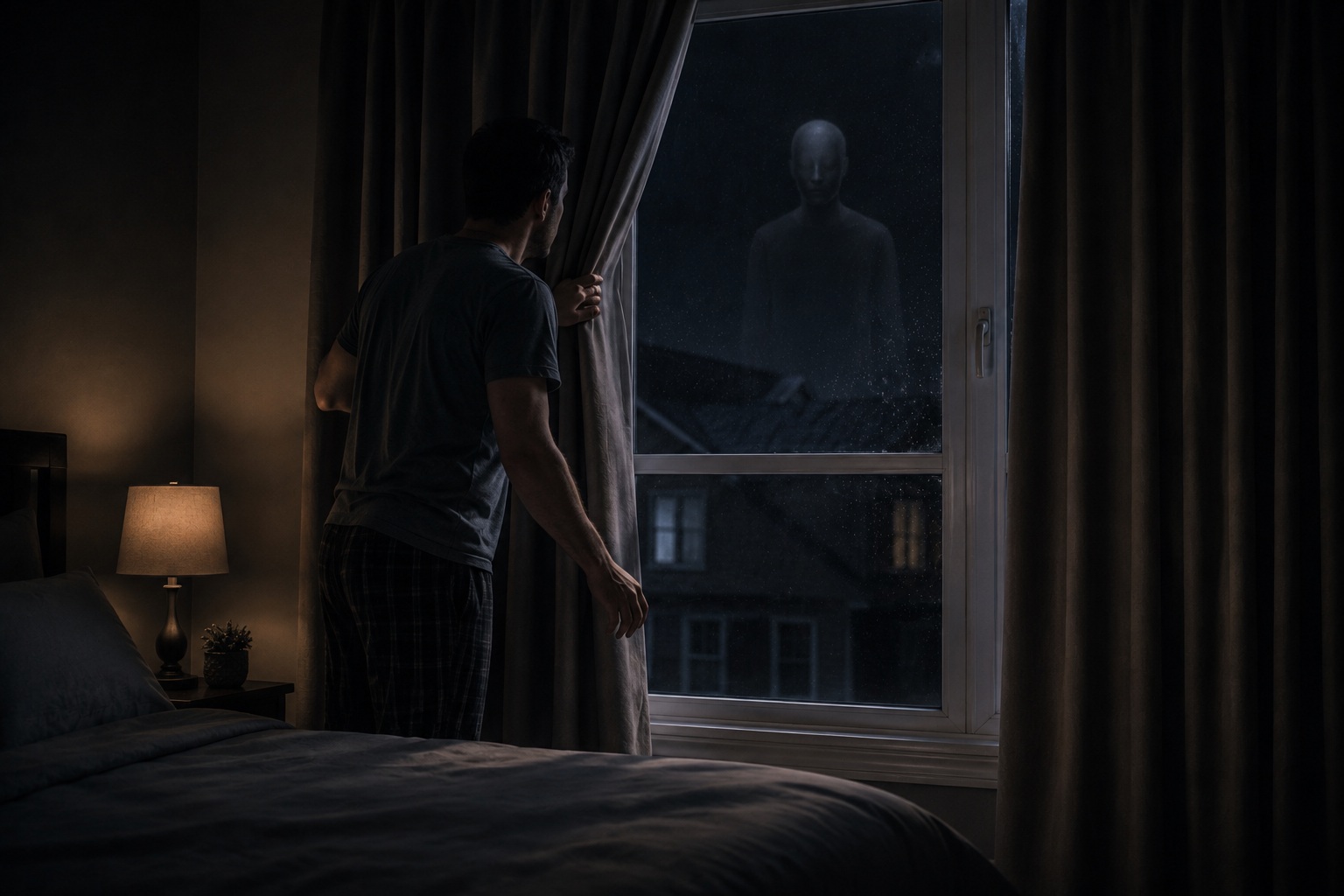
Window-face stories often do the opposite. People replay them because the event happened somewhere deeply familiar. The kitchen was their kitchen. The bedroom belonged to their own home.
The window had been part of everyday life for years before that single night. Afterward, ordinary routines change. Curtains stay closed. Exterior lights remain switched on.
Someone begins avoiding one room after dark. Others glance toward the same piece of glass every evening without realizing they are doing it. The location itself becomes connected with the memory. Unlike an abandoned building or isolated forest, a family home cannot easily be avoided.
That makes the story harder to leave behind.
Why The Question Never Completely Goes Away
No single explanation fits every report. Many stories almost certainly begin with reflections, tired eyes, changing light, or the remarkable ability of the human brain to recognize faces in random patterns.
Those explanations account for countless strange moments that disappear once conditions change. At the same time, some witness statements include details that continue to trouble the people involved long afterward. A dog reacting before anyone notices the window. Two people independently describing the same pale face.
A figure appearing where no person could physically stand. A reflection that seems to contain someone who is not in the room. These details are impossible to verify years later, but they explain why the stories continue circulating. The lasting question is not whether every face in a dark window has a supernatural cause.
It is why so many unrelated people, in different homes and different countries, describe the same simple scene. A quiet house after midnight. A glance toward black glass. And the overwhelming feeling that someone has been watching from the other side long before they were noticed.