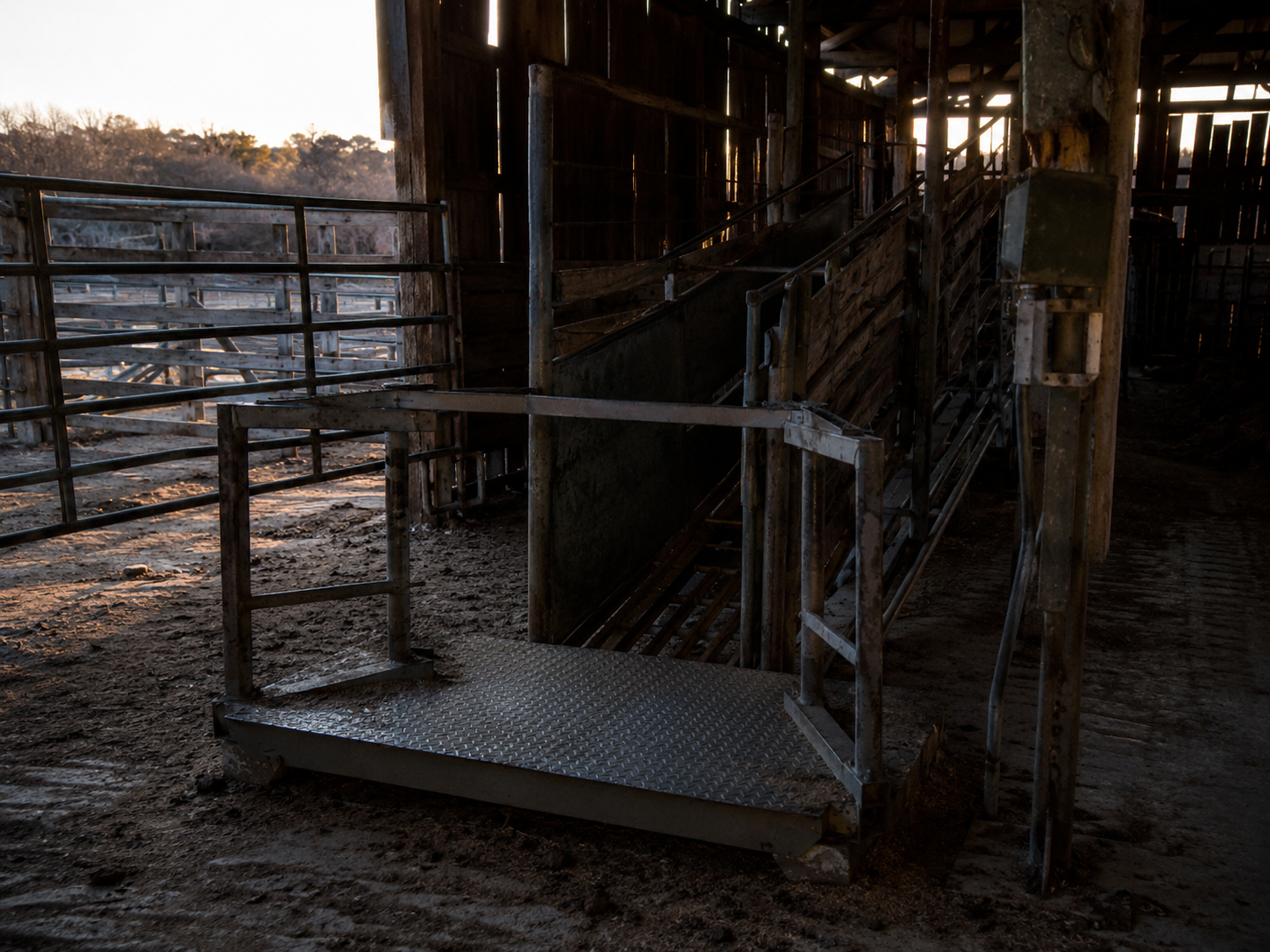
A calf scale is built for plain work, not mystery. It is a metal platform, a gate, a chute, and a number that tells a rancher whether an animal is gaining weight.
At the Coyote Creek place, that plainness is what made the morning discovery feel wrong. The locked scale shed had not been used overnight, yet the platform carried three fresh scratches and a set of dusty drag marks.
The easiest assumption was that a coyote, dog, raccoon, or loose calf had found a way in. Ranch buildings collect signs from ordinary animals all the time.
But the account becomes more interesting because the ordinary routes were not obvious. One still image showed a low dark animal-like shape near the feed chute, while the door, boards, and lower vents reportedly showed no simple entry point. Here are five details that keep the Coyote Creek calf scale scratches from feeling like a closed case.
1. The Scale Was Inside a Locked Shed
The first detail is not the scratches. It is the room around them.
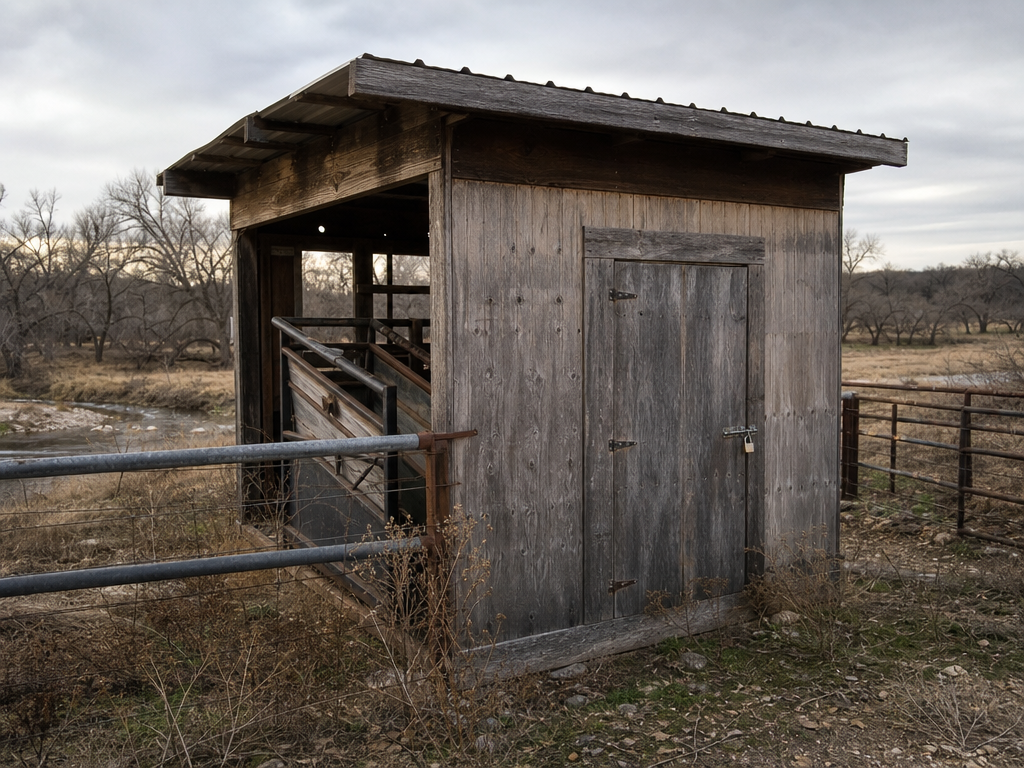
According to the ranch account, the calf scale sat inside a small shed used for weighing young stock before moving them between pens. The main door was locked at the end of the previous afternoon, and the side access gate into the chute was latched.
That does not make the shed impossible to enter. Old ranch buildings have seams, warped boards, loose corners, and places where determined animals can press through.
Still, a locked structure changes the question. It is no longer just, what made the marks? It becomes, what made the marks and how did it get close enough to make them?
The morning check reportedly found no open door, no torn wire, no obvious gap under the threshold, and no displaced feed sacks that would suggest a larger animal had forced its way through. That absence is not a detail people read as anything strange. It is only the first narrowing of the usual explanation.
2. The Marks Came in Three Clean Lines
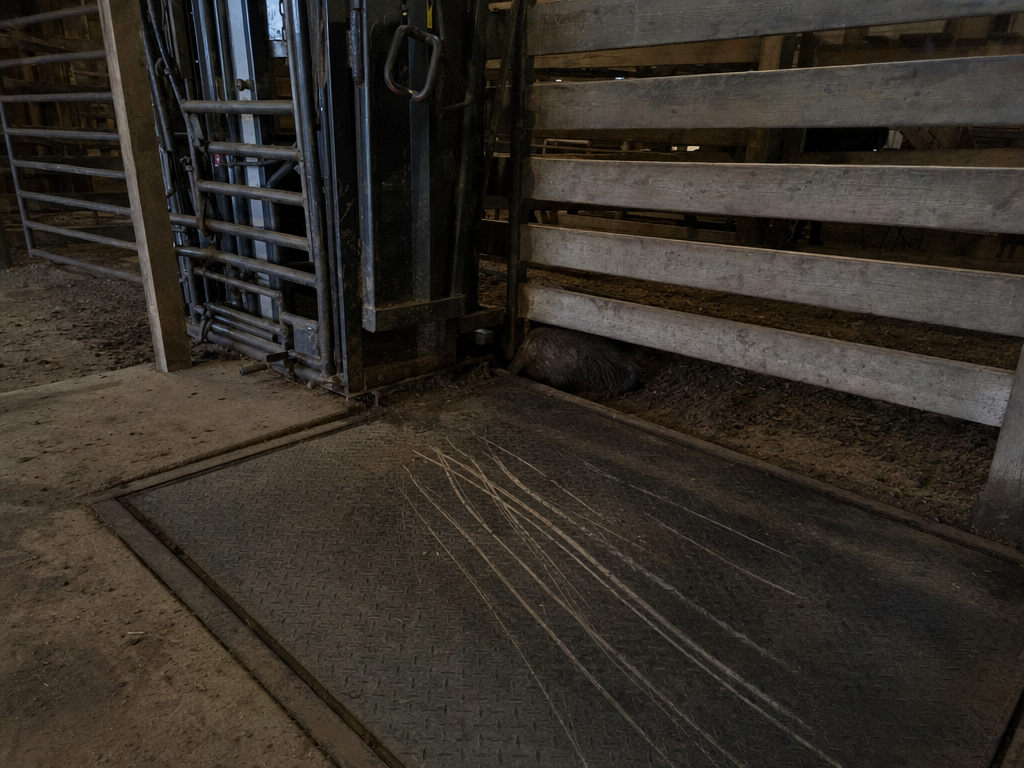
The scratches were described as three roughly parallel lines across part of the scale platform. They were not deep gouges, but they were brighter than the older scuffs around them, as if they had cut through dust and surface oxidation more recently.
That matters because ranch scale platforms are already scratched. Hooves, gate chains, buckets, tools, and boots can leave a messy history on the metal.
The Coyote Creek marks stood out because they looked grouped. Three lines, close together, moving in the same direction, give the eye a pattern to hold onto.
A cautious reading should not jump straight to claws. A bent rake, a dragged piece of metal, a caught latch, or a tool dropped and pulled across the platform could make lines that resemble an animal mark.
The unresolved part is that no matching tool was said to be left in the shed, and the marks appeared with drag streaks on the dusty floor. The scratches were not an isolated mark on clean metal. They were part of a small disturbance field around the scale.
3. The Drag Marks Did Not Look Like Normal Hoof Traffic
Hoof traffic usually tells a busy story. It leaves chips of dried mud, crescent impressions, overlapping steps, and scuffs in more than one direction.
The drag marks around the scale were described differently. They appeared as low streaks in the dust, starting near the platform and trailing toward the feed chute area.
That does not mean something supernatural or unknown was there. A feed pan could have been pushed. A loose board could have scraped. A small animal could have carried or pulled something across the floor.
But the pattern made the rancher pause because it did not resemble a calf walking in, turning around, and leaving. It looked lower and flatter, as if weight had moved close to the ground.
This is where the story starts to overlap with creature folklore without becoming a detail people read as it. Chupacabra reports often lean on low movement, livestock settings, and marks that seem animal-like but not easily placed. The Coyote Creek case fits the atmosphere of that folklore, even if it does not confirm the creature.
4. The Still Image Showed a Low Dark Shape
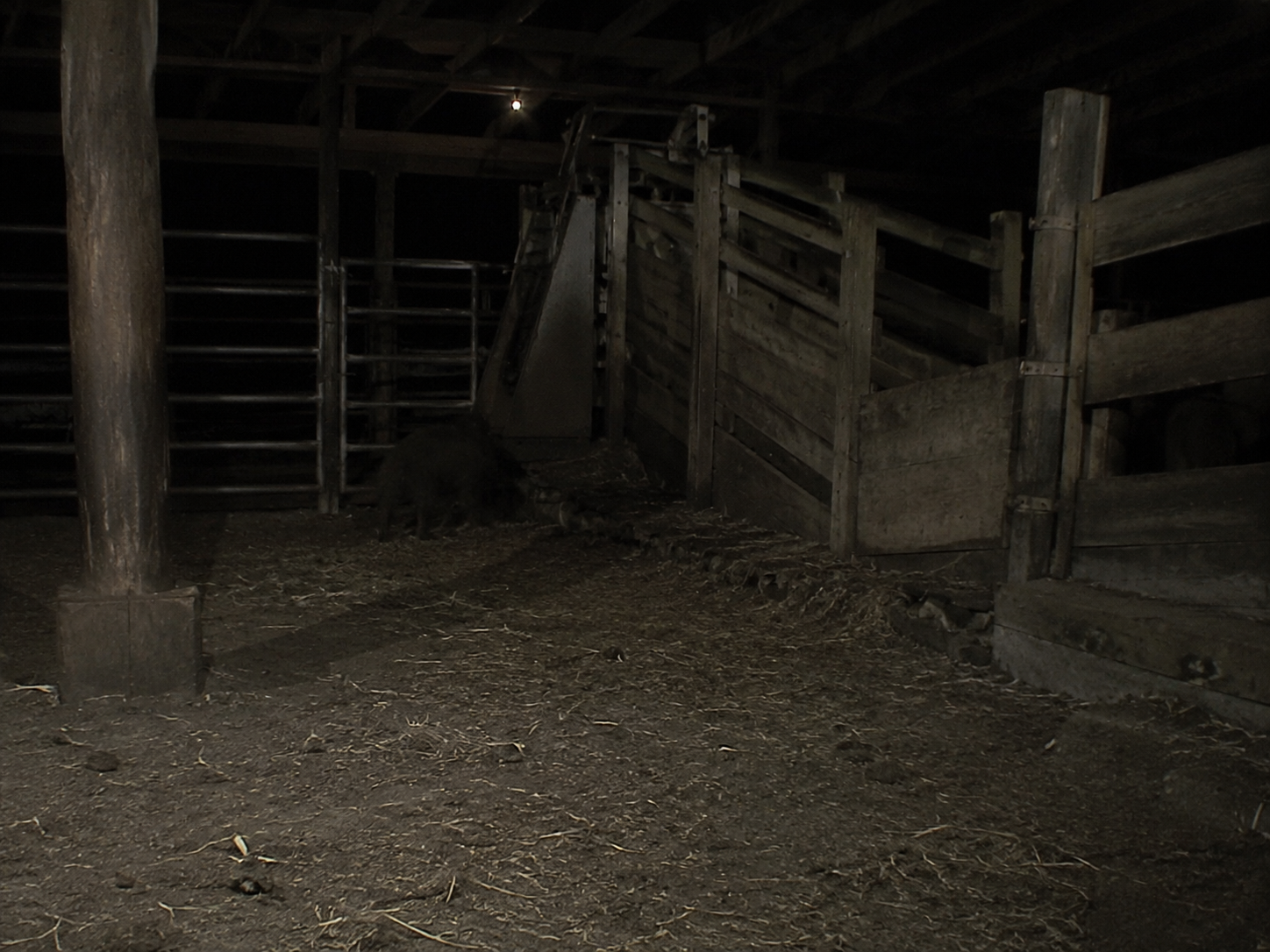
The most attention-grabbing part of the account is a single still image from a small interior camera. It reportedly showed a low dark form near the feed chute, close to the fence side of the shed.
That description should be handled carefully. A low-light still can turn a feed bag, shadow, dog, raccoon, or camera artifact into something suggestive.
The important point is that the image was not described as a clear monster portrait. It was not a sharp face in the frame or a dramatic animal standing in the open.
It was a low dark animal-like shape, partly hidden by the chute and difficult to separate from the background. That makes it weaker as proof, but stronger as a mystery detail, because it matches how many real unclear evidence cases actually look.
If the still had shown a perfect creature, the story would be easier to doubt. The ambiguity is what keeps it in the uncomfortable middle: visible enough to raise a question, unclear enough to resist a confident answer.
5. No Ordinary Entry Point Was Found
The fifth detail is the one people tend to return to. After the scratches and still image were noticed, the crew reportedly checked the shed for an animal route.
They looked at the door, the chute gate, the wall seams, the vent openings, and the space under the lower boards. Nothing obvious appeared large enough for a coyote-sized animal.
There are still possible answers. A smaller animal could have entered through a gap that looked too minor during daylight inspection. A latch may have failed briefly and been reset. A person may have opened the shed and later forgotten or denied it.
The case does not require a cryptid to exist. It only requires a sequence of ordinary possibilities to fail in slightly different places.
That is often where ranch mysteries become memorable. Not because they prove the strangest theory, but because every simple theory leaves one piece sitting outside the fence.
The Most Reasonable Explanations Still Matter
Before the Coyote Creek scratches are treated as creature evidence, the normal explanations deserve space.
A loose dog could have entered during a moment when the door was open and gone unnoticed. A raccoon or similar animal could have climbed through a high gap and dropped near the chute. A piece of equipment could have shifted, scraped the scale, and been moved before anyone thought to document it.
Camera limitations also matter. Low-light stills compress distance, hide texture, and make shadows look solid. Dust on a lens, infrared glare, and motion blur can all create shapes that feel more intentional than they are.
The cautious position is not to dismiss those explanations. It is to ask whether any of them accounts for the full set: locked shed, fresh three-line scratches, low drag marks, unclear dark shape, and no obvious entry point.
A good skeptical answer should explain the whole pattern, not just the easiest piece.
Why the Chupacabra Label Appears Anyway
The word chupacabra gets attached to ranch stories quickly, sometimes too quickly. It carries a long shadow of livestock fear, unknown predators, and nighttime evidence found after the animal is gone.
In this case, the label is probably less a diagnosis than a filing cabinet. People use it when the event seems animal-related but does not fit comfortably into coyote, dog, bobcat, raccoon, or human mischief.
That does not mean the label is correct. It may only mean the story has the same shape as older creature accounts: a working farm setting, evidence discovered after the fact, and one unclear visual clue.
What makes the Coyote Creek account useful is not that it proves a named creature. It shows how quickly a practical ranch problem can become folklore when the physical details do not line up neatly.
The scale was not a haunted room or a staged attraction. It was a tool. That ordinary setting gives the mystery its weight.
The Detail That Keeps the Case Open
If one detail keeps the case open, it is the relationship between the marks and the image.
Scratches alone could be a tool. Drag marks alone could be a feed pan. A dark shape alone could be a shadow. A locked shed alone could be a mistaken memory.
Together, they create a small chain. Something seems to have been near the chute. Something disturbed the dust. Something marked the metal. And the usual entry route was not found afterward.
That chain may still be ordinary. Most unexplained ranch incidents probably are.
But ordinary does not mean obvious, and unexplained does not mean imaginary. The strongest version of this case sits between those two errors.
The Coyote Creek calf scale scratches remain interesting because they ask for a complete explanation, not a dramatic one. Until the entry point, the object that made the three lines, and the low shape in the still are all accounted for together, the shed keeps a little of its unease.
For now, it is best treated as cautious creature evidence: not a clean encounter, not a noted predator, and not a monster story with a neat ending. Just a locked ranch shed, a marked scale, and a dark shape near the feed chute that left more questions than tracks.
Reader Context
This Weird Witnessed story is an editorial reconstruction, written as eerie visual storytelling rather than a verified report. For more context, see Creatures, Crawlers, and Cryptid Stories Guide and How WeirdWitnessed Creates Reconstructed Horror Stories.