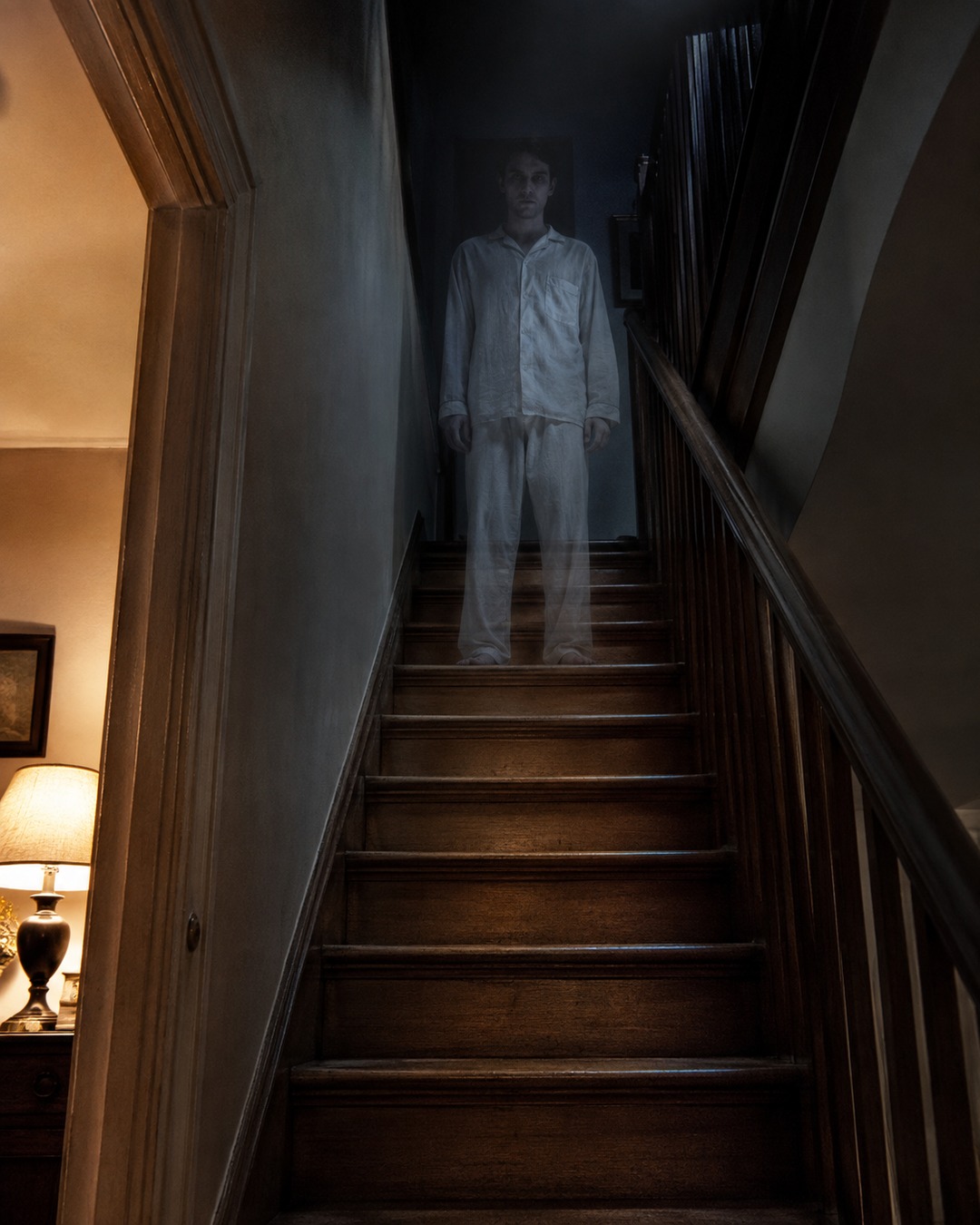
Illustrative reconstruction
Imagine waking in a dark bedroom and noticing a shape near the doorway. It is tall enough to feel human, darker than the room around it, and completely still. You try to move, but your body feels pinned to the mattress. By morning, the memory is not just that the room was dark. It is that someone seemed to be standing there.
This is an illustrative reconstruction, not a documented case. It represents a pattern often described in shadow-person and apparition accounts: a human-shaped presence seen in darkness, near sleep, or at the edge of vision.
Short answer
People may report shadow figures and apparitions for several reasons. Some experiences happen around sleep paralysis, when a person is conscious but temporarily unable to move and may perceive a threatening presence. Other reports involve low light, peripheral vision, expectation, grief, fear, reflections, or ambiguous shapes in rooms and hallways.
The fact that ordinary explanations exist does not make the experience feel less real to the person who had it. A shadow-figure report often becomes powerful because the mind interprets an unclear shape as a person.
What people actually report
Reports usually include one or more of these details:
- a dark human outline;
- a figure near a bed, door, hallway or corner;
- no visible face;
- an intense feeling of being watched;
- inability to move or speak;
- the figure vanishing when lights turn on;
- uncertainty about whether the person was fully awake.
Those details point toward several possible categories: sleep-related experience, low-light misperception, memory reconstruction, folklore-informed interpretation, or a claim the witness considers paranormal.
Ordinary explanations to check first
Many shadow-figure reports can be discussed without assuming a paranormal cause. The most useful ordinary explanations to check first are sleep paralysis, low-light pattern recognition, reflections, doorway shadows, screen glow, streetlight through curtains, and the way expectation changes what a person notices after being startled. These possibilities do not erase the fear of the experience; they give readers a clearer way to separate atmosphere from evidence.
Sleep paralysis and the sensed presence
The NCBI Bookshelf overview of sleep paralysis describes a state in which a person is conscious but unable to move during transitions between sleep and wakefulness. Medical sources such as the Sleep Foundation and Cleveland Clinic also describe episodes that can include fear and vivid perceptions. That makes sleep paralysis directly relevant to many bedroom shadow reports.
Sleep paralysis does not explain every apparition story. But it is one of the most important explanations for bedroom shadow figures because it matches several common elements: waking, immobility, fear and a perceived intruder.
Low light and pattern recognition
In dim rooms, the brain works with incomplete information. A coat on a chair, a doorway, a curtain fold, a mirror reflection or a dark corner can be interpreted as a human form. The effect can be stronger in peripheral vision, where detail is lower and motion or contrast matters more than precise shape.
This is not stupidity. It is how perception protects us. Seeing a possible person in the dark can be safer than ignoring a threat. The cost is false alarms.
Folklore gives the figure a name
Different cultures have stories of night visitors, bedroom presences, shadow people, old-hag figures, crisis apparitions and death omens. These traditions give people a vocabulary for ambiguous experiences. A dark shape is no longer just a dark shape; it may become “a shadow person,” “a ghost,” or “something watching.”
A trustworthy article should separate the cultural label from the evidence. Folklore tells us how people understand the experience. It does not prove what physically caused it.
Why doorways and bed edges matter
Doorways are natural frames. A dark opening in a partly lit room already resembles a stage. Beds matter because people move between sleep and waking there. Corners matter because shadows collect there and provide little detail.
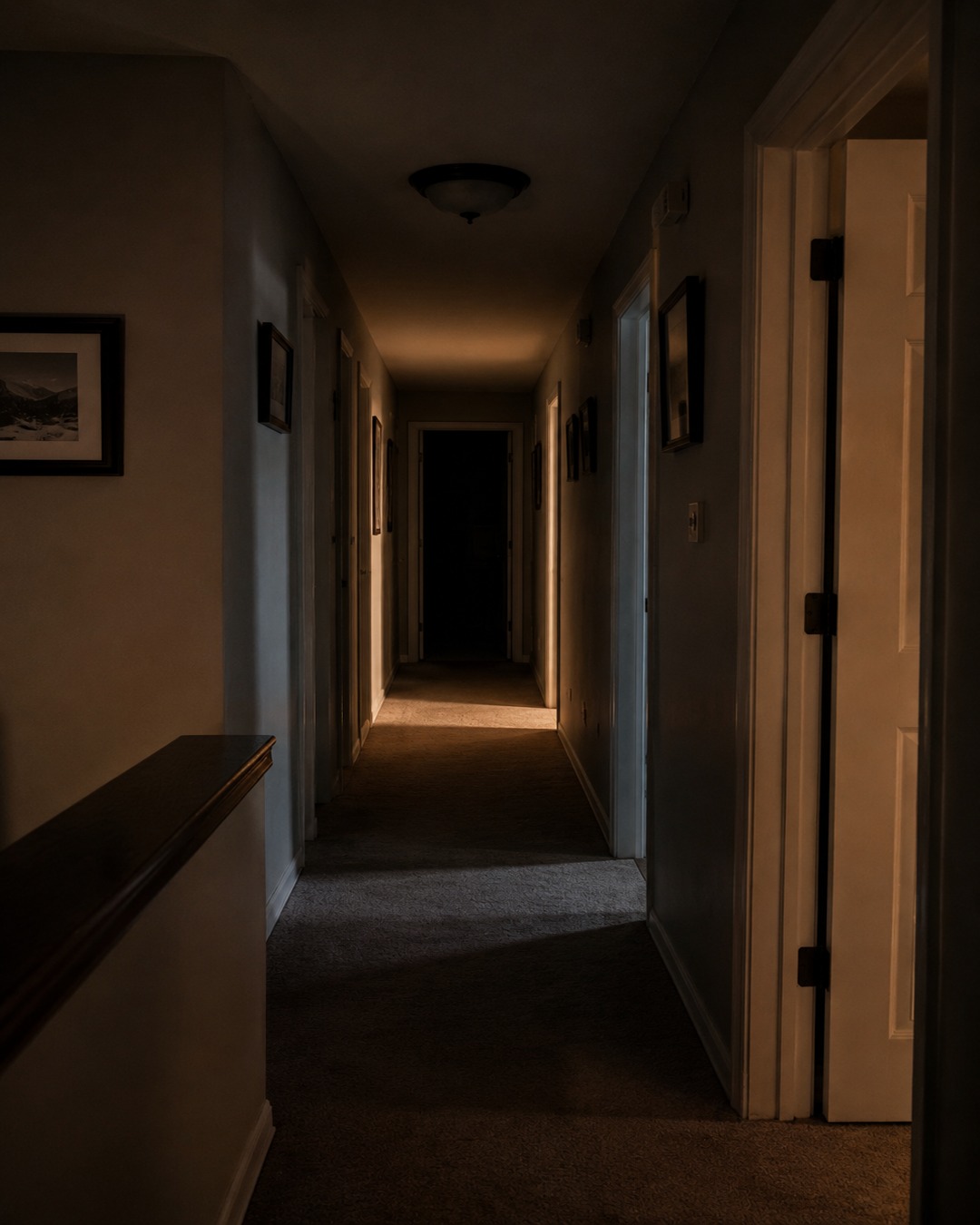
That is why so many apparition reports take place at thresholds: bedroom doors, hallway openings, stair landings, closets, mirrors and windows. These are places where the brain has enough shape to imagine a figure, but not enough information to correct the impression immediately.
Practical shadow-figure checklist
A reader can evaluate a shadow-figure experience more usefully by writing down details before retelling the story repeatedly:
| Check | Why it matters |
|---|---|
| Were you falling asleep or waking up? | Sleep transitions are strongly relevant to bedroom apparition reports. |
| Could you move and speak? | Temporary inability to move points toward sleep paralysis. |
| What was the light source? | Door gaps, streetlights, screens and mirrors can create human-like shapes. |
| Did the figure have detail? | A detailed face, clothing or movement is different from a dark outline. |
| Did another fully awake person see it? | Independent witnesses make a report easier to evaluate. |
| Was the interpretation discussed first? | Group discussion can reshape memory and certainty. |
This does not prove or disprove a haunting. It gives the witness a cleaner record of what happened, which is more useful than forcing the experience into a ghost story immediately.
What would make a case more interesting?
A stronger case would include multiple awake witnesses seeing the same figure from different positions, clear environmental documentation, photos or video captured before the interpretation spreads, and a careful check for reflections, shadows, sleep state and lighting. Even then, the conclusion should remain precise: the report is unusual, not automatically supernatural.
How to describe a shadow figure report carefully
A useful shadow-figure account separates the setting from the interpretation. The setting is what could be checked: the room, doorway, light source, time of night, whether the person was awake, and whether anyone else saw the same thing independently. The interpretation is the part people argue about later: whether it felt like a ghost, a dream image, a reflection, a person, or something else.
That separation helps the story keep its mood without becoming misleading. Readers can understand why the figure felt disturbing while also seeing what ordinary explanations should be considered first.
Mirrors And Figures Behind The Witness
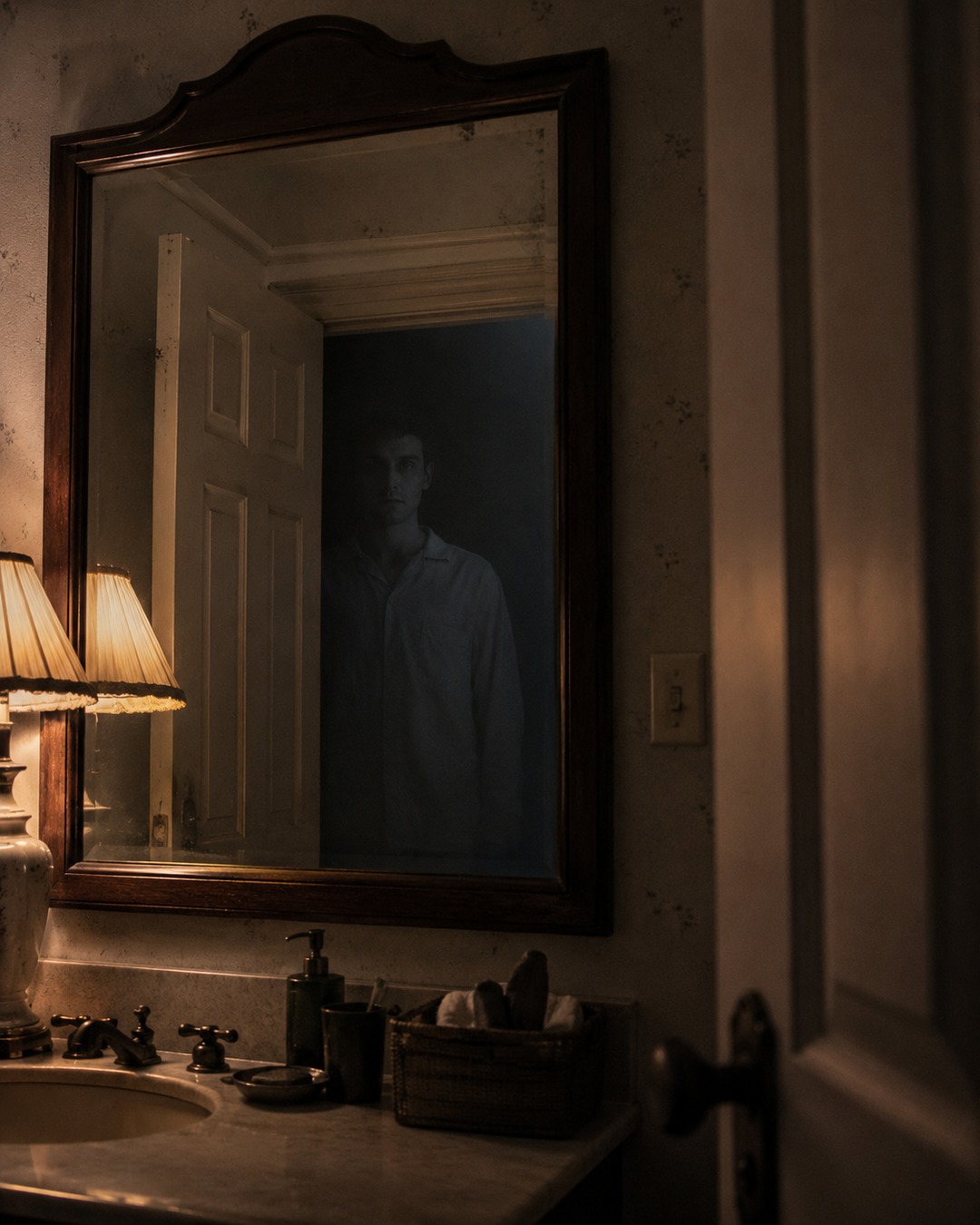
Some apparition reports happen in mirrors rather than in direct view. The witness may see a human-shaped figure behind them, turn around, and find the room empty. These stories sit closer to shadow-figure and apparition perception than to ordinary object movement because the central question is why the mind reads a reflected shape as a person.
Low light, unfamiliar rooms, hotel layouts, angled mirrors, dark doorways, coats, furniture, reflected windows and partial facial detail can all create a figure-like impression. A mirror also adds a second step: the witness is not only interpreting a shape, but interpreting a shape in reversed space. Useful details include whether the figure had a visible body outline, whether it blocked a known background object, whether the witness could reproduce the effect from the same position, and what changed when the lights were turned on.
What we can and cannot say
We can say that shadow figures are a common theme in ghost folklore and that sleep paralysis and low-light perception provide strong ordinary explanations for many bedroom cases. We cannot say every shadow figure is hallucination, and we cannot say shadow people are proven entities. The honest answer lives between those extremes.
What this page adds that a generic result usually does not
A shadow-figure report becomes more useful when it preserves the lighting, sleep state, doorway or mirror position, duration and whether the shape moved independently. The experience can be frightening without every dark outline being treated as an apparition.
Faces In Dark Windows
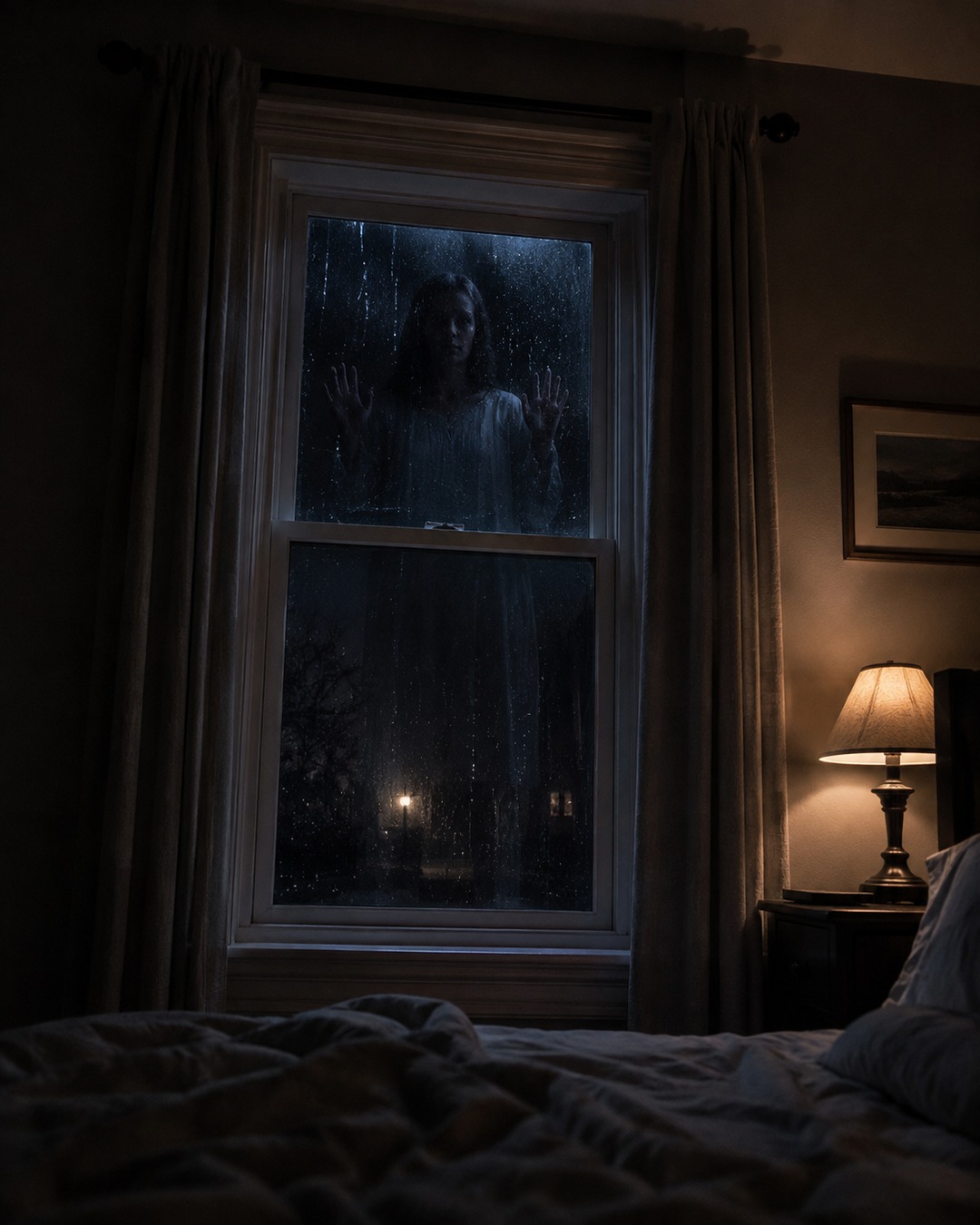
Faces in dark windows are a common apparition detail because glass combines reflection, darkness, interior light and expectation. A person may see their own reflected movement, a light source behind them, curtains, objects in the room, outdoor shadows or contrast patterns that the brain organizes into a face. The experience can still feel immediate and frightening, especially after midnight when the room behind the viewer is brighter than the outside.
Useful checks include changing the viewing angle, turning lights on and off, photographing the window from the same position, checking what is behind the observer, and looking for outdoor light sources or reflective surfaces. A face-like impression is stronger when the original setting, lighting and repeat angle are documented before the image is cropped or retold.
Sources & Further Reading
- NCBI Bookshelf — Sleep Paralysis
- Sleep Foundation — Sleep Paralysis: Symptoms, Causes, and Treatment
- Cleveland Clinic — Sleep Paralysis
Related Weird Witnessed guides