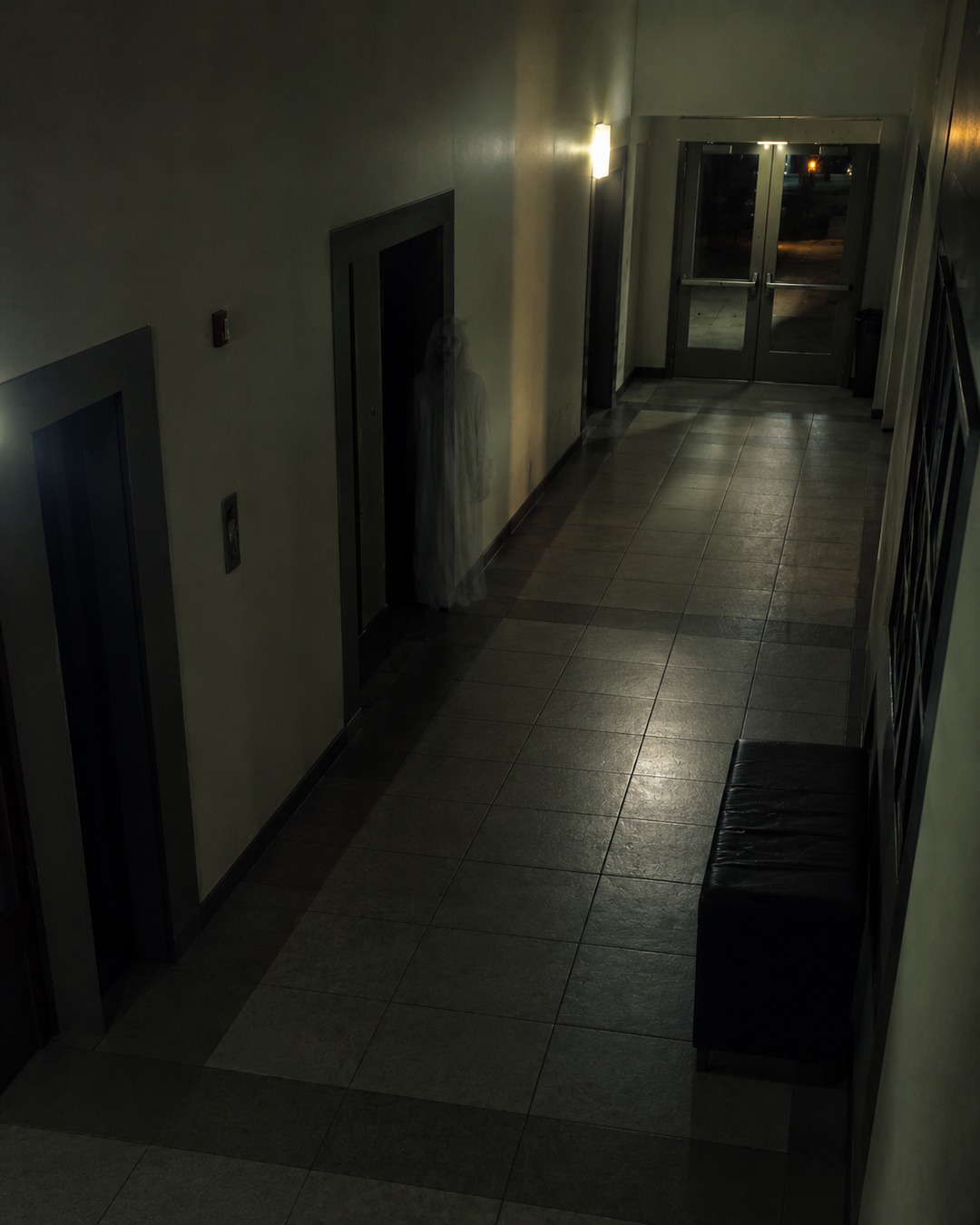
Illustrative reconstruction
The night camera was mounted high in the corner of the empty pool room, fixed on a scene that should not have changed until morning. The lights had dimmed, the chairs were stacked, and the water looked flat on the small monitor. Then one lane rope bowed out of line. A shadow thickened near the lifeguard chair. On the replay, the shape looked almost human, but never quite became a person.
Security-camera footage can feel stronger than a story because it seems independent. A camera recorded something. A timestamp appears on the screen. The building was closed. But video is not a neutral eyewitness. It is a technical record shaped by lens angle, exposure, frame rate, compression, infrared light, motion detection, reflections, software and the fact that viewers often watch copies of copies after the most dramatic moment has already been selected.
Short answer
Apparently paranormal security-camera videos often look strange because surveillance systems are designed to monitor spaces, not produce forensic-quality evidence of small ambiguous events. Low light, infrared illumination, compression, frame rate limits, motion blur, reflections, glass, insects, dust, headlights, automatic exposure changes, motion detection and reuploaded screen recordings can all make ordinary movement look ghostly. A human-shaped blur on video is not proof without the original file, camera context, scene measurements and ordinary explanations checked first.
How security cameras change what viewers see
CCTV and security cameras are usually mounted high, wide and fixed. That position helps cover doors, hallways, pools, warehouses and parking lots, but it flattens depth and removes familiar human eye-level references. A small object close to the lens can look large. A person farther away may look smaller than expected. A reflection can appear to occupy the wrong part of the room.
Many systems also record at limited frame rates. Fast motion may appear as a streak or jump. A person or animal can enter between frames, while compression fills in missing detail with blocky shapes. When viewers see only a clipped segment, they lose the minutes before and after that might explain the motion.
Low light, infrared and exposure shifts
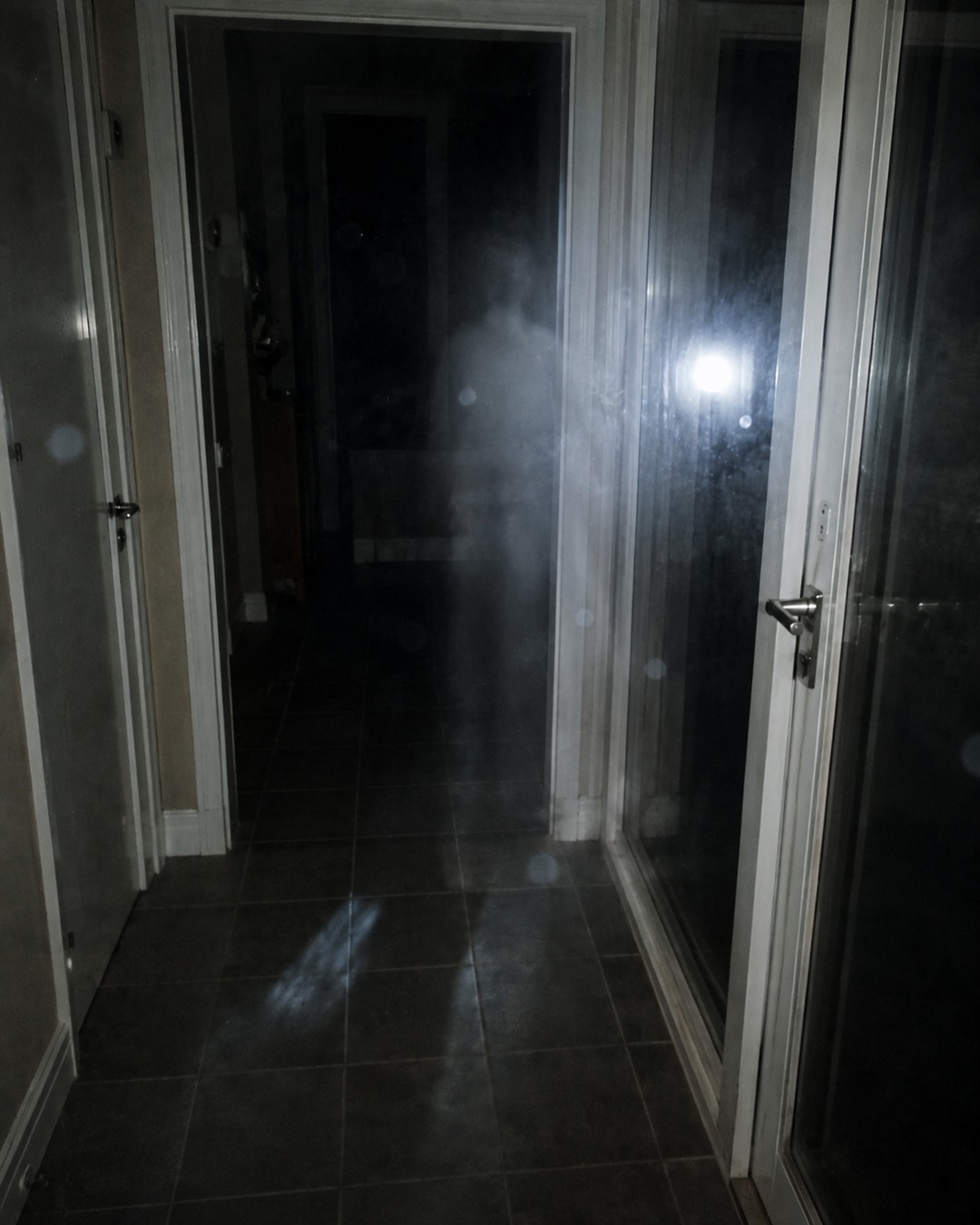
Night cameras often rely on infrared illumination or automatic gain. Infrared light can brighten dust, insects, moisture and reflective surfaces near the lens. Automatic exposure can make a room pulse brighter or darker when headlights pass outside, a door opens, or a reflective object catches light. In a dark hallway or pool room, those changes can make a shadow seem to appear and vanish.
Shutter and exposure behavior matter too. A slow exposure can smear a moving object. A fast exposure in weak light can create noise. Digital sharpening may turn noise into edges that look like shoulders, faces or hands. Those artifacts are not lies; they are how the system builds a usable image from limited light.
Motion detection and missing context
Motion-triggered systems may not record continuously. They may save a clip only after movement crosses a detection zone. That means the first visible frame can begin after the cause has already started. A curtain may be moving before the clip begins. Water may already be disturbed. A door may have been pushed by air pressure before the recorded segment starts.
Useful review requires the full original file, camera model, frame rate, recording mode, exact mounting position, light sources, weather, access logs and a wider timeline. A screen recording from social media loses much of that information. Reuploads add compression and may crop out the clue that explains the event.
Reflections, glass and public-building cameras
Public buildings create many reflection problems. Hotels have polished doors and mirrors. Hospitals have glass partitions. Warehouses have glossy floors. Pools and natatoriums add water surfaces, lane ropes, tile, stainless steel and humidity. A dark shape near a wall may be a reflection, a shadow, a person partly hidden by perspective, or an object made strange by compression.
Water is especially difficult. Pump circulation, drains, ventilation, cleaning equipment, vibration and delayed surface movement can shift ropes or reflections after a room looks empty. A wake without a visible source can feel unsettling, but the first question is whether the water, object or image is actually moving.
Why things look human-shaped on video
People are very good at detecting bodies and faces from limited information. That ability is useful in daily life, but it also means dark vertical shapes, coats, furniture, reflections, compression blocks and insect trails can be read as figures. The more a clip is paused, zoomed and replayed, the easier it becomes to see a body-like outline that may not survive in the original wider context.
What to check before calling footage paranormal
- Use the original file, not a phone recording of a monitor.
- Preserve metadata, frame rate, resolution and timestamps.
- Check the camera location, lens angle, glass, mirrors and reflective surfaces.
- Look for insects, dust, moisture, headlights, doors, HVAC movement and people with access.
- Compare the clip with normal footage from the same camera at the same time of night.
- Ask whether the event starts before the motion-triggered recording begins.
- Avoid heavy digital enhancement that creates details not present in the original file.
How this differs from ghost photography
Still photographs and security video overlap, but they are not identical problems. For still images, see Ghost Photography And Paranormal Camera Artifacts Explained. This page focuses on video, CCTV and security-camera interpretation: frame rate, motion detection, compression over time and fixed-camera context.
What we can and cannot say
We can say that security-camera clips sometimes record ambiguous movement, odd shapes and unsettling timing. We can also say that the technical limits of surveillance systems create many ordinary ways for footage to look paranormal. A clip may be interesting, but interest is not proof.
We cannot responsibly call a security-camera anomaly evidence of a ghost without provenance, original files, camera context and ordinary explanations ruled out. The strongest cases are those where the full scene, equipment and timeline are preserved, not merely the strangest few seconds.
Why enhancement can mislead
Many viral ghost clips become less reliable after enhancement. Brightness boosts, contrast changes, sharpening, slow motion and heavy zoom can make a faint object look more defined than it was in the original file. Compression blocks become edges. Noise becomes texture. Reflections become outlines. A viewer may think the enhanced version reveals the truth, when it may actually be adding visual certainty that the camera never recorded.
A responsible review preserves the original file first, then compares any enhancement against it. Enhancement can help locate a moment, but it should not be treated as new evidence unless the process is explained and reversible.
Questions a serious video review should answer
- Was the footage recorded continuously or triggered by motion?
- What was the frame rate and resolution?
- Was infrared illumination active?
- Was the camera behind glass or pointed at reflective surfaces?
- Were doors, fans, HVAC vents, pool systems, curtains or loose objects nearby?
- Could headlights, emergency lights, phones or exterior signs affect exposure?
- Is there footage from another camera angle?
- Was the clip exported directly, or filmed from a monitor and uploaded again?
These questions do not assume the clip is fake. They simply recognize that security footage is a technical artifact. Without equipment context, it is easy to mistake recording behavior for room behavior.
Why provenance matters more than the scariest frame
The scariest frame is often the least useful part of a video. Provenance matters more: who exported the file, whether it is complete, whether the timestamp is reliable, whether access logs exist, whether other cameras were running, and whether the same camera has produced similar artifacts before. A short anonymous clip can be eerie entertainment, but it has limited evidential value.
Security-camera cases become more interesting when ordinary access, environmental movement and camera behavior are documented. They become weaker when only a cropped, reuploaded, narrated highlight survives.
Sources & Further Reading
- Axis Communications — Video surveillance technical white papers
- YouTube Help — Video quality after upload
- MDN Web Docs — Video codecs and compression context
- MDN Web Docs — Audio and video delivery context