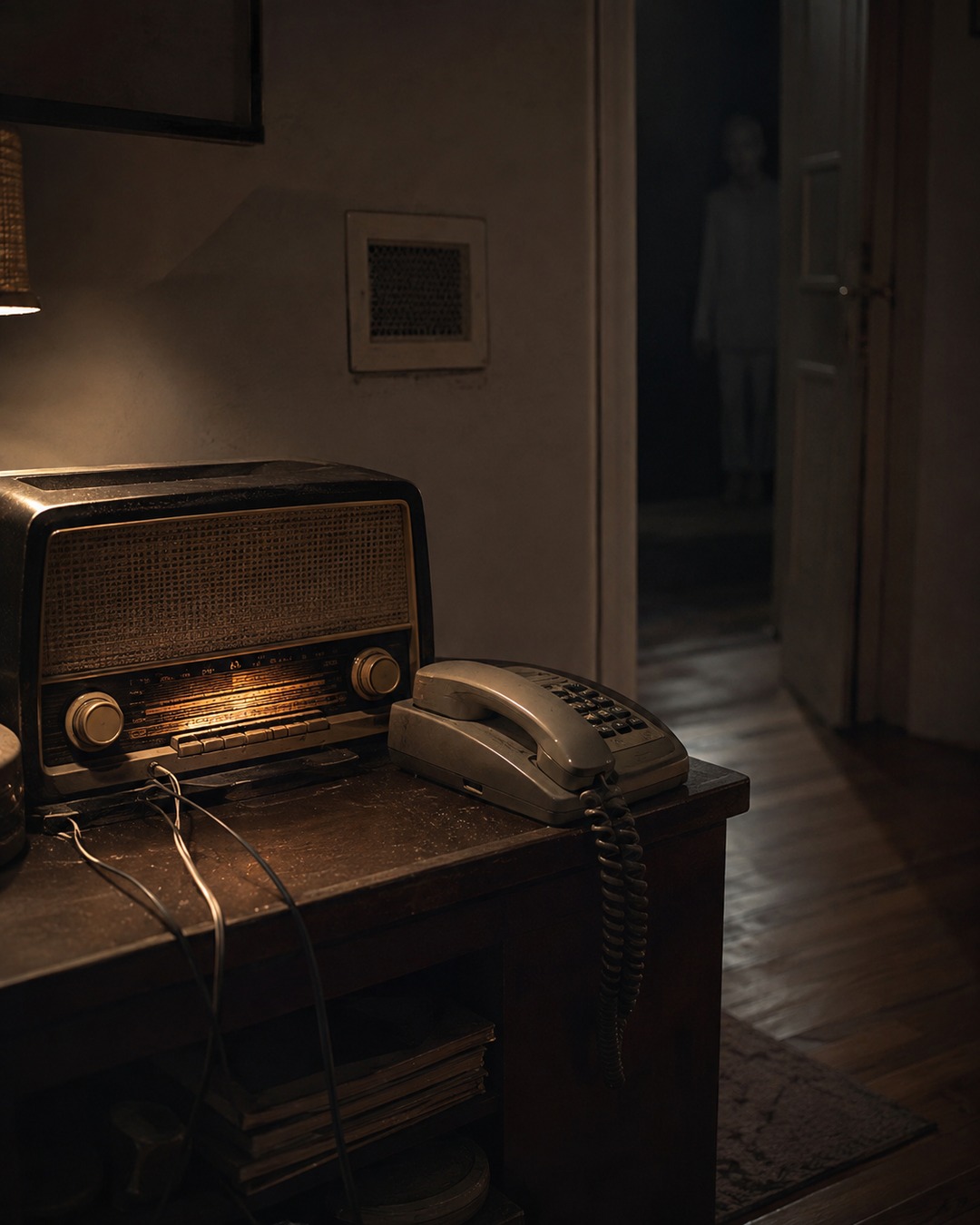
Short answer: Reports of phantom voices, disconnected phone calls, radios speaking in recognizable words, baby-monitor voices, whispered names, and meaningful static do not all have one explanation. A careful review starts with ordinary mechanisms: the brain finding speech-like patterns in noise, sleep-related perception, building sound transmission, radio-frequency interference, device cross-talk, memory and expectation, and the limits of anecdotal evidence.
This guide treats audio anomalies as claims to evaluate, not as proof of a haunting. The useful question is not “could a story be scary?” but “what would have to be checked before a voice report becomes strong evidence?”
What people mean by “phantom voices”
Witnesses use the phrase for several different experiences: a name heard in an empty hallway, crying in a room where no child is present, a familiar phrase in radio static, a baby monitor picking up another voice, or a phone call that seems to come from a disconnected number. Those claims should be separated because the likely explanations and evidence standards differ.
Why the brain finds words in noise
Human perception is tuned to detect language quickly, even from incomplete signals. That strength also produces mistakes. Pareidolia and apophenia describe the tendency to perceive meaningful patterns in ambiguous input. With sound, this can make hiss, fans, appliances, wind, traffic, plumbing, or distant conversation feel like words, especially when a listener is already expecting a voice.
Radio, RF interference and wireless devices
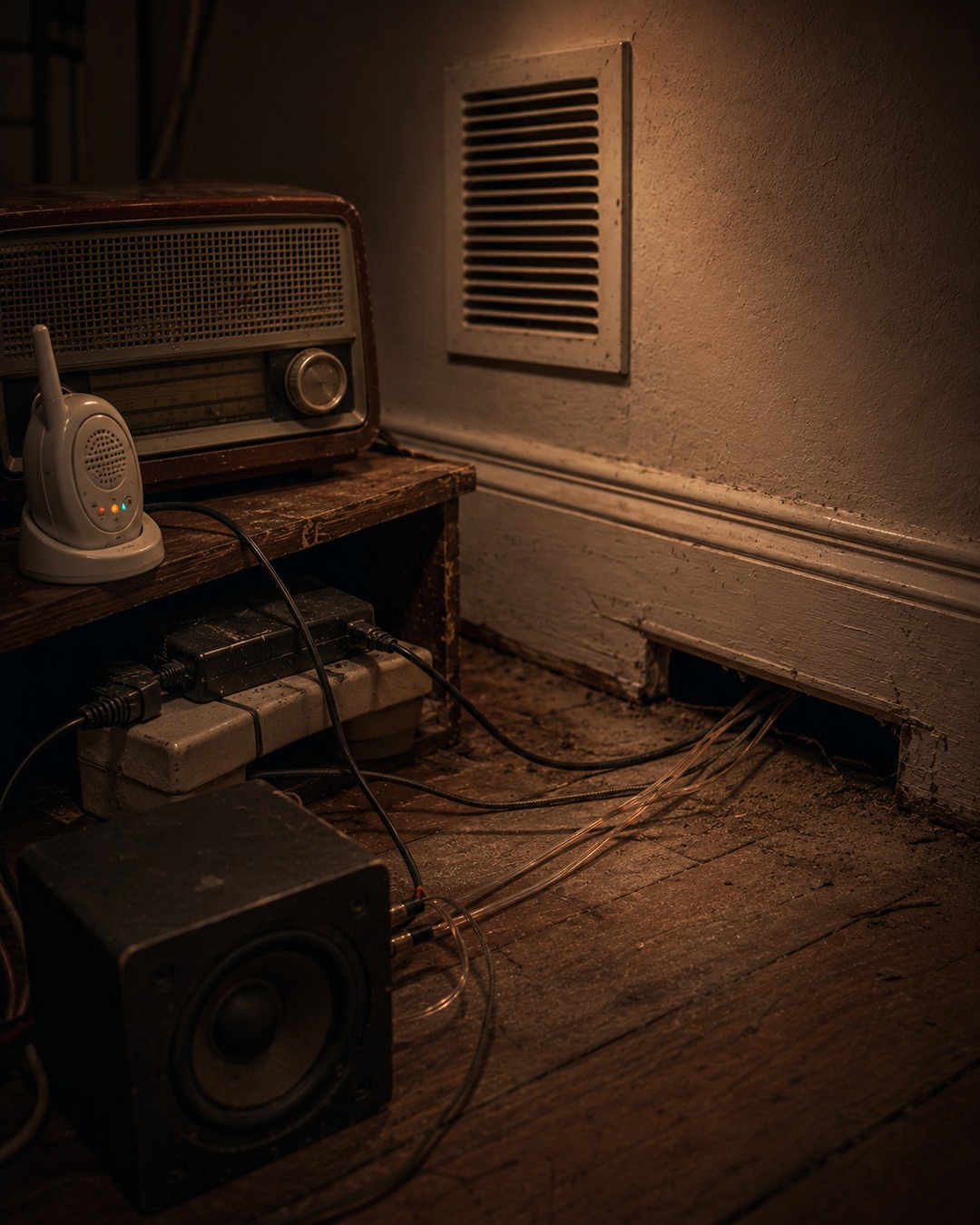
Radios, baby monitors, wireless microphones, cheap speakers, intercoms, and poorly shielded devices can receive or reproduce unwanted signals. Interference does not require a paranormal source: nearby transmitters, overlapping consumer devices, faulty wiring, or a device tuned near another signal can all create surprising audio. A useful report should identify the device model, frequency band when available, distance from transmitters or neighbors, and whether the sound can be reproduced.
Voices through vents, walls and buildings
Buildings transmit sound in unintuitive ways. Ductwork, shared walls, stairwells, elevator shafts, pipes, open chases, and hard surfaces can carry speech so the source feels displaced. A voice that seems to come from an empty room may originate from another floor, an adjoining unit, a hallway, or outside. Time of day, HVAC status, open doors, window position, and repeated tests matter.
Sleep-related and waking perception
Some voice reports happen near sleep: waking up to a name, hearing a phrase before fully awake, or feeling that a voice came from beside the bed. Sleep-transition states can produce vivid sensory experiences. That does not make the witness dishonest; it means timing, fatigue, medication, stress, and sleep disruption are relevant context.
Phantom phone-call reports
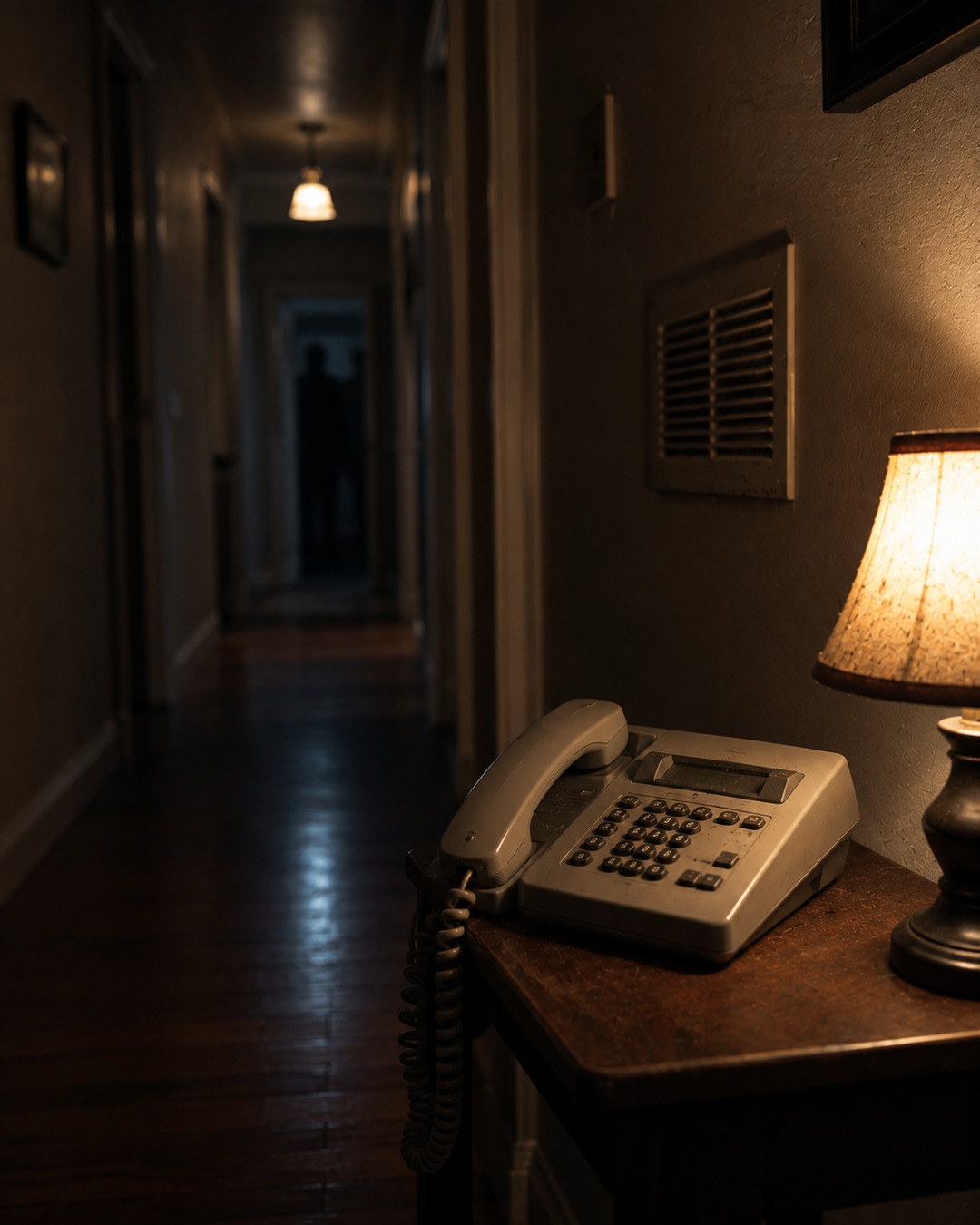
A call from a disconnected number or a familiar voice on the line should be treated as a telecommunications and record problem first. Useful evidence would include carrier logs, caller-ID screenshots, voicemail files, device logs, timestamps, whether the number was reassigned, spoofing possibilities, and whether more than one device received the same call.
What useful evidence would require
- Original audio files, not compressed reposts.
- Device model, location, time, and settings.
- Whether the sound repeated under the same conditions.
- Environmental notes: HVAC, open windows, nearby rooms, neighbors, traffic, storms, appliances.
- Independent listeners who do not know what phrase they are supposed to hear.
- Carrier, radio, or device logs when phone/radio claims are involved.
Practical checklist
Before treating an audio anomaly as unusual, check ordinary sources: people in adjacent rooms, vents, plumbing, speakers, alarms, radios, baby monitors, smart devices, doorbell cameras, phones, neighbors, street noise, wind, pets, and sleep timing. Then test whether the same conditions reproduce the sound.
What remains uncertain
Some reports cannot be reconstructed after the fact. That uncertainty is not the same as evidence for a haunting. The strongest cases preserve original recordings, device data, environmental context, and repeatable observations.
Sources & Further Reading
- Pareidolia — pattern perception background
- Apophenia — perceiving meaningful patterns
- Auditory Hallucinations — StatPearls / NCBI Bookshelf
- FCC: defining sources of interference
- FCC consumer guide: wireless microphones and baby monitors
Related Weird Witnessed research: knocking, footsteps and voices in haunted houses and electrical anomalies, radios and power problems.