The smell reached the hikers before the silence did.
It rolled through the pine trees in a heavy wave, thick enough that one of them stopped talking in the middle of a sentence. It wasn't the sharp smell of a dead animal or the damp scent that follows rain. It was closer to soaked dog fur left in a closed room for days, mixed with wet earth and something sour that didn't belong in the clean mountain air.
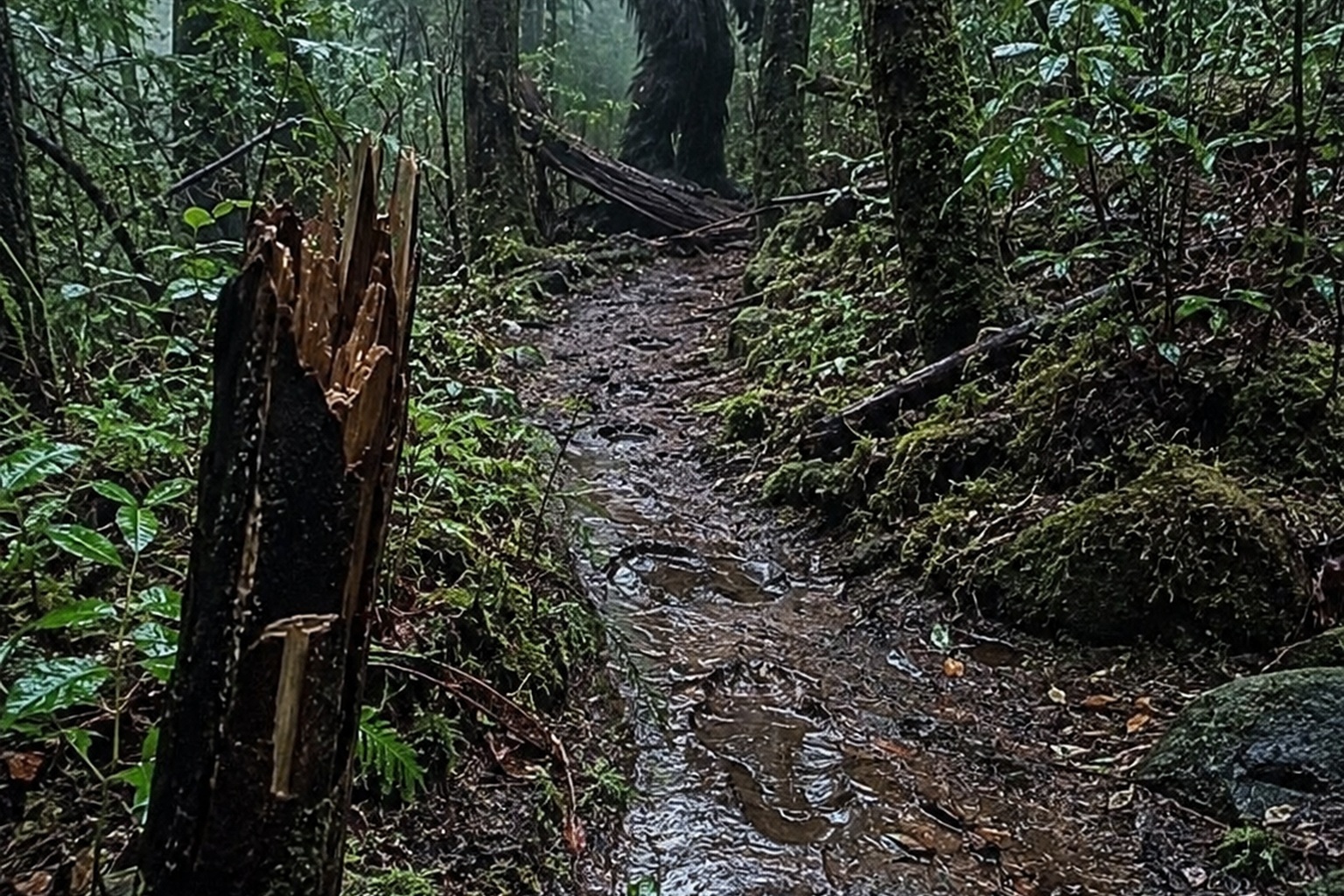
One hiker joked that a bear must be nearby. The other looked toward a clearing where nothing moved. The birds had stopped. Even the insects seemed quieter. Then a large branch, far ahead on the trail, swayed once without wind. Nobody saw anything. When they finally continued, the smell faded almost as quickly as it had arrived. Fifty yards farther down the trail they found huge footprints pressed into soft mud beside a fallen log. The prints crossed the path and disappeared into dense trees that should have been impossible for something so large to move through without making noise.
That sequence appears again and again whenever people describe unusual Bigfoot encounters. The smell comes first. The tracks appear later. Sometimes the witness never sees a creature at all, yet the overpowering odor becomes the detail they remember most. So why do so many Bigfoot witnesses describe smelling wet fur before they discover footprints? Is there a simple explanation, or is the strange sequence part of why these stories continue to spread?
Many Bigfoot stories begin with something people notice using their nose rather than their eyes. That matters because smell is difficult to ignore. You can choose not to look into dark trees. You cannot easily avoid breathing.
The First Time It Happened
Witnesses often describe an odor similar to wet dog, soaked animal fur, rotten vegetation, old leather, or damp musk. Different people use different words, but the descriptions often share the same feeling: the smell is unusually strong, appears suddenly, and seems out of place. The timing makes the experience memorable.
Someone may hike the same trail every weekend without noticing anything unusual. Then, on one afternoon, an overpowering odor appears almost instantly, hangs in the air for a minute or two, and disappears just as quickly. That sudden change tells the brain that something nearby is different.
Whether the cause is ordinary wildlife or something harder to explain, the unusual smell becomes the first warning that the environment has changed.
People usually think fear begins with what they see. In reality, smell often reaches the brain faster than careful visual thinking. A strange odor immediately raises questions before the eyes have found an answer.
What made it? How close is it? Why wasn't it there a moment ago? That uncertainty builds tension.
Why The Place Felt Wrong
If someone later discovers unusually large footprints, broken branches, or unexplained movement, the smell becomes linked to every detail that follows. Even if nothing unusual is ever seen, the memory remains powerful because it started before there was anything visible to explain it. Many wilderness experiences work this way.
Campers sometimes smell smoke before spotting a fire. They smell skunks before seeing one. Hunters often notice animals through scent before movement. Because of that, Bigfoot stories using the same pattern feel believable to many listeners. The order matches how people naturally experience forests.
Witnesses usually find the most unsettling details after the odor has already changed the mood of the trail.
The interesting part is not only the smell itself. It's what people report noticing next. Some describe unusually large footprints in mud or snow. Others mention branches broken high above head level, as though something tall pushed through the trees.
Some hear a heavy step, a single knock against wood, or the sound of something large moving away through thick brush. Others report complete silence. The forest suddenly feels empty. Birdsong disappears.
The Detail Nobody Could Explain
Small animals stop making noise. The witness becomes aware that the woods sound different without immediately knowing why. By the time they begin searching for the source, whatever caused the change is already gone. That sequence—smell, silence, tracks—appears often enough that many people who enjoy reading Bigfoot reports immediately recognize it.
Whether every story is accurate is another question entirely, but the pattern itself is surprisingly consistent.
There are plenty of ordinary reasons someone might suddenly smell wet fur deep in the woods. A black bear can produce a strong musky odor, especially if it has been moving through wet vegetation.
Elk, deer, wild pigs, and other large mammals can also leave powerful scents under the right conditions. Dead animals hidden beneath brush sometimes produce smells that drift in changing wind currents. Wet soil, decaying leaves, fungi, and stagnant pools can combine into odors that seem stronger than expected.

Wind also plays tricks. Air moving through valleys can suddenly carry smells from hundreds of yards away before changing direction again only moments later. Humidity makes this effect even stronger. Someone walking uphill may enter a pocket of air carrying an odor that disappears after only a few steps.
What They Checked Afterward
These explanations account for many reports. Forests contain countless smells that people rarely notice until weather conditions concentrate them in one place.
Some stories continue because witnesses say the ordinary explanations did not seem to fit what happened.
Instead of smelling something faintly carried on the breeze, they describe an odor so concentrated it seemed to surround them. Instead of finding signs of known wildlife, they discover unusually large footprints leading into dense cover. Sometimes experienced hunters or park visitors say they were familiar with local animal smells but felt this one was different.
That does not automatically mean the encounter involved an unknown creature. Memory changes over time. Fear affects how events are remembered. People discussing unusual experiences together can unintentionally reinforce certain details.
The Moment It Became Harder To Ignore
Still, these reports remain interesting because many witnesses describe remarkably similar sequences despite living in different regions. The repeated combination of overwhelming odor, sudden silence, and unusually large tracks keeps the discussion alive. Why Wet Fur Is the
Smells are unusually good at attaching themselves to memory.
Years later, someone may struggle to remember exactly where they stood on the trail. They may forget what clothes they wore. They may not remember the weather. But they remember the smell.
Scientists have long known that odors are closely connected to emotional memory. A familiar scent can instantly bring back forgotten places or experiences. That may explain why Bigfoot witnesses often describe the smell in extraordinary detail while remaining uncertain about everything else. The odor becomes the anchor for the entire memory.
Every sound afterward feels connected to it. Every footprint gains importance because it followed that strange moment. Even listeners who doubt the story often remember the smell description because it feels oddly specific. It's easier to imagine wet fur than an unseen creature.
Why People Avoided That Spot Later
People often assume Bigfoot stories are mainly about seeing a giant figure between trees. Surprisingly, many reports involve no clear sighting at all. Instead, witnesses describe a collection of smaller details.
Heavy footsteps. Broken branches. An uncomfortable silence. A strange smell.
Large tracks. None of these alone would convince most people that something extraordinary happened. Together, however, they create a sequence that feels difficult to dismiss emotionally. If the smell appeared after the tracks, the story would feel different.
If the tracks came without the silence, listeners might assume another animal passed through earlier. The order matters. Each detail seems to prepare the witness for the next one. That storytelling structure may also explain why these reports spread so easily.
People naturally remember events that unfold step by step, each clue making the next one more unsettling.
Why The Story Still Gets Shared
The mystery is not simply whether Bigfoot exists. It's why so many stories begin before anyone claims to see anything unusual.
An unexpected smell changes the mood. The forest grows strangely quiet. Someone slows down without knowing why. Only afterward do they notice broken branches, oversized tracks, or signs that something large may have passed through moments earlier.
For skeptics, changing wind, wildlife, and memory probably explain most of these experiences. For believers, the repeated pattern suggests that witnesses may be noticing the presence of something hidden before they ever catch sight of it. Neither answer completely removes the uneasy feeling these stories create.
Perhaps that's because smell is such a personal sense. Unlike a distant shape or an unclear photograph, it feels immediate. You cannot pause it, zoom in, or replay it. For a few seconds, it surrounds you completely. Whether the source is an ordinary animal, unusual forest conditions, or something people still argue about around campfires, the sequence remains remarkably familiar.
The smell arrives first. The trail feels wrong. Only then do people begin looking down—and discover tracks leading into woods that suddenly seem much larger than they did a minute before.