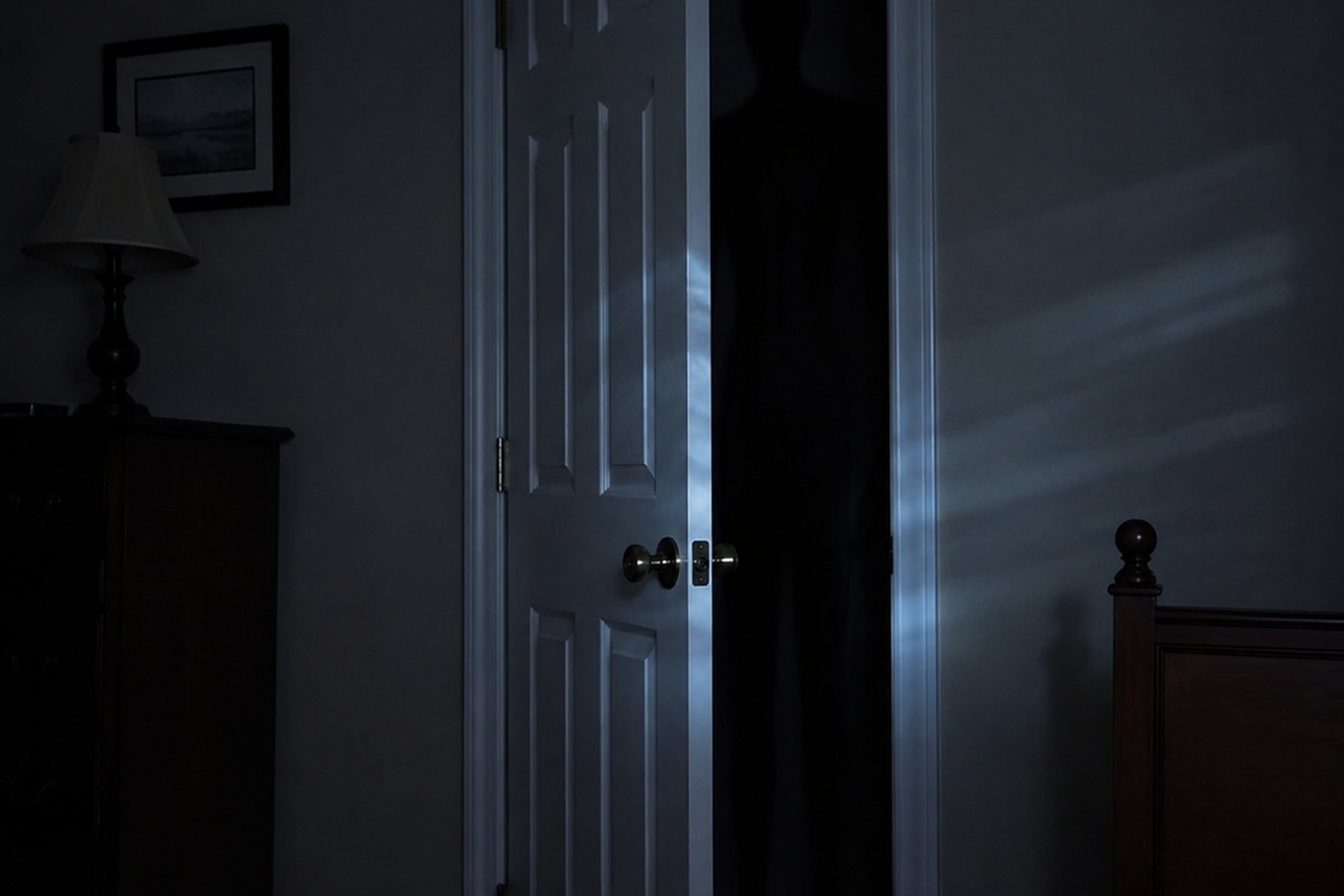
A woman woke because the bedroom suddenly felt bigger. Not brighter. Not louder. Just bigger. She reached for her phone to check the time and noticed the narrow strip of darkness beside the dresser. Her closet door was open only a few inches. She was certain it had been shut when she went to bed. The room looked ordinary until she realized something else had changed.
The coats hanging inside were perfectly still. The ceiling fan was running, the curtains beside the window were moving gently, and a loose receipt on the dresser fluttered whenever the fan turned. But the clothes inside the closet never moved at all. They hung in complete silence as though the air stopped exactly at the doorway.
She watched the opening for several seconds. Then one empty hanger slowly rocked forward. Nothing else moved. She got out of bed, pushed the door closed, checked the latch, and climbed back under the blankets. Less than ten minutes later came a soft wooden click. The door had opened again by itself, stopping at exactly the same narrow gap.
Stories like this appear everywhere people talk about strange experiences at home. Whether someone believes in ghosts, coincidence, or hidden problems with old houses, closet doors opening during the night remain one of the most common details in paranormal stories. Why do so many people remember the same simple event? And why does an ordinary bedroom suddenly feel so frightening when that dark doorway appears after midnight?
Most closets are places we stop paying attention to. During the day they are filled with familiar things—shirts, jackets, storage boxes, shoes. At night those same objects become dark shapes with unfamiliar outlines. Our brains naturally notice doorways because they separate one space from another. A closed closet feels finished. Once the door opens, even slightly, the room suddenly seems connected to another dark area that wasn't part of the bedroom moments earlier.
The First Time It Happened
That simple change is enough to make many people uneasy before anything unusual even happens. Paranormal stories often use closets because they represent hidden spaces inside places we already trust. Unlike basements or abandoned buildings, a bedroom is supposed to feel safe. An open closet quietly breaks that feeling.
Interestingly, witness stories rarely describe the closet door swinging completely open. Instead, many describe it stopping halfway or opening just enough to reveal darkness inside. That narrow gap creates uncertainty.
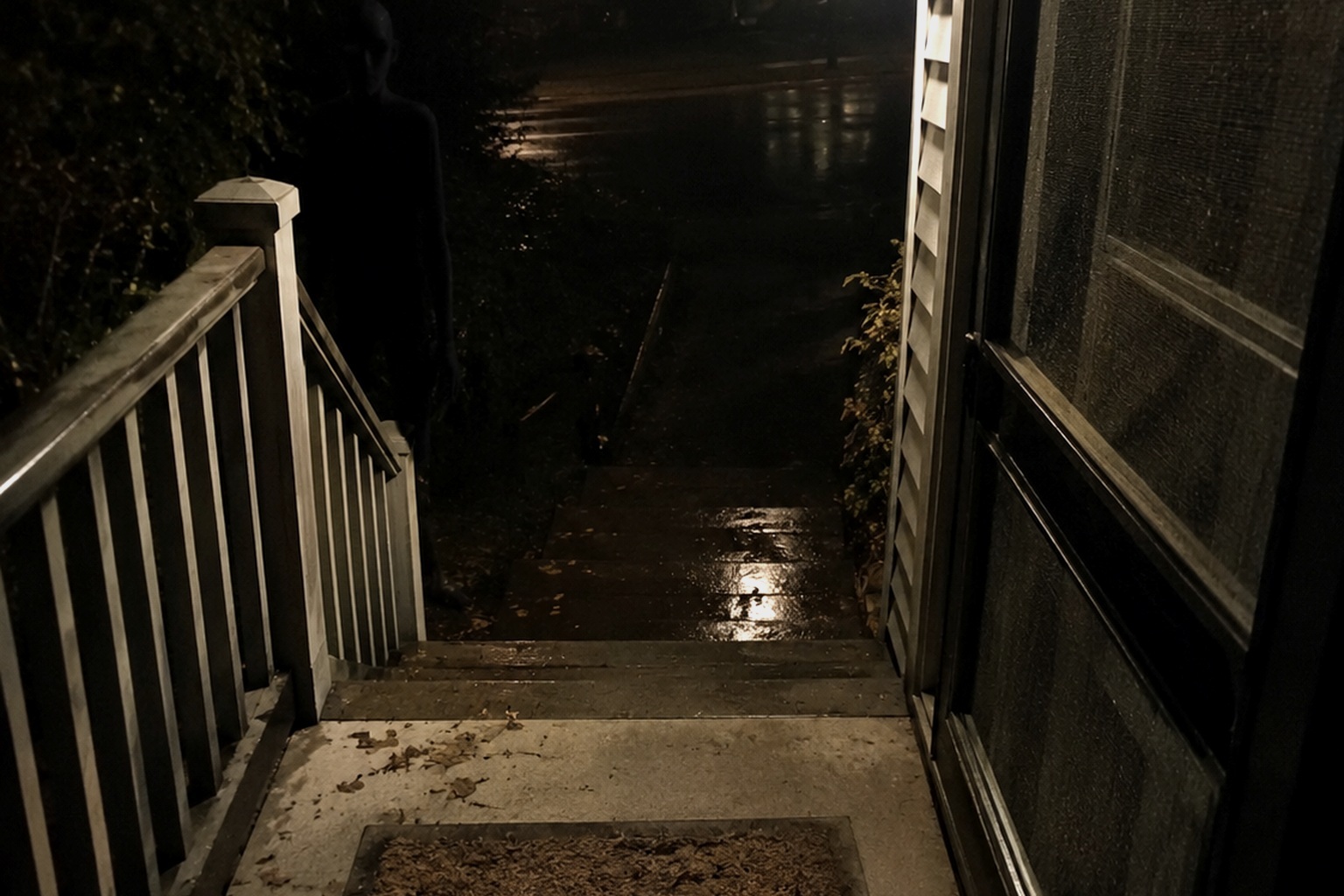
You cannot fully see inside. You cannot completely ignore it either. Some people describe feeling as though someone is standing just beyond the hanging clothes without ever seeing an actual face. Others mention noticing a shape that disappears whenever they look directly toward it.
In paranormal storytelling, this partial opening matters because it allows imagination to fill in what cannot be seen. The unknown becomes far more frightening than a fully visible room. Many witnesses later say they spent more time watching the empty opening than sleeping.
Why The Place Felt Wrong
What People Usually Check First
Most people do exactly the same things before assuming anything strange. They check whether the house is level. They look for air vents. They examine the hinges.
They test whether the latch catches properly. Older homes often settle over time. Slight shifts in the floor can let lightweight doors drift open on their own. Air pressure also changes when heating or cooling systems start during the night. Opening another door elsewhere in the house can create enough pressure for a poorly balanced closet door to move.
Loose hinges or worn latches make the problem even more likely. These explanations solve many reports. If the door behaves the same way every evening under the same conditions, mechanical causes become the most likely answer. That is why investigators of unusual home experiences often begin with the simplest possibilities rather than the scariest ones.
The Detail Nobody Could Explain
Not every story ends with an easy answer. The reports that stay with people usually include one extra detail that feels harder to dismiss. Someone closes the door several times during the night, and it opens to exactly the same position every time.
A family pet refuses to walk near the closet despite showing no fear anywhere else in the house. The room suddenly becomes unusually quiet just before the door moves. A child says someone is standing inside before anyone notices the door has opened. Others describe seeing a blurred person-shaped figure between hanging coats for only a second before the space looks empty again.
The figure is rarely described as looking like a normal person. Instead it appears transparent, faceless, strangely tall, or partly hidden inside the darkness itself. These details are impossible to verify after the moment passes, but they explain why the experience stays vivid in memory. The opening door becomes linked with another unsettling event instead of remaining an ordinary household problem.
People often ask why these stories almost always happen after midnight. Part of the answer is practical. Most homes become quieter during late-night hours. Small sounds that disappear during the day suddenly stand out.
What They Checked Afterward
Wood expands and contracts as temperatures change. Heating systems switch on. Pipes settle. Tiny clicks become noticeable.
Our vision also changes in darkness. Without strong lighting, the brain fills missing information using outlines and expectations. Hanging clothes become human shapes. Empty corners appear deeper than they really are. That does not automatically explain every experience, but it helps explain why nighttime encourages people to notice unusual details they would ignore at noon.
Midnight also carries strong cultural meaning. Ghost stories, horror movies, and urban legends repeatedly describe strange things beginning after everyone has gone to sleep. Even people who do not believe in the paranormal recognize the feeling. When something unexpected happens during those hours, the mind naturally connects it with stories heard long before.
Across online discussions and old collections of ghost stories, certain patterns appear again and again. Someone hears a closet door click open without hearing footsteps. A bedroom feels colder only near the open doorway.
A mirror reflects the open closet differently than expected. A dog stares toward the opening for several minutes before quietly leaving the room. Someone closes the door and later discovers it standing open again without remembering hearing it move. Notice what these stories usually avoid.
The Moment It Became Harder To Ignore
The scary part is rarely an attack. Most describe waiting. Watching. Listening.
The fear comes from expectation rather than action. Readers naturally begin imagining what could step out if they continue staring long enough. That slow uncertainty often creates a stronger emotional response than showing an obvious monster.
People question their memory most when one small detail in the room has changed without an obvious cause.
One reason these experiences become memorable is that people are surprisingly confident about bedtime routines. Many people always close bedroom doors. Many always turn off lights in the same order. Many always leave closets shut.
When they wake to find one small detail different, they immediately wonder whether they forgot something. Memory, however, is less perfect than most of us think. Routine actions often happen automatically. It is entirely possible to believe you closed a door while actually leaving it slightly open.
Why People Avoided That Spot Later
At the same time, repeatedly discovering the door open over many nights naturally encourages people to look for another explanation. That uncertainty is exactly why these stories spread so easily. Neither answer completely satisfies everyone. Why the

Open Door Becomes More Frightening Than Any Ghost
Interestingly, many witness stories never include a visible ghost at all. The closet simply opens. Nothing comes out. Nothing speaks.
Nothing touches anyone. Yet readers often remember those stories longer than tales featuring dramatic hauntings. The doorway becomes frightening because it suggests possibility instead of certainty. An empty opening lets every reader imagine something different waiting inside.
One person imagines a silent figure standing behind winter coats. Another imagines someone slowly watching through the gap. Someone else imagines absolutely nothing—and somehow finds that even worse. That flexibility allows the same story to remain frightening across generations.
Why The Story Still Gets Shared
The details change. The open doorway stays the same.
For many homes, the answer is surprisingly ordinary.
Uneven floors, loose latches, shifting air pressure, temperature changes, and old hinges can all cause closet doors to drift open while everyone sleeps. Checking those possibilities should always come first. Yet the stories people continue sharing usually contain something more than an opening door. It is the silence that suddenly fills the room.
The pet refusing to approach. The impossible stillness inside the closet while everything else moves. The feeling that the darkness beyond the clothes somehow became deeper than it should be. Whether those moments come from coincidence, perception, memory, or something people cannot easily explain, they all center on the same ordinary object.
A closet door is supposed to stay where you left it. When it slowly opens after midnight, the room itself feels different. Not because the closet has changed. Because the simple act of opening turns an everyday storage space into a question that remains unanswered long after the door is closed again.