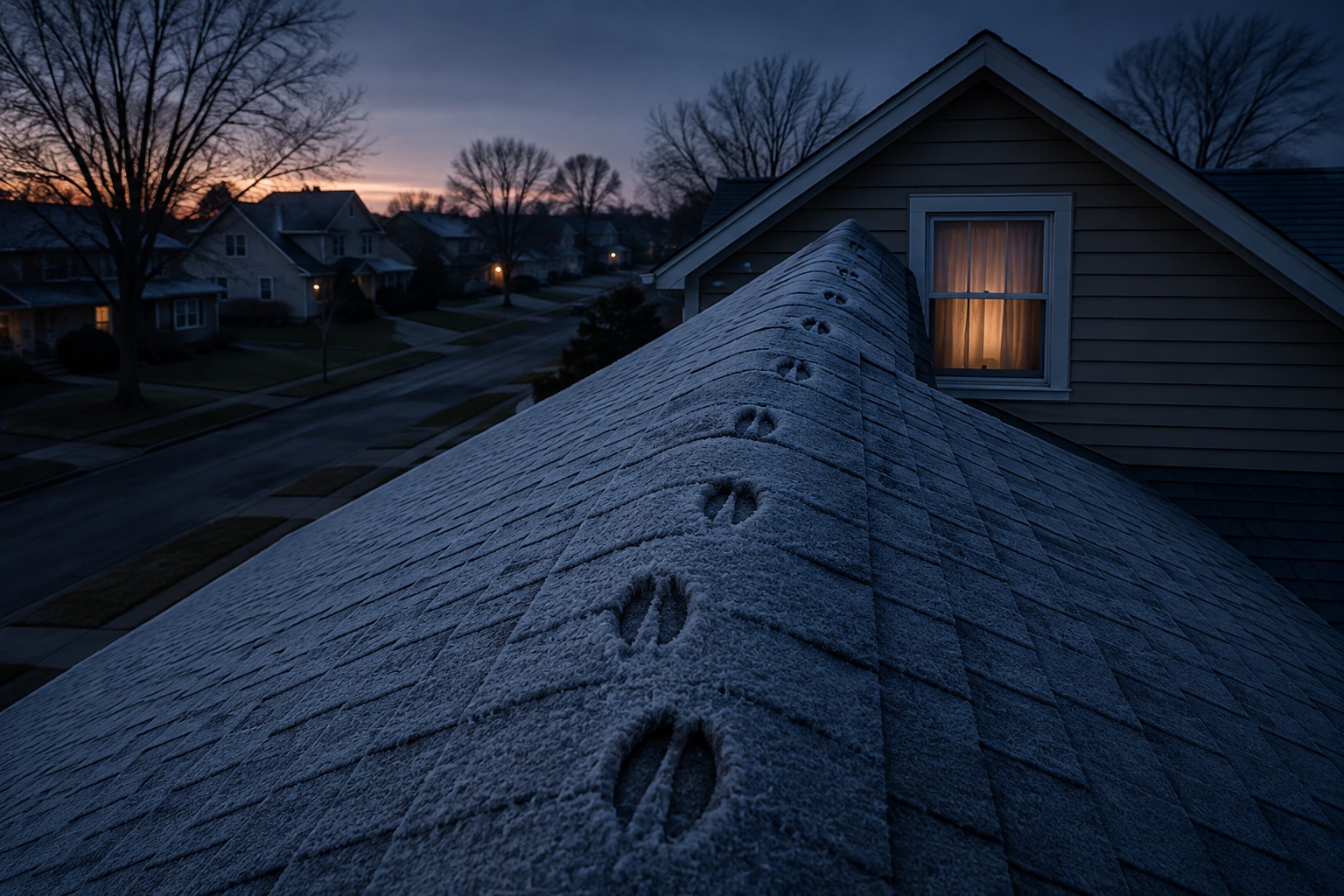
The first print was directly above the baby's bedroom. It wasn't the size that bothered the homeowner when he climbed onto the garage roof the next morning. It was the shape. Two deep halves, cleanly split like the hoof of a large deer or goat, pressed into the thin layer of frost that still covered the shingles. Another mark sat three feet farther along. Then another. They crossed the highest part of the roof without slipping once.
There were no scratches leading up from the gutters. No ladder marks against the walls. No broken branches hanging over the house. The prints simply appeared on one side of the roof, walked across the ridge, and disappeared at the opposite edge without continuing into the yard below.
His neighbor laughed until he climbed up and saw them himself. Both men searched for fallen tiles, animal fur, broken fencing, anything that suggested a normal visitor. They found nothing except one final hoofprint directly above the upstairs window where the family said they had heard heavy walking around two in the morning.
Stories like this appear in mountain towns, farming communities, snowy villages, and isolated neighborhoods around the world. Whether people connect them with strange creatures, old folklore, or something they can't explain at all, rooftop hoofprints have become one of those unsettling details that keeps showing up in witness reports.
So why do creature stories mention hoofprints on rooftops so often, and why does that single detail stay with people long after the rest of the story fades?
Most people rarely think about what happens above their ceilings.
The First Time It Happened
A roof is supposed to separate the ordinary world from wind, rain, and wildlife. We expect squirrels in trees, deer in fields, and raccoons climbing fences. We do not expect heavy footsteps directly overhead. That expectation is exactly why rooftop stories feel so disturbing. Witnesses often describe hearing slow, deliberate movement crossing shingles late at night. The sound isn't frantic like branches scraping during a storm. Instead it resembles something walking with purpose.
When daylight comes, people climb up expecting to find bird tracks or signs of a raccoon. Instead, the stories claim they sometimes discover hoof-shaped prints where ordinary climbing animals shouldn't be able to travel. Whether the marks were made by weather, damaged roofing, or something less easily explained, the location becomes the frightening part. The roof itself feels inaccessible, making every unusual detail seem bigger than it might otherwise appear.
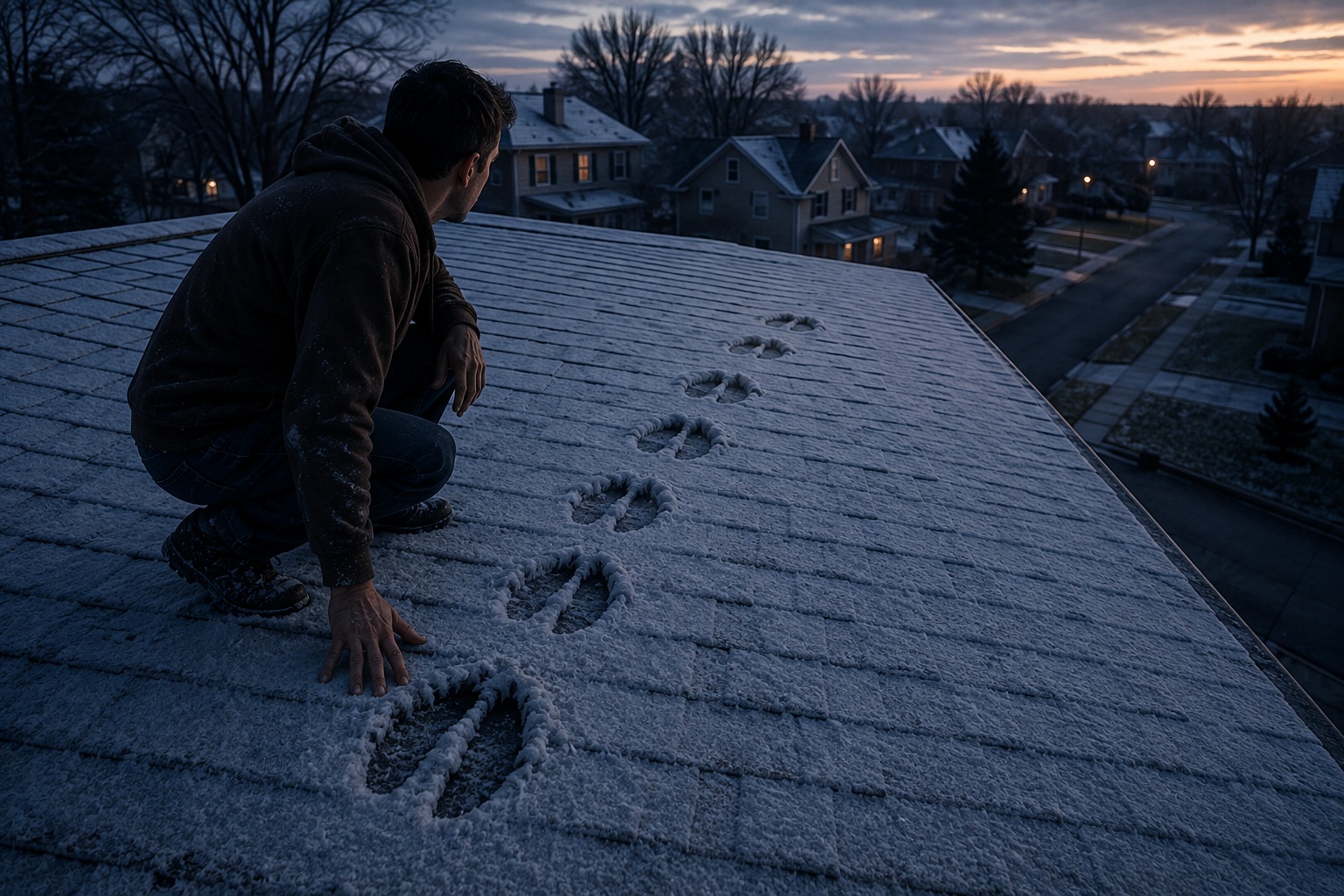
Strange Pattern Witnesses Describe The stories are surprisingly consistent. The prints rarely cover the entire roof. Instead, witnesses usually report a short trail containing only a handful of impressions.
Many accounts describe the tracks following the roof ridge instead of wandering randomly. Others say they stop above one specific bedroom before continuing. Some begin halfway up the roof with no matching trail across the lawn. Others end at the edge without continuing onto the ground.
Why The Place Felt Wrong
That broken path becomes the detail people remember. If the same marks crossed the driveway or backyard first, most readers would immediately assume an escaped farm animal. When the trail seems disconnected from the ground itself, the mystery grows much larger. Folklore from different regions often attaches different creatures to these stories. Some traditions blame horned spirits. Others mention forest beings, mountain creatures, or unnamed visitors that travel above homes rather than through them.
The names change. The hoofprints remain.
Why Hoofprints Feel More Unnatural Than Paw Prints Human brains recognize hoofprints almost instantly.
Unlike paw prints, which belong to many familiar animals, split hoof marks immediately suggest larger wildlife. But roofs rarely host deer. Goats can climb steep terrain, but suburban rooftops without nearby access are another matter entirely. That mismatch creates tension before anyone even begins thinking about paranormal explanations.
Witnesses often describe the prints as evenly spaced. Not running. Not slipping. Simply walking.
The Detail Nobody Could Explain
That calm movement feels intentional. If claw marks suggest panic or pursuit, hoofprints suggest patience. Readers unconsciously imagine something heavy crossing above sleeping people without hurry or fear. The image is simple enough to picture immediately, making the story difficult to forget.
One interesting part of these reports isn't the strange print itself. It's what witnesses do next. Most people immediately search for normal answers.
They check nearby trees. They examine fences. They look for broken gutters. They inspect muddy ground beneath the roof.
They ask neighbors whether livestock escaped overnight. Many stories become less mysterious after those checks. Wind can scatter debris into unusual shapes. Melting frost sometimes exaggerates tiny depressions.
Roof damage may resemble footprints when viewed from certain angles. Animals occasionally reach surprising places using sheds, stacked firewood, or leaning branches. These possibilities explain more reports than many people expect. That's why careful witnesses usually spend more time looking for practical causes than telling scary stories.
What They Checked Afterward
Ironically, the cases that continue getting shared are the ones where those simple explanations seem harder to fit.
Some reports contain details that keep people talking. The prints appear after fresh snowfall but stop halfway across the roof.
The impressions seem too large for local wildlife. The spacing remains identical across steep slopes where slipping would seem likely. A homeowner hears slow walking above the ceiling, yet the next morning nearby trees show no broken limbs and the yard below remains untouched. None of those details automatically mean something impossible happened.
Memory changes. Snow melts. Weather reshapes surfaces. People notice patterns that may not have existed exactly as remembered.
Even so, these stories linger because each practical explanation solves only part of the puzzle instead of the entire sequence. The roof explains the sound. The weather explains the marks. An animal explains the movement.
But putting every piece together into one simple picture sometimes proves difficult for the witnesses involved. That uncertainty is often more frightening than certainty itself.
The Moment It Became Harder To Ignore
Why Old Folklore Keeps Returning Long before modern neighborhoods existed, stories warned people not to ignore strange sounds above their homes.
Different cultures imagined different visitors. Horned night spirits. Mountain wanderers. Forest guardians.
Unknown animals that avoided daylight. In many traditions, rooftops marked the boundary between the protected family space below and the dark wilderness outside. Something crossing overhead symbolized that boundary being disturbed. Today's stories rarely repeat those old legends word for word.
Instead, the old ideas survive through modern details. Instead of hearing horns scrape wooden cottages, witnesses describe footsteps crossing asphalt shingles. Instead of lantern light, they mention porch lights. Instead of stone chimneys, they describe satellite dishes and roof vents.
The setting changes. The uneasy feeling remains almost identical. That's one reason rooftop hoofprint stories spread so easily online. Even without knowing centuries of folklore, readers instinctively recognize the emotional shape of the story.
Why People Avoided That Spot Later
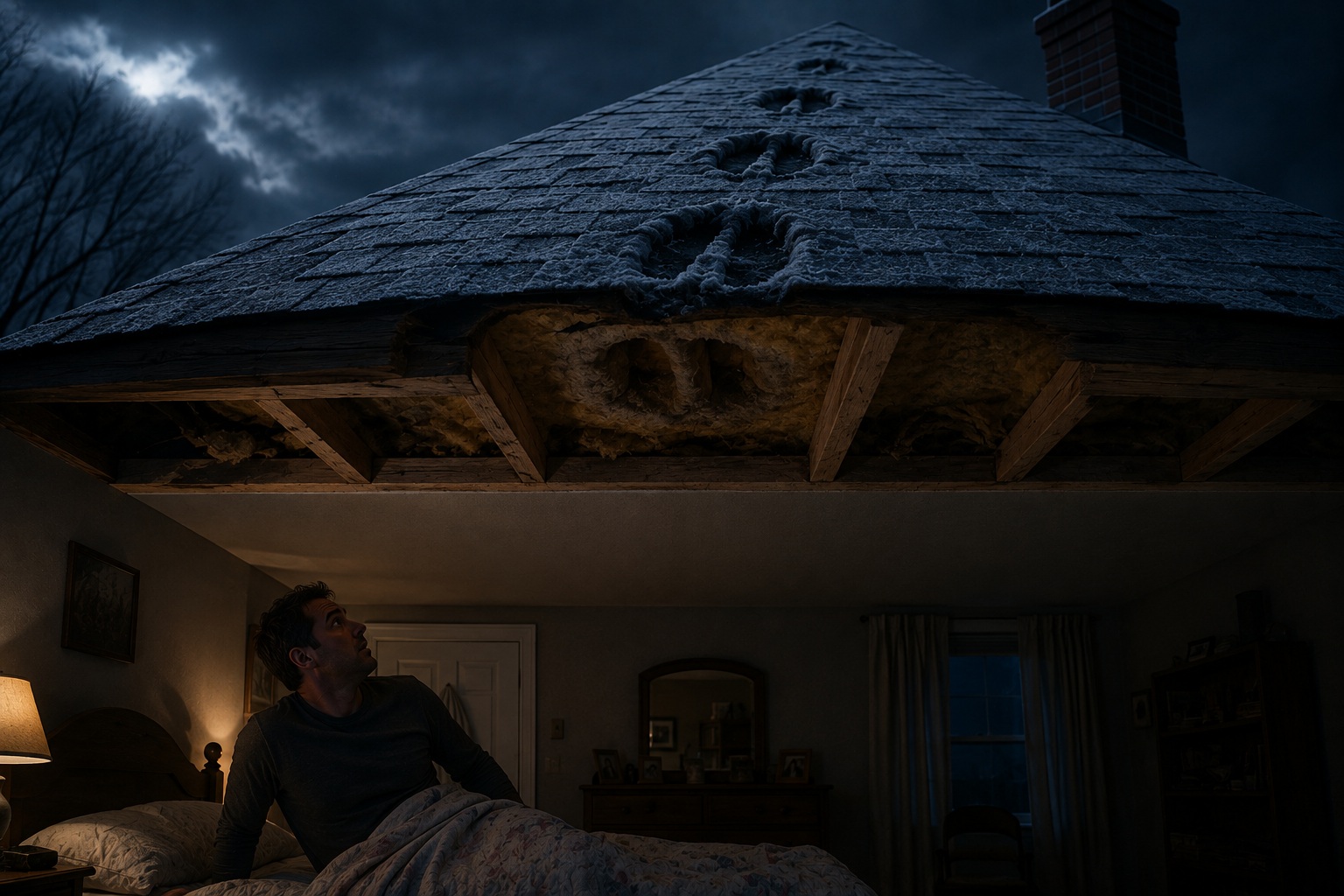
Something stayed outside. Yet somehow it was directly above you.
Notice what people almost never describe.
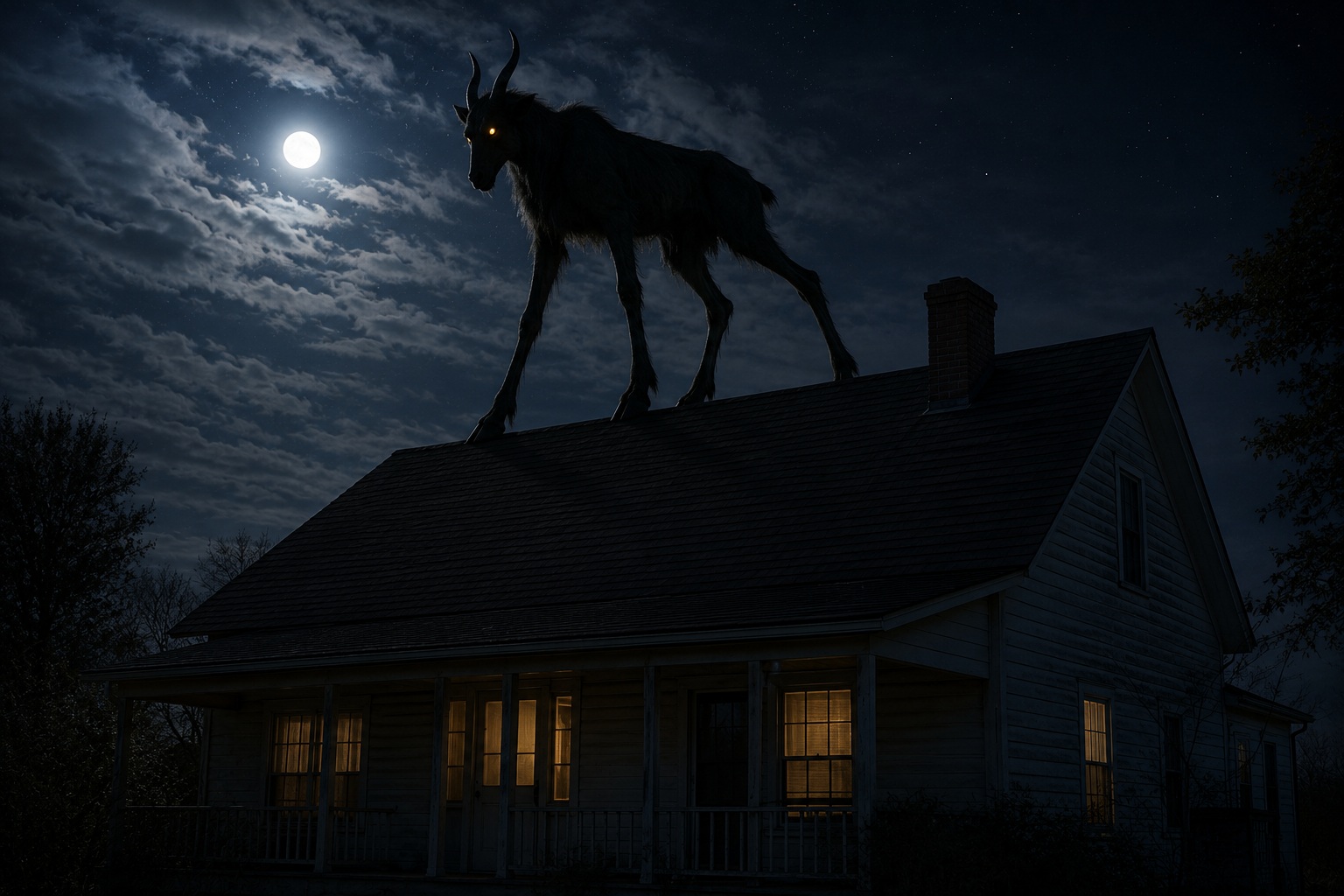
Very few claim they clearly watched a creature standing on the roof. Instead, they remember signs that something might have been there. Heavy footsteps. A strange trail.
An impossible path. A bedroom directly beneath the last print. That missing piece invites imagination to finish the picture. A fully visible monster can eventually become familiar.
A roof crossed by something unseen remains open-ended. Readers continue asking the same questions long after the story ends. What made the marks? Why only a few?
Why The Story Still Gets Shared
Why above that room? Why didn't anything continue into the yard? Those unanswered questions are exactly why the image survives.
Why Rooftop Hoofprints Continue Appearing in Creature Stories
Creature stories rarely become memorable because they include the biggest monster. They become memorable because one ordinary place suddenly stops behaving the way we expect. A rooftop belongs to everyday life. Families sleep beneath it every night without thinking twice.
Adding a short line of unexplained hoofprints transforms that familiar space into something uncertain. Most reports probably have explanations that were never fully discovered. Others may have grown more dramatic as neighbors retold them over the years. Some details were almost certainly misunderstood.
Yet the pattern keeps returning because it combines three fears that people understand immediately: something approached the house, something walked directly overhead, and whatever left the tracks was gone before morning. Whether someone sees the stories as folklore, misunderstood wildlife, unusual weather, or something stranger, rooftop hoofprints remain one of the most unsettling details in modern creature tales.
They don't ask readers to believe they saw a monster. They ask them to imagine waking up, climbing a ladder, and finding silent hoofprints crossing the roof above the place where they slept. For many people, that picture is disturbing enough all by itself.