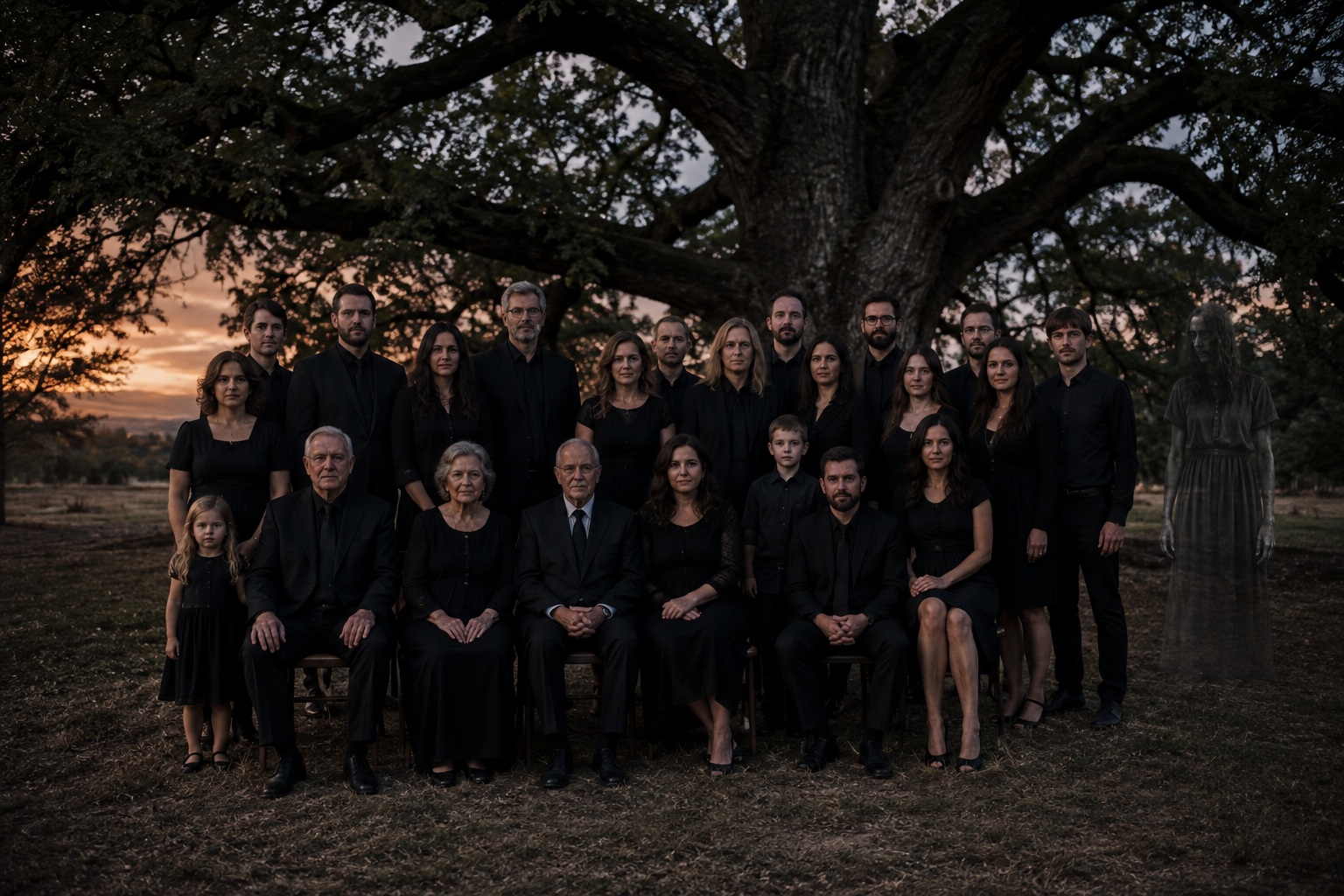
The woman standing at the far end of the second row had no face. Nobody noticed her during the gathering. The family had spent the afternoon comforting one another after the funeral, sharing food in the backyard and taking the traditional group picture before everyone drove home. Children smiled despite swollen eyes. An uncle held the family dog. Grandparents sat in folding chairs beneath an old oak tree.
It wasn't until later that evening, while someone zoomed in to tag relatives, that they realized one person didn't belong. She stood slightly behind everyone else. Her clothes were dull gray, unlike the dark funeral clothes worn by the family. Her hands hung unnaturally low, almost below her knees. Where her face should have been, there was only a smooth blur, as if someone had erased every feature without touching the rest of her body.
Everyone insisted they would have noticed another guest standing there. No one remembered inviting her. No one remembered seeing her leave. Stories like this appear again and again whenever people talk about strange experiences after funerals. Sometimes the extra person appears in a family photograph. Sometimes someone notices an unfamiliar figure standing quietly behind relatives during the gathering itself. Sometimes several people later remember feeling watched without ever seeing anyone at the time.
Why do these stories stay with people for years? Why are funerals one of the places where reports of an unexpected extra person seem to appear so often? And why do witnesses usually describe the same small details instead of dramatic ghostly encounters?
Why Funerals Make Ordinary Moments Feel Different
The First Time It Happened
Funerals bring together emotions that rarely exist all at once. People are exhausted from planning. Many have slept very little. Some relatives haven't seen each other in years.
Old memories return while new grief is still settling in. Because everyone is focused on saying goodbye, surprisingly ordinary details can suddenly become unforgettable. A strange shadow near the cemetery path. Someone who seems familiar but cannot be identified. An extra chair that nobody remembers placing.
Most experiences have simple explanations. A distant relative no one recognizes. Someone walking behind the group. An optical illusion created by overlapping people.
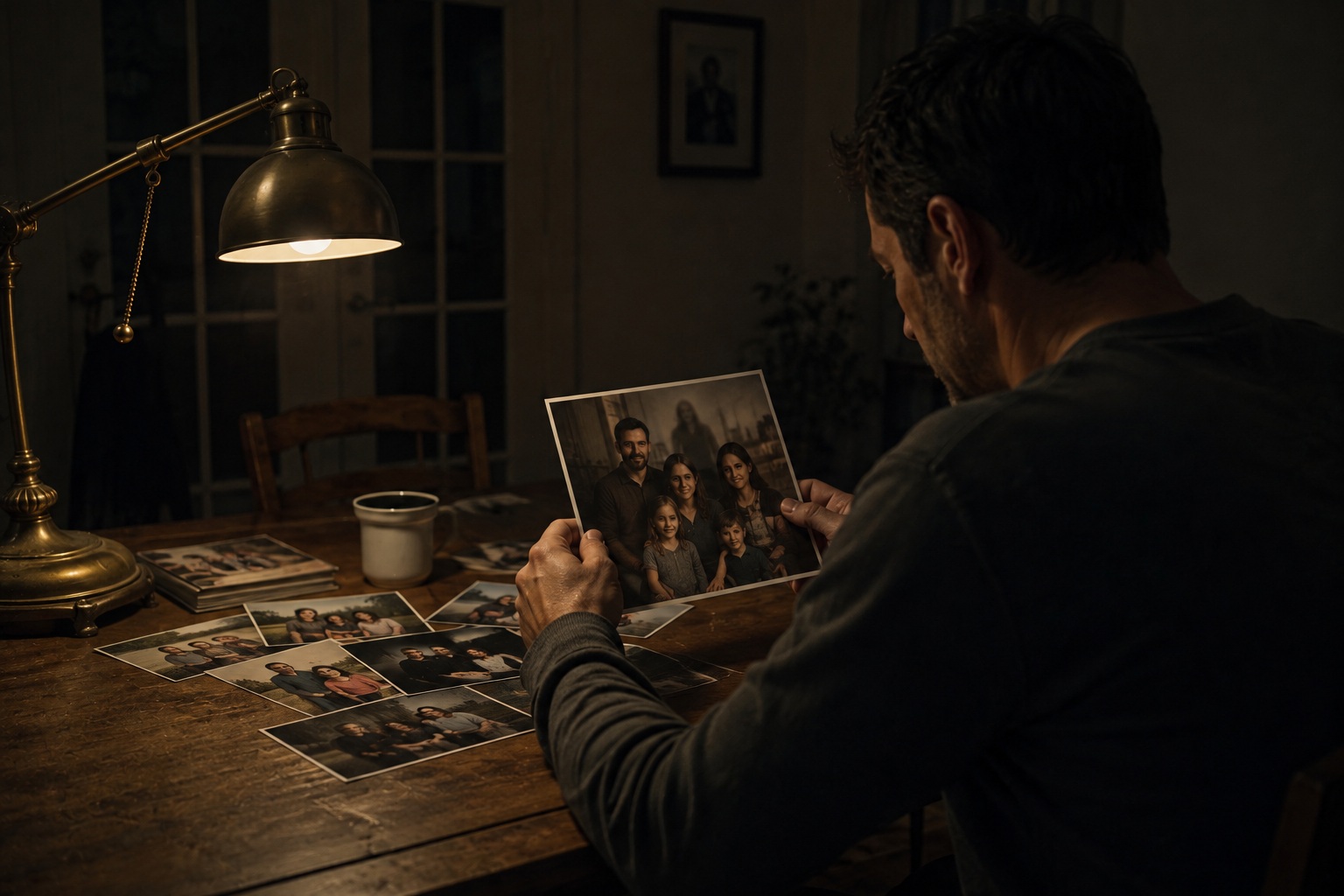
But the stories that continue being shared usually include one detail that refuses to fit those easy answers. The stranger is standing inside the family rather than passing behind them. Nobody remembers speaking to them. Their posture looks subtly wrong.
Or their face simply isn't there. Those are the details witnesses keep returning to years later.
One unusual thing appears again and again in these reports.
Why The Place Felt Wrong
Nobody notices the figure while looking directly at them. Instead, the person becomes visible only after attention shifts somewhere else. Someone is counting relatives. Someone is comparing several family pictures.
Someone notices every person is smiling except one. Only then does the extra figure stand out. That delayed discovery makes the story much more unsettling. If someone had pointed toward a transparent figure during the gathering, everyone would have reacted immediately.
Instead, the figure seems almost designed to avoid attention until the moment has already passed. Many witnesses describe the person as blending naturally into the edge of the group without truly belonging there. They're never posing confidently. They're simply… present.
Most Interestingly, witnesses rarely describe terrifying faces. Instead, they describe faces that seem incomplete. A blur where eyes should be.
The Detail Nobody Could Explain
Skin without features. Hair covering everything. A head turned at an angle that hides every recognizable part. Sometimes the clothing feels wrong instead.
Everyone else is dressed for the funeral. The extra figure wears clothing from another time. Not dramatically old-fashioned. Just quietly out of place.
Others describe hands hanging too low, shoulders bending strangely, or feet that appear to rest slightly above the ground rather than on it. Each detail sounds small by itself. Together they create the uncomfortable feeling that someone is standing where a person should be without looking entirely human.
That subtle wrongness often frightens people far more than an obvious monster would.
The First Things Families Usually Check Whenever someone notices an unexpected figure, the search for ordinary answers begins almost immediately. They compare other pictures taken seconds apart.
They ask relatives who attended. They count everyone visible. They check whether another guest wandered into the background. Sometimes the answer is surprisingly simple.
What They Checked Afterward
Different camera angles can overlap people. Someone stepping into frame between shots may look like they appeared from nowhere. Compression artifacts and motion blur can soften facial features. Low evening light can erase details completely.
Reflection from nearby windows can also create confusing shapes. Most cases end there. The mystery disappears once someone identifies the stranger or finds another photograph from the same moment. Those stories are quickly forgotten.
The stories that survive are usually the ones where every ordinary explanation seems to remove part of the mystery but never all of it. Everyone agrees the figure wasn't part of the family. Nobody can identify them. No matching person appears in the pictures taken moments before or after.
Whether that means anything unusual happened is impossible to know. But it explains why these accounts continue being discussed.
Very few reports describe the extra person standing in the center of the family.
The Moment It Became Harder To Ignore
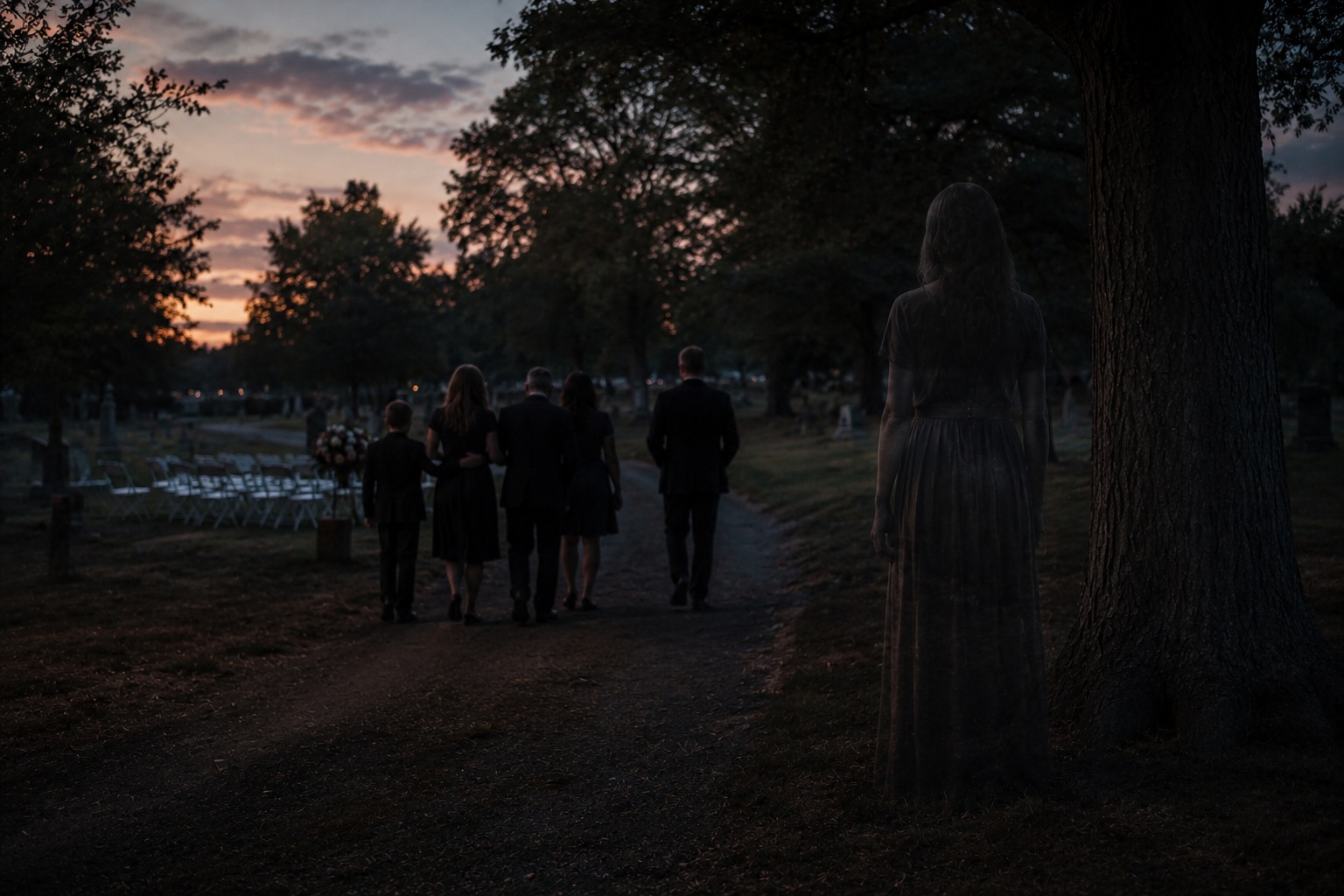
They're almost always near the outside. Behind the last row. Beside a tree. Halfway between the gathering and an empty doorway.
Standing quietly beside a fence. The placement itself feels meaningful. People naturally look toward faces in the middle of a group. Our attention reaches the edges later.
That makes the outer edge an ideal place for something strange to remain unnoticed. From a storytelling point of view, it also feels believable. A figure standing directly between grandparents and grandchildren would be impossible to ignore. Someone quietly watching from the side feels much more unsettling.
Whether these stories grow over time or begin exactly that way, the edge of the gathering becomes one of the details readers remember most.
Memory isn't like replaying a video. Every time we revisit an emotional event, our minds rebuild parts of it.
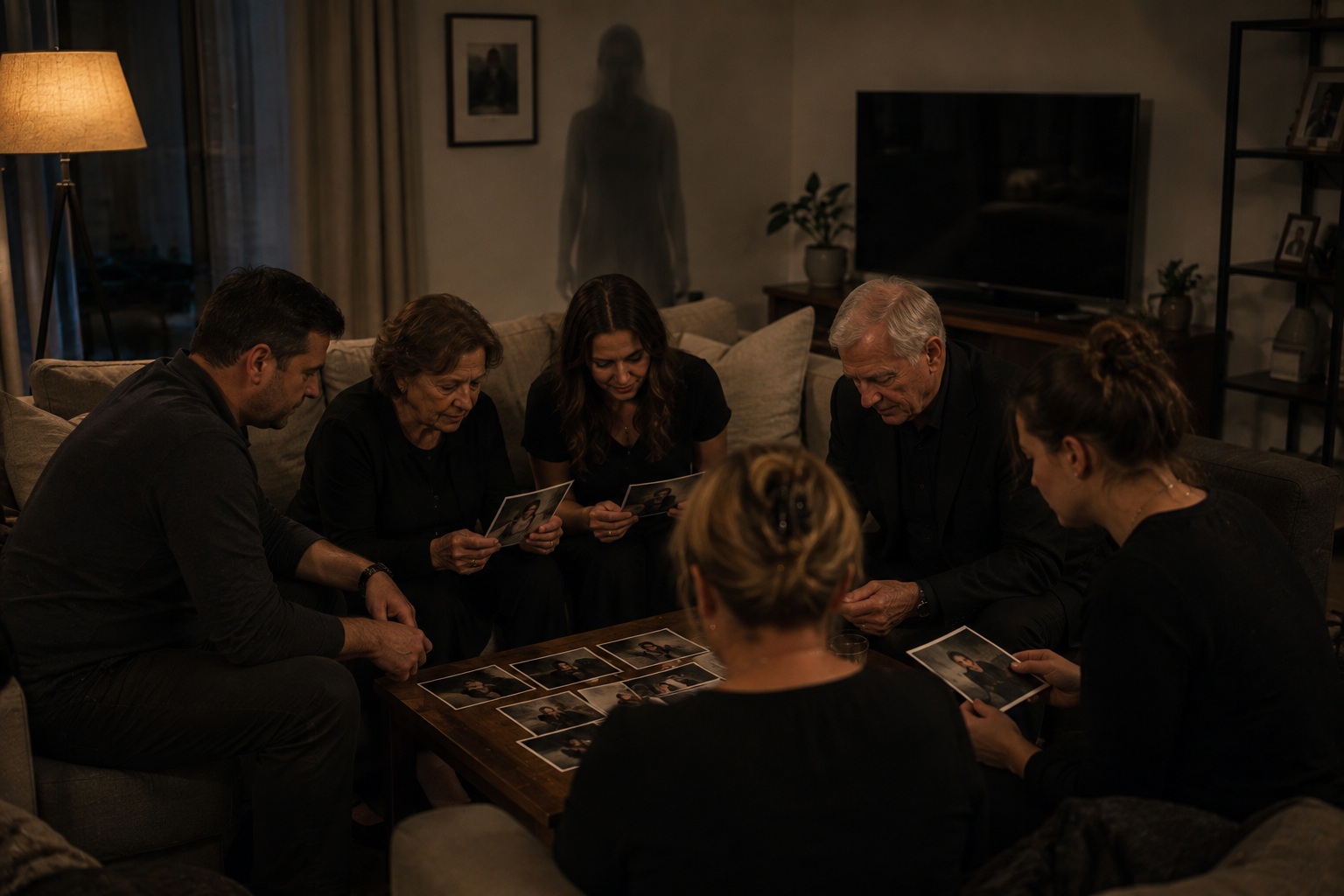
Why People Avoided That Spot Later
Funerals create some of the strongest emotional memories many people ever experience. Later, while looking through photographs, people naturally compare what they remember with what the image shows. If those two versions don't perfectly match, the difference feels enormous. "I don't remember that person."
"I never noticed someone standing there." "I could have sworn there were only twelve of us." Those thoughts make the image feel stranger than it might have seemed on an ordinary day. At the same time, grief also causes many people to search for signs that loved ones are still somehow nearby.
That doesn't mean every unusual photograph has a supernatural explanation. But it does explain why images connected to funerals often receive far more careful attention than ordinary family pictures. People study every face. Every reflection.
Every empty space. Most of the time, nothing unusual appears. Occasionally, someone notices a detail they cannot comfortably explain.
Why The Story Refuses To Fade
Most ghost stories grow around loud events. Doors slam. Objects move. Someone hears footsteps.
Why The Story Still Gets Shared
Stories about extra people in funeral photographs are quieter. Almost nothing happens. A family gathers. They smile despite their sadness.
The picture is taken. Only afterward does someone notice one person who shouldn't be there. That slow realization is what makes these accounts linger. There is no dramatic ending.
No chase. No screaming. Only a single question that cannot be answered with complete confidence. Who was standing with the family?
Whether the answer is memory, coincidence, lighting, or something nobody fully understands depends on the story being told. What keeps these reports alive isn't certainty. It's the unsettling possibility that if everyone in the picture looks familiar except one silent figure standing perfectly still at the edge, the image changes forever.
The family no longer remembers the day exactly as it happened. Instead, they remember the moment they counted every face… …and realized there was one too many.