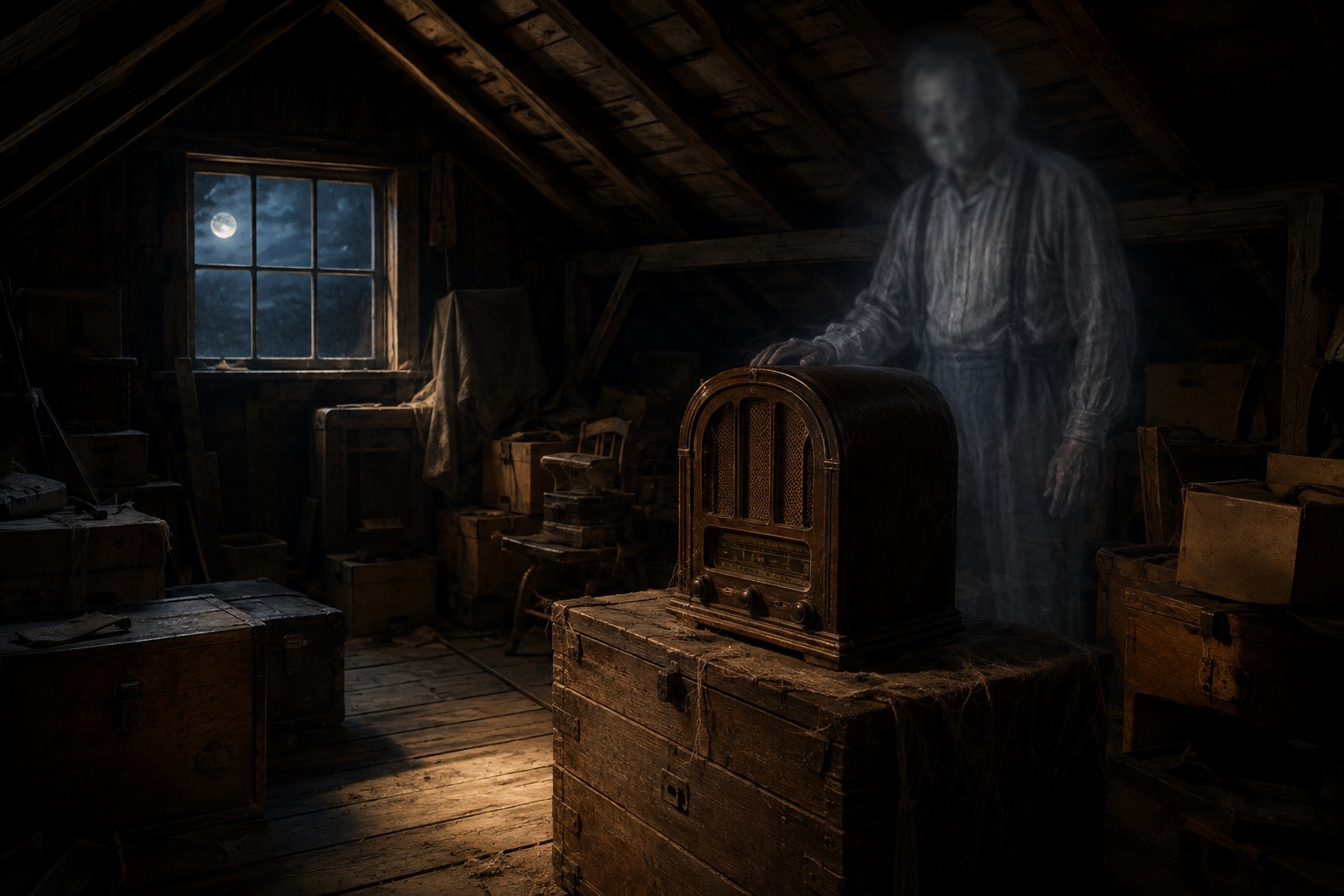
The first thing she noticed was that the radio used her grandfather's nickname. Nobody outside the family had called him that in more than twenty years. The old wooden tabletop radio had not worked since it was moved into the attic after his funeral. It wasn't even plugged into the wall. Still, just after midnight, a faint burst of static drifted down through the ceiling, followed by a calm elderly voice saying, "Don't forget the back window."
She climbed the attic stairs expecting to find a phone playing a recording or a neighbor's television bleeding through the walls. Instead she found only dust, storage boxes, and the silent radio sitting exactly where it had been left years earlier. As she reached toward it, the voice came again.
This time it laughed softly before repeating the same warning. The strange part was not hearing a familiar voice. People can mistake distant sounds or remember voices during quiet nights. The unsettling detail was that the sentence ended exactly the way her grandfather always ended it—with a made-up family phrase nobody else would have known.
After that night she searched for every ordinary explanation she could think of. She eventually discovered she was far from the first person to tell a story like it. Across ghost stories, family folklore, and late-night witness accounts, one pattern appears again and again: an old radio suddenly producing what sounds like the voice of someone who has been gone for years. Whether the cause is ordinary, psychological, or something people struggle to explain, the same details appear often enough that many people ask the same unsettling question.
Why do old radios seem to repeat a family voice after midnight?
Why Radios Feel Different From Other Household Sounds Old radios already carry a strange reputation because they sit halfway between familiar technology and mystery. Unlike a phone or smart speaker, many vintage radios crackle, fade, drift between stations, and produce bursts of static that seem almost alive. During quiet nights those changing sounds naturally invite people to search for words hidden inside the noise.
The First Time It Happened
That alone explains many experiences. But stories become harder to dismiss emotionally when listeners believe they recognize a specific person. People rarely report hearing random conversations. Instead they describe a grandmother humming, a father calling from another room, or a sibling repeating a sentence they always used during life.
Whether the voice truly existed or the brain completed incomplete sounds, the emotional impact is immediate. The moment a familiar personality appears inside meaningless static, the radio no longer feels like an ordinary object. It becomes connected to memory. That is exactly why these stories stay with people for decades.
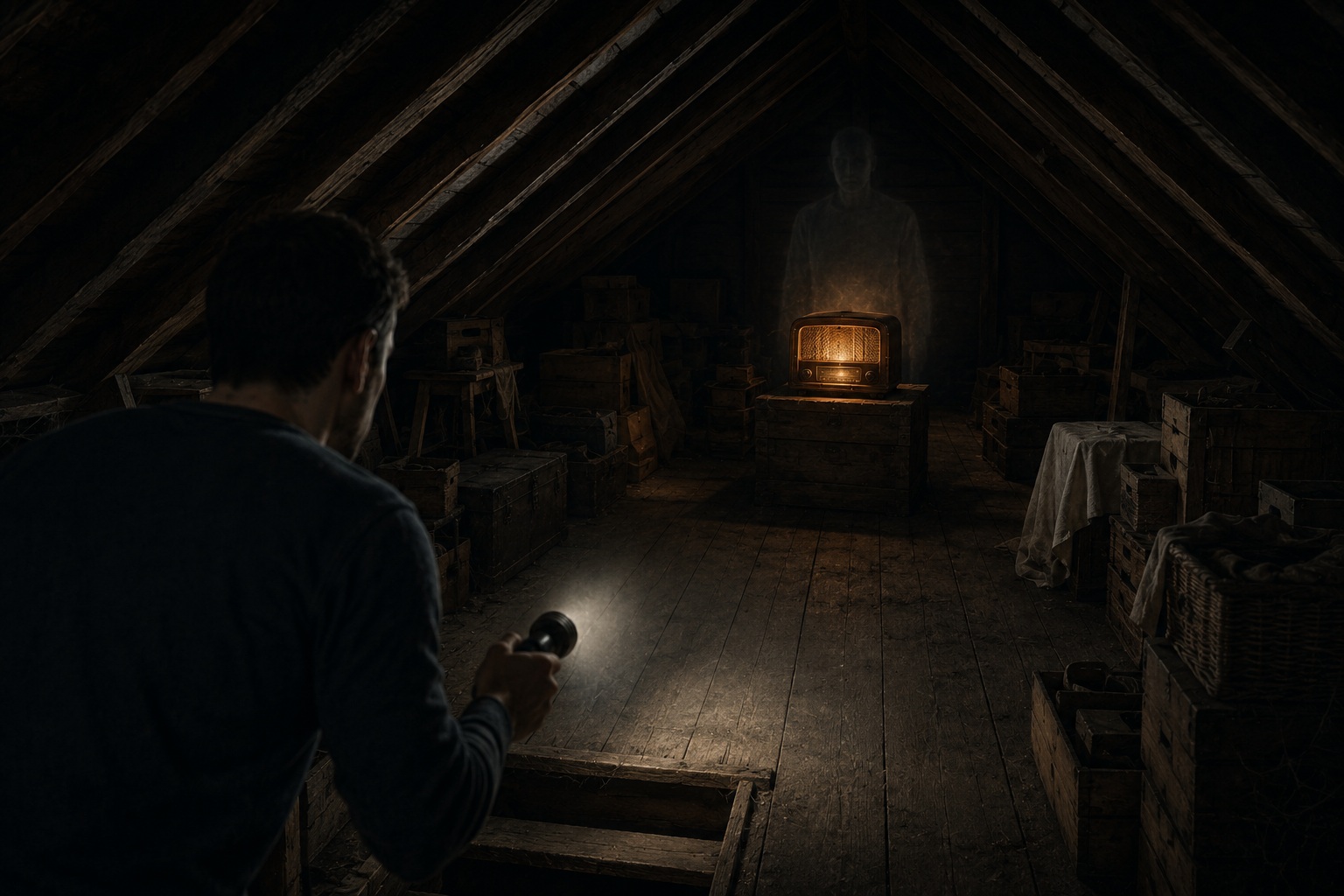
Interestingly, most people do not remember every word. They remember one impossible detail. The voice says a private nickname.
It finishes a sentence exactly the same way. It laughs with the same rhythm. It pauses in the same place. Those tiny personal habits matter more than the message itself.
Anyone could imagine hearing "Hello." Far fewer people expect to hear a phrase only their family ever used. That is the detail witnesses repeat years later because it feels too specific to ignore. Sometimes the message is surprisingly ordinary.
Why The Place Felt Wrong
"Turn off the stove." "Lock the shed." "Don't wake the baby." Nothing dramatic happens afterward.
The fear comes from recognizing the speaker, not from what they say. A simple sentence becomes unforgettable because it arrives from somewhere it should not.
Almost everyone reacts the same way.
They search for another source. The room is checked for hidden speakers. Phones are inspected. Televisions are turned off.
Neighbors are considered. Modern electronics can occasionally interfere with old audio equipment. Certain weather conditions can also allow distant radio stations to travel farther than expected, producing voices where none were expected. People familiar with amateur radio often point out that unusual signal reflections can create surprising results.
Those explanations account for many reports. Others involve simple coincidence. Static naturally contains changing frequencies, and the human brain is extremely good at finding recognizable speech inside random noise. This effect, called auditory pareidolia, explains why people sometimes hear words inside waterfalls, fans, or white noise.
The Detail Nobody Could Explain
Once someone expects a familiar voice, the brain may organize random sounds into something meaningful. That is a powerful explanation. Yet some stories continue because listeners insist they were not merely hearing speech. They were hearing one particular person.
Midnight itself probably has less power than the conditions surrounding it. Homes become quieter. Traffic fades.
Heating systems cycle differently. Background noise disappears. Tiny sounds suddenly become noticeable. People also tend to be tired after long days.
Fatigue changes attention and perception. Memories become easier to trigger. A familiar object sitting in darkness—a radio inherited from a grandparent, for example—already carries emotional weight before any sound begins. If static suddenly bursts from its speaker, the mind immediately searches for meaning.
That combination of silence, expectation, memory, and unusual sound creates the perfect setting for unsettling experiences. Still, there are stories that refuse to fit neatly into that explanation. Some witnesses describe several family members hearing the same voice. Others say everyone in the room recognized the same sentence.
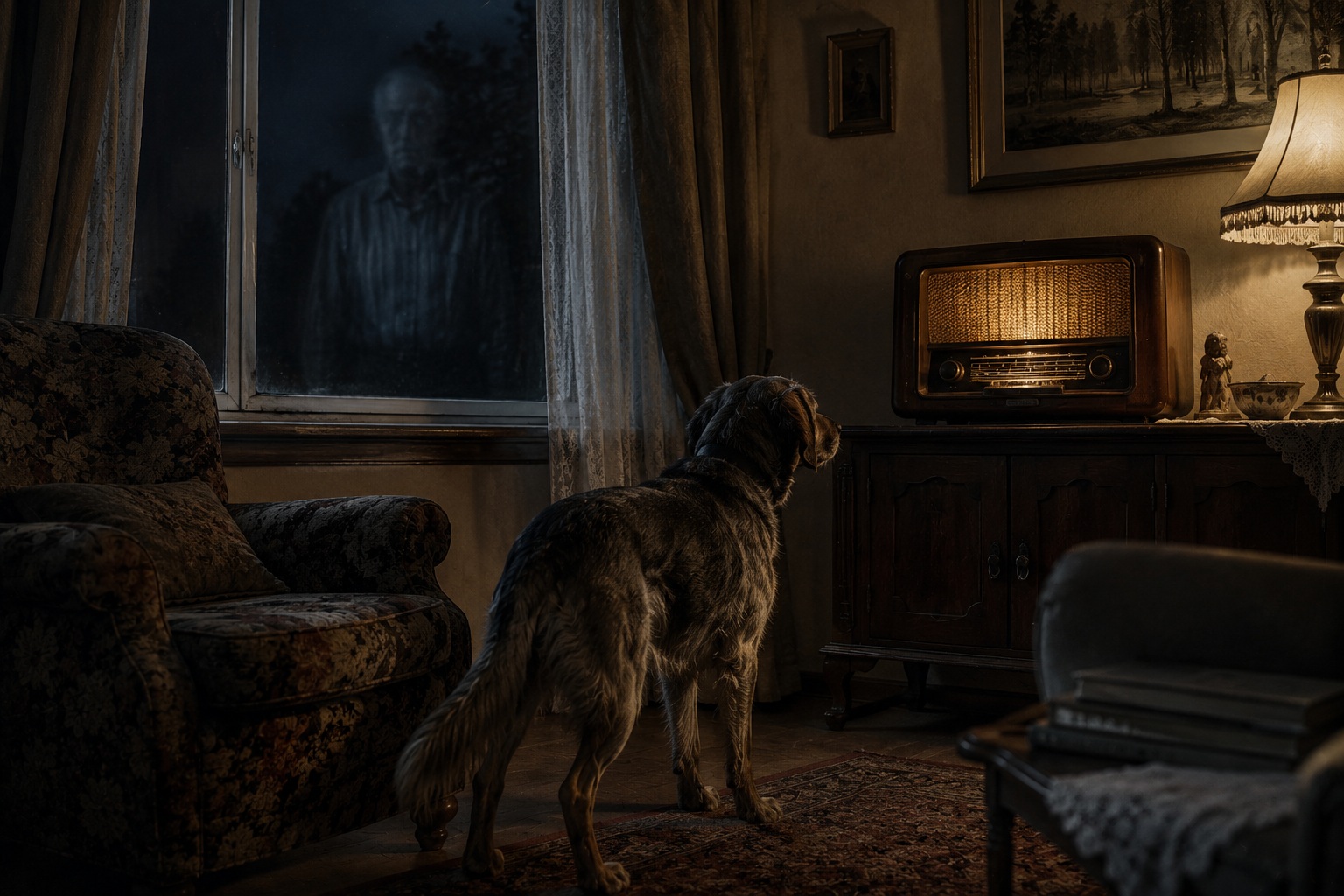
What They Checked Afterward
Those accounts remain difficult to evaluate because memories can influence each other afterward, but they continue to appear in collections of ghost stories from many different countries.
One commonly repeated version begins with a family cleaning out an older relative's house.
The power has already been disconnected. Most appliances no longer function. An antique radio remains on a shelf simply because nobody has carried it away yet. Late that evening someone upstairs hears soft static.
When they investigate, the radio is silent. As they turn away, a voice quietly says someone's childhood nickname. Nobody answers. Several seconds pass.
Then the voice repeats it one last time before everything becomes completely still. Another frequently shared version involves restoring antique radios. Collectors sometimes report hearing unexpected broadcasts while testing repaired sets. Most eventually discover ordinary explanations involving distant stations or electrical interference.
But a handful insist they briefly heard voices they recognized from family members before normal programming returned. Whether those memories changed over time or whether something stranger occurred is impossible to determine. The important point is not whether every story is true. It is that people across different places often describe remarkably similar moments.
The Moment It Became Harder To Ignore
Most reports probably have ordinary causes. Old electronics behave unpredictably. Signals travel in unexpected ways.
Memory is imperfect. Expectation shapes perception. Those explanations deserve serious consideration before anything else. Yet people continue discussing these stories because of the moments that seem unusually specific.
A voice answers someone's spoken question. The message mentions something unknown until later. Multiple people independently describe the same unusual sentence. A family phrase appears that visitors could not reasonably know.
None of these details automatically point toward anything supernatural. Memory changes over time. People unintentionally influence one another while retelling stories. Coincidences happen more often than we expect.
Still, those specific details explain why some experiences resist simple dismissal. People remember not just hearing a voice. They remember recognizing the person. That emotional certainty becomes difficult to forget even when no satisfying explanation follows.
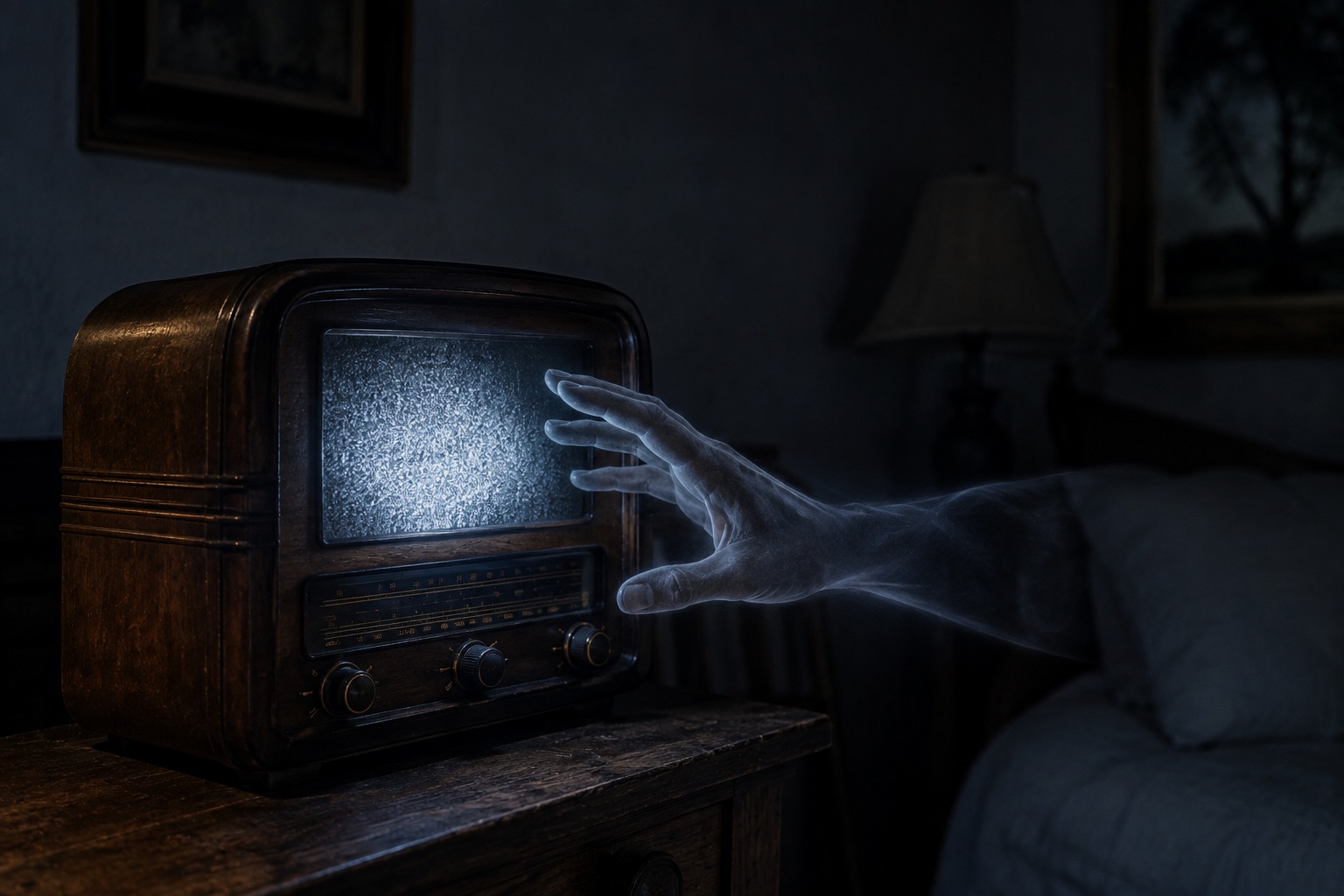
Why People Avoided That Spot Later
It seems backwards. A stranger speaking through an old radio should be more frightening. Instead, witnesses almost always say the opposite.
A familiar voice creates a stronger emotional shock because recognition happens instantly. There is no time to question whether someone is nearby. The brain identifies the speaker before logic catches up. That recognition activates years of memories all at once.
A favorite expression. A laugh. A bedtime story. An argument.
A goodbye. Those memories arrive together in a single second. Whether the sound came from electrical interference, imagination, or something no one can confidently explain, the emotional experience is genuine. That is why people often become more frightened after recognizing the voice than during the sound itself.
The radio stops. The room becomes silent. Only then does the impossible detail settle in.
Why These Stories Continue To Spread
Why The Story Still Gets Shared
Old radios represent more than forgotten technology. They connect generations. Many families keep them because they belonged to parents or grandparents. They remain in attics, guest rooms, workshops, and living rooms long after newer devices replace them.
That emotional history gives every unexplained sound extra weight. A burst of static from a modern Bluetooth speaker feels like a technical glitch. The same burst from an eighty-year-old wooden radio feels like a message trying to get through. That difference shapes how people remember the experience.
Whether the explanation turns out to be atmospheric conditions, electrical noise, suggestive memory, or something that remains unresolved, the story grows because listeners recognize themselves inside it. Almost everyone has inherited an object connected to someone they miss. Almost everyone has experienced a quiet house after midnight.
And almost everyone knows how unsettling it would feel to suddenly hear a familiar voice speaking from a place that should have remained silent forever. Perhaps that is why these stories never completely disappear. They remind us that memory can feel alive inside ordinary objects.
Sometimes the explanation is entirely practical. Sometimes it remains uncertain. Either way, if an old radio quietly speaks with the voice of someone your family loved, the first thing most people do is exactly the same. They stop moving.
They listen one more time. And they hope the voice does not already know their name.