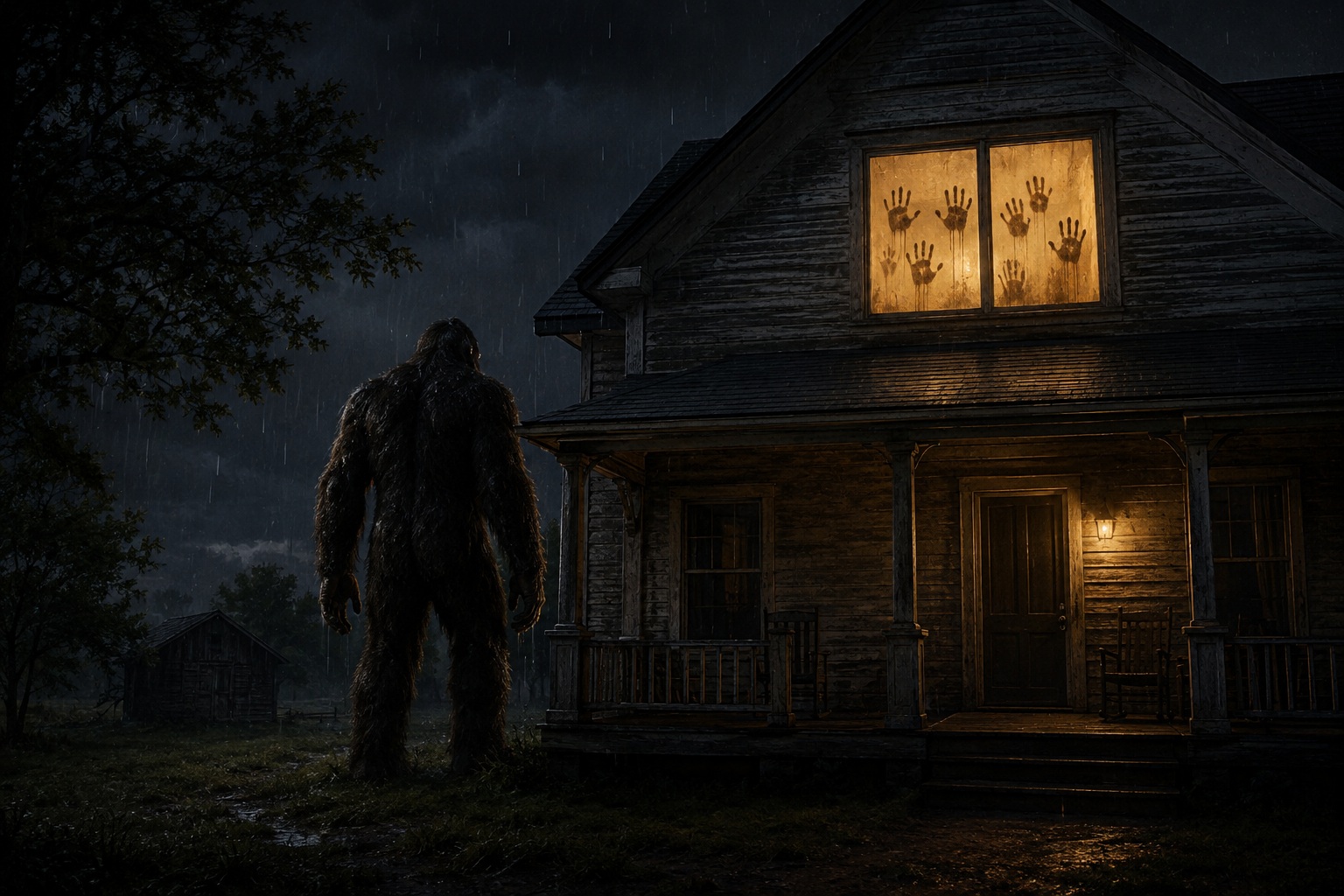
A woman wiping rain from her upstairs bedroom window stopped halfway through the glass. The muddy marks were on the outside. Not fingerprints. Not smears left by a branch. Five long handprints, spaced farther apart than any person's hand could comfortably reach, stretched across the upper corner of the second-story window. Each print angled downward, as though something had steadied itself while looking inside.
She lived alone. The flower bed beneath the window was untouched. No ladder leaned against the house. The siding showed no scrape marks. Her first thought was that neighborhood teenagers had played a prank, until she stepped outside and realized the prints sat nearly twenty feet above the ground. The rain had washed everything else clean overnight. Only the dark handprints remained.
Stories like this appear surprisingly often in Bigfoot discussions. They rarely focus on tracks in the woods or distant figures crossing roads. Instead, they describe something much stranger: signs that a huge hairy visitor came close enough to look directly into someone's upstairs window.
Whether these stories point to an unknown animal, a misunderstanding, or something that grows larger every time it is retold, the same unsettling detail keeps returning. People are less frightened by a creature in the forest than by the thought of something tall enough—or clever enough—to stand outside a second-story bedroom without making a sound.
The First Time It Happened
Most people naturally divide their homes into safe and unsafe spaces. The front porch feels exposed. A first-floor window can be reached by anyone walking through the yard. An upstairs bedroom feels different because height creates a sense of separation from whatever is outside.
That expectation is exactly why muddy handprints on second-story glass are so memorable. The marks suggest that whatever left them ignored a boundary most people never question. Even if the prints turn out to have a simple explanation, the first reaction usually comes before logic has time to catch up.
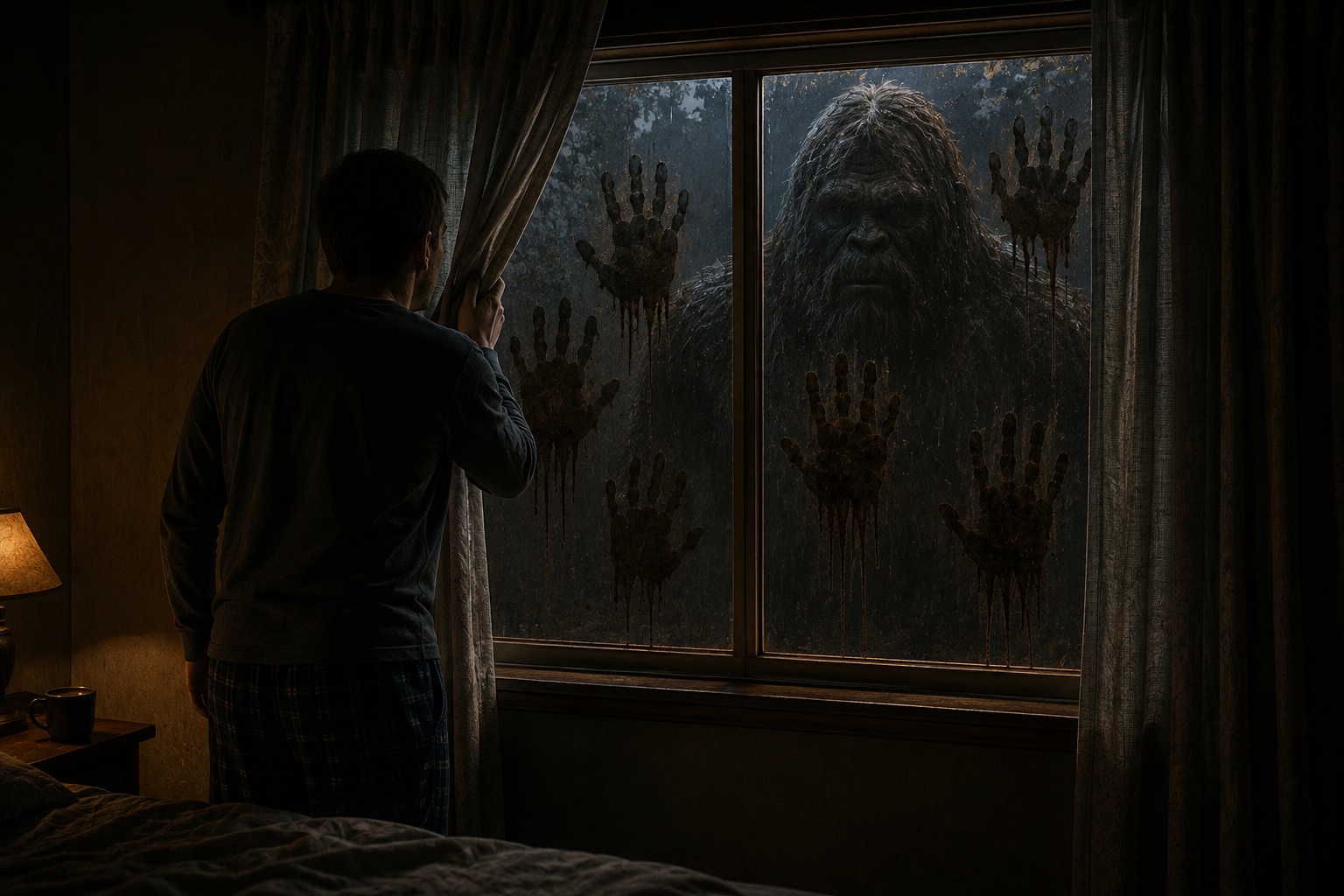
Many reported stories describe people discovering the marks only after waking the next morning. Others notice them while closing curtains after dark. Either way, the realization arrives all at once: something may have been close enough to watch without being noticed. The fear comes from the location as much as the prints themselves.
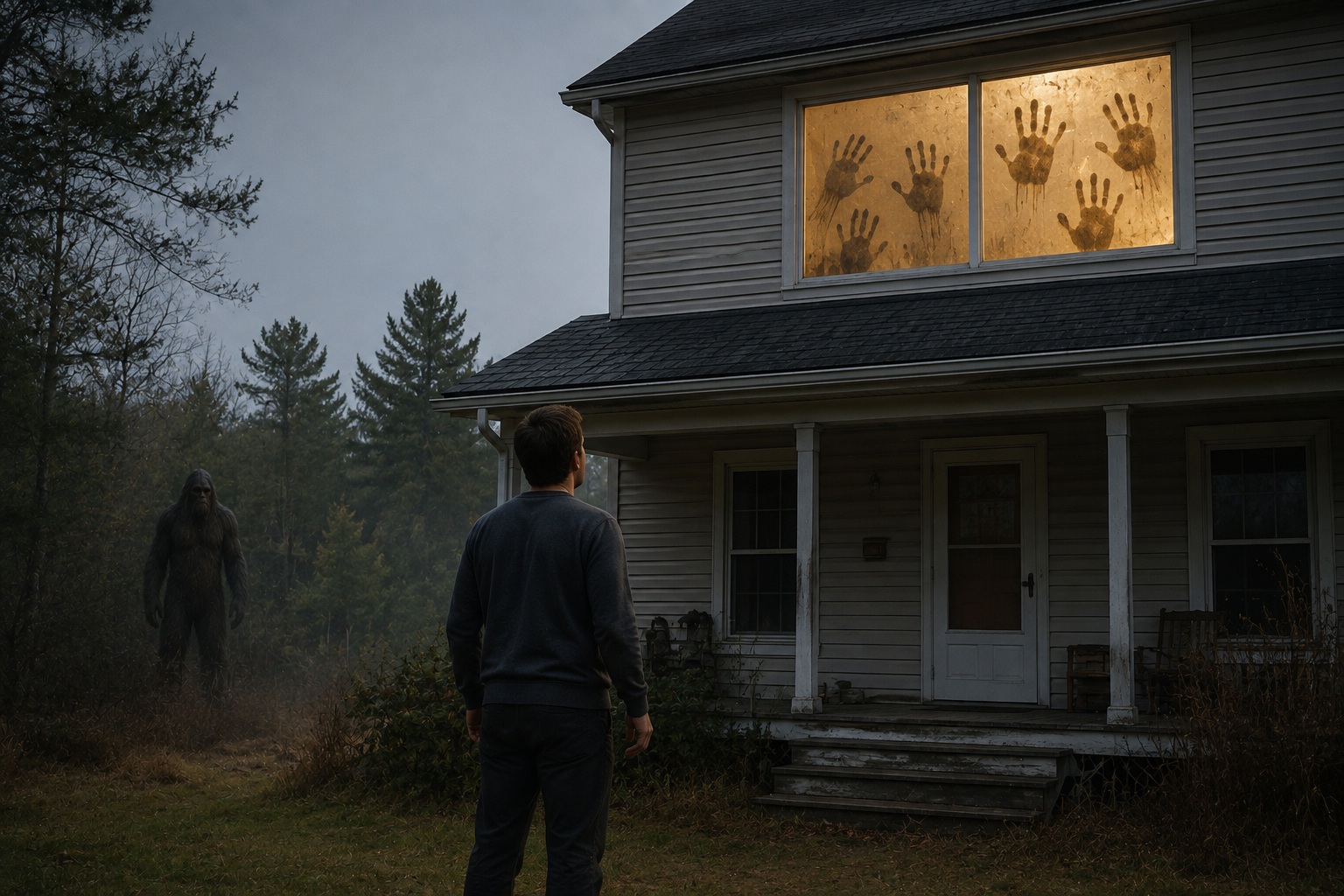
Bigfoot reports vary wildly, but second-story window stories tend to follow a surprisingly similar pattern. The home usually sits near woods, farmland, or the edge of a rural neighborhood. Pets often behaved strangely the night before. Dogs refused to leave the porch or stared toward the back of the house. Livestock became restless without an obvious reason. Sometimes people remember hearing slow footsteps outside but assumed they belonged to deer.
Why The Place Felt Wrong
Only the next day does someone notice the muddy marks. The handprints are usually described as unusually large, with long fingers spread wider than expected. Witnesses often say the palm looks broad rather than narrow, making the print appear different from a human hand even before measurements begin.
Many stories also mention that the prints appear alone. There are no matching tracks beneath the window. No obvious climbing aid. No broken branches directly below the glass. That missing explanation is what keeps the stories circulating.
The First Things People Usually Check
After the surprise fades, witnesses almost always begin checking the obvious possibilities. Could someone have used a ladder? Is there a nearby deck, retaining wall, shed roof, or steep hill that changes the height? Did a tree branch swing close enough to brush the window?
The Detail Nobody Could Explain
Were the marks already there and simply noticed for the first time? These questions matter because many strange-looking situations become ordinary after a closer inspection. A ladder borrowed by a neighbor. Construction work. Children climbing onto a porch roof. Even muddy gloves pressed against the glass during repairs can later seem mysterious if everyone forgets about them.
Perspective also plays tricks. A window that appears to be twenty feet high from one angle might be much closer to a sloping hillside on the other side of the house. What looks impossible from the driveway may not be impossible at all. That is why careful witnesses usually examine the entire area before jumping to extraordinary conclusions.
Some stories continue because the normal answers never seem to fit completely. The prints may appear after heavy rain that erased older marks. Fresh mud sometimes sits inside the grooves of textured glass while nearby surfaces remain clean.
In a few reports, the spacing between individual prints suggests something moving sideways along the wall instead of climbing straight upward. Witnesses occasionally describe additional clues nearby. Long strands of dark hair caught on rough bark. Broken shrubs that seem flattened instead of snapped.
What They Checked Afterward
Deep impressions in soft soil several yards away but not directly beneath the window. None of these details automatically point toward a giant unknown creature. Each one has possible ordinary explanations on its own. What makes the stories memorable is when several unusual details appear together without producing one obvious answer.
People tend to remember combinations of strange events far longer than a single unexplained mark.
Why Muddy Handprints Are More Frightening Than Footprints Footprints usually tell us where something went. Handprints suggest what something was doing.
That difference matters. A track in the woods implies movement through an area. A handprint on bedroom glass suggests attention. It hints that something paused, leaned closer, and looked inside. Even if nothing supernatural happened, our brains naturally build a story around the position of the marks.
Was something searching for a way in? Did it hear movement inside? How long had it been standing there? The imagination fills every unanswered question.
The Moment It Became Harder To Ignore
Psychologists have long noted that incomplete information often creates stronger fear than complete information. We imagine possibilities that may be far worse than reality. A muddy handprint becomes memorable because it feels personal. Instead of finding a strange sign somewhere in the forest, the sign appears on the place where people sleep.
Could A Large
Large animals can certainly leave surprising marks around homes. Bears stand on their hind legs to investigate scents. They climb exceptionally well and sometimes reach windows, balconies, or elevated decks.
Raccoons leave hand-like prints that can appear unsettling at first glance. Even large birds occasionally leave muddy streaks across upper windows after landing briefly. Wind can also move muddy branches against glass in unusual patterns. Over time those marks may resemble fingers more than leaves.
Why People Avoided That Spot Later
Lighting changes how prints look as well. A shadow crossing textured glass can exaggerate finger length or make overlapping smears appear like one enormous hand. Because of these possibilities, wildlife experts generally recommend looking for nearby signs before assuming something extraordinary visited the property. Most strange marks eventually receive a straightforward explanation.
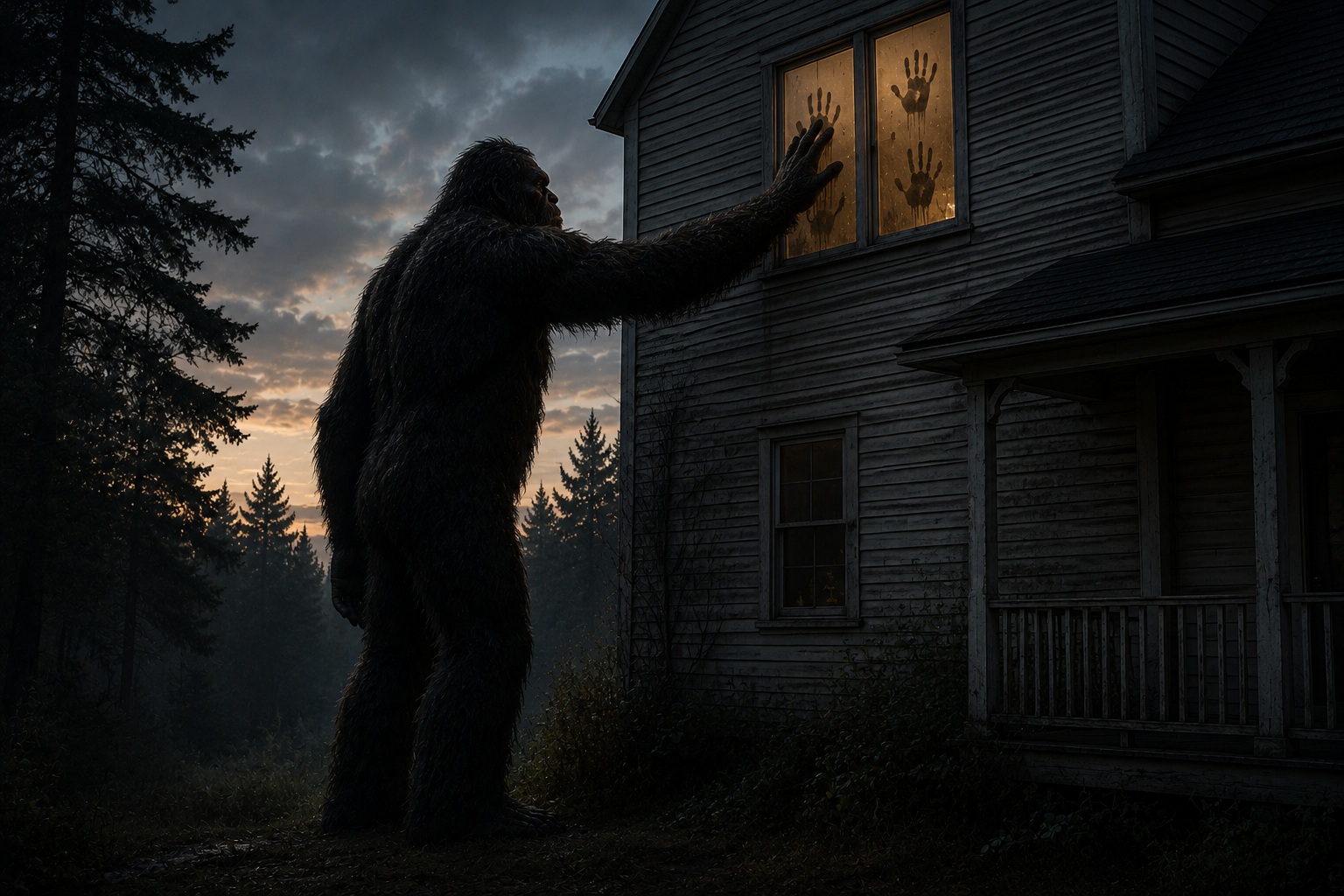
But not every story ends with one.
Second-story window handprint stories survive because they combine two fears people already have. The first is the fear of being watched.
The second is the fear that something much larger than ourselves can move quietly without being seen. Bigfoot stories often place that unknown presence deep in forests where people expect wildlife to live. Moving the same idea to a bedroom window changes everything. Suddenly the mystery feels close enough to touch.
Even readers who do not believe in Bigfoot usually pause when they picture waking up and finding oversized muddy hands pressed against the outside of the glass where they slept only hours earlier. That image stays in memory because it overturns a basic expectation about home.
Why The Story Still Gets Shared
Home should separate us from whatever waits outside. These stories ask a disturbing question instead. What if the distance between your bed and the forest was only a pane of glass?
The Question People Keep Asking
So why do second-story windows get muddy handprints in Bigfoot stories? There is no single answer. Some reports probably come from wildlife, climbing access that was overlooked, weather, or simple misunderstandings that grew more mysterious with time. Others remain difficult to explain because the details remembered by witnesses never fit neatly into one ordinary picture.
That uncertainty is exactly why the stories continue to spread. The muddy prints are not frightening because they supposedly belong to a legendary creature. They are frightening because they appear somewhere people believe should be unreachable. Whether someone sees a giant unknown visitor, mistakes a much more ordinary cause, or simply remembers an unsettling night differently years later, the image stays the same.
Five muddy fingers. Outside the upstairs window. High enough that everyone who sees them asks the same question before anything else. How did they get there?