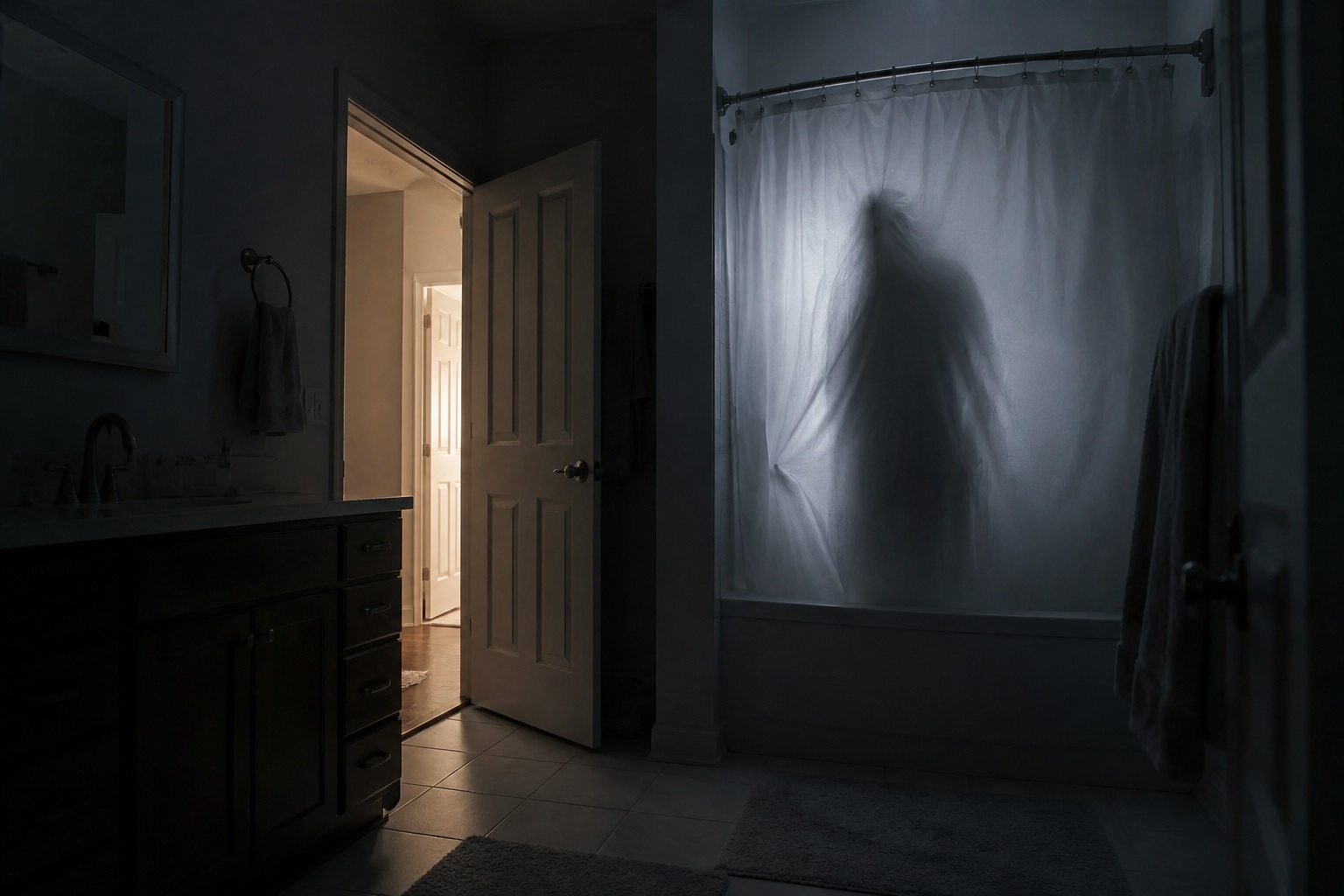
The shower curtain was already moving before she reached the bathroom door. Not swaying gently, not drifting from a draft, but pulling inward toward the bathtub as if someone standing inside had brushed against it with a shoulder. The rest of the apartment was silent. The bedroom window was closed. The air conditioner had switched off nearly twenty minutes earlier.
She stopped in the hallway and waited. The curtain settled. Then, without a sound, one corner slowly lifted again. Not enough to reveal what was behind it. Just enough to suggest someone had shifted their weight inside the tub. She called out.
Nothing answered. She stepped into the bathroom expecting to find an open window, a fan still running, or perhaps a towel hanging too close to the curtain. Instead she found still air. The fan switch was off. The small frosted window was locked. Every towel hung flat against its hook.
The curtain stopped moving the moment she reached for it. Behind it waited only an empty bathtub.
Stories like this appear surprisingly often whenever people discuss strange experiences at home. A moving shower curtain sounds like something that should have a simple explanation, and many times it does. Yet some reports include details that make people hesitate before pulling the curtain open. Why does this ordinary object create such a powerful feeling that someone is standing just out of sight? And why do so many stories describe the movement beginning before anyone even enters the room?
The First Time It Happened
Bathrooms are among the smallest rooms in a home, yet they often feel strangely isolated. During the day they are bright, practical spaces filled with familiar routines. At night they become something else. The light is often harsher. Every sound echoes. Mirrors reflect dark doorways. Curtains hide spaces that are only a few feet away but completely out of sight.
Unlike a bedroom or living room, a bathroom contains several places where someone could briefly disappear from view. The shower curtain becomes a simple barrier between what is visible and what is hidden. That hidden space matters more than people realize. The human brain naturally pays extra attention to anything blocking its view of a place large enough to conceal another person. Even though we know a bathtub is small, the curtain removes enough visual information for our imagination to fill in the rest.
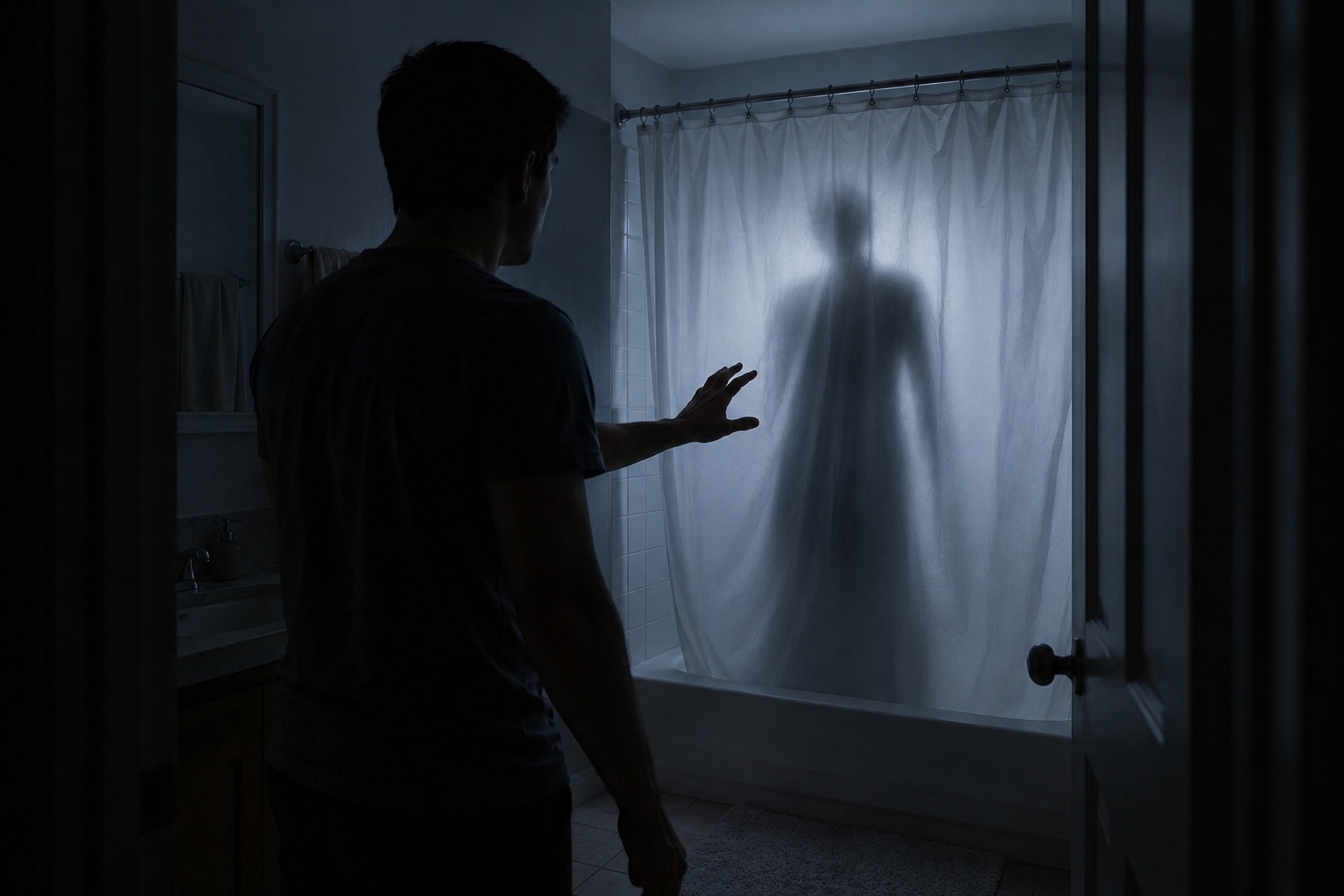
This is one reason shower curtain scenes appear so often in horror stories. The fear comes long before the curtain opens.
Most reports are not about a curtain blowing wildly across the room. Instead, witnesses describe surprisingly small movements.
Why The Place Felt Wrong
The bottom edge slides a few inches across the floor. One fold slowly tightens as though something behind it shifted position. The curtain bows inward for only a second before relaxing again. Sometimes the movement happens only once.
Other times people say it repeats every few minutes without becoming stronger. The detail that often stays with them is timing. They hear no fan starting. They feel no moving air. The curtain begins to move only after the house has become quiet enough for them to notice it.
Many stories also include hesitation. People stand outside the bathroom for several seconds, expecting another movement before finally pulling the curtain aside. Nothing is there. That empty reveal often becomes more unsettling than finding someone inside would have been.
The first explanation is usually airflow. Bathrooms often contain ventilation fans, heating vents, or small windows that create subtle pressure changes. Opening another door elsewhere in the house can sometimes move enough air to tug on a lightweight curtain. Central heating and cooling systems can also create gentle air currents that are difficult to notice until they reach a hanging fabric surface.
The Detail Nobody Could Explain
Steam adds another possibility. After a hot shower, warm air continues circulating as temperatures equalize. Lightweight curtains may drift inward or outward as the room cools. Some curtains even cling toward the tub because of temperature differences created during bathing. These ordinary explanations account for many reports.
That is why people who experience something strange usually begin checking practical causes before assuming anything unusual happened. They close windows. They turn fans off. They wait.
Sometimes the curtain still moves.
The stories that continue getting shared usually contain one extra detail. Someone watches the curtain while standing in completely still air.
The movement starts and stops abruptly instead of gradually. Only one section moves while the rest hangs perfectly still. Or the curtain reacts immediately after someone speaks into the empty room. None of these details automatically point to anything paranormal.
What They Checked Afterward
Memory can exaggerate timing. Small air currents can behave unpredictably around corners and narrow spaces. Still, these details are exactly what make witnesses uncomfortable. The movement no longer feels random. It begins to feel responsive.
That shift—from seeing movement to wondering whether something caused it intentionally—is often what transforms an ordinary household event into a story remembered for years.
Paranormal stories rarely describe someone standing clearly in the middle of a brightly lit bathroom.
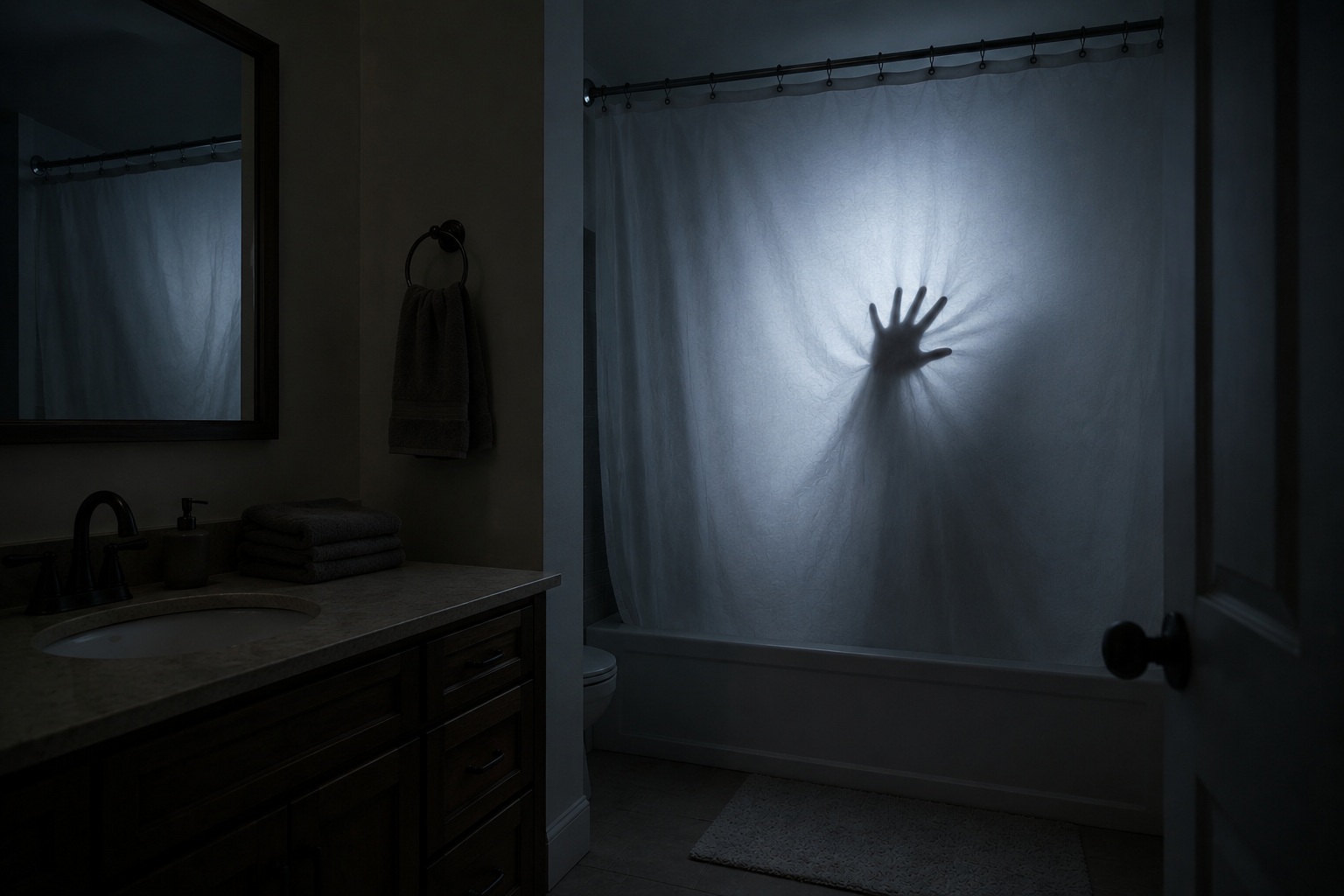
Instead they focus on what remains hidden. A hand briefly pressing against the curtain. A blurred face appearing behind wet plastic. A shadow standing perfectly still until the curtain moves by itself.
These images are memorable because the curtain becomes a decision. Someone has to pull it back. Unlike opening a closet or looking through a doorway, opening a shower curtain requires stepping directly toward the hidden space. Many ghost stories build tension around those final few steps.
Often nothing is behind the curtain. Occasionally the witness reports seeing something impossible—a transparent figure, a faceless person standing inside the tub, or someone who vanishes the instant the curtain opens. Whether readers believe these stories or not, they all rely on the same simple fear.
The Moment It Became Harder To Ignore
Something might already be waiting in the smallest room of the house.
People rarely remember how much the curtain moved. They remember everything around it.
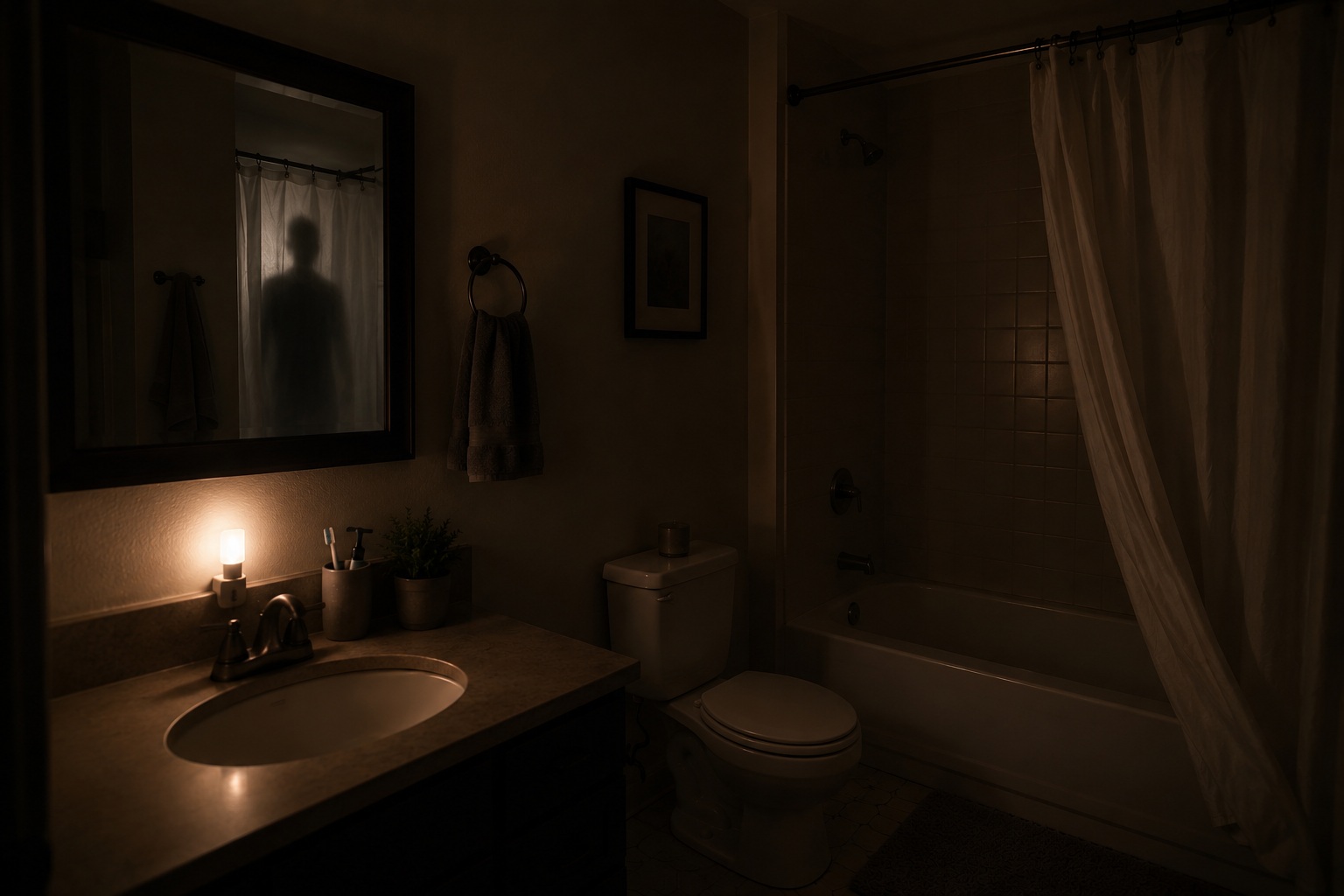
The sound of bare feet on cold bathroom tile. The nightlight glowing beneath the sink. The toothbrush cup sitting exactly where it always had. The towel hanging perfectly still while the curtain shifted beside it.
These ordinary details make the strange moment feel larger. If every object had been moving, a draft would seem obvious. Instead witnesses often describe a bathroom that appears completely frozen except for one piece of fabric. Our memories naturally preserve contrasts.
The more ordinary the room felt, the more impossible that single movement seemed afterward. Years later people may forget the exact date or season. They remember the curtain.
Why People Avoided That Spot Later
Why Empty Bathrooms Trigger Such Strong Reactions
Bathrooms combine several things that make people uneasy. They contain mirrors that reflect dark rooms behind us. They amplify quiet sounds. They include plumbing noises that can occur unexpectedly.
Most importantly, they require moments when we deliberately turn our backs. We close our eyes while washing our face. We look into the mirror instead of behind us. We stand beside a closed curtain knowing someone could theoretically be on the other side.
Even without believing in ghosts, that arrangement creates tension. Psychologists often note that uncertain situations demand more attention than obvious ones. An empty doorway is easy to understand. A doorway partly hidden by a moving curtain asks a question our brains instinctively try to answer.
That question arrives before logic does. Who—or what—moved it?
Why The Story Still Gets Shared
Many strange bathroom experiences eventually receive ordinary explanations.
A ventilation fan cycles on automatically. A neighboring door changes the room's air pressure. A curtain made from especially light plastic reacts to subtle temperature differences. Those answers solve countless mysteries.
Yet a smaller group of stories refuses to fit neatly into those explanations. People describe standing in completely still air while watching the curtain move only once. They remember hearing a soft brushing sound from inside the tub before the fabric shifted. Some insist the movement stopped the instant they reached for the curtain, as though whatever had been there no longer wanted to be seen.
No one can say with certainty what happened in every story. That uncertainty is exactly why the question continues appearing in paranormal discussions. The moving curtain becomes less important than the feeling it creates. For one brief moment, an ordinary bathroom no longer feels empty.
And almost everyone knows the instinct that follows. You stand perfectly still. You stare at the curtain. Then you decide whether you're brave enough to pull it open.