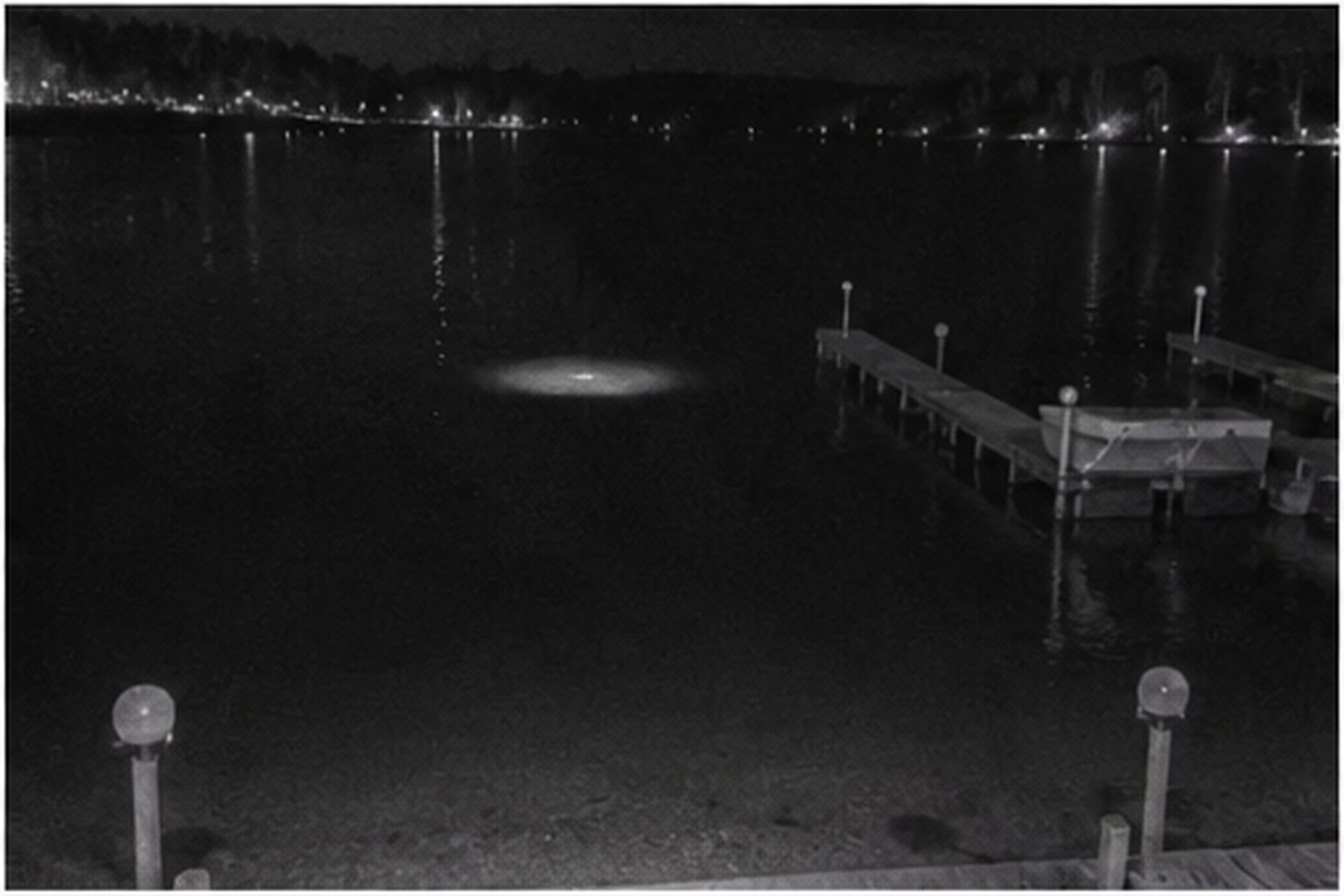
The camera was never meant to watch the sky.
It was bolted under the eave of a lake cabin, angled down toward the dock so the owner could check on the boats after storms. Most nights it recorded nothing but water, rope, and the slow rocking of two aluminum fishing boats in their slips.
That was why the first strange thing appeared in the wrong place.
Not above the tree line.
Not among the stars.
In the water.
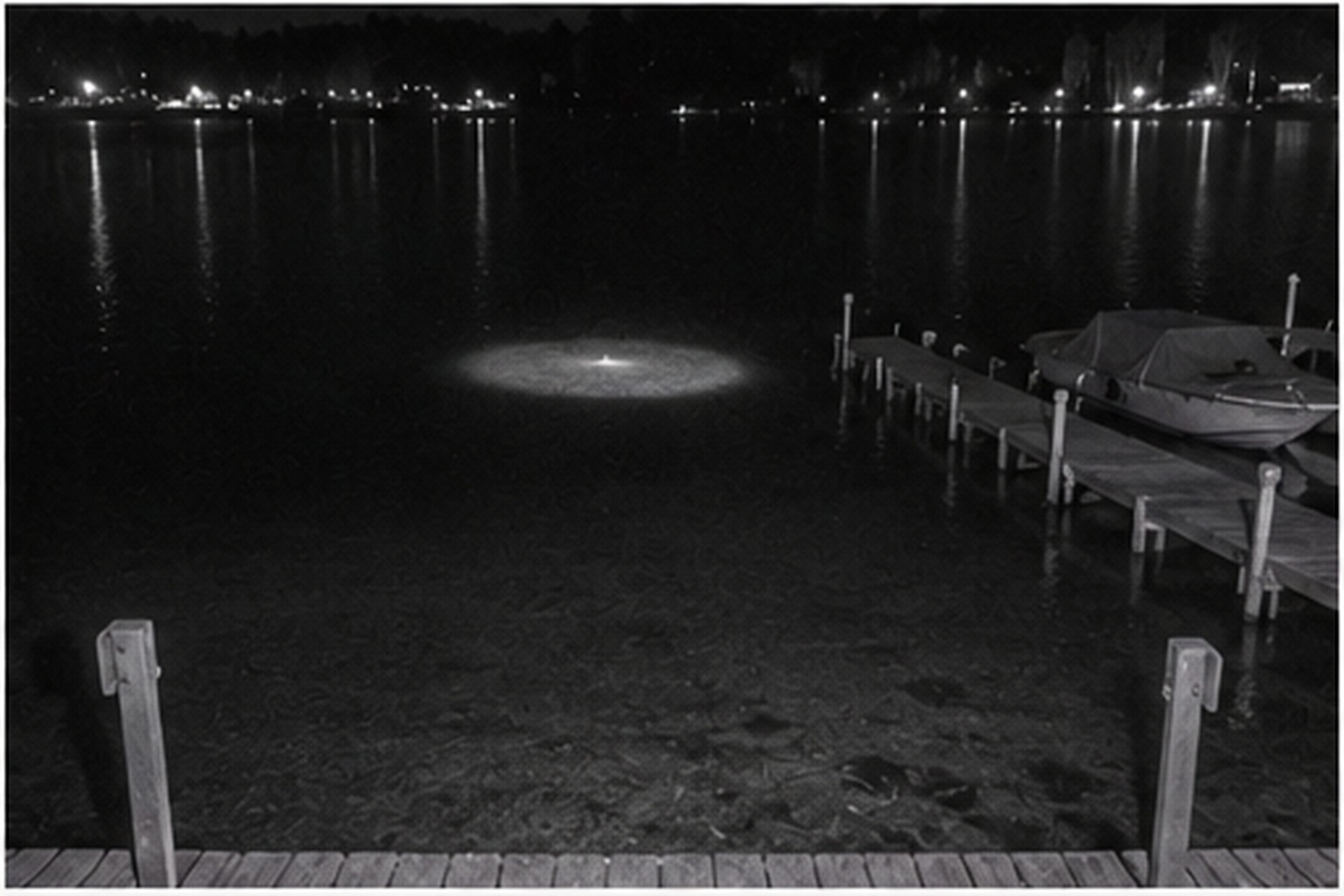
At 2:16 a.m., the security camera saved a motion camera still because the lake surface brightened. A pale disc had appeared in the black reflection between the dock and the far boat. It trembled there, flattened by ripples, white at the center and dimmer around the edge.
The sky in the top of the frame was empty.
The Reflection Arrived Before The Object
The cabin owner noticed the camera still the next morning while checking an alert on his phone. He expected to see a raccoon on the dock or wind pushing a loose paddle against the boat hull.
Instead, the thumbnail showed the water glowing.
He opened the camera file and watched the pale disc form on the lake like a coin rising from underneath. It did not splash. It did not cast light across the whole surface. It simply appeared as a reflection, as if something bright had switched on above the camera’s view.
But nothing bright was visible above it.
For almost six seconds, the camera saw only the disc in the water.
Then, at the very top edge of the frame, a matching pale shape slid into view.
It did not descend like a plane. It did not cross like a satellite. It entered the image slowly from above, centered over its own reflection, a smooth white oval with no flashing lights and no obvious edges except the curve of brightness against the dark.
The lake stayed calm beneath it.
That calm was what made the camera still hard to stop watching.
Everything Around The Dock Looked Ordinary
There were no dramatic sounds on the camera record. The camera’s microphone was poor, and most of the audio was the same soft hiss it always made at night. Occasionally a rope clicked against a cleat. Water tapped the dock posts. Somewhere in the trees, one insect buzzed close enough to distort the mic.
The disc made no sound the camera could catch.
It hovered above the far end of the dock for less than half a minute. The boats did not rock harder. The dock lights did not flicker. The tree line did not bend in wind. Nothing behaved as if a heavy machine was hanging over the water.
But the reflection did behave.
It moved with the ripples.
When the pale disc in the sky shifted slightly left, the reflected disc shifted the same way across the water, delayed by the lake’s small waves. When the object brightened, the reflection brightened. When it dimmed, the reflection dimmed.
The owner watched the camera still several times before he realized he was holding his breath during the first six seconds.
The reflection was there before the thing that should have caused it.
He Tried To Recreate It With Every Normal Light
The practical answer was reflection. A boat light. A neighbor’s floodlamp. A car turning around on the road behind the cabin. The lake was good at stealing light and placing it where it did not belong.
That afternoon, he walked the property and checked the angles.
The dock faced a narrow part of the lake. Across the water were trees, two seasonal cabins, and a gravel access road that sat higher than the shoreline. A car on that road could shine headlights through gaps in the trees. A porch light could reflect in broken pieces. The moon could fool a camera when clouds moved fast.
All of that was plausible.
So he tested it.
He parked his truck on the access road and aimed the headlights through the trees. The camera caught two long white streaks, not a round disc, and the sky frame stayed dark.
He turned on the cabin floodlight. It blew out the dock boards and made the boats shine, but it did not create anything in the middle of the water.
A neighbor switched on a porch lamp across the cove. The reflection showed as a small vertical smear near the far bank, nowhere near the dock.
The moon was checked too. At 2:16 a.m., it had been behind cloud cover and off to the side, not centered over the dock.
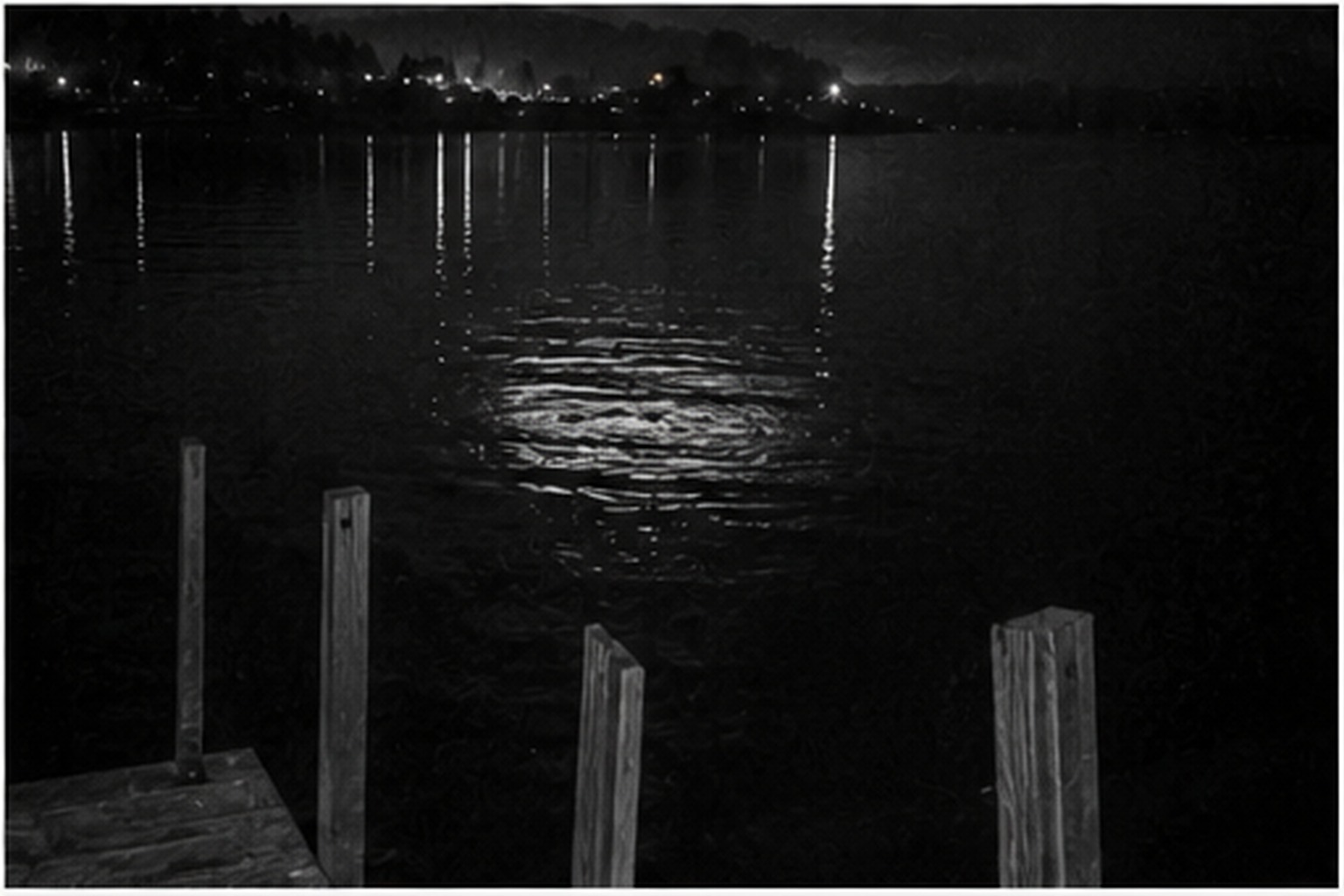
The tests did not prove anything unusual.
They only failed to make the same mistake happen twice.
The Camera Might Have Been Wrong
That was the explanation he liked best: the camera had glitched.
Security cameras are not eyes. They compress darkness into blocks, invent shapes from noise, and smear moving lights into objects that were never there. A sensor can bloom. Infrared can bounce off mist. A spider thread near the lens can become a glowing disc if it catches light at the right angle.
He took the camera down and found a web near the housing.
For a few minutes, that seemed to solve it.
Then he watched the camera still again.
The disc did not cling to the lens. It passed behind the dark vertical line of a dock post in the frame, or at least its reflection did. The water broke it apart in a way a lens artifact should not. The pale shape above the dock appeared at the correct mirrored position for the reflection below.
A camera expert he knew was careful. He said the camera images was too low quality to claim much. It could be layered reflections inside the lens. It could be a bright object outside the frame hitting the water before the camera adjusted exposure. It could be timing weirdness from the motion-trigger buffer.
That last idea almost worked.
Maybe the camera saved the camera still late. Maybe the object had been visible before the file began, and the reflection only seemed to arrive first because the beginning was missing.
But the saved camera file included pre-roll. The first seconds showed dark water, dark sky, and no light. Then the reflection appeared. Then the object entered the sky frame.
The sequence stayed wrong.
The Dock Felt Different Afterward
He did not tell many people. Lake communities turn stories into jokes that last for years. He did not want the marina calling him saucer man every time he bought fuel.
But he did start checking the camera every morning.
For two weeks, it recorded normal things: moths, rain, raccoons, a heron standing on the dock like an old man in a coat. Once, a neighbor’s flashlight moved through the trees and made a messy reflection exactly where it should have been. That helped a little.
Then he noticed the rope.
On the night of the disc, one boat’s bow line had been tied to the inside cleat. In the morning, it hung from the outer cleat instead. The knot was the same kind he used, not cut, not frayed, just moved. The boat had not drifted because the stern line held.
He could have done it himself and forgotten. Someone could have stepped onto the dock. A raccoon could not retie a rope, but a neighbor could.
The camera showed no person on the dock all night.
Only the pale reflection. Then the pale disc. Then, near the end of the camera still, after the object dimmed and slid upward out of frame, a small movement in the rope as if the loose end had been lifted by a hand just outside the camera’s view.
He watched that part once and did not watch it again for a month.
The Lake Went Back To Being A Lake
Nothing else happened. That is often the most frustrating part of stories like this. The sky did not open. The dock did not burn. No official visitor arrived to confiscate the camera. The lake returned to its ordinary black surface, reflecting porch lights and clouds and the occasional passing plane.
The mundane explanations remained on the table.
A light outside the frame.
A camera artifact.
A reflection from the lens housing.
A motion buffer that made timing look stranger than it was.
He repeated those possibilities whenever the camera still came up, because they were honest possibilities. Low-quality camera images can mislead anyone who wants mystery too badly.
Still, he kept the original file.
He kept the camera angle unchanged.
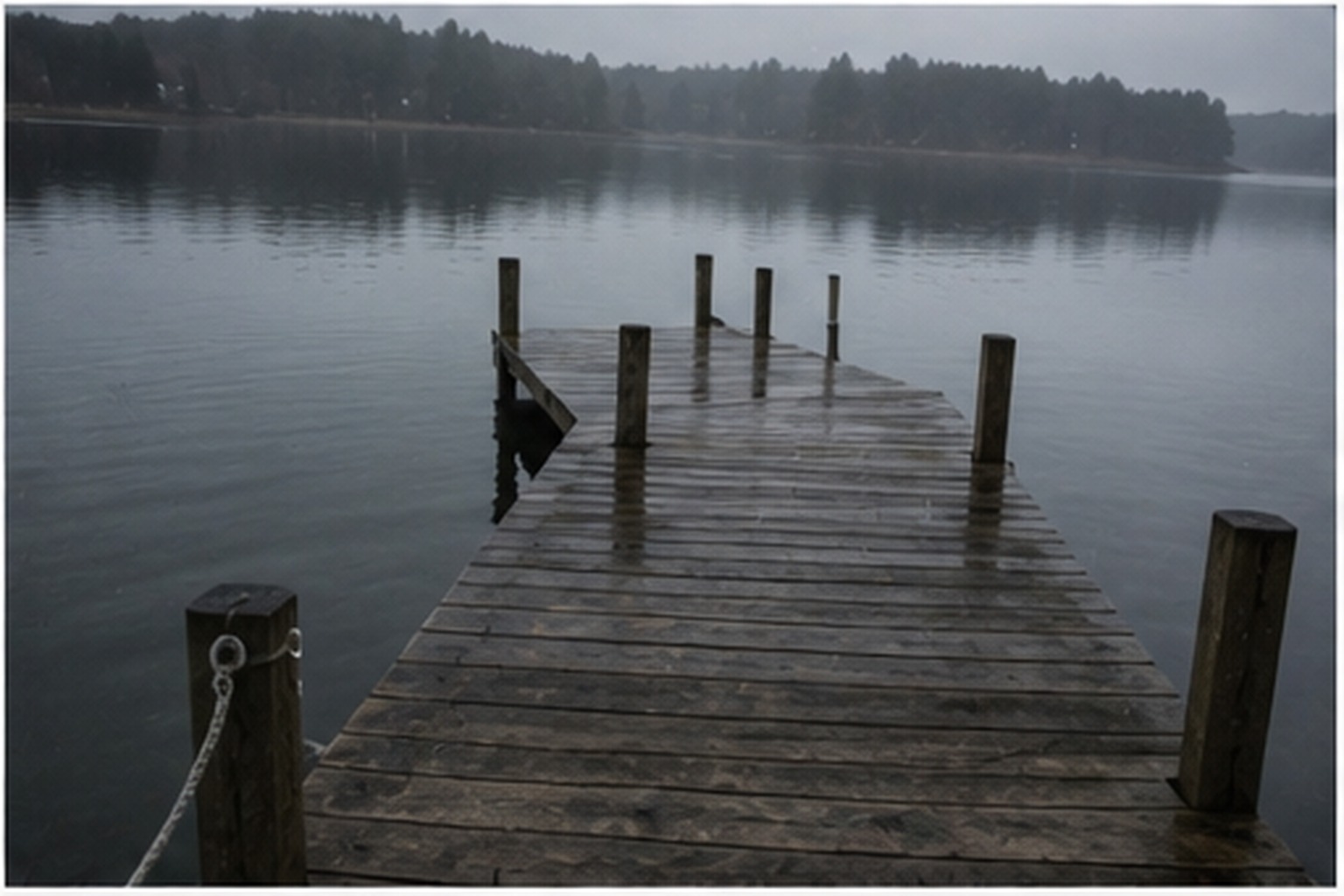
And on nights when the water is perfectly still, he avoids looking at the live feed for too long. The dock sits empty. The boats sleep in their slips. The black surface holds nothing but faint stars and the occasional tremble of wind.
What bothers him is not the idea that something was in the sky.
It is the idea that the lake saw it first.
As if the water was reflecting an arrival before the air was ready to admit it was there.